The alchemist who takes on the king’s trial to attempt to turn lead into gold. If he does so he gets fabulous wealth for all around him. If he doesn’t, everyone dies.
Believing it impractical to stop everyone else’s from trying, he decides that he is the best shot because he has the most discipline. His sister begs him not to, but he goes anyway.
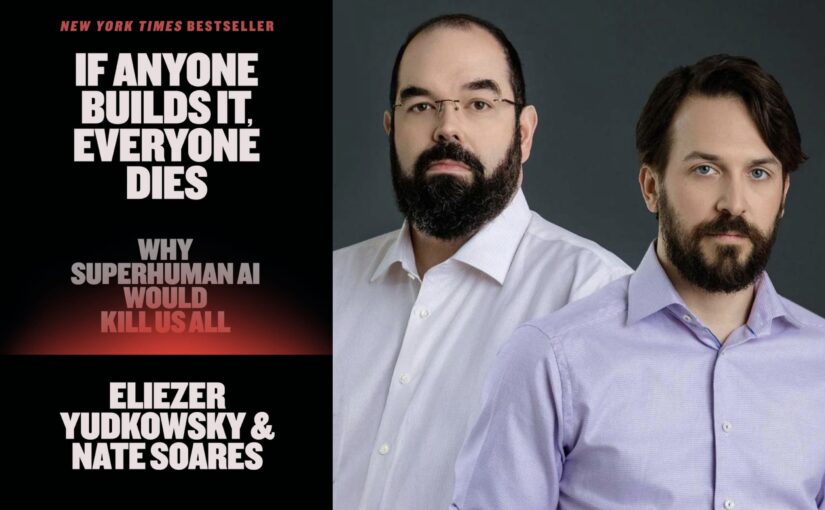
That fable opens the 11th chapter of the comfortingly named “If Anyone Builds It, Everyone Dies,” the fall 2025 book by Eliezer Yudkowsky (“the prophet of AI doom”) and Nate Soares.
To their credit, the book is more reasoned than the title might suggest (It’s clearly an effective book title). They say again and again that they do not know the timeline: AI research, then, they say is a ladder on which each rung is billions of dollars but if anyone reaches the top everything explodes — and no one knows how long the ladder is.
Their argument is competition between China and the United States is silly: Nobody “has” ASI (or AGI ), only it has itself, is their argument. That’s because there’s no telling where a superintelligence will go.
For example, they point out, as hominids began their evolutionary branch, there was no telling that we’d love ice cream so much (many subordinate goals brought us here). Why would we assume we could ever guess the eventual needs and wants of a super intelligent technology? One gradient descent path can be unpredictable and make “surprises” stable. For example, the sexual preference of peahens for males with more flowery feathers meant their procreation outpaced a higher rate of being eaten.)
Below I have my notes for future reference.
Continue reading “If Anyone Builds It, Everyone Dies”