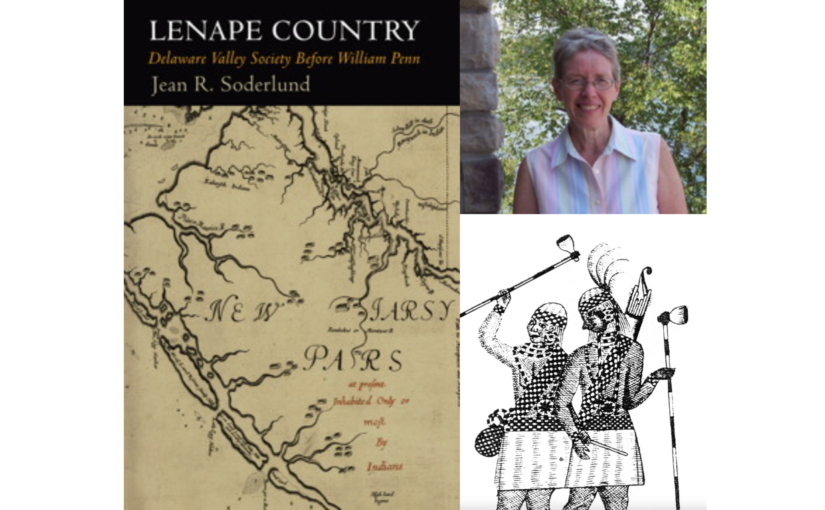
Lenape Country before William Penn

The Lenape people controlled their territory, and they meaningfully shaped the society that developed in present-day Philadelphia, Pennsylvania, Delaware and New Jersey.

So argues the 2016 book Lenape Country Delaware Valley Society Before William Penn written by Lehigh University professor Jean R. Soderlund. A prevailing narrative is of a relatively weak and minor subgroup of the Alqonquian people but this book argues something more nuanced.

Other big themes: early Swedish settlers remained primarily trading partners with the Lenape, which contrasted with the Dutch and the English who over time seemed more interested in colonizing, though the English Quakers were on the whole far more peaceable than the Chesapeake, New Amsterdam and New England regions. The Lenape themselves shaped this reality.

This is a rich social-political history of the earliest recorded details of Lenape life. I strongly recommend buying a copy if you love history and the details of indigenous and European engagement. As is my custom, I share notes from my reading below for my future reference but please do pick up a copy.

Continue reading Lenape Country before William Penn
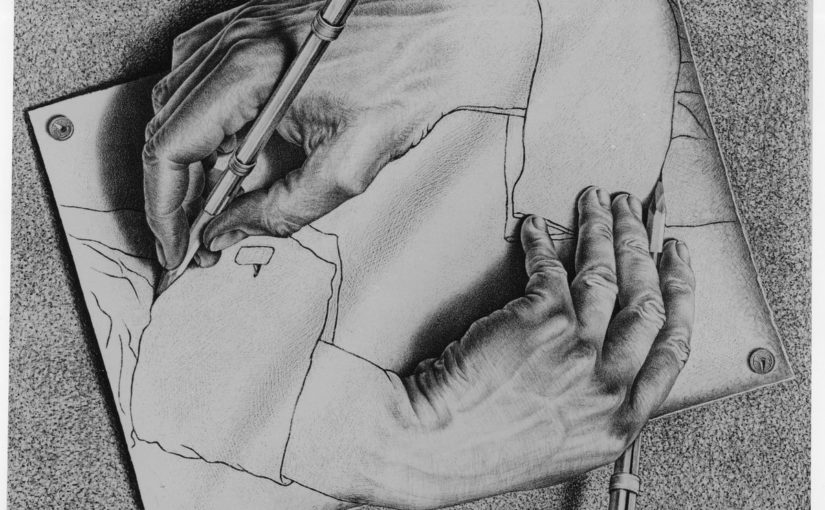

Gödel, Escher, Bach: an Eternal Golden Braid

The universe isn’t remarkable because of stuff. It is remarkable because of the relationship between stuff.

That is something like a theme from the iconic and celebrated 1979 book by academic Douglas Hofstadter called Gödel, Escher, Bach: An Eternal Golden Braid, which won both Nobel and Pulitzer prizes. An entire secondary marketplace of ideas and debate centers around the meaning and intention of the book, so I will not attempt to contribute to that. The book did influence computer science, especially the development of artificial intelligence, but Hofstader has said he does not identify with technology or computer culture.

Overall, the dense book brims with interdisciplinary “strange loops,” or examples of the interrelationships between concepts that create systems.The book’s title comes famously from naming three men influential in very different fields: influential Hungarian-American logician Kurt Gödel (1906-1978); Dutch graphic artist M. C. Escher (1898-1972) and legendary classical composer Johann Sebastian Bach (1685-1750). All their work are used as examples of strange loops. I share a few notes below that I may return to in the future.

Continue reading Gödel, Escher, Bach: an Eternal Golden Braid

Write more effective resolutions

It’s a new year! As much as 40% of Americans make new year’s resolutions each year but fewer than 1 in 10 report sticking to them. I wrote my first resolutions as a teenager, and I’ve learned a lot about what works and doesn’t in holding yourself accountable. Here are a few tips I’ve learned that I thought might help some of you!

Continue reading Write more effective resolutions