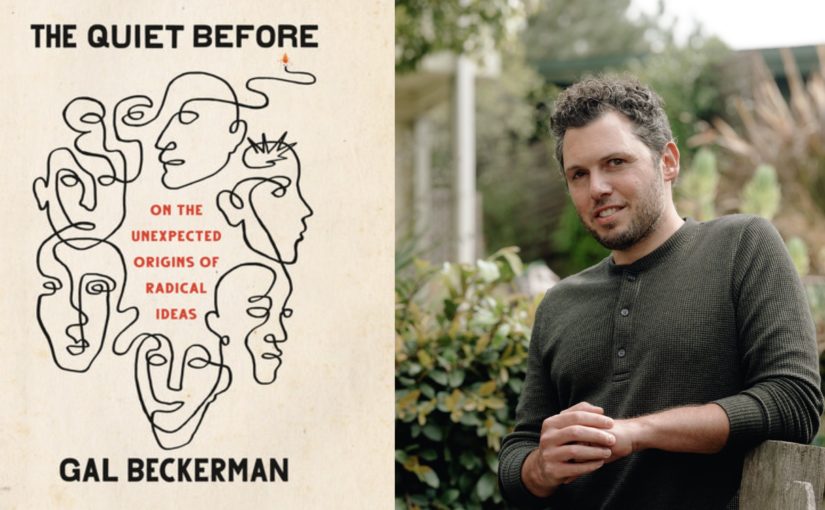
The Quiet Before: the unexpected origins of radical ideas by Gal Beckerman

Long before the change happens, people start by talking.

That’s how community organizing really happens. Before intersectionality or the fall of the Berlin Wall or the Civil Rights movement, or even before the recent explosion of the alt-right, somewhere people quietly come together to form a movement. What do those moments have in common?

That’s the focus of The Quiet Before: On the Unexpected Origins of Radical Ideas, a new book by Gal Beckerman, a books editor for the Atlantic and formerly The New York Times. (Find a review in the Washington Post)

Below, find notes for my future review — and watch an interview Beckerman did with Sewall Chan, who spoke at the 2020 edition of an annual journalism conference I host.

Continue reading The Quiet Before: the unexpected origins of radical ideas by Gal Beckerman
Four Thousand Weeks: Time Management for Mortals

No time management system can save you if you won’t save yourself.

Our human capabilities are powerless against software, global scale and machine learning. We can’t keep up. It’s the “efficiency trap” — the more effective we get, the more others rely on us. Time management, then, isn’t about getting more done but rather it’s about deciding what not to do and how to be at peace with our decisions.

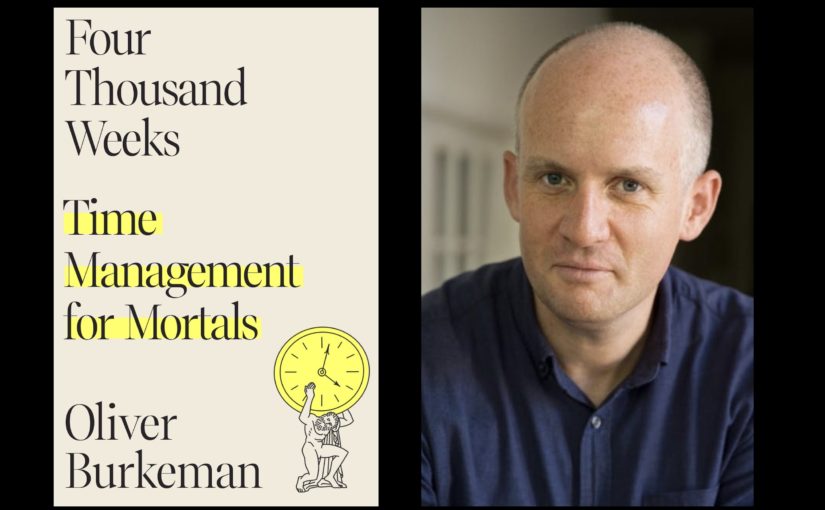
That’s the biggest theme I took from Four Thousand Weeks: Time Management for Mortals, last year’s bestselling book from former productivity columnist Oliver Burkeman.

The average human lifespan today is about 4,000 weeks — which gives the book its title and its purpose. After spending much of his career chasing each productivity hack, the author came to a newfound philosophy. Late in the book he describes it as his “Cosmic Insignificance Therapy”: recognizing our futility in the universe is a prerequisite for sustaining a balanced life.

High-achievers can still work hard and do great work. He writes about how. More than anything though the book argues we need the right foundation before we ever chase “inbox zero.” As a productivity nerd myself, I enjoyed the book and got lots from it. It is far less tactical and so may not resolve what some want out of a time management book, but it succeeds at adding something new to the conversation.

Below I share notes for my future reference.

Continue reading Four Thousand Weeks: Time Management for Mortals

The Changing World Order: Why Nations Succeed or Fail

Empires rise and fall in predictable ways that follow long-established patterns.

An emerging power invests heavily in education, infrastructure and trade to create wealth, which it protects by strengthening its military. Elsewhere the current leading power grows decadent with rising wealth inequality, in-fighting and fading investments until the emerging power confronts it – and wins. War and revolution start the cycle anew.

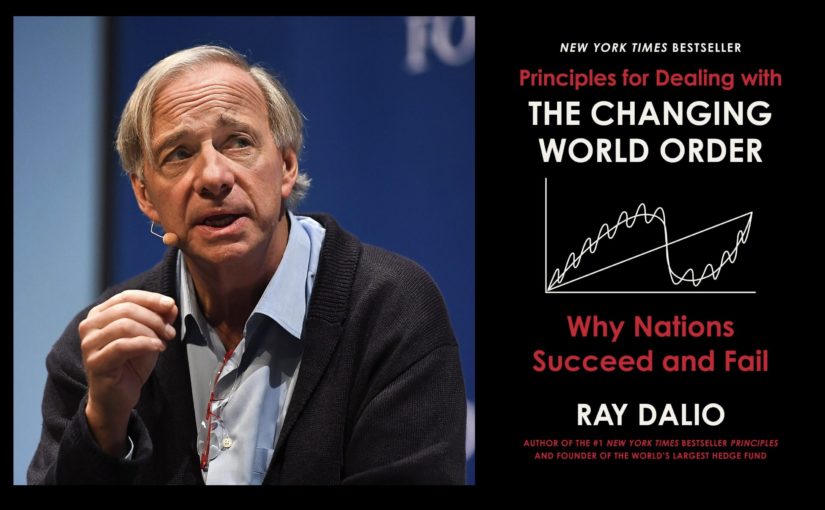
That’s among the biggest themes from the high profile 2020 book from Ray Dalio, the founder of one of the world’s largest hedge funds: Principles For Dealing With The Changing World Order Why Nations Succeed And Fail. It’s part of the “principles” series that includes extensive independent research that Dalio’s team maintains here. He intends to look at the longest historical period possible to find patterns that can inform what happens next.

Most pressingly, he argues we’re at the late stage of the American empire, when the United States will continue to decline from its role as the world’s global hegemony and cede that position to China. I’ve been disappointed that much of his coverage has not challenged him on what seems a very big conflict of interest: Dalio is heavily invested in China, an authoritarian country that does not protect criticism, and he has been careful to avoid criticizing the party. In short, the book’s biggest flaws may be that he pulls his punches against China. Still, by using his own determinants and data, he paints a stark picture of unassailable patterns over the last 500 years up until today that looks like this:

Below I share my notes from reading the book for my future reference.

Continue reading The Changing World Order: Why Nations Succeed or Fail

Dialect Diversity in America: notes from William Labov’s 2012 book on language change

Language variation is becoming more distinct, not less, in the United States.

So argues the 2012 book “Dialect Diversity in America: The Politics of Language Change” by influential linguist and academic William Labov.

One major divergence in dialects is between African American Vernacular English (AAVE) and white dialects but differences go wider too. According to Labov, people from cities such as Los Angeles, Chicago, Toronto, Philadelphia, and New York now speak more differently from each other than they did in the 1950s. This seems counterintuitive given the ubiquity of mass media, but academic linguists have shown that one-way communication does less to influence how we talk than our peers.

The book is insightful and compelling Get yourself a copy. My notes for future research are below.

Continue reading Dialect Diversity in America: notes from William Labov’s 2012 book on language change