Storytelling has a working definition that I like and find helpful. It explains why you can roll your eyes at the term or be really motivated by it, and why “storytelling” can refer to so many different forms.
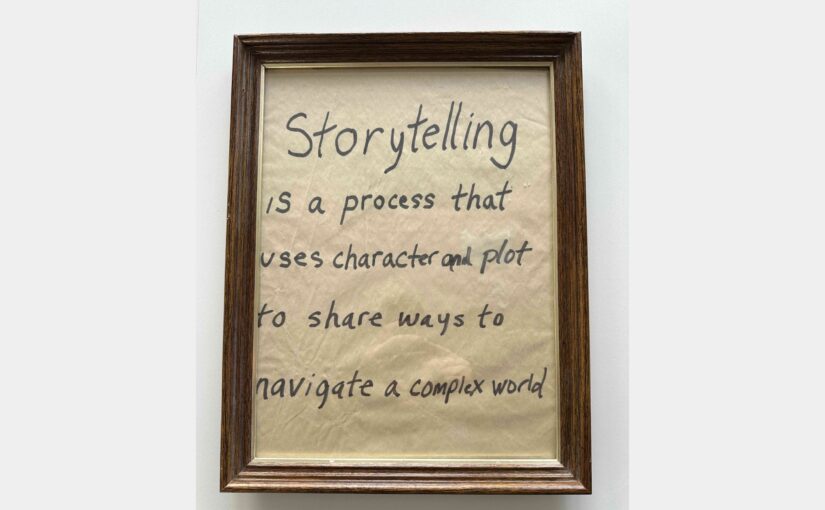
Here’s how I think of storytelling, how I define it in my own practice. I keep it in a nerdy frame in the Technical.ly newsroom:
Storytelling is a process that uses character and plot to share ways to navigate a complex world.
The idea is that we take people’s experiences and map them onto reality. We match them to things that can help you understand a complex world. That means standup comedy, novels, movies, political campaigns, journalism, documentaries—all of it can employ storytelling.
And it can be used for good ends, ends you agree with, or it can be used for evil ends. Storytelling is not inherently good or bad. It’s just a human condition: we map our experiences onto other people’s lived experience.
That’s why you can like the format or not. You can like the ends or not. It’s just a thing we do. It’s like breathing.
So when there’s coverage of corporate storytellers, you can roll your eyes. When there are beautiful examples of oral historians in pre-literate societies, you can be inspired. You can consider some of it hijacking or not. None of it really matters. Storytelling doesn’t care. Storytelling is the human condition.
In my practice, I think of it as a way to strengthen local community and give more people their best shot. I happen to use a journalistic frame, but I have friends in standup comedy, fiction writing, academia, and marketing—all of whom employ storytelling, better or worse than others, more or less effectively than others.
Storytelling isn’t inherently good nor bad.