Vigil by George Saunders

What might the chief architect of the oil and gas industry think about on his deathbed, as the effects of climate change only worsen and his lobbying prove even more effective?

That’s the setup of Vigil, the new satirical novel by George Saunders, the celebrated American writer. It’s a magical device to explore regret, comfort and legacy.

A few friends and I have admired and followed George for close to 20 years. We’ve discussed his short stories, attended his talks bought his collections and more recently his longer works. He helped me understand what writing can be.

Those friends and I were divided on Vigil. Two friends feel he’s narrowed too much into one voice that came from his short stories, into Lincoln in the Bardo and returned for this one. In contrast, I view this as a defining style — the incomplete sentences, particular pacing and sparing coarse language and themes — and I love it. I found it comforting, and thought-provoking, visual and world-making.

I always remember George talking about how every writer “climbs the mountain” of another writer’s voice, before finding their own. He’s done it, and I’m on a lifelong journey to do the same.

Below, I have a few notes I wrote down memorably from the book for my future reference.

Continue reading Vigil by George Saunders

Why the joint stock company was one of the world’s best inventions

A company pools capital for entrepreneurs, and distributes risk for investors.

The oldest forms were extensions of the state, typically time-bound efforts to reach some goal of an empire. Victorian England introduced “limited liability,” in which investors were not liable for anything beyond their investment, and tradable shares.

This invention of invention helped fuel the Industrial Revolution. That’s from the 2003 book The Company: A Short History of a Revolutionary Idea by journalists John Micklethwait and Adrian Wooldridge.

More than 20 years old, the short snappy book was written in the wake of the Enron and Worldcom scandals. Before even the Great Recession, these business journalists were already asking: “Is the company essentially a private association, subject to the laws of the state but with no greater obligation than making money, or a public one which is supposed to act in the public interest?”

That questions remains important today. Even as it’s become far easier to start a company, as the authors write: “The modern company still needs a franchise from society” 

Below I share my notes for future reference

Continue reading Why the joint stock company was one of the world’s best inventions

The case for a throwback summer

What is your favorite childhood summer throwback?

I, for one, remember a lot of morning sitcom reruns, sandlot baseball, the icy-chill of a well-conditioned library and an annual block party. What’s yours?

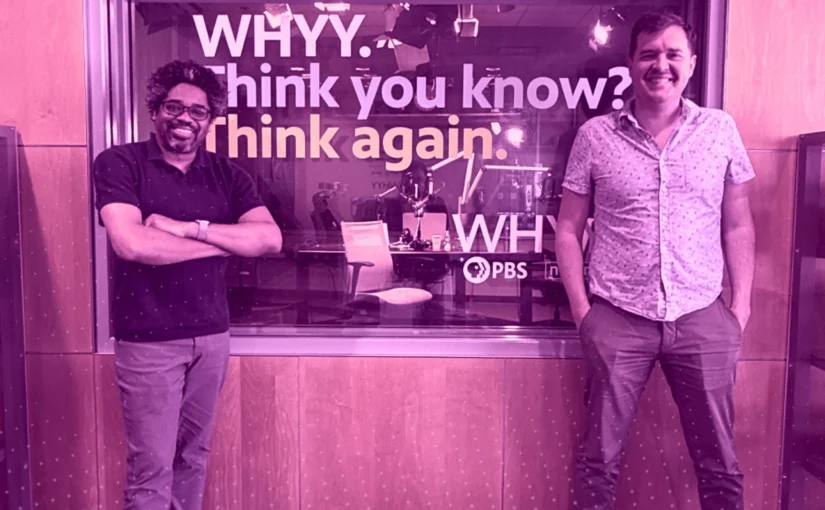
I enjoyed joining the impressive Cherri Gregg and Avi Wolfman-Arent on WHYY’s Studio 2 this week, alongside Stephanie Humphrey and Marc Faletti.

This is especially timely as the parent of young kids, as I embark on a summer of activities and camps — balancing developing and fun, boredom and screens and all the rest. Give this a watch and let me know what you remember from your own summer childhood! https://lnkd.in/gZ-VqfVr

Continue reading The case for a throwback summer

What is human consciousness?

Consciousness is “under siege.”

Suddenly lightning-fast computing seems to recreate tasks we commonly associate with intelligence. Yet we’re unprepared as a society to define, let alone create and control, something as pervasive as being. Across close to two-dozen scientific theories of why consciousness appears at all, the so-called “hard problem of consciousness,” none has widespread agreement.

We’re behind in part because at the dawn of the Enlightenment, early scientists focused on measurable phenomenon, in part because they believed that leaving the soul to the church would avoid a political backlash. That allowed hundreds of years of scientific flourishing, but left an underdeveloped sense of self.

That’s from A World Appears: A Journey into Consciousness, a 2026 book by author-science journalist Michael Pollan. Across dozens of interviews and an approachable survey of the research landscape, he ably walks the reader through what we know now. Two stages are easier to test than the two later ones, since it requires consciousness to describe consciousness, but to put it simply:

  • Cognition is processing information, perhaps by instinct
  • Intelligence is, as William James defined it, “a fixed goal with variable means of achieving it”
  • Sentience is a precursor to consciousness, or, as Evan Thompson described it, “the feeling of being alive”
  • Consciousness is a sense of self, of knowing you know

It’s a fun book, I recommend it.

Below I share my notes for future reference.

Continue reading What is human consciousness?

A vision for Philadelphia 250 years from today

This might be the project, and the writing, I’m proudest of in my career thus far.

Find here the backstory, and an Inquirer op-ed here I wrote. Below find the words of a vision statement for Philadelphia 250 years from now, which has now inspired a mural by my friend Sean Martorana and Mural Arts Philadelphia.

Continue reading A vision for Philadelphia 250 years from today

The risk-taking that connects Wall Street, Las Vegas and Silicon Valley

A certain approach to risk and decision-making spans Wall Street, Las Vegas, Silicon Valley and, yes, even cryptocurrency libertarianism. Not all of it’s good, but some is.

It’s important to understand this community and worldview. That’s from On the Edge: The Art of Risking Everything, a 2025 book by popular statistician Nate Silver.

The book is at least 150 pages too long, and needed a more disciplined edit. The author says he had three book proposals: gambling, AI and game theory. As far as I can tell, he combined them all. The bloated book has detailed poker gossip, historical passages about Las Vegas and biography of Steve Wynn. Lengthy passages detail how LLMs work and the personalities behind game theory. It’s all moderately interesting but bizarrely off focus of his book, in my read.

I happen to like the stuff, but I kept finding myself circling passages that could have been edited away. Regardless, I took away plenty of charming little details.

Below I share my notes for future reference.

Continue reading The risk-taking that connects Wall Street, Las Vegas and Silicon Valley

AI a Performance-Enhancing Drug: my interview on WYPR

Host Jason Michael Perry sits down with Chris Wink, cofounder and CEO of Technical.ly, to explore whether AI is becoming a performance-enhancing drug for founders and what that means for workers, entrepreneurs, and the cities trying to build ecosystems around both.

Recorded in Philadelphia during Philly Tech Week at the WHYY studios, the conversation digs into Chris’s framework for cutting through the AI noise, the gap between what AI could do at work and what people are actually using it for, why the most exposed workers may not be who you expect, and what the bar is now to be taken seriously as a founder in 2026.

LISTEN HERE

How a poem’s 1417 rediscovery shaped the Enlightenment

The concept hooked me: Lucretius’s On the Nature of Things, a materialist Roman poem, gets rediscovered in 1417 by book-hunter Poggio Bracciolini, and its ideas — atoms, a universe without divine design, pleasure as a worthy pursuit — help crack open the modern world.

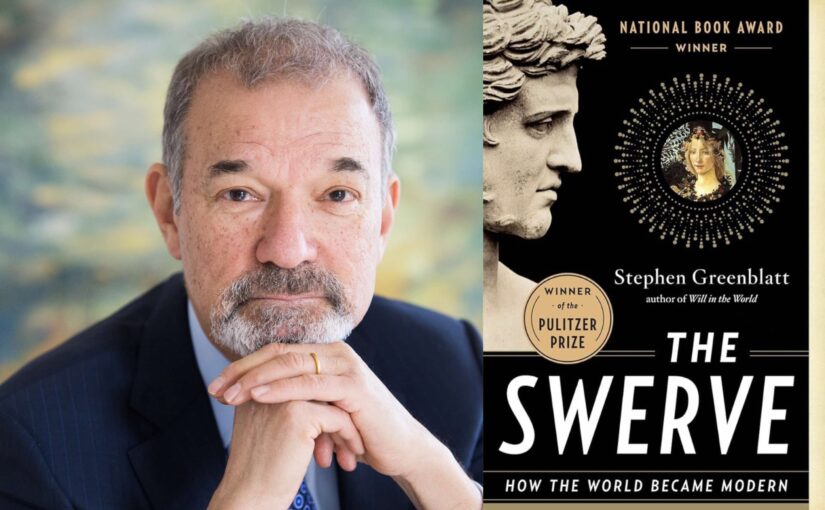
That’s the setup of The Swerve: How the World Became Modern, a 2011 book by historian Stephen Greenblatt that won both the Pulitzer Prize and National Book Award. I just read it.

What I actually wanted was the origins story: how could anyone in the centuries BCE arrive at “atomism” at all, with no microscopes and no evidence? The book gave me less of that than I hoped, so I went digging on my own — and that turned out to be the more rewarding part. The answer: ancient atomism wasn’t a discovery. It was a logical deduction. Parmenides had argued that nothing can come from nothing and therefore change is impossible; Democritus’s answer was tiny, eternal, uncuttable bits (atomos) rearranging in a void. It only looks like modern science because the word survived. The concept was independently rebuilt on real evidence 2,000 years later.

Which reframed the whole book for me. The Swerve isn’t really a book of ideas — it’s a beautifully written, story-forward narrative built on a single irresistible image: a lone bibliophile pulling a lost masterpiece off a monastery shelf at exactly the right moment to change everything. That’s why it won: gorgeous prose, a great yarn, and a secular-humanist thesis that landed perfectly in the science-vs-religion mood of 2011.

The insight I want to keep: Greenblatt’s book is itself an example of its own thesis. It’s a work that met its moment — the right idea, well-told, arriving when the culture was primed to reward it. Drop it into today and I’m not sure it wins anything. Books, like the texts they’re about, get lucky in their timing.

Below I share my notes from the book for future reference.

Continue reading How a poem’s 1417 rediscovery shaped the Enlightenment
Who are entrepreneurs enemies? My 2026 Technical.ly Builders Conference keynote

Below is my Friday speech, inspired by this bet, and following this live podcast recording.

I want to tell you about a bet I have with Brian Brackeen.

I’ve known for Brian for more than 10 years, back when he founded a facial recognition startup in Miami. He’s built in machine learning longer still. He and his wife and partner, Candice, cofounded Ohio-based VC firm Lightship Capital, investments around AI. He organizes Black Tech Week. He’s got opinions.

Last year we debated whether AI would imminently replace software developers. Brian said yes—developer jobs would fall. I disagreed. We bet a cheesesteak, or more properly having to wait in line for one, deadline May 2026.

It’s May 2026. This morning we’re going to learn the answer together, and what it means either way.

Continue reading Who are entrepreneurs enemies? My 2026 Technical.ly Builders Conference keynote

Moravec’s Paradox

This was original a social video post

I want AI to do my dishes and laundry so that I can do art and writing, not for AI to do my art and writing so I can do more dishes and laundry.

That 2024 tweet went viral. And there’s a name for this: Moravec’s Paradox, and it dates back to 1988, from a machine learning researcher.

Continue reading Moravec’s Paradox