Atlanta: give me your Republican mayors

I may be finding a trend.

At some point, two party systems went missing in our country’s great cities, and no one seems to care.

Scant a city is without some complaints of at least a lackluster Republican Party, yet I am finding a dearth of even academics or journalists who know where – or even when – they went in most cities.

Atlanta is a perfect example.

I had trouble finding book sources in Temple’s library and even Internet sources noting historical political party information of Atlanta mayors. Indeed, I couldn’t figure out when the last Republican was.

I first reached out to Dr. Gregory Hall, a professor of political science at the respected and historically black Morehouse College in Atlanta. He kindly passed my query out to his colleagues. The result was a whole lot of apologies, but no real answers.

Because of that common reaction that seems to nestle somewhere around ‘no one asked, so no one cared, so no one remembered,’ another common reaction I have gotten is those most knowledgeable working to find where a Republican may have been.

I got just such a reaction today, after moving away from academics.

Upon a recommendation from Dr. Hall and following my own path, I moved on to the newspapermen of Atlanta, a city of 486,000. I sent out emails to a handful of reporters from the Atlanta Journal-Constitution, the big paper in town.

Today, I received this from David Pendered, who was described as having “the longest institutional memory” by Jim Tharpe, Pendered’s fellow political writer at the Journal-Constitution, in an email from May 30.

Date: Wed 20 Jun 18:59:12 EDT 2007
here’s a thought, but it would be a stretch for your theory: atlanta had a wealthy mayor in the 1960s named ivan allen. he basically ensured the city stepped up to appropriately handle martin luther king jr’s funeral. and he had a habit of just writing personal checks to pay a bill for a city service he thought shouid be provided to residents, but the city didn’t have the money. that could be viewed as a patrician republican. but there’s no doubt he was, at the time, a democrat.

It seems that the top academics and journalists in one of the largest cities in the country have no idea when City Hall was last run by anyone other than a Democrat. Strange.

It may be that a two-party system in the urban America is more complex than I am thinking of it. What makes a Republican in a city when he has to cater to demographics unlike those of his national party. Business ties and a fiscal focus may seem a traditional conservative, but if a city’s population won’t elect Republicans, they naturally tend to viability, in this case becoming Dems, a natural case of survival.

Mark that for important paper topic.

Phoenix: an active urban Republican Party

A few hours ago, I got an email from Ed Montini, a political writer for the Arizona Republic, a regional newspaper based in Phoenix.

It comes as no surprise that a city of 1.5 million, better than 75 percent of whom are white, can sustain some form of a Republican Party.

Date: Tue 12 Jun 17:02:51 EDT 2007
Mr. Wink,

Unlike the rest of the state, Phoenix elections are held on a “nonpartisan” basis, though everyone knows the party affiliations of everyone else. Kind of a don’t ask, don’t tell election.

Anyway, the last mayor who was Republican was Skip Rimsza, who served from ’94 until ’03, as I remember. The Republican mayor before that would have been Margaret Hance.

I’d guess you could Google Rimsza and get what you needed.

Best,

Ed Montini

It seems likely that the demographics of Philadelphia, 1.5 million and nearly 45 percent black, play into the struggles of the city’s Republican Party. For my paper, I will have to find academic evidence for it, but, of all racial or ethnic groups, it seems blacks are least likely to sway to the GOP, perhaps based on their long ancestral battle for political rights and finding it, most recently, with the Democrats.

Shame of a City: a Philadelphia mayoral election documentary

In 2003, the Philadelphia mayoral contest was set to be of epic proportions.

It was a rematch of now-incumbent Mayor John F. Street and Republican Sam Katz. In 1999, Katz lost by less than 8,000 votes, the closest election in the history of mayoral popular votes in Philadelphia, particularly considering more than 425,000 votes were cast.

Filmmaker Tigre Hill followed the Katz campaign throughout the election right through Wednesday, Oct. 8, 2003, when it was announced that a recording device was found in Room 215 of City Hall, Street’s mayoral office, and that it was part of an FBI probe.

It became national, indeed, even international news, and Hill chronicled the entire thing. The film is captivating if only for the sheer drama that unfolds, heightened by the normal characters that only Philadelphia can create.

The film was released to DVD on April 10 and there have been a handful of showings. I got to see it myself, as a friend gave me an advanced copy before it was released in April. Last month, Hill was on MSNBC promoting the film, interviewed by Michael Smerconish.

I strongly recommend it for anyone interested in urban politics, documentary work or Philadelphia generally.

See the trailer here on the film’s Web site or as a Quicktime here.

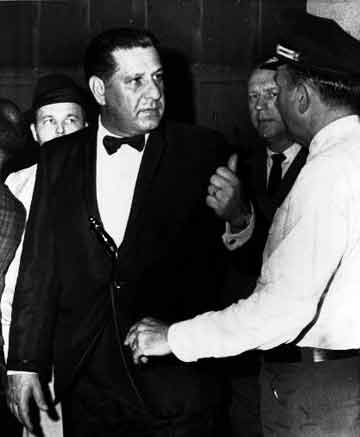
Image is screen shot from documentary.

Red, White Blue and Black: an honors thesis proposal

Last week I chose a focus for my honors thesis project, Philadelphia’s Republican Party. Since then, I have further extrapolated my focus, though I am sure it will change over the next year. Still, I have also begun reaching out to academics, journalists and otherwise researching other urban GOP.

See my longer thesis focus in its longer, perhaps, meandering form below.

Philadelphia is said to be the birthplace of America. There is no overestimating the responsibility that should come with such a title, yet, most might agree, this historic metropolis has seen a precipitous decline in its prestige. Indeed, this City of Firsts hasn’t had many firsts in centuries.

Continue reading Red, White Blue and Black: an honors thesis proposal

Judge Seamus McCaffery: city Democrats run state-wide, GOP doesn't

On May 15, Seamus McCaffery was one of two state Democrats to win a primary as part of his bid to join the Pennsylvania Supreme Court, as reported by the Philadelphia Inquirer.

He is a law and order judge, but in a city like Philadelphia, McCaffery runs as a lunch pail, white ethnic Democrat. Check the first graf of his bio, themes that make it into most of his stumping:

Seamus McCaffery is a proud immigrant who was born in Belfast, Northern Ireland in 1950, to Seamus and Rita McCaffery. When he was 5, Seamus immigrated to America with his parents and siblings. The family settled in Philadelphia and grew to include 3 brothers and 3 sisters, all of whom remain in Philadelphia, Bucks and Montgomery counties. Seamus and Rita McCaffery’s extended family now includes 21 grandchildren and 5 great-grandchildren.

The Republican candidates were, unsurprisingly, not from Philadelphia and far less funded. Still, a state wide election like Supreme Court judge could provide a platform for a candidate. Some might think that is just what McCaffery is doing, considering he has long been thought to be a possible mayoral candidate, as a 1997 City Paper cover story might suggest. Check out his campaign advertisement running right now.

[youtube=http://www.youtube.com/watch?v=KoeKXIuEs_A]

Benjamin Flanders: last Republican mayor of New Orleans

It is important for me to understand Philadelphia doesn’t exist in a vacuum.

It is no secret that since the 1960s, when the Democratic Party became the benefactors of black voting loyalty, as many urban centers have seen white flight, large cities haven’t been particularly kind to Republicans.

So, while Philadelphia hasn’t seen a Republican mayor since 1952, other cities have gone longer. Though I’ve had some difficulty – as you’ll see – last week it seemed to me that the last Republican mayor of New Orleans was Benjamin Flanders who was last elected in 1870!

That is why right now my research doesn’t have a lick to do with Philly. Instead, I am creating a better understanding – however basic and marginal – of the city-wide, particularly mayoral, politics of the largest cities in the United States.

I emailed and called a dozen journalists and academics and got my first response back today, from Ray S. Mikell, an associate professor of political science at the University of New Orleans.

Continue reading Benjamin Flanders: last Republican mayor of New Orleans