Japan Part 1 of 3: Tokyo

This is a month in the making and perhaps even tardier than that. As your disorientated guide, uninformed teacher and uninspiring leader, I apologize. Let’s figure out Japan.

NBC has done a lot of things right in this, the premiere season of what I hope to be a show of divergent course in the nascence of online-only media. What they didn’t do was give you viewers nearly enough information about our countries of travel. But, then, I suppose that is just what I am supposed to do, and so I am here to do it now.

So here it is: my first in a three part series that might just be my bid for an Encyclopedia Asiananica. I hope all of this will give you a better understanding of one of the world’s more interesting and powerful nation-states. Today, we’re going to very briefly and generally discuss Tokyo in every way I could think you might want to break it down. I will follow with two posts on Japan, a domestic breakdown and then try to place the country in a global concept. If you’re actually still reading, you’re probably alone, so keep going, if only out of pride.

Continue reading Japan Part 1 of 3: Tokyo

Donald Richie: Episode Four

By most standards, I am not particularly cultured. So, it might surprise you to hear that recently I was in a small, basement club in Tokyo watching Japanese avant-garde films from the 1960s. Yeah, it surprised me too.

I was there to see the event’s host, an 82-year-old author who has lived in Tokyo for some 60 years. Anyone who takes cinema seriously or who knows anything about Japanese culture has heard of Donald Richie. He is considered a central figure on Japanese film, and the man has pounded out more than 40 books on Japanese culture, in addition to his own films and weekly columns. There is scare a scholar known more widely than he.

Continue reading Donald Richie: Episode Four

Jaa mata

So I have this peculiar habit of ending my entries with, “jaa mata.” From a recent blog comment, it has occurred to me that I never mentioned what that meant. How absurdly anti-educational that is. It comes in closing, so, yes, some of you are savvy enough to understand it is, indeed, a Japanse farewell. “Jaa mata” can be translated to mean “See you again,” while its shortened, and more commonly used, form is “Jaa ne,” which I sneak in from time to time, means, basically, “See you.” Dreadfully complicated isn’t it?

Anyway, for those of you hoping to expand your everyday Japanese, here’s Christopher’s pronounciation guide, (JYA maTAH) yes, JYA being the first sound, not the name of this dreadful show you’re experiencing.

(JYA nay)

That being said, what you should know is what the Japanese call Japan: Nihon. If you are to continue to travel with me in Tokyo, you need to know this, that is just respectful. Nihon, get it, (NEE hone)

And a particularly literate comment brought forth, “Fuku wa uchi,” which, someone far more capable of Japanese translating than I tells me means literally, “Fortune comes in.” (Ignore what Googling the phrase tells you, my source is more reliable)

Commonly the phrase runs as, “Oni wa soto! Fuku wa uchi” The Devil is out! Fortune comes in.”

(OH nee wah so TOE. FOO koo wah oochi)

And, while we’re on this subject, I should clarify the two Japanese words I knew before I started learning in the months preceding my Tokyo arrival. “Sayanora” and “kon’nichi wa.” They meant goodbye and hello to me before I learned better.

“Sayanora” is really only used when referring to a goodbye with a sense of finality, as if the departing will not return for a long time. And “kon’nichi wa” is “good afternoon,” though it is used widely, from 10am to well past sunset for some.

See, who among us can say we didn’t learn something new today? Who, I demand!

Jaa,
Christopher

Yasukuni

On Sunday I trekked on that bicycle of mine six miles to the Tokyo American Club – think a fancy country club without the golf, but with a pool, restaurants and ballrooms – for an academic symposium on the foreign diplomatic issue in northeast Asia: Tokyo’s Yasukuni Shrine.

I mentioned it in a previous blog, but, in short, Yasukuni is a Shinto war memorial with a right-wing taste to it, from the pamphleteers that walk the grounds to the adjacent revisionist history museum. A great deal of foreign nations, particularly the Asian states who suffered from 20th century Japanese imperialism and fear Japan is trying to ignore its past, are deeply opposed to the shrine’s existence and the recurring trend of Japanese prime ministers visiting the grounds. If you want to hear more, check out any legitimate news source and you’ll be able to find plenty.

Continue reading Yasukuni

Out for Battle

It was1:38pm on the Sunday of a holiday weekend and I was writing a paper for a class on modern Japanese politics. The beat of a drum and the sound of voices broke what little concentration I had managed.

It was a cool afternoon, another cloudy day in the late Japanese summer, and beyond a bordering building, the source of the commotion was revealed: a local festival. Like the Kichijoji omatsuri I had seen a week ago or so, there was a crowd, albeit much smaller, encircling a traditional drum and an omikoshi, portable shrine.

It should be noted that near my parents’ home in New Jersey it is odd to see roving festivals. Even my apartment in North Philadelphia has yet to yield a spotting of Americans dressed in Revolutionary War clothing swaggering passed.

Continue reading Out for Battle

Languages

Learning a second language is clearly one of the hardest, most admirable, and most rewarding learning experiences I have found. This, I say, knowing no more than a few scattered phrases in a few scattered languages. I say this as I say not learning a musical instrument has been one of my great regrets: without knowing, without really trying.

I can gurgle some Japanese, stumble over even less Twi, trickle clichés in Spanish, and barb with buzz phrases in German, leaving French the only language that I can even fake conversational ability. The phrase, “I dabble,” comes to mind. I haven’t done well, but I have done.

The world around the United States has so many amazing opportunities for people to learn language. Americans clamor about it: how the U.S. is monolingual, leading a multilingual world. The stars and stripes are leading a parade with snickers in languages we can’t understand following us the entire way.

Continue reading Languages

Pledges

Before you travel, study abroad or not, you have to have goals. No one is questioning that. But, it doesn’t hurt to readjust, reaffirm, and re-list those goals once you’ve settled in. You’ll learn more and doubt less. So, here are a few new pledges for my time here in Tokyo.

1.I will grow my hair. This may be less a pledge and more a premonition. While I do like the idea of walking into a Tokyo barber shop and getting a trim, in my favorite game of trying something new, I am going to abandon my military-shave for the long hair that is fashionable in Japan. (I may only have half a year, but we’ll see what I can do when I will grow my hair.)

2. I will sing karaoke with Japanese girls. Karaoke and sushi are pretty much the meat of American perspectives of Japanese culture. So who could disagree that I should get pretty Japanese girls to sing the American country music that I love. I am thinking there could be some fantastic footage if I will sing karaoke with Japanese girls.

Continue reading Pledges

Learning Tokyo

Let me preface by saying I have been on this island for less than ten days.

That being said, I think I am beginning to get a feel for Tokyo. The best way I know how to evaluate that is to go right ahead and make wild, uneducated generalizations about this huge city, having only seen perhaps as much as one hundredth of it.

It is clean. Yeah, yeah, yeah, we’ve all heard this. No, but really, Japan is clean. Upon entry in my apartment I was handed a friendly, non-threatening ten pages on garbage disposal here in the city. They tell me you have your bottles, plastic and otherwise, cardboard and larger, non-biodegradable items, and then you have food waste and burnables, paper and the like that can be safely burned for energy. There are two pick-ups weekly for each of the three categories.

I find myself taking pictures when I see graffiti and taking notice when I see trash on the street or gum in a urinal.

Continue reading Learning Tokyo

Classes

Classes have begun. It’s a funny thing about studying abroad; classes are often a condition. A tough aspect of studying abroad is overcoming that vacation feeling you might have towards your travel and find balance enough to get a grade or too.

I am actually studying at Temple University-Japan, a satellite campus of my Philadelphia home university. Here in Tokyo, it is the largest and oldest American university in the city. In classes English is required. I suppose that’s good for me. (Nihongo sukoshi wakarimasu – I speak very little Japanese.)

Though most of the students are Japanese (with populations from nearby South Korea and China and other East Asian countries) and have been schooled in English for years, I am still left in awe at those around me who voice opinions in a second language, the type of political and philosophical thought that many native speakers struggle to reign in under their language control.

Continue reading Classes

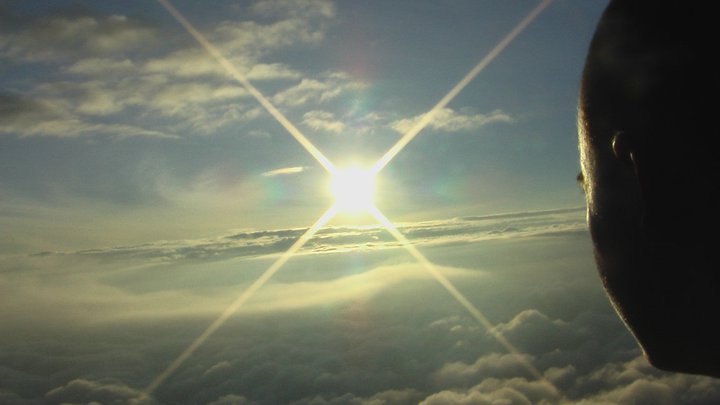
Mount Fuji: Part 3 of 3

SEE EPISODE THREE

Read about my Fuji experience in greater detail: Part One, Part Two and Part Three.

In the dark, the terrain was uneven and a bit rocky for the beginning of one of the more trafficked nature trails in the world. Regularly, either my chance at night-hiking was ruined or my idiocy was saved by other groups of hikers with miner’s helmets, headlamps and the occasional flashlight.

My stretches of lone connection and attempts at mystifying my Fuji adventure were shortened increasingly the further I climbed and the faster I went. Moreover, the narrower the path got, the more often I was stuck behind slow-moving hiking groups.

Continue reading Mount Fuji: Part 3 of 3