Colonial-era publishers in the United States were small, family-run businesses that spanned social classes, divided politics and drove forward discourse. Though tiny operations independently, they collectively shaped widespread opinion and developed into the fractured news environment we have today.
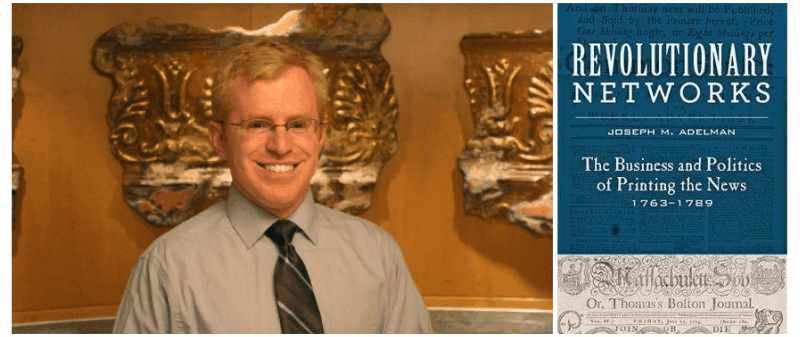
That’s one main theme from Revolutionary Networks: The Business and Politics of Printing the News, 1763–1789, an academic book published by Joseph M. Adelman earlier this year by Johns Hopkins University Press.
Adelman adds a lot to the literature on the details of how publishing houses worked in this era. In truth, I sought even greater detail on the real operations but I so appreciated his inclusion of basic finances and revenues, and much detail on the people behind it. I found myself scribbling many notes down on what I’d like to further research for my own understanding of the history of my trade. Much thanks to Adelman.
My friend Everett kindly bought me this as a gift, and I quickly read through it back in February. This is one of many publishing and journalism history books I’ve enjoyed the last several years. Below find notes for myself. I encourage you to buy the book and explore the topic yourself.
Continue reading Notes on “Revolutionary Networks: the Business and Politics of Printing the News, 1763–1789”