What’s my personal “artificial intelligence” philosophy

My stance: The term describes many technologies, but collectively they look like a big generational change, without the hype and excess

It was summer 2009 that I was first introduced to the idea that robotics and artificial intelligence are two halves of how a machine would move through our world. One is physical motion, and the other is a big term for computer systems that mimic human cognition — from computer version and probabilistic language and sound mimicry.

Over the next near two-decades, my reporting and entrepreneurship have evolved alongside a new fast-moving chapter of these technologies we call “artificial intelligence.” I’ve spent at least a decade developing my own relationship to what some have called “the singularity.” Now the last few years have brought this into the mainstream. That’s forced me to develop a more precise view.

Continue reading What’s my personal “artificial intelligence” philosophy

Science communication at a crossroads

Notes from a University of Maryland systems-wide symposium

I joined a spirited conversation at the University of Maryland BioPark for a system-wide symposium on science communication.

I filed a story for Technical.ly here. Our panel looked like this:

  • Megan Nicholson, a senior editor at Issues in Science and Technology
  • Heath Kelsey, director of the Integration and Application Network at the University of Maryland Center for Environmental Science.
  • Christopher Wink, cofounder and publisher, Technical.ly
  • Moderator, Michael Sandler, the UM system’s vice chancellor for communications and marketing

My foundational political belief: countervailing power

Mine is this: I am deeply skeptical of concentrated power.

This was originally a social video

What’s your defining political belief?

I’ve been thinking about that because on this app, and others, there’s a loud and often vicious argument among people most Americans would place somewhere left of center. Liberal, progressive, leftist, socialist, Democrat — those words do not mean the same thing, and I usually try not to wade into that labeling fight, either as a journalist or as someone who studied political science.

But I do think there’s a fair and useful question underneath it all: what is your foundational belief? Mine is this: I am deeply skeptical of concentrated power.

Continue reading My foundational political belief: countervailing power

The economic and family challenges of school-free summer

Summertime puts stress on family, and our wider workforce, I wrote about it for Business Insider

My latest Business Insider story is focused on the economic and family challenges of school-free summer.

I’m scrambling to get my kid into summer camp. We’ve joined multiple lotteries and lost money, but I need to fill 10 weeks of summer.

Read the story here

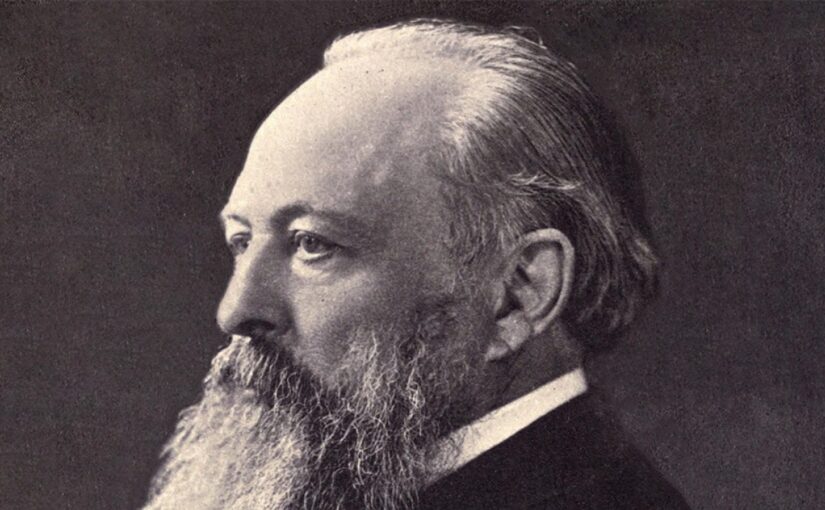
Great men are rarely good; good men are rarely great.

Lord Acton had it right 150 years ago

Great men are rarely good; good men are rarely great.

This perspective has long influenced my thinking, and it comes to mind again in the context of the longstanding rivalry between the late Apple cofounder Steve Jobs and Bill Gates.

I was always uncomfortable with people valorizing Jobs, because the track record seemed clear: he treated people very badly. Meanwhile, Bill Gates has done objective good with his wealth since. And yes, rehabilitating a reputation by investing in meaningful global health projects… that is a good.

But, though we don’t know the final word on the Epstein files, Gates’s relationship there does not look good, especially in light of a noncommittal interview done by his ex-wife Melinda.

Continue reading Great men are rarely good; good men are rarely great.

Blue Man Group founder Chris Wink (that’s not me) appears in the Epstein Files

Chris Wink (the journalist) who wrote this post shares a name with, but is not the same person as, the Blue Man Group founder, who is named in the Epstein Files

Well, my name is in the Epstein files. Not me though.

There’s another Chris Wink. He’s the founder of Blue Man Group, the eclectic artistic troupe that got its start in New York and maintains a longstanding residency in Las Vegas.

That Chris Wink (Blue Man Group founder and artist) is 25 years older than the Chris Wink (journalist) who is writing this. Once a friend pointed out that name appeared in this heinous file and document release, I wanted to ensure somewhere on the internet this clarification was made: there are (at least) two very different Chris Winks. When I was getting my journalism started in 2008, I first learned of the name competition.

Continue reading Blue Man Group founder Chris Wink (that’s not me) appears in the Epstein Files

Two kinds of stories go viral: The rare and the commonplace

One marks a pattern, one shares an outlier.

[This was originally a social post]

The biggest problem I see on social media is how often we confuse things that get attention because they represent something that happens often, and emerging that gets attention because it’s entirely unusual. One marks a pattern, one shares an outlier.

Continue reading Two kinds of stories go viral: The rare and the commonplace

Pro-entrepreneurship is not the same as pro-business

You can support new ideas, competition and experimentation, and still be skeptical of incumbents. Being pro-entrepreneurship means backing good-faith attempts at something new: letting teams iterate, letting bad ideas fail, and letting good ones scale.

[This was originally a social post]

Pro-entrepreneurship is not the same as pro-business.

You can support new ideas, competition and experimentation, and still be skeptical of incumbents. Being pro-entrepreneurship means backing good-faith attempts at something new: letting teams iterate, letting bad ideas fail, and letting good ones scale.

Continue reading Pro-entrepreneurship is not the same as pro-business

Make it illegal to use a photo for an AI-generated video

For 150 years, courts have recognized something called the right of publicity — the idea that your face, your voice, your identity belongs to you.

This was originally produced as a social video. Below is a script version.

Make illegal any use of a person’s likeness in any AI-generated video. Do it now.

Here’s why.

For 150 years, courts have recognized something called the right of publicity — the idea that your face, your voice, your identity belongs to you. Not to a tech company, not to a political campaign, not to a creepy ex. You.

Continue reading Make it illegal to use a photo for an AI-generated video

On moral relativism

Being a “product of your time” explains behavior, but it doesn’t excuse it. The truth doesn’t wait for us to catch up — morally or scientifically.

(This was originally a social video, and below is my script)

Most people totally misuse the phrase “product of their time.” Here’s the fix.

There’s a classic trap in moral relativism debates. We say, “Well, people back then didn’t know any better.” But here’s the key idea from moral realism in philosophy: something can be true, even if most people at the time don’t recognize it.

Continue reading On moral relativism