First You Write a Sentence: The Elements of Reading, Writing and Life

Writers begin their journey loving words. Later they learn to love sentences. Still later, they turn to obituaries. Or something like that. The point: Language is a cultural invention so its forms and our relationship to it is ever changing.

To become a better writer, then, is to grab hold of these various for their various purposes. For one, as Gertrude Stein put it: “paragraphs are emotional and sentences are not.”

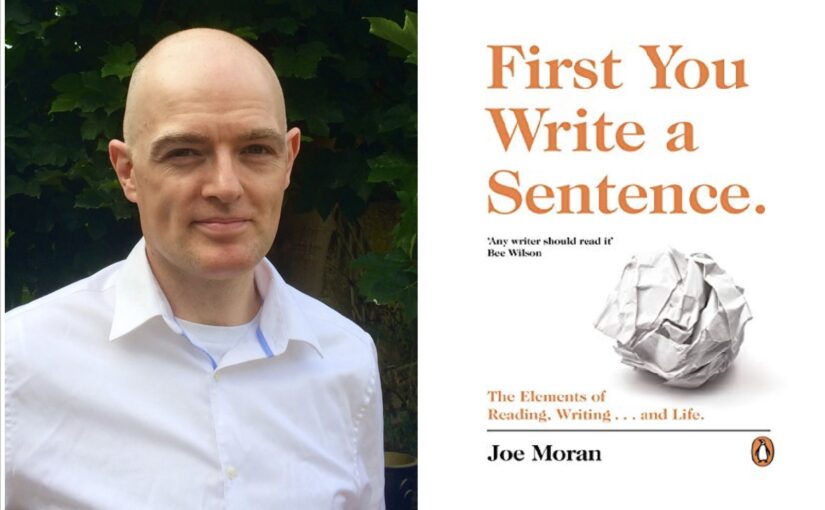
Somewhere in here is how we develop our “writing voice.” Not exactly the same as how you speak but maybe, “a buried, better-said version of you,” as author Joe Moran put it in his 2018 book First You Write a Sentence: The Elements of Reading, Writing . . . and Life.

It’s a lovely book, both for the craftsmanship Moran puts into his sentences and the wisdom he pulls together on stronger writing. I recommend it. Below I share my notes for future reference.

Continue reading First You Write a Sentence: The Elements of Reading, Writing and Life
Semicolons

Punctuation for writers is better thought like musical notation for composers.

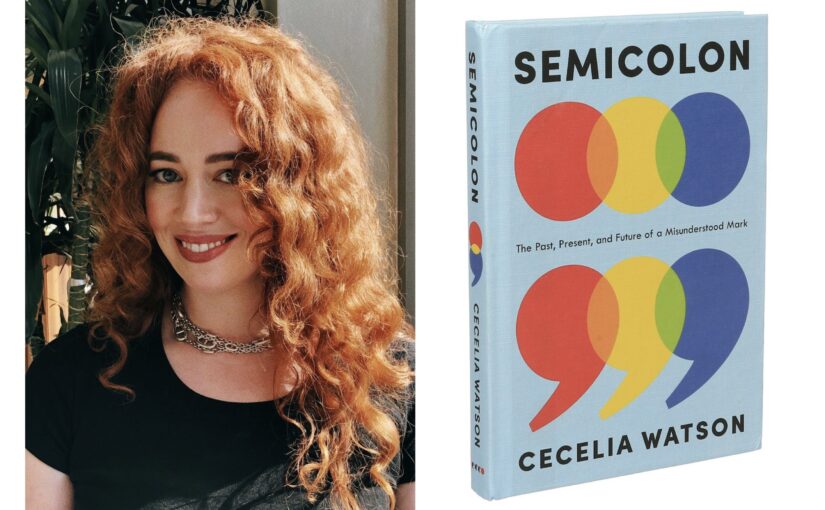
Too many rules are arbitrary and clumsy attempts to guide to better writing. Hence the strange intimidation and vitriol toward one piece of punctuation in particular, the semicolon, which was created in 1490s Venice. Treat it with care and with love. That’s a goal from Cecelia Watson’s slim 2019 book Semicolon: The Past, Present, and Future of a Misunderstood Mark.

Below I share my notes for future reference.

Continue reading Semicolons

What We Owe The Future

People matter if they live thousands of miles away — and thousands of years away too.

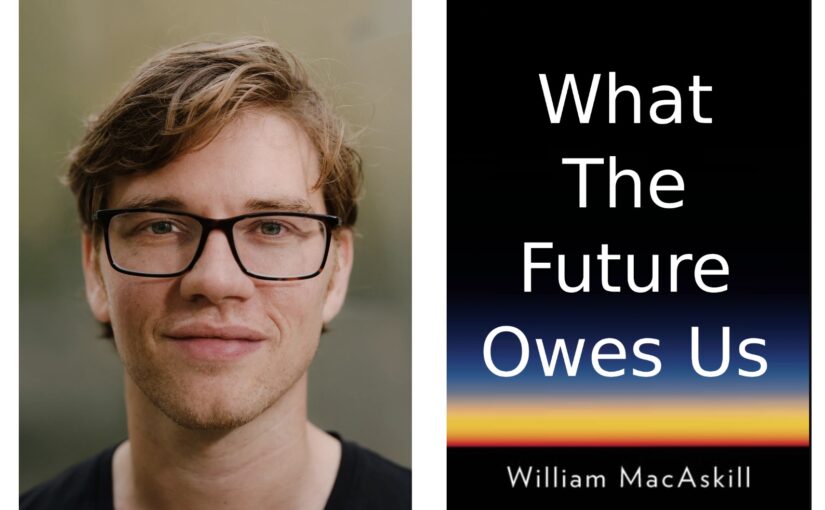
That’s among the primary arguments from What We Owe the Future, a 2022 book by the Scottish philosopher and ethicist William MacAskill that popularized a concept of longtermism (which has coincided with effective altruism).

Below I share my notes for future reference.

Continue reading What We Owe The Future

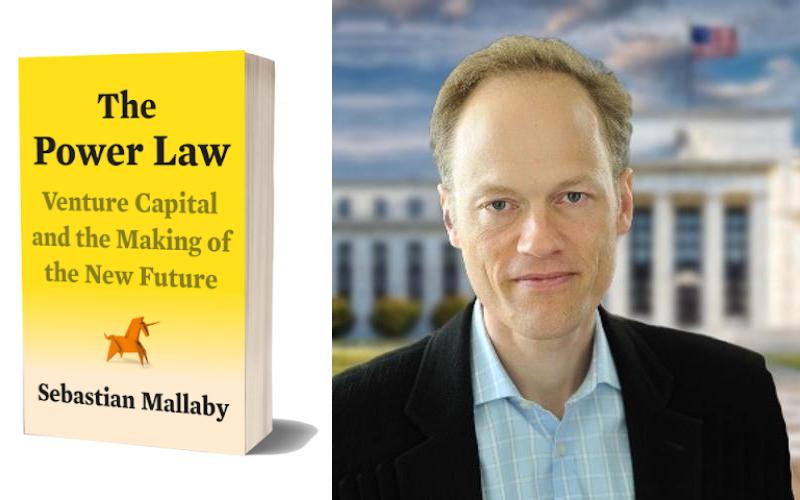
The Power Law: Venture Capital and the Making of the New Future

Silicon Valley wasn’t created in the 1950s by government intervention — which favored neither California nor Massachusetts at the time. It wasn’t just northern California’s counterculture or Stanford. Its ability commercialize basic products was the interweaving of egalitarian openness and capitalistic competitiveness that venture capital created.

So argues The Power Law: Venture Capital and the Making of the New Future, a 2022 book by economics journalist Sebastian Mallaby. What early Silicon Valley culture did have was a true ecosystem of people gossiping and swapping ideas and sharing. It reminds me of why free speech emerged in Europe.

The book is a history of venture capital, though it adds nuance to another book I read that is a pure history. This book gets its title from the the power law concept, in which you lose only 1x your money but if you miss a deal you could lose out on 10x or 100x your money. That fuels big bets.

Mallaby’s book is exhaustive. I appreciated its deep history, others might not. The book does feel full of survivorship bias, of war stories from successful people (mostly men) describing why they were successful. Quirks of the writing come up — he uses the subjunctive a lot like “in 1986, he had offered,” and sprays the term “Presently” all over the place — but I mightily appreciated the book. Give it a try.

I share my notes below for future reference.

Continue reading The Power Law: Venture Capital and the Making of the New Future

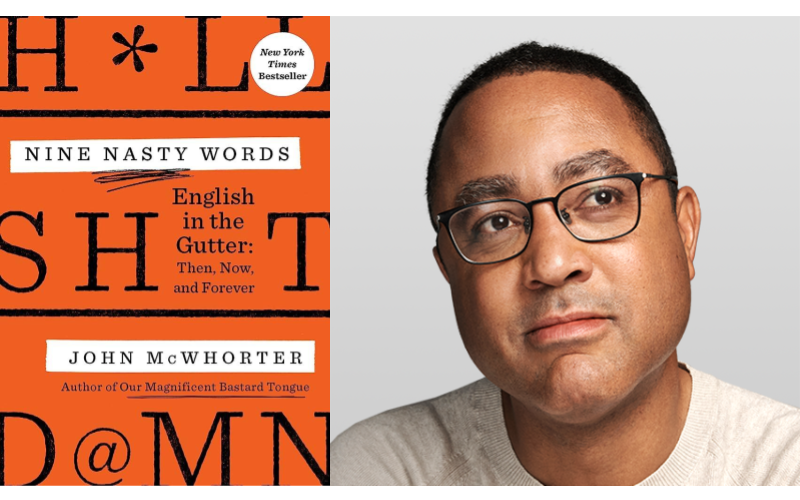
9 Nasty Words by John McWhorter

Vulgarity has gone through three big waves in English: about religion, about the body and now about groups of people.

The etymology and usage of profanity can tell you the most important lesson there is about language: It is always in motion, whether or not you know it, can perceive it or like. That’s the point of linguistics professor John McWhorter’s 2021 book Nine Nasty Words: English in the Gutter: Then, Now, and Forever. As he cheekily summarizes: “Profanity, first involved the holy, and only later the holes.”

I’ve read a bunch of McWhorter’s books, including his other recent publication, which veered into the political. This book is far more like his other pure, approachable books on linguistics. I’m a fan of his, and I’d recommend this as much as his others. As he writes: “To understand that language changes without allowing a certain space for serendipity is to understand it not at all.”

For future reference, I have my notes below.

Continue reading 9 Nasty Words by John McWhorter

After 7 years, I am no longer Generocity.org publisher

This was originally published on Technical.ly. I republished it here because it feels an especially personal update. This post completes a resolution of mine for the year.

After seven years of publishing Generocity.org, Technical.ly’s parent company Technically Media has transitioned the nonprofit-industry news site to Civic Capital, a philanthropic consultancy.

This is personal to me. In 2015, I led the effort to acquire Generocity, which was founded by philanthropist Sandra Baldino years prior. In the ensuing years, I was publisher for both Technical.ly, which expanded its geographic focus, and Generocity, which remained focused in Philadelphia. Both followed a similar playbook: Find an important industry that is typically covered nationally and report obsessively on it with a local lens.

Continue reading After 7 years, I am no longer Generocity.org publisher

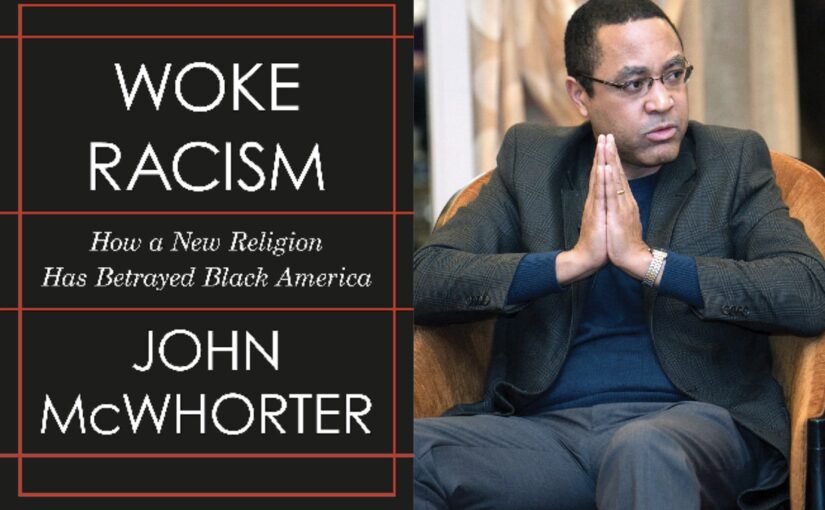
Woke Racism: notes from John McWhorter’s controversial 2021 book

Early Christians didn’t think of themselves as a religion but as bearers of truth. So too do a class of progressive activists that put race at the center of everything, and are unwilling to hear any complicating narrative.

That’s the theme of the 2021 book Woke Racism: How a New Religion Has Betrayed Black America written by John McWhorter, a linguist and prolific writer on language, whom I have long read (he’s also a native Philadelphian). No surprise given the topic and his stature the book has garnered widespread coverage. Some more thoughtful than others.

I respect McWhorter, and am a genuine fan of his linguistics books, so I’ve gone with him on this ride he’s taken into our political and partisan muck. He was one of the hundreds of academics to sign that Harper’s letter that called for greater civility, which received ample generational criticism.

I don’t suggest his politics align with my perfectly but I do take him to be a good-faith arguer. So I appreciate his book’s overall argument that a class of activists are more interested in virtue signaling among their peers than actually progressing forward. The best way to understand this movement is that they’re adherents to a kind of religion, he argues. They’re no more likely to accept other points of views than a Christian is to accept perspective on Christ from Islam.

Instead, his broad perspective on race in America is that culture outlasts original stimuli (ie true racism). It’s thorny. I share my notes from the book below for my future reference.

Continue reading Woke Racism: notes from John McWhorter’s controversial 2021 book

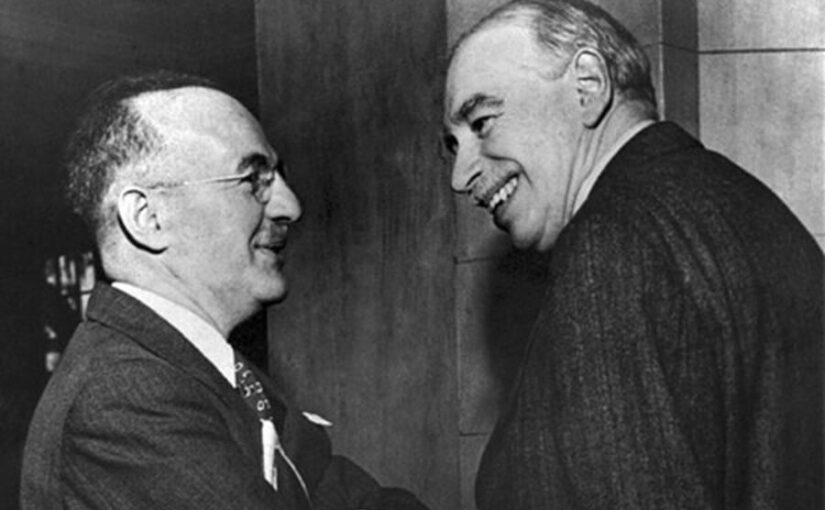
Keynes Hayek: The Clash That Defined Modern Economics

Fair or not, today’s economic theory gets simplified in popular understanding as a binary between two influential leaders: English economist John Manyard Keynes (1883-1946) and younger Austrian-British economist Friedrich Hayek (1899-1992).

One way to understand economic theory then is understand these two men, and how they debated and intersected. That’s the goal of Keynes Hayek: The Clash That Defined Modern Ececonomics, the 2011 book by British journalist Nicholas Wapshott.

Keynesian economics gets simplified as describing government as the spender of last resort; In the face of recession, government spending can reverse those threats (think of the initial pandemic era); Hayek helped establish the Austrian School of economic theory (which greatly influenced the University of Chicago school, including Milton Friedman), which can be simplified as arguing for government to set the rules and little else. Like so many silly binaries, there are lessons from both.

Below I share my notes from the book for future reference.

Continue reading Keynes Hayek: The Clash That Defined Modern Economics