Why the joint stock company was one of the world’s best inventions

A company pools capital for entrepreneurs, and distributes risk for investors.

The oldest forms were extensions of the state, typically time-bound efforts to reach some goal of an empire. Victorian England introduced “limited liability,” in which investors were not liable for anything beyond their investment, and tradable shares.

This invention of invention helped fuel the Industrial Revolution. That’s from the 2003 book The Company: A Short History of a Revolutionary Idea by journalists John Micklethwait and Adrian Wooldridge.

More than 20 years old, the short snappy book was written in the wake of the Enron and Worldcom scandals. Before even the Great Recession, these business journalists were already asking: “Is the company essentially a private association, subject to the laws of the state but with no greater obligation than making money, or a public one which is supposed to act in the public interest?”

That questions remains important today. Even as it’s become far easier to start a company, as the authors write: “The modern company still needs a franchise from society” 

Below I share my notes for future reference

Continue reading Why the joint stock company was one of the world’s best inventions

The risk-taking that connects Wall Street, Las Vegas and Silicon Valley

A certain approach to risk and decision-making spans Wall Street, Las Vegas, Silicon Valley and, yes, even cryptocurrency libertarianism. Not all of it’s good, but some is.

It’s important to understand this community and worldview. That’s from On the Edge: The Art of Risking Everything, a 2025 book by popular statistician Nate Silver.

The book is at least 150 pages too long, and needed a more disciplined edit. The author says he had three book proposals: gambling, AI and game theory. As far as I can tell, he combined them all. The bloated book has detailed poker gossip, historical passages about Las Vegas and biography of Steve Wynn. Lengthy passages detail how LLMs work and the personalities behind game theory. It’s all moderately interesting but bizarrely off focus of his book, in my read.

I happen to like the stuff, but I kept finding myself circling passages that could have been edited away. Regardless, I took away plenty of charming little details.

Below I share my notes for future reference.

Continue reading The risk-taking that connects Wall Street, Las Vegas and Silicon Valley

Immigration creates a “lake society,” rather than a stagnant swamp

Immigrants are neither villains, nor victims.

The through put in any economy is where dynamism comes from to get a “lake society”, rather than a stagnant swamp.

More to the point, foreign workers tend to not be the same as native workers, and when that’s the case everyone benefits. So that should be the focus, less displacement and more a core component of how an economy thrives.

That’s from The Truth About Immigration: Why Successful Societies Welcome Newcomers, a 2024 book written by Wharton School professor Zeke Hernandez.

In truth this pro-immigration stance is something of a straw man. Overall, even amid partisan American culture war, as I frequently report, high-skilled immigration is bipartisan— regardless of campaign rhetoric. It’s among the few things we agree on.

Instead, in many societies the question is what is the right level of immigration.

Below are my notes for future reference.

Continue reading Immigration creates a “lake society,” rather than a stagnant swamp

The corporation was invented to serve the people

Apple and Amazon are valued by public markets far in excess of their tangible assets, because of their “intangibles” in R&D and brand recognition. By historic standards, they own very little.

In contrast, AerCap and Prologis are among the world’s largest owners of the “means of production.” One leases aircraft to most large airlines. The other is the world’s largest industrial real estate company, leasing warehouses and data centers. They own the stuff.

Both “are nevertheless rather unimportant intermediaries in the modern economy” that now reflect “a long chain of intermediation” that means the system is more distributed. Yet our view and language about how companies fit into our world hasn’t changed.

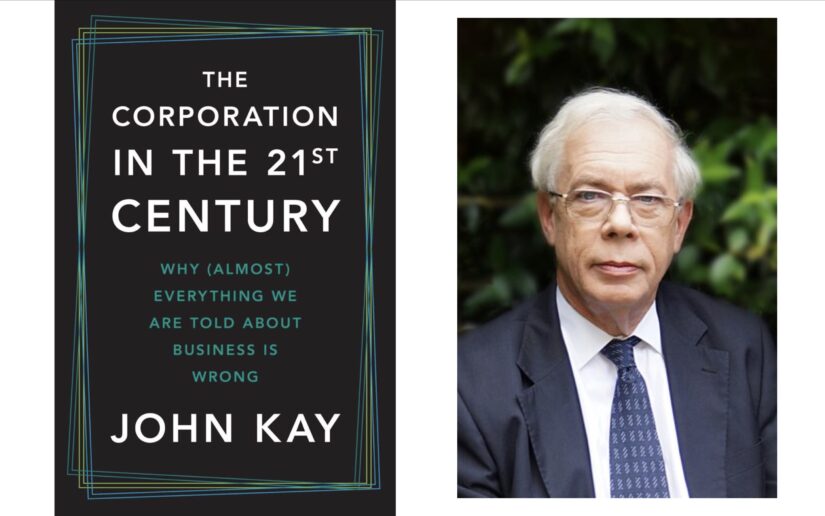
That’s from The Corporation in the Twenty-First Century: Why (Almost) Everything We Are Told About Business Is Wrong, a 2024 book by knighted economist John Kay.

The old industrial meaning of “capital” meant the owned means of production — mills, railways, steel plants, assembly lines. In many modern firms, Kay argues, those assets are fungible, often rented, and less important than the firm’s collective capabilities.

Among his criticisms is how today’s shareholder priority has distracted from the corporation’s origins as a device of the state. Executives can extract value in the short term, but this narrow-mindedness is provably harmful to corporations in the medium term. Business and economics thought has become far too self interested. Its champions treat “collective action” and “collective knowledge” as accidental overflow rather than our truly natural state. The book is thoughtful and important, given that its from among its closest insiders.

Below I have my notes for future reference.

Continue reading The corporation was invented to serve the people

How the internet connects across the world

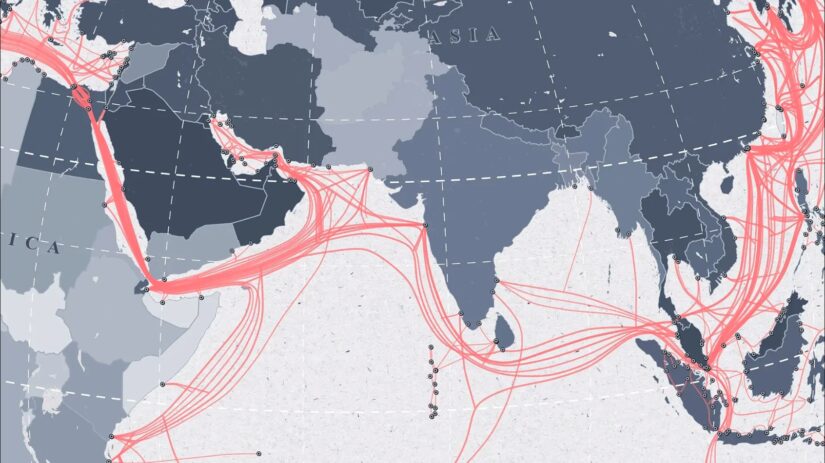
Close to 900k miles of undersea cables criss-cross the world’s oceans. Pulsing light carrying data that makes up every Instagram post, email and transfer speed between users and data centers.

Mostly they’re thin as a garden hose, and the modest landing stations that bring them on-ground are all “air conditioned disappointment.” All this infrastructure is quiet and bulky and difficult, nothing like the frictionless experience we’re treated to online. We ought to better understand it.

That’s from The Web Beneath the Waves: The Fragile Cables That Connect Our World, a trim little fall 2025 book by journalist Samanth Subramanian, which neatly, artfully and helpfully captures core infrastructure of our digital age. It’s a delightful read.

Below I share my notes for future reference.

Continue reading How the internet connects across the world

Mega-events have failed cities before. Are we learning?

Cities love hosting mega-events — the Olympics, World Cup, NFL Draft. But decades of research suggest they rarely deliver the long-term economic boost leaders promise.

Are we learning? This was the focus of the plenary discussion I moderate this week in Washington DC at the annual leadership summit hosted by the International Economic Development Council (IEDC).

I also wrote about it for Technical.ly here.

Continue reading Mega-events have failed cities before. Are we learning?

Mind the difference between what you know, and what you think you know

More of us should familiar with Bayesian probability, in which you acknowledge your priors and update frequently.

In predictions and finance, the average is more often close to the best than to the worst. So figure if you really want to be average. Poker, chess, earthquakes and economics are either so varied or still missing some underlying sense for predictions to be especially good; in contrast to other weather and the emergence of collective wisdom.

All that’s from the 2015 book “The Signal and the Noise: Why So Many Predictions Fail–but Some Don’t,” by pollster, odds-maker and very-online-person Nate Silver. This book was before Trump’s first election, and when Silver began his combative persona online. Back then, poker and gambling was a world of mathematical insights, presaging other books like one in 2018 by Annie Duke. It injected a kind of numeracy among the professional class, which was good, though we’ve been fighting against the numbers ever since.

As Silver, who was 37 when this book came out, wrote then: “This book is less about what we know then about the difference between what we know and what we think we know.”

Below I share my notes for future reference.

Continue reading Mind the difference between what you know, and what you think you know

Lessons on entrepreneurial ecosystem building

The entrepreneur-boosters of Boulder were always adept at packaging their story.

Over my years organizing while reporting on startup communities in the U.S. mid-Atlantic via the news org I founded Technical.ly, I understood a cohort of entrepreneurs and investors told a compelling story for their swath of Colorado. They packaged processes (an ever-evolving accelerator program called Techstars) and developed an outsized stream of software companies, alongside that state’s evolving economy.

Among the messages coming from their work that I personally believe in: “Quantity based approaches operate on the assumption that averages, not outliers, drive system value. That is incorrect.”

A “more of everything approach doesn’t work. Instead, an economy that is more accessible and dynamic requires a complex system of overlapping networks that rewards emergence and expects low probability events that have outsized reruns. The trouble is that economies and local policies are typically run by people motivated by linear progress.

That message is neatly described and navigated in The Startup Community Way, a 2020 revision with researcher Ian Hathaway of a 2012 book initially written by Brad Feld, an investor-organizer most associated with that Boulder, Colorado startup community and Techstars. Feld’s initial book became a common starting place for “entrepreneur ecosystem builders,” and he is a prolific writer and speaker, introducing and crediting himself with concepts, including the phrase “startup communities.”

This edition is the right place to start, and I enjoyed it. Given Colorado’s statewide economic story in the Mountain West, and Feld’s position, this book has particular authority and insight. Keeping with his “give back” mentality, working with many hands, the book includes a dozen or so page-length essays from contributors and longtime collaborators across the United States. Hathaway injects the growing research on the importance of entrepreneurship.

Their success lifts a tide that helps many boats, including places and subjects important to my work. I thank them for it. As per usual, outside my own journalism and organizing, here on my personal blog, below I share my notes for future reference from a book I enjoyed.

Continue reading Lessons on entrepreneurial ecosystem building

How countries go broke

The American-led political order that started in 1945 at the conclusion of the Second World War is 80 years old and due for a major reordering.

That’s from How Countries Go Broke, the most recent in the “Principles” series by Ray Dalio, the billionaire hedge fund manager who has written a collection of books on economic systems and investment strategy. I read “The Changing World Order” a few years back.

This, like others in the series, is backed what Dalio vaguely refers to a research team he employs. This makes sense, that a billionaire investor would employ research to develop an ever more detailed view of the world, but he’s become best known for a more expansive view than current economic conditions. Beyond his Bridgewater hedge fund, Dalio pumps out content now that attempts to put today into a broader historical context. No doubt simplified, his “big cycle” is the idea that eternally human qualities result in governments following predictable patterns, of relying on a hard, fixed currency before devaluing it long enough until there is a collapse.

He argues we’re something like 90%-95% through this pattern. Dalio has a reputation of prescience, if not precision: His prediction of a coming internet bubble bursting came five years too early (a half decade of earnings). I struggle with this. The books and research are compelling and interesting, but exactly because they’re comfortingly simple, they also read is unhelpful in any specific or actionable way. The interpretation is nonetheless welcome.

Below I share my notes for future reference.

Continue reading How countries go broke

Remarks: Tech meetups shape economic mobility

Below are my notes, and video, from the remarks I offered to kickoff the second day of our Technically Builders Conference, which also doubled as the closing of the 15th annual Philly Tech Week. It informed this story we published on Technically. My slides are here.

Starting in 1975, the Homebrew Computer Club was a regular gathering of tech enthusiasts in northern California.

The group was made famous for inspiring Apple founders Steve Jobs and Steve Wozniak. But hundreds of computer clubs emerged around the country then. The Philadelphia Area Computer Society (PACS), for example, was first organized in spring 1976.

You don’t have to care about a few dozen computer nerds getting together 50 years ago. How they did has shaped the work we do, though, and has a few lessons for our future.

Continue reading Remarks: Tech meetups shape economic mobility