Technical.ly awarded national Online News Association award for tech reporting

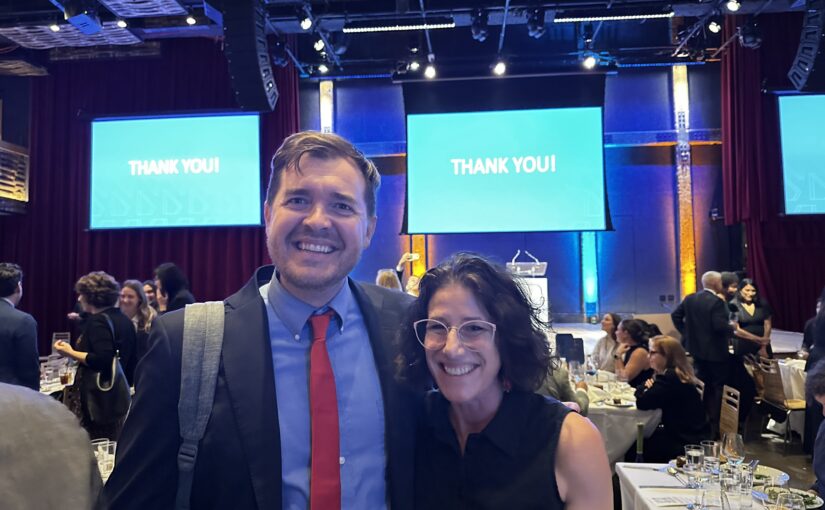
Incredible honor: I am overcome with pride for the Technical.ly’s newsroom big win at the Online News Association’s annual awards, first announced last night.

Alongside Wired and Reuters, Technical.ly was honored for Excellence in Technology Reporting. The only local newsroom to get this distinction.

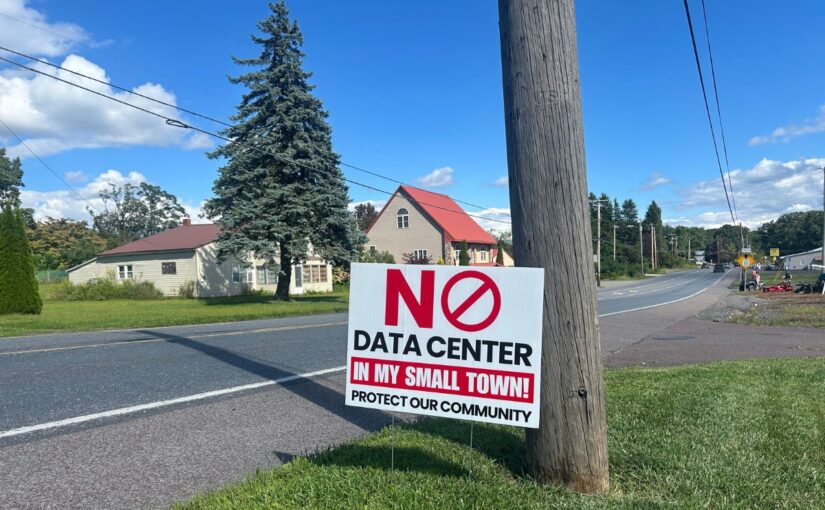
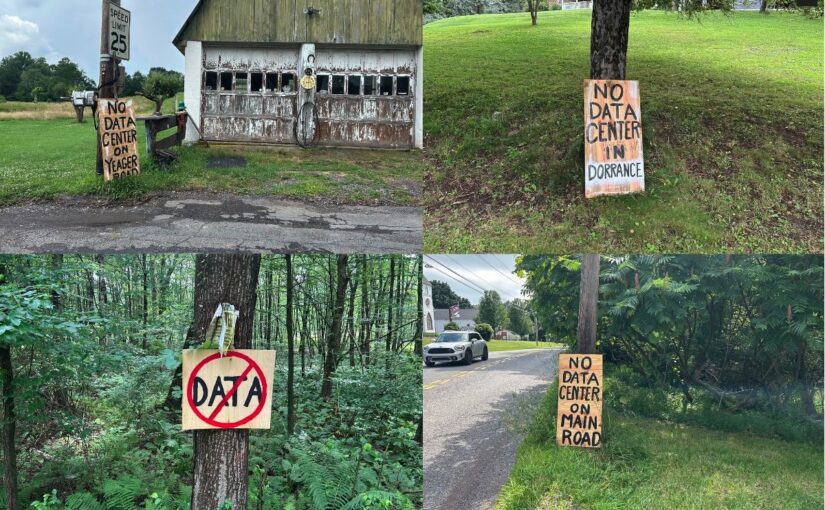
This particular award is for our deep, insightful and balanced data center coverage, led by Danya Henninger, Katie Malone, Alice Crow and Sarah Huffman, and the kind of work we’re now doing in 10 U.S. states and growing. It took 18 years and many hands to get to this level.

Continue reading Technical.ly awarded national Online News Association award for tech reporting

A vision for Philadelphia 250 years from today

This might be the project, and the writing, I’m proudest of in my career thus far.

Find here the backstory, and an Inquirer op-ed here I wrote. Below find the words of a vision statement for Philadelphia 250 years from now, which has now inspired a mural by my friend Sean Martorana and Mural Arts Philadelphia.

Continue reading A vision for Philadelphia 250 years from today

Who are entrepreneurs enemies? My 2026 Technical.ly Builders Conference keynote

Below is my Friday speech, inspired by this bet, and following this live podcast recording.

I want to tell you about a bet I have with Brian Brackeen.

I’ve known for Brian for more than 10 years, back when he founded a facial recognition startup in Miami. He’s built in machine learning longer still. He and his wife and partner, Candice, cofounded Ohio-based VC firm Lightship Capital, investments around AI. He organizes Black Tech Week. He’s got opinions.

Last year we debated whether AI would imminently replace software developers. Brian said yes—developer jobs would fall. I disagreed. We bet a cheesesteak, or more properly having to wait in line for one, deadline May 2026.

It’s May 2026. This morning we’re going to learn the answer together, and what it means either way.

Continue reading Who are entrepreneurs enemies? My 2026 Technical.ly Builders Conference keynote

Technical.ly journalists leading an AI discussion

I was proud to see three journalists and current and former Technical.ly newsroom staffers are leading an upcoming AI conversation a conference hosted at Philadelphia’s NPR affiliate.

My current colleague Danya Henninger, who oversees our newsroom, will be alongside two treasured former teammates: Julie Zeglen, who is now at the Philadelphia Inquirer, and Paige Gross, who has joined the B2B publisher Industry Dive. It felt reaffirming that when organizers curated a list of thinkers on the topic of artificial intelligence and media, all three have Technical.ly ties.

They’re smart and delightful. Check out the Philadelphia Student Press Association‘s inaugural summit April 24.

What’s my personal “artificial intelligence” philosophy

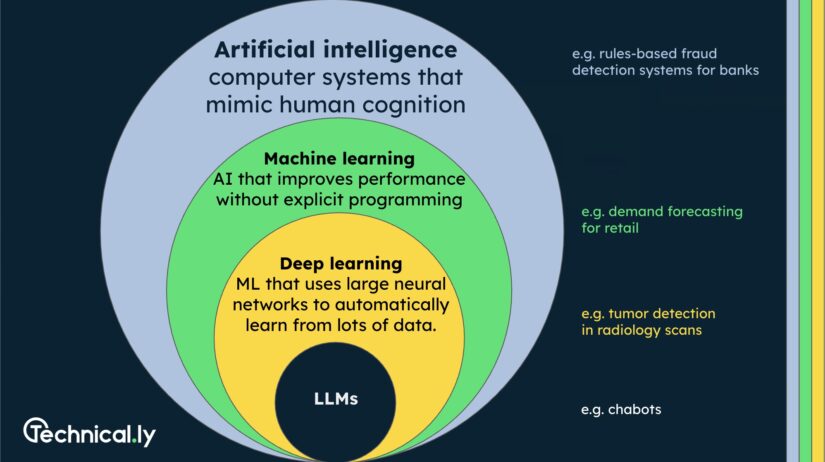
It was summer 2009 that I was first introduced to the idea that robotics and artificial intelligence are two halves of how a machine would move through our world. One is physical motion, and the other is a big term for computer systems that mimic human cognition — from computer vision and probabilistic language to sound mimicry and risk management.

Over the next near two-decades, my reporting and entrepreneurship have evolved alongside a new fast-moving chapter of these technologies we call “artificial intelligence.” I’ve spent at least a decade developing my own relationship to what some have called “the singularity.” Now the last few years have brought this into the mainstream. That’s forced me to develop a more precise view.

Continue reading What’s my personal “artificial intelligence” philosophy

Local stories shape how people in that place feel about their home

The good people at Series B[uffalo], a new entrepreneurship storytelling initiative from that upstate New York region’s innovation-led economic development org 43 North Foundation, interviewed me for their newsletter. I shared that below, and encourage you to check them out.

My perspective is informed by Technical.ly’s ‘case for storytelling.’

Continue reading Local stories shape how people in that place feel about their home

Lessons on entrepreneurial ecosystem building

The entrepreneur-boosters of Boulder were always adept at packaging their story.

Over my years organizing while reporting on startup communities in the U.S. mid-Atlantic via the news org I founded Technical.ly, I understood a cohort of entrepreneurs and investors told a compelling story for their swath of Colorado. They packaged processes (an ever-evolving accelerator program called Techstars) and developed an outsized stream of software companies, alongside that state’s evolving economy.

Among the messages coming from their work that I personally believe in: “Quantity based approaches operate on the assumption that averages, not outliers, drive system value. That is incorrect.”

A “more of everything approach doesn’t work. Instead, an economy that is more accessible and dynamic requires a complex system of overlapping networks that rewards emergence and expects low probability events that have outsized reruns. The trouble is that economies and local policies are typically run by people motivated by linear progress.

That message is neatly described and navigated in The Startup Community Way, a 2020 revision with researcher Ian Hathaway of a 2012 book initially written by Brad Feld, an investor-organizer most associated with that Boulder, Colorado startup community and Techstars. Feld’s initial book became a common starting place for “entrepreneur ecosystem builders,” and he is a prolific writer and speaker, introducing and crediting himself with concepts, including the phrase “startup communities.”

This edition is the right place to start, and I enjoyed it. Given Colorado’s statewide economic story in the Mountain West, and Feld’s position, this book has particular authority and insight. Keeping with his “give back” mentality, working with many hands, the book includes a dozen or so page-length essays from contributors and longtime collaborators across the United States. Hathaway injects the growing research on the importance of entrepreneurship.

Their success lifts a tide that helps many boats, including places and subjects important to my work. I thank them for it. As per usual, outside my own journalism and organizing, here on my personal blog, below I share my notes for future reference from a book I enjoyed.

Continue reading Lessons on entrepreneurial ecosystem building
What happens after Eureka?

We love to celebrate the spark of a good idea, but we too often skip over the long, uneven road it takes to get that idea into the world.

Research on innovation keeps pointing to the same tension: breakthroughs come from serendipity and “structural holes,” where people from different disciplines collide, but impact only happens when we deliberately smooth the path that follows. That’s what made a conversation I led at Baltimore’s University of Maryland Biopark, inside the innovation district’s year-old 4MLK building feel special.

I contributed Technically coverage here and here. The Biopark team had a photographer on site, so I also just pulled some of the shots of me in action below.

Continue reading What happens after Eureka?

Multi-local news can thrive when it’s about more than just place

(This originally appeared a Linkedin article)

Newspaper veterans keep trying to rebuild newspapers.

The impulse is rarely stated so bluntly. But you hear it in most strategy sessions about “saving local news.” Funding and analysis focus on a town-square-style local news bundle that newspaper veterans are determined to sustain for shared identity.

I actually agree with the civic benefits of a single, professionally-curated website, newsletter and social feed that approximates what’s happening in a place. I benefit from such efforts, even if I don’t share the deep emotional connection that people who loved the best years of local newspapers do.

Yet single-mindedness squeezes out other ideas. This blind spot is illustrated in the way the term “multi-local” is currently being discussed and digested by journalism insiders.

Continue reading Multi-local news can thrive when it’s about more than just place

A few lessons from the 15th annual Klein News Innovation Camp

We were back. Audience was great, I enjoyed my lunchtime keynote interview with Wired editor Steven Levy.

To fill an early-morning slot, I crowdsourced a session (in old school unconference style!) on creators as distribution partners, and creators of news. (The topic has been on my mind!) In a crowded room

Below are a few notes from the daylong unconference on the future of news for my own memory.

Continue reading A few lessons from the 15th annual Klein News Innovation Camp