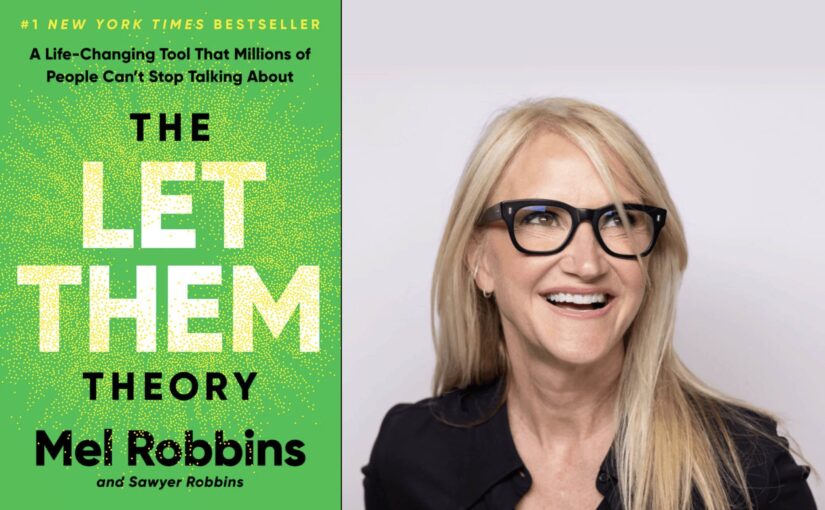
Commercially successful self-help authors have a story that a book-buying audience wants to hear. That message lands simply and clearly for those who need it, and may not seem like much to anyone else.
So it is with The Let Them Theory, the 2024 book by Mel Robbins, a former CNN legal analyst and self-help star, that has sold 10 million copies. I got the book to better understand this category, which frequently spawns coursework and speaking careers from tidy packages and simple ideas.
Like its peers, the book’s premise is so simple that the author spends a lot of time writing about how simple it is. “Let them” is an encouragement to let those around you do what they will, since you can’t control it. Its inspiration came from her daughter reminding the author to not micromanage what teens did before prom: “let them.” This sparked her to post on social, which spread widely and even inspired tattoos.
That’s great market-testing, so the book was made to scratch whatever itch it solved.
She had been there before. Fifteen years ago, she was a “relationship coach” who filled in for speaker at a local TEDx event, introducing her “5-second” countdown to motivation — “just count!”
That sparked a 2017 book that itself was a bestseller. That and others were about managing oneself. This book was about managing relationships with others, and for many the themes will be old ones, of Stoicism, Buddhism and “radical acceptance.”
Robbins relies heavily on her early story to connect with readers, and soothingly recounts her timeline:
- At age 41, she was $800k in debt with her husband whose restaurant was failing.
- At 44, she got her TEDx speaking spot, prominent but regional and unpaid
- At 46, she got her first paid speaking gig;
- At 49 she self published that first book, which became a surprise bestseller
- At 54 started her podcast, and related newsletter with millions of subscribers
In truth, under too much scrutiny it all feels paper-thin. The author writes a lot about her success — there are even chapter epigraphs quoting herself in her own book. This isn’t my kind of book. But I understand a book and a message solves something for a person unexpected: To mark a change someone wants. That’s what the business of self-help understands so well.
In this book, Robbins uses the second-person: “Their disrespect doesn’t say anything about you. How you respond does.” You can feel the reader nodding along. Friendships come from proximity, timing and energy Chapters focus on dating and friendships. All under the same theme.
“Let them, “she writes, “and then let me.”