How might state sovereignty and robotic autonomy develop in a divided post-revolution United States near-future?
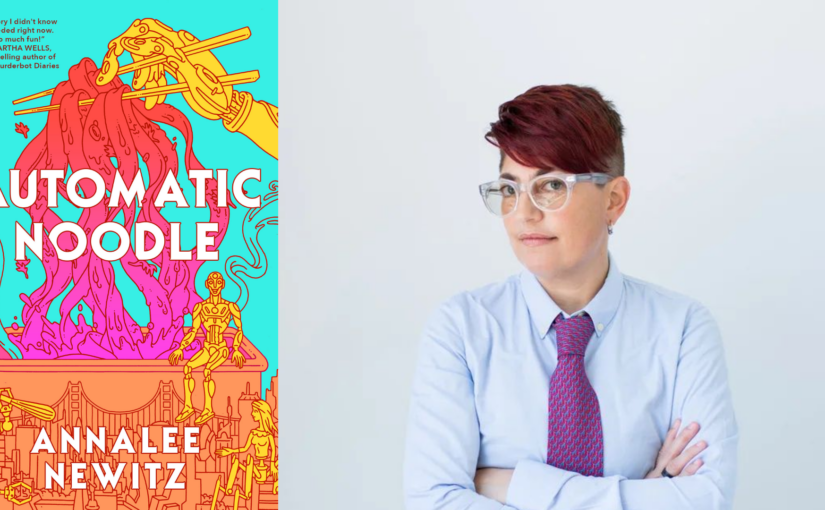
That’s the background of Automatic Noodle, a 2025 cozy sci-fi novel written by journalist and California native Annalee Newitz that follows a band of rebooted food-service robots that attempt to operate their own restaurant.
The cheerier can-do tone allows the novella to sneak in broader themes. It’s altogether lighter than Klara and the Sun, the influential modern originator of stories told from the robot’s perspective. Newitz does make fun use of language with the voice of robots, and explores humanity in subtle ways.
Below I share some notes for my future reference.
My notes:
- One robot (Hands) “became intimately familiar with the many moods of dough”
- Robots, especially “HEEI,” were granted freedom “because humans couldn’t steal something that hadn’t yet been measured”
- Customs and deference, like how nobody sat on the “driver’s seat” of a sentient car because “ it felt creepy, like climbing into the lap of a stranger”
- It is ultimately a politely progressive take — the impeccably diverse human crowd near a popular noodle shop includes “a Latinx couple “
- The bots say “ghost kitchens” are successors to “spirit kitchens” where emperors had staff to prepare food for gods: “eating is just one reason people make delicious food. Cooking can also be a form of sacrifice,” said Hands
- Cayenne the entrepreneur just wants food to sell whereas Hands loves the art
- After war, residents were “rebuilding with desperate love”
- How could robots even with precise science know the emotional, environmental and erratic internal inputs to their taste for food?
- Robots got “memory sovereignty” and rental options but no ownership or replication
- A coordinated attack to send “the wobbly infant nation of California” into “the imprisoning arms of America”