When so few identify as racist, a better explanation is those who support a caste system. Caste is the granting or withholding of status to someone on the basis of their perceived rank or standing in the hierarchy.
“Caste is insidious and therefore powerful because it is not hatred, it is not necessarily personal. It is the worn grooves of comforting routines and unthinking expectations, patterns of a social order that have been in place for so long that it looks like the natural order of things.”
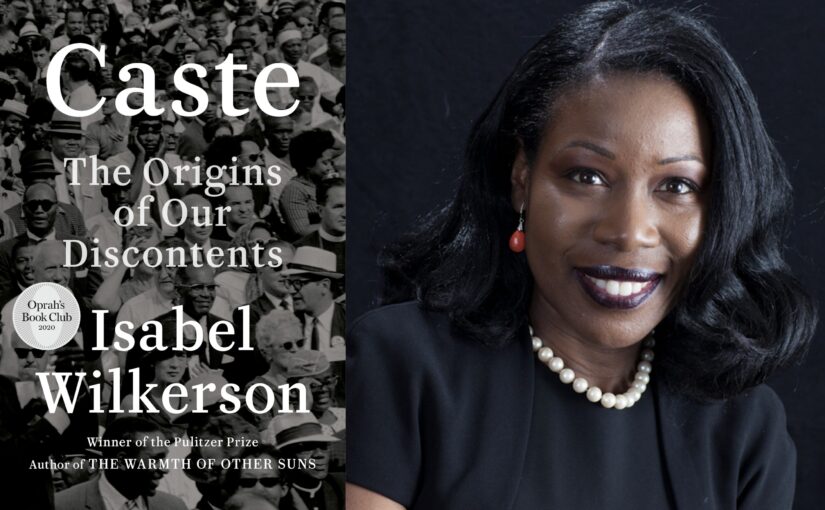
That’s from Caste: The Origins of Our Discontents, a book by journalist Isabel Wilkerson that published in August 2020, just months after the police killing of George Floyd and amid one of the country’s largest racial justice movements. (In 1994, Wilkerson became the first Black woman to ever win the Pulitzer Prize; Her 2010 book The Warmth of Other Suns on the Great Migration received critical and commercial success)
It became a bestseller, and I just finally read it fully. It is rich and beautiful, and challenging. The central tenet is a mix of race and class into caste. The author prefers to use “subordinate” and “dominant caste” in the American context, exactly because we don’t commonly use the framing — and associate it more with, say, India.
Plenty of the depth of this thorny issue isn’t explored in this book. It came out in summer 2020, so it missed the political shift of the ensuing years, when Black voters did not vote as a monolith. In her rich metaphors, she doesn’t spend any time explaining why she thinks the “American house” is worth saving at all.
As she quotes one sociologist saying: slavery was not a torn thread in “an otherwise perfect cloth” but “it would be closer to say that slavery provided the fabric out of which the cloth was made.” Race, then, plays heavily in the book, but she argues this has become something entwined in class and culture. As Dalit leader Ambedkar said: “there is never caste. Only castes,”
The book is well worth the read, and I regret not having gotten there sooner. Below I share my notes for future reference.
My notes:
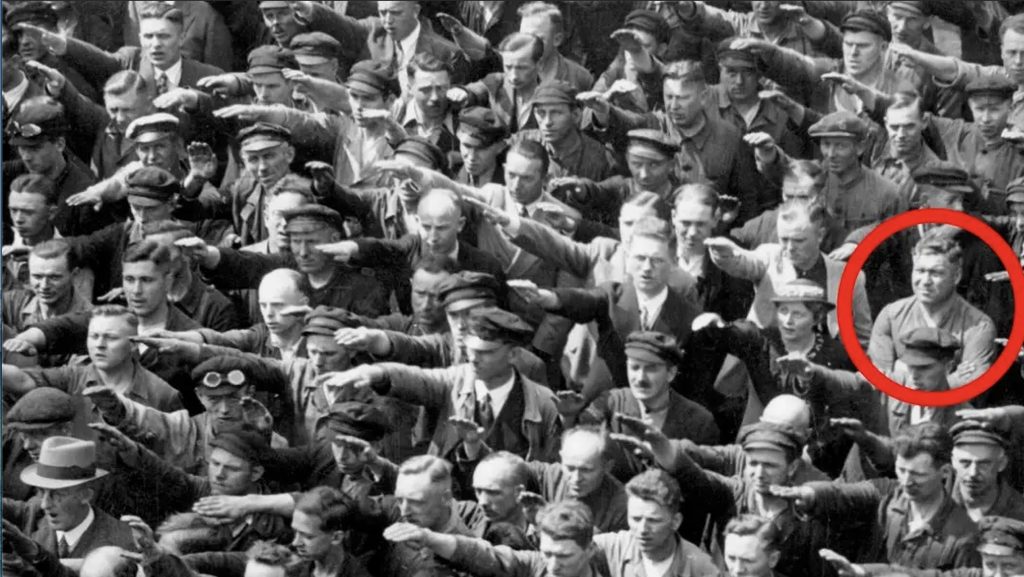
- The famous 1936 photograph showing a lone man standing with his arms crossed while a crowd of shipyard workers salutes Adolf Hitler most widely refers to August Landmesser, though some historical records suggest the man may alternatively be Gustav Wegert
- The book is rich in metaphor — the anthrax toxins buried in the permafrost that in 2016 heat released and killed residents; the doctor who wouldn’t diagnose your condition without history; the old house whose hidden damage can be ignored for a while
- Of the old American house: “We did not erect the uneven pillars or joists, but they are ours to deal with now”.. “ any further deterioration is in fact on our hands”
- Caste of Nazi (brief), India (long) and United States (shape shifting)
- “Race in the United States is the visible agent of the unseen force of caste. Caste is the bones, race the skin.” Determined where you live, what healthcare you recieve and how you’re seen
- In winter 1959, MLK and wife visit India “as a pilgrim” introduced by one as an “untouchable from the United States” and though at first annoyed, MLK then saw the connection to his peoples “ still smothering in an airtight cage of poverty”
- Charles Sumner an early user of “caste” word in American context: “caste makes distinctions where God has made none”
- “The human pyramid encrypted into us all,” the American caste system
- 1944 The American Dilemma: Swede used word “caste” not race in US
- Ashley Montagu: race is human invention and social construct
- W.E.B. Du Bois wrote this famous passage in his 1935 landmark work, Black Reconstruction in America: “The slave went free, stood a brief moment in the sun; then moved back again towards slavery. The whole weight of America was thrown to color caste”
- Michelle Alexander’s The Next Jim Crow (2010) on mass incarceration also has caste framework
- Julia C Collin’s 1865 novel (first by a black woman): The Curse of Caste (Williamsport school teacher)
- From 1619 in Virginia, Africans were not listed in 1630 census by name or age or arrival date – since they had no time bound status like indentured Europeans. The caste had already begun
- Not one decision but rather the Africans brought were strong workers, more resistant to European disease than indigenous, they were easier to spot than the Irish who ran and got lost among other Europeans — didn’t know the land and were cheap labor for products they already knew or learned quickly : “The strength of African workers became their undoing”
- US Navy official James K. Paulding, who criticized slavery in chains around US capitol and said: “When they [the slaveholders] permit such flagrant and indecent outrages upon humanity as that I have described; when they sanction a villain, in thus marching half naked women and men, loaded with chains, without being charged with a crime but that of being black, from one section of the United States to another, hundreds of miles in the face of day, they disgrace themselves, and the country to which they belong.”
- “Slavery in this land was not merely an unfortunate thing that happened to black people. It was an American innovation “ — one category of people in permanent subjugation
- Stephen Steinbger, slavery was not a torn thread in “an otherwise perfect cloth” but “it would be closer to say that slavery provided the fabric out of which the cloth was made”
- Edward Baptist, “an economy whose bottom gear was torture”
- James Baldwin: No one was white before he/she came to America “
- Author: “hostility toward the lowest caste became part of the initiation rite into citizenship in America. Thus people who had descended from Africans became the unifying foil in solidifying the caste system”
- Paul Broca developed a chromatic scale containing exactly 34 shades of human skin and hair color. In 1864, the influential French anthropologist and physician Paul Broca collaborated with textile manufacturers and artists to design a standardized chart for classification.
- Caucasian term was coined in 1795 by a man who thought a particular skull from the Caucuses was beautiful
- J Craig Venter geneticist at Celera during 2000 genome mapping: “Race is a social concept not a scientific one”
- Caste was a Portuguese word given to describe Indian varnas
- In Berlin June 1934, the 17-man committee that formed the Nuremberg laws started in the stenography transcript by looking at how Americans kept races separate legally. Moderates doubted Americans truly prosecuted miscegenation but extremists viewed it as reason to be more aggressive. Roland Freisler: “ I am of the opinion that we need to proceed with the same primitivity that is used by these American states… Such a procedure would be crude, but it would suffice” they took aspects of the American system but the one drop rule was too far and the Nazis backed off it when they decided more limited blood laws
- German untermensch (subhuman) came from American eugenicist Lothrop Stoddard’s 1922 book
- Hitler admired the United States and our use of Indian reservations, of lynching and the 1924 immigration restriction act
- Lynchings: even the Nazis didn’t sell souvenirs of Auschwitz’s (but Americans sold photos and locks if hair from lynchings)
- Her 8 pillars caste: natural, heritability, endogamy, purity, occupational hierarchy; stigmatized, terror and inherent superiority
- In 1662, Virginia general assembly put caste to matrilineal line which broke from English common law
- “He may neither earn nor weed his way out“w rote Allyson Davis and Mary Gardner in deep south their 1941 study of caste in America
- 1630 Virginia: Hugh Davis whipping for laying with a negro woman is first mention of race and hierarchy in America — 10 years later Robert Sweet got a slave woman pregnant but she was whipped
- Willie James forced drowning for his love letters to a white girl
- Vaishno Das Bagai, an Indian immigrant, was in the U.S. for 8 years before Supreme Court ruling lost his citizenship, his wife and three children and general store on Fillmore St in San Francisco. He wore three piece suits. He then lost his business because of California law stripping non citizens — and lost his passport so he could not go back home to India either — he killed himself in San Jose and left a suicide note: “ obstacles this way, blockades that way, and bridge is burnt behind”
- James Henry Hammond: debate and governor despite the slavery rape and monstrous reputation, he called slaves the mud sill in which the American system relies on top of the foundation
- In North Carolina during slavery, slaves pursuing good trading were subject to 39 lashes
- After Civil War “they could escape the South but not their caste”
- in 1890, “85% of black men and 96% of black women were employed in just two occupational categories ,” wrote Stephen Steinberg “agriculture and domestic or personal service”
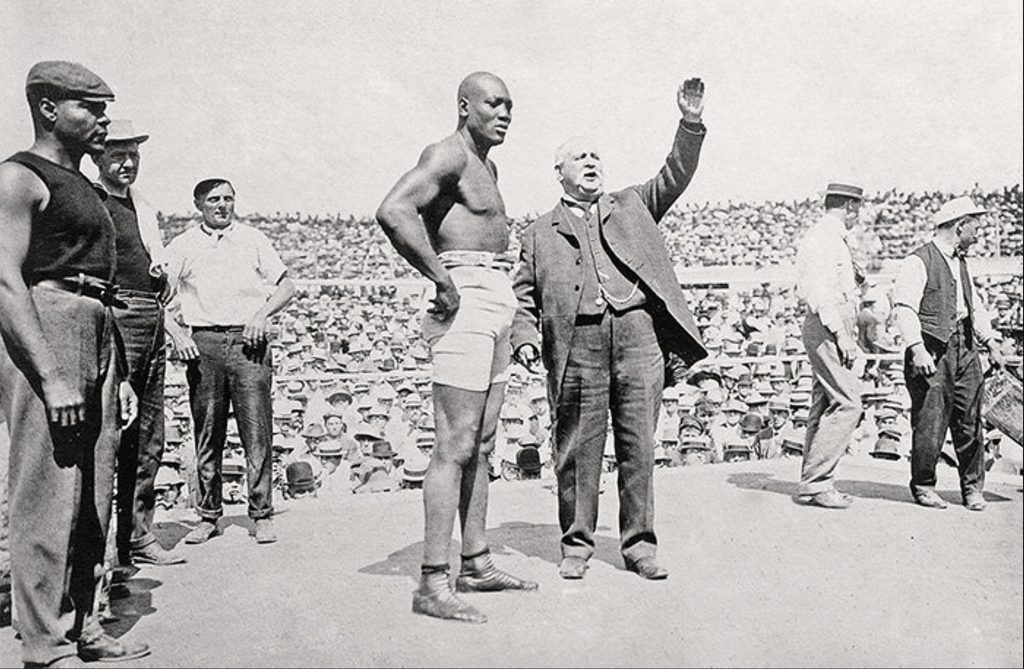
- On July 4, 1910 (in Reno), Jack London gets “Great White Hope” (James Jeffries) to box Jack Johnson, a race fight
- Minstlery: black entertainers stem from forced merriment for the slave holder — Hattie McDaniel’s obese and desexed Mammy character softened the reality and how black wealth as evolved
- Dr. J. Marion Sims—often called the “father of modern gynecology”—conducted non-consensual, experimental genital surgeries on enslaved Black women and girls in Montgomery, Alabama, between 1845 and 1849
- In 1710, an anonymous white slave-owning woman asked a missionary from the Society for the Propagation of the Gospel a famous, historically recorded question: “Is it possible that you think any of my slaves will go to heaven and that I shall meet them there?”
- The concept of deaths of despair—idefined by economists Anne Case and Angus Deaton as premature fatalities from drug overdoses, suicide, and alcohol-related liver disease—is the result of dominant group status threat
- Dubois: lower whites had been given a “Public and psychological wage”
- “The American caste system, which co-opted this class of white workers nearly from the start, “drove such a wedge between black and white workers that there probably are not today in the world two groups of workers with practically identical interests” who are “kept so far apart that neither sees anything of common inter-ests,” Du Bois wrote.
- Metzl’s 2015 book “Dying of Whiteness”: the taxi driver from Tennessee dying of an inflamed liver who could have been treated by expanded ACA Medicad in Kentucky but not in Tennessee and he said “I would rather die”than sign up for Obamacare because it went to “Mexicans or welfare queens”— and he did die
- In 1946, Sgt Isaac Woodward incident: after discharged from WW2, back in Georgia, police abuse
- On March 9, 1892, a white mob lynched three Black grocers in Memphis, Tennessee—Thomas Moss, Calvin McDowell, and Will Stewart (also referred to as Henry Stewart). This sparked the remarkable work by Ida B wells
- In 1721 Boston small pox outbreak, minister Cotton Mather used an African inoculation procedure introduced by Onesinus but only one doctor picked up the African idea — though they had used indigenous snake venom antidotes
- In 2017 Travis Dixon analysis: white families make up just 17% of poor people in news stories, black at 59%—total mismatch to their populations
- Sentencing Project: black on white crime is 10% of crimes but 42% of crime coverage
- J Lorand Matory: “the stigmatized stratify their own because no one wants to be in last place”
- Bryan Stevenson: the victim’s race better predicted death penalty than the race of the criminal
- Phillip Kasinitz: White American immigrants gain status by losing ethnicity; black immigrants lose it, as African identities are now more valuable
- In his memoir, My American Journey, General Colin Powell details this powerful incident from 1963, which happened shortly after he returned from his first tour of duty in the Vietnam War: He was not served at a hamburger joint in Alabama in 1963
- Freddie Gray’s death involved black officers and Eric Garner’s a black woman supervisor: caste not just race was at play
- The Natchez research in Mississippi with black and white Harvard researchers in the 1930s (more time spent by Yale researchers for 1937 book Caste and class in a southern town, based on just months not years). Next in 1939, “after freedom” become a second canonical book — rendering deeper “Deep South” from 1941 as a footnote though it began sooner and went longer, and used “caste” framing — then 1944 “American dilemma” reinforced caste
- Patricia Hill Collins: “knowledge without wisdom is adequate for the powerful but wisdom is essential for the survival of the subordinate”
- Arline Geronimus: 1992 “weathering” on telomeres among black Americans
- George Lipsitz: middle class blacks and Mexicans have higher hypertension and stress than poor — presumably because they’re stepping outside caste
- Joseph Graves: “out of place principle of social dominance”
- LBJ said the Democrats would lose the south for a generation — it was an understatement as no Democrat had won the majority of white voters since civil rights legislation (including Obama)
- “Caste does not explain everything in American life, but no aspect of American life can be fully understood without considering case and embedded hierarchy”
- Author argues Trump voters were voting their interests, investment in a caste system
- Refeences Liliana mason and others on racial prediction of voting [[but we know shifts later are less race tied]]
- White evangelicals became base of Republican politics in a way that black Americans have not for Democrats
- April 2017: New Orleans quasi military operation to remove confederate statues
- Berlin stumbling stones to memorialize Nazi victims; there are no Nazi memorials — only interpretive museums (Places of Horror That We Should Never Forget)
- Himself a refugee from Nazi Germany, Albert Einstein was longtime friends with jazz musician and activist Paul Robeson, and when Marian Anderson performed to a sellout crowd in Princeton NJ but the Nassau Inn denied her a room because she was black, she stayed with Einstein instead — accepted Lincoln University degree and commencement in 1946, with Julian Bond and friendly with WEB Dubois
- “Will the United States adhere to its belief in majority rule if the majority does not look as it has throughout history?” [[[The book references 2045 projection of demographic inversion but she does seem to fall into the assumption that people of color will vote one way and whites will vote another. The 2024 continued to cloud that narrative (she notes that a hierarchy could “the sedition of whiteness could well expand to confer honorary whiteness to those on the border… to increase the ranks of the dominant caste” needs “an intervention of humanitarian impulses”]]
- Barbara Walter in 2023 book how civil wars start: partial democracies are three times likely than democracy
- Lincoln in 1858: “ public sentiment is everything… Whoever can change public opinion can change the government”