You’re adopting a puppy

For every project you take on, any commitment you make, you’re agreeing to a longterm relationship. Other people will depend on you, habits will form and roles will shape.

It’s like adopting a pet, as a colleague and I say to each other sometimes. Are you willing to walk the dog? To feed it and give it water and be willing to spend the energy, time and money if it gets sick?

I say that to myself when I want to start something new, and I find it helps influence my thinking. If I think of the longterm requirements and still want to move forward, then I will. If not, well, there’s no use to start at all. (One way I’m working to say no more often).

+1

There’s familiar web slang to show complete agreement: +1.

It comes from Google+ (yes, a success from a Google social platform!), which was informed from other social sharing and commenting platforms and web forums that have literal up/down voting options to show endorsement.

In my work, I hear lots of people using the same literal phrase in meetings — and on emails and in group chat messages. It has a nice humility to it. It’s the opposite of stuffy and political corporate environments in which people feel the need to blabber just to show value. We all hate when we say something and then someone speaks up just to essentially say the same thing.

On a team that trusts each other, the goal is simply to gain consensus. So if a teammate offers an idea or makes a suggestion that I mostly agree with I’ll say just that: “plus one.” Other teammates do the same. You’ll be amazed by how quickly a meeting can move.

Give it a try.

What I learned at our second annual ‘Personal Finance Day’

Following up on last year’s inaugural, two friends and I returned to the rural county we grew up in together and had a day-long nerd out on personal finances.

Yes, after cocktails and dinner and catching up, we literally gave presentations and shared tips on things we were learning about navigating the very complicated personal finance world. It’s all about fun and self-improvement.

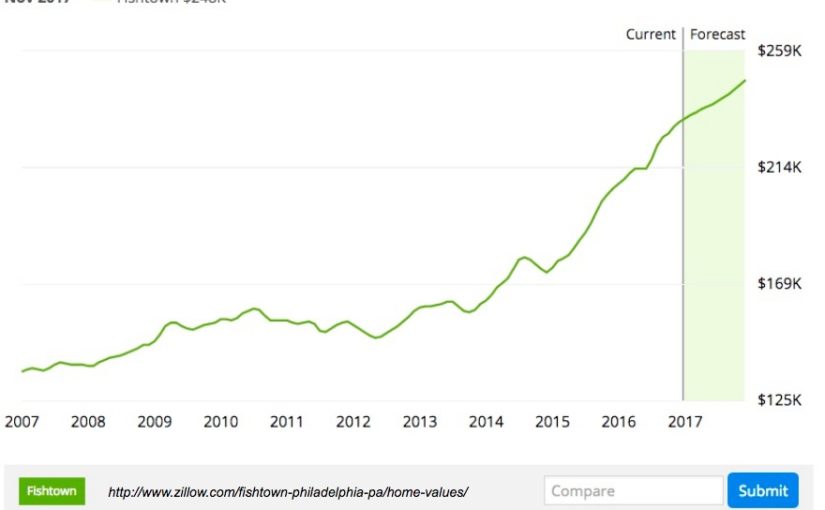
We shared and discussed and debated over ideas and rules of thumb and data — like the above pictured Zillow chart predicting longterm real estate growth in my neighborhood of Fishtown.

Below, I share a few notes that aren’t top secret.

Continue reading What I learned at our second annual ‘Personal Finance Day’

New Sincerity is the answer to snarky post-modern web culture

A version of this essay was published as part of my twice-monthly newsletter several weeks ago. Find other archives and join here to get updates like this first.

I’ve been struggling a lot over the last couple years, and of course particularly in the last six months, with how mean the social web can be. How mean we are to each other. And how naive I sound to others when I think we can be something else.

This has gotten me into reading about the New Sincerity movement of the 1980s that then got a major boost of attention in the 1990s by beloved and troubled writer David Foster Wallace. It’s what I’ve been searching for.

Continue reading New Sincerity is the answer to snarky post-modern web culture

Atlanta Tomorrow Tour dinner series takeaways

I’m fresh back from a followup to last year’s Tomorrow Tour event series that we at Technical.ly hosted for and with the entrepreneurial engagement team at Comcast. This time we hosted small group dinners with entrepreneurs to inform the direction the Comcast team is heading to support founders. (The above photo is me interviewing angel investor Kelly Hoey at our public Atlanta event last year).

We’ve now hosted several, and they’re all engaging. But the conversation I led in Atlanta felt especially compelling. We pledged a conversation with no attribution, but I wanted to recall a few of the takeaways. So here for my own future reference are notes for future use.

Here those notes are:

  • “What you wear is fashion, what yo carry is technology:” Sree Kotay (Comcast CTO, who okayed my sharing this)
  • “Enchanted objects”: MIT’s David Rose’s phrase for the internet of things
  • 300m users for Internet, 3b for mobile, 30b for IOT in connected objects
  • “Commerce and content capitalized the internet”
  • “Never take more than you can give in any relationship”
  • Program details: Flashpoint at Georgia tech and Tech Stars take 7 percent for $20k, which also offers an optional $100k convertible note)
  • Lessons for startups to engage corporates: Just say no; Have a window to find a champion; Be open about budget; Be real: just evaluating if you’ll do it internally;
  • Know the range of startups: Early on they’re a cheaper shot at them saying yes to early customers. Then they grow to saying no
  • Three kinds of startups: improving process, totally changing process and moonshot ideas
  • “What keeps you up at night?”
  • Tell us what problems you most need solve for
  • Don’t write a check less than $25k to try something

People you disagree with and people you dislike are two different groups

I’m struggling with how clear it seems we’re on a path culturally in which we won’t be able to like or admire people we disagree with. Or, worse, that if we disagree with someone on one topic, we’ll have to disagree with them on everything.

I tweeted this week that I both respect Barack Obama and I can understand his administration made decisions that have a complicated legacy. Likewise, I’ve long admired John McCain but do not agree with many of his stances. There are lots of people whose views might diverge from mine.

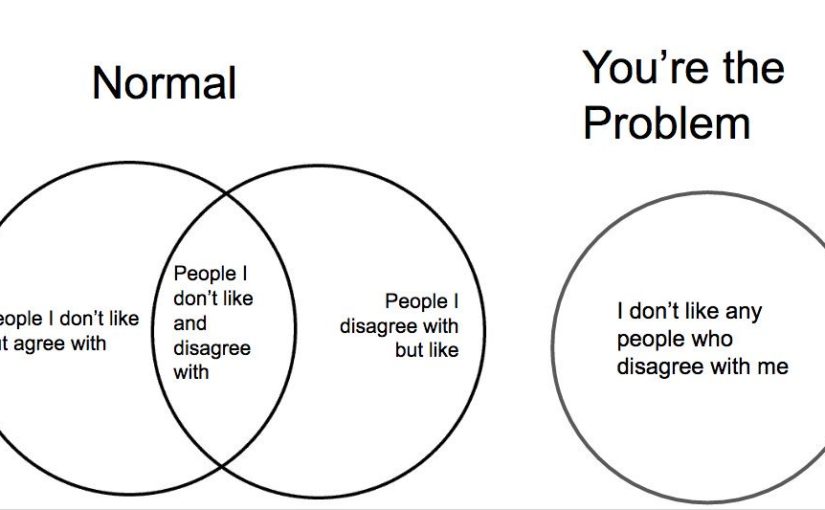
It reminded of that image above that I made last fall out of exasperation. I like people and disagree with them, and I mostly dislike people who I disagree with. Also, opinions on people and topics may shift, because we are all adapting. Some of that surely has to be ok, doesn’t it? I worry if not.

All war begins with a premise of ‘better than’

At its core, every war—whether between nations, ideologies, or even individuals—starts with a premise of superiority. One side believes it is better than the other: better ideals, better values, better claims to resources or land. That belief in being “better than” is the seed from which conflict grows.

This framing helps justify violence, no matter how brutal or senseless. If you’ve convinced yourself that your way of life is superior, it becomes easier to dehumanize those who don’t share it. You aren’t attacking equals; you’re attacking something lesser, something wrong. And when you believe your cause is just and theirs is flawed, compromise feels unnecessary—or even impossible.

But here’s the hard truth: Wars aren’t just about ideological clashes or moral righteousness. They’re also deeply practical, rooted in power and control. The “better than” narrative is often a convenient way to rally support, to mask the raw pursuit of dominance as something noble.

This idea isn’t just about geopolitics. It’s worth considering in our daily lives. How often do we approach disagreements—whether in relationships, workplaces, or communities—with a subtle sense of “better than”? And how much conflict could we avoid if we were quicker to recognize the humanity in others, even when we disagree?

War, big or small, thrives on division. It begins with “better than.” It ends when we start to see the world as “equal to.”


Reporters: how to handle correction requests from sources

It’s going to happen.

Beat reporters, you’ll know the trends and source material. You’ll work your sources fairly. You’ll strive for accuracy. You’ll fact check and contextualize.

Then the message will come — a call for a correction. Sometimes it’ll be baseless, often there will confusion and then there will come those times when you just got it wrong.

The web moves fast and with the vast communication network that exists today, reporters are the front lines for complaints and criticisms like never before. You can’t hide from the emails, social messages and texts.

So you’ll need to know how to handle this, particularly when you’re challenged to navigate complaints within a community you serve.

Continue reading Reporters: how to handle correction requests from sources