Two years after Hind Rajab’s killing in Gaza

I made a $500 donation to the Palestine Red Crescent Society, and if you can, I think you should too.

This is adapted from a social video I published.

Last year, when I published a video I made about Palestine, I stayed close to my own lane: the documented killings of Palestinian journalists. That’s my trade, my expertise. It’s also considered a war crime.

Over my years of local reporting on economic issues, I’ve received criticism about speaking about geopolitics, and about *not* speaking about geopolitics. So I don’t know what to do other than be honest.

And, to be honest, I keep thinking about Hind Rajab, the little girl in Gaza who was the same age two years that my daughter is today. As Omar El Akkad has written: “There’s no such thing as someone else’s children.”

Continue reading Two years after Hind Rajab’s killing in Gaza

My foundational political belief: countervailing power

Mine is this: I am deeply skeptical of concentrated power.

This was originally a social video

What’s your defining political belief?

I’ve been thinking about that because on this app, and others, there’s a loud and often vicious argument among people most Americans would place somewhere left of center. Liberal, progressive, leftist, socialist, Democrat — those words do not mean the same thing, and I usually try not to wade into that labeling fight, either as a journalist or as someone who studied political science.

But I do think there’s a fair and useful question underneath it all: what is your foundational belief? Mine is this: I am deeply skeptical of concentrated power.

Continue reading My foundational political belief: countervailing power

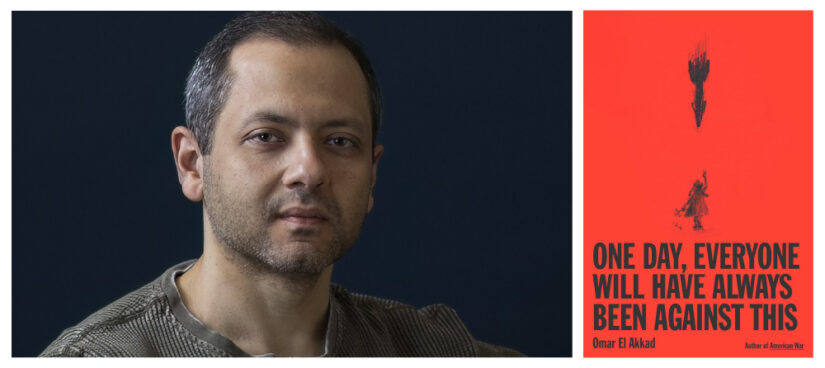
One Day, Everyone Will Have Always Been Against This

Notes from the February 2025 National Book Award winning lyrical takedown of Western enablement of the Israeli genocide of Palestinians by novelist Omar El Akkad.

Long the most compelling evidence of the net good of the project called “Western civilization” has been the demand for so many to join it. No doubt it’s always included misdirection and dastardly ethical lapses but surely all told the demand showed it was worth it. What happens when that changes?

The author who overlooked the petty indignities because of the remarkable and widespread freedom — of movies and walking into a library unencumbered by fear was thrilling. But the paper thin reliance on Israel over the killing of Palestinian children has broken a growing number of adherents.

That’s what I kept thinking of while reading One Day, Everyone Will Have Always Been Against This, the February 2025 National Book Award winning lyrical takedown of Western enablement of the Israeli genocide of Palestinians by novelist Omar El Akkad. It is harrowing, and beautiful and imporant.

“This is an account of a fracture, a breaking away from the notion that the polite, western liberal ever stood for anything at all,” he writes, and then later to the western liberal, of which I would likely be considered one: “It’s no use in the end to scream again and again at the cold, cocooned center of power: I need you just this once to be the thing you pretend to be”

Elsewhere: “There’s no such thing as someone else’s children.”

Below I have my notes for future reference.

Continue reading One Day, Everyone Will Have Always Been Against This

Where the American policy of backing violent insurgents started

Notes from The Jakarta Method: Washington's Anticommunist Crusade and the Mass Murder Program that Shaped Our World, a 2020 book by American journalist Vincent Bevins.

The Cold War was a sprawling, decades-long global imperial campaign advancing American-style capitalism. It worked, at least for those who orchestrated it. Anywhere any unaligned effort, and certainly any movement connected toward the Soviet communistic system, faced direct or indirect American military and special forces. 

Little known strategies from Indonesia and Brazil in the 1960s, as poorly known as they are, became models exported worldwide. That’s from The Jakarta Method: Washington’s Anticommunist Crusade and the Mass Murder Program that Shaped Our World, a 2020 book by American journalist Vincent Bevins.

As he writes: “I am not saying that the United States won the Cold War because of mass murder. The Cold War ended mostly because of the internal contradiction of Soviet communism, and the fact that its leaders in Russia accidentally destroyed their own state. I do want to claim that this loose network of extermination programs, organized, and justified by anti-communist principles, was such an important part of the US victory that the violence profoundly shaped the world we live in today.”

Below I share notes from the book for my future reference.

Continue reading Where the American policy of backing violent insurgents started

Mind the difference between what you know, and what you think you know

Notes from the 2015 book "The Signal and the Noise: Why So Many Predictions Fail–but Some Don't," by pollster, odds-maker and very-online-person Nate Silver.

More of us should familiar with Bayesian probability, in which you acknowledge your priors and update frequently.

In predictions and finance, the average is more often close to the best than to the worst. So figure if you really want to be average. Poker, chess, earthquakes and economics are either so varied or still missing some underlying sense for predictions to be especially good; in contrast to other weather and the emergence of collective wisdom.

All that’s from the 2015 book “The Signal and the Noise: Why So Many Predictions Fail–but Some Don’t,” by pollster, odds-maker and very-online-person Nate Silver. This book was before Trump’s first election, and when Silver began his combative persona online. Back then, poker and gambling was a world of mathematical insights, presaging other books like one in 2018 by Annie Duke. It injected a kind of numeracy among the professional class, which was good, though we’ve been fighting against the numbers ever since.

As Silver, who was 37 when this book came out, wrote then: “This book is less about what we know then about the difference between what we know and what we think we know.”

Below I share my notes for future reference.

Continue reading Mind the difference between what you know, and what you think you know

In Covid’s Wake

Before the covid-19 outbreak, public health officials around the world largely agreed that containment of a flu pandemic is largely futile so better to focus on the most at risk populations: speak honestly, encourage healthy behaviors and work fast on a vaccine.

It didn’t all go to plan. In the United States, the Trump administration successfully oversaw a historic vaccine development, while injecting hostile politics into the system. Meanwhile, left-leaning states over-relied on non-pharmaceutical interventions (NPIs), such as widespread masking and extended school closures, that had limited gains for considerable cost. Right-leaning states contributed to vaccine skepticism, which led to hundreds of thousands of excess deaths.

The new book In Covid’s Wake: How Our Politics Failed Us, written by Princeton University political scientists Stephen Macedo and Frances Lee, attempts to put forward an unimpassioned assessment of the American-led public health response. I simplified their assessment of a handful of the most prominent public health measures into the chart below, and in a social video here.

My summary of In Covid’s Wake interpretation

It’s one of my favorite nonfiction books of the year. Below I share my notes for future reference.

Continue reading In Covid’s Wake

Of Boys and Men

Notes from Richard Reeves's 2024 book

A very small number of men dominate the most powerful and wealthiest positions, and are among the most aggressive humans alive.

But though this tiny number accounts for many disparities, and men have not taken enough domestic imbalances, their trend lines are worrying. Boys and men are going the wrong direction fast.

That’s from the 2024 book by Richard V. Reeves: “Of Boys and Men Why the Modern Male Is Struggling, Why It Matters, and What to Do about It.” It’s one of a growing collection of research and literature.

As Reeves writes: “We have an education system favoring girls and a labor market favoring men. Two wrongs don’t make a right.”

Below I share my notes for future reference.

Continue reading Of Boys and Men

The Committee to Protect Journalists reports Israeli forces have killed nearly 200 journalists

Four Al Jazeera journalists — and three others — were killed by an Israeli air strike in Gaza this month. We need to talk about that.

I usually only share reporting I’ve done, or topics where I have real expertise. International politics isn’t my beat, so I don’t pretend to have unique insight there. But this is different.

Continue reading The Committee to Protect Journalists reports Israeli forces have killed nearly 200 journalists

Abundance

Democrats should be able to campaign by saying ‘vote for us, we’ll govern like California.’ Instead Republicans campaign by saying ‘vote for us, or they’ll govern like California.”

The American left lacks a central organizing principle, other than slowing progress with an ever growing checklist of rules: they need an alternative. So argues Abundance, a book by prominent, center-left national journalists Ezra Klein and Derek Thompson. As a perfect representation of the divided era, the book’s commercial success and the author’s rising popularity has created a backlash from many progressives. Classic liberal Klein in particular just seems to irk a whole class of leftists.

As the authors write in the book: “One way of understanding the era we are in is as the messy interregnum between political orders.”

Their “abundance agenda” is polarizing in part because their interest is in operating the current system, and many of their would-be-allies turned critics are not. The identifiers of “liberal,” “progressive,” “leftist” and “socialist” are discussed tirelessly among smart people with graduate degrees and little serious focus on governing. Many of them contribute to the dismaying see-sawing of elected Democrats, that have for generation focused on appeasing a diverse coalition.

The left, the authors write, “seeks legitimacy through rule following rather than through the enactment of the public’s will.“ The United States is a big distributed republic, with thousands of layers of government, at town, county and state levels, to experiment and demonstrate an ability to solve problems. Instead, as the authors argue, rather than solving homelessness in some Democratic city, leaders oversee a multi-year research phase to hire a BIPOC-led consulting firm that confers with a full list of constituent groups from identities, environmental and social causes to gather community feedback.

Nothing is solved, everyone complains. Most vote elsewhere next go-round. This has gotten Klein and Thompson lots of glowing praise from centrists, and ferocious pillorying from progressives. One small contribution I kept thinking about while reading the book: Lots of their perspective would play nicely in local political contexts, rather than vicious national conversations.

Meanwhile, public trust continues to decline, and green infrastructure is slowed. Setting aside the Biden administration’s ambitious IRA green energy bill and the Chips and Science Act focused on industrial policy, Democrats long ago gave up “supply side” policies. Their book argues that should change.

Politics today is a fight over what we have, or had — not what we can create.

Below I share my notes for future reference.

Continue reading Abundance

What Baltimore’s “Black Butterfly“ teaches the rest of us

Notes from The Black Butterfly: The Harmful Politics of Race and Space in America by Dr. Lawrence T Brown in 2021.

Why does there remain a plethora of social ills the disproportionally affect Black people in America over 150 years after chattel enslavement has ended? “The answer: black communities have been subjected to unrelenting an ongoing historical trauma.“

That’s from The Black Butterfly: The Harmful Politics of Race and Space in America by Dr. Lawrence T Brown in 2021. He coined the term “black butterfly” to refer to the patterns of racial segregation in Baltimore, which mirrors patterns in other US cities.

Below I share my notes for future reference.

Continue reading What Baltimore’s “Black Butterfly“ teaches the rest of us