NEast Philly: traffic, data and graphs on a hyperlocal news site

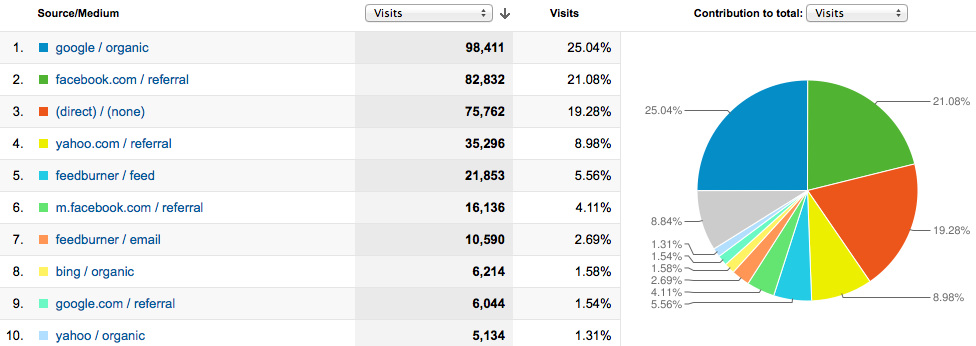
All-time referral traffic to NEastPhilly.com, as reported by Google Analytics on March 3, 2012.

Quietly last fall, NEastPhilly.com, the hyperlocal news site for Northeast Philadelphia, marked three years since having been launched as a college project by now WHYY NewsWorks feed blogger Shannon McDonald.

Though I spent much of that time contributing coverage, I now play the role of web editor, helping keep the site up and functional. Shannon has had more than 20 contributors, a handful of them to date, and has done serious journalism and meaningful community coverage, on her own and with outreach from residents and readers.

Though an after-hours labor of love of hers, I’ve remained impressed with the relative impact of NEast Philly, so, three years later, I wanted to share some metrics.

Continue reading NEast Philly: traffic, data and graphs on a hyperlocal news site

SEO: the difference between the basics, the detailed and spam

There’s no shortage of conversation about the end of search engine optimization. As search gets more personalized — cache and cookies and the rest — ensuring that your business, organization or another site ranks highly when people use web search tools becomes less straightforward.

Still, it’s naturally something that I get asked about a lot — how do I get more people to find my website online?

Continue reading SEO: the difference between the basics, the detailed and spam

Baseball cards: 10 business lessons from my time in the sports memorabilla bubble

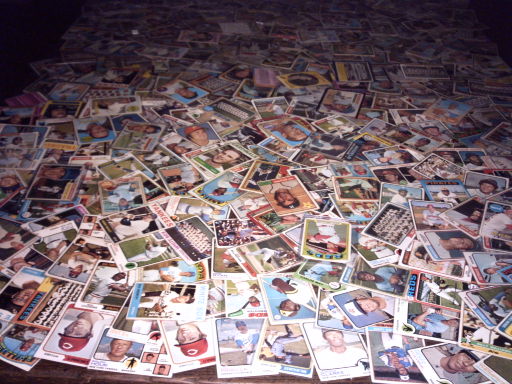
In middle school, I collected baseball cards. A lot of baseball cards.

In third grade, I tried pogs before they were outlawed in class when it was found we were effectively gambling with them. In a naive, youthful pursuit of seeing every movie ever made, I amassed piles of them on VHS and DVD. My grandparents gave me some collector coin sets, somehow I ended up with a few beanie babies and, being a recovering pack rat, I ended up with little collections of Simpsons merchandise and sports jerseys as a pre-teen, political campaign signs and pro sports team paraphernalia in high school and old books and vinyl records through college. Yes, as a kid, I’ve collected a lot — Lincoln logs, Legos and inherited stamps, too, fill my basement.

But, in truth, the largest collection I ever amassed was little pieces of printed cardboard, baseball cards, and to a lesser extent, other sports cards. In my memory, anything I didn’t save, I spent on them, starting with the occasional checkout-line pack purchase at the former Shelby’s dime store.

Of course, I’m not alone among the youth of the 1980s and 1990s. Entire books have been written about the baseball card bubble that came from an over-saturated market, so much so that many think error cards were created to fuel demand.

In love with sports and trading and playing with friends, I dove headlong into the hobby bubble. More specifically, from about the age nine in 3rd grade to about 14 in 8th grade, I likely spent less than $1,000, and, if I was able to more accurately estimate, it might likely be much less. In truth, my time was spent more on trading the cards with friends. Before high school, I had mostly set aside the indulgence, though I’d still sometimes take out that collection to marvel at my investment.

Still, my sports card collection was the first foray into business I made, and so I learned plenty. Here’s my sharing some of that.

Continue reading Baseball cards: 10 business lessons from my time in the sports memorabilla bubble
First 100 days as CEO of the Philadelphia Public Interest Information Network: advice for Neil Budde

Neil Budde in July 1997 as Wall Street Journal interactive editor. Photo by Ted Thai for LIFE magazine.

A leader for a major public affairs journalism project at Temple University in Philadelphia began his role last week.

I was excited to find in February that Neil Budde, whose claim to fame is being the founding editor of WSJ.com, would be the CEO of the new, temporarily-named Philadelphia Public Interest Information Network. Everyone closer to the project than I and others who know Budde in other ways have all had positive remarks.

The impact of an organization like that on information communities in Philadelphia can be a thrilling thing to watch. By way of full disclosure, I did have early-stage conversations about the position and the project on the recommendation of others. That said, I’m eager to have further discussion with Budde.

With all that said, I wanted to share some thoughts on what goals Budde might seek in his first 100 days the PPIIN CEO.

Continue reading First 100 days as CEO of the Philadelphia Public Interest Information Network: advice for Neil Budde

A reporter is only as good as his sources (are organized)

The old saying goes that a reporter is only as good as his sources.

To tell or find a story, one needs to have the resources and access to perspective and insight. In my few years as a journalist, I’ve taken considerable effort to build relationships and gather sources.

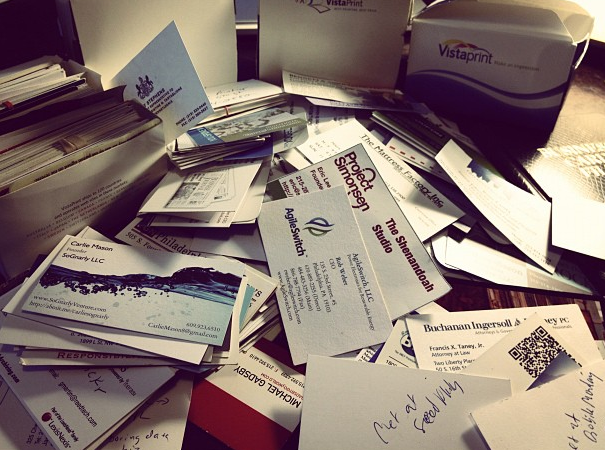
That mostly amounted to piles and piles of business cards. Thankfully, two tools have allowed me to take considerable control over that mess.

First, almost since the very beginning of my collecting sources in college, I have obsessively updated my contacts in my Gmail account, including emails, phone numbers, even birthdays and mailing addresses when possible. Taking it further, I include headshots and a description of when I first met the person and what their relevance is, to ease my ability to remember the person.

Second and most recently, with my first smartphone and Macbook following this and this,I’m able to sync those Gmail contacts to my phone, allowing me to have access to those contacts more readily, as I try to develop as many text and Gchat relationships, it’s proven a great tool.

Which is good, because as important as it is to have good sources, it doesn’t matter if you can’t find them.

15 things I learned three years after launching Technically Philly

First, let’s acknowledge that three years is not a terribly long time.

Still, I’m proud that three years ago last month, Brian James Kirk, Sean Blanda and I launched a blog to cover the technology community of Philadelphia. Three years later, we are full-time employees of a growing business with a good reputation.

In that time, we’ve had some accomplishments that are worth being proud of. It’s been a learning experience to be sure.

First, our organization is changing in lots of ways.

Continue reading 15 things I learned three years after launching Technically Philly

Philadelphia Museum of Art: thoughts on making the Parkway temple to impressionism more accomodating and more relevant

The Philadelphia Museum of Art is among the country’s largest, oldest and most influential.

Still, founded in 1876 and looming on the Ben Franklin Parkway for 90 years, the Museum’s leadership knows being a historic, cultural icon in Philadelphia doesn’t make it immune to financial distress. The bankruptcy of the once legendary Philadelphia Orchestra has made that clear.

It’s with this that several of the museum’s most active board members brought together in late January something of a focus group of mostly 30 and 40-something young leaders in Philadelphia to help discuss its future. Thankfully, Liz Dow of Leadership Philadelphia, which largely invited the focus group members, brought me into the conversation.

The conversation largely lacked a focus that is most often seen as a determining factor in successful focus groups. Still, the 90-minute lunch and dialogue was interesting enough that more than a month later, I find myself with a few dozen swirling thoughts on the subject. I wanted to share them here.

Continue reading Philadelphia Museum of Art: thoughts on making the Parkway temple to impressionism more accomodating and more relevant