Science communication at a crossroads

Notes from a University of Maryland systems-wide symposium

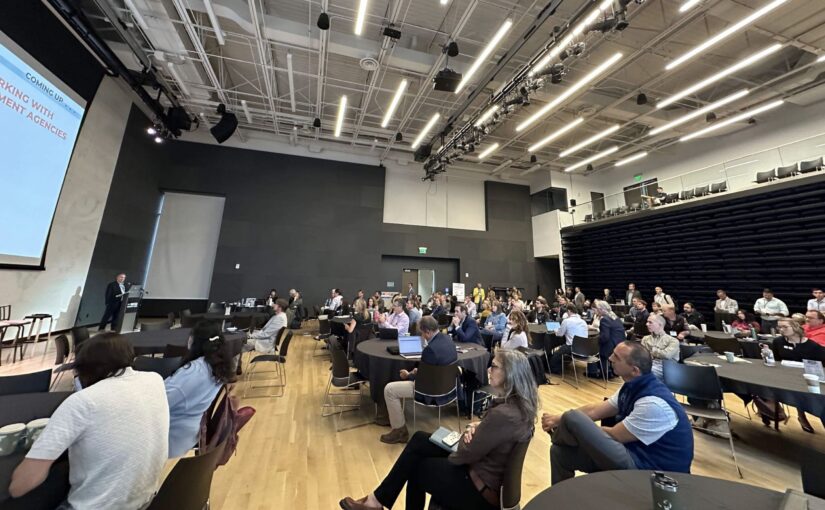
I joined a spirited conversation at the University of Maryland BioPark for a system-wide symposium on science communication.

I filed a story for Technical.ly here. Our panel looked like this:

  • Megan Nicholson, a senior editor at Issues in Science and Technology
  • Heath Kelsey, director of the Integration and Application Network at the University of Maryland Center for Environmental Science.
  • Christopher Wink, cofounder and publisher, Technical.ly
  • Moderator, Michael Sandler, the UM system’s vice chancellor for communications and marketing

To navigate AI, journalists must know the technology, and their job

Notes from my recent New Mexico local news summit keynote

To navigate AI, journalists need to break it down: What the technology is, and what the job is.

I was thrilled to keynote this weekend’s New Mexico Local News Fund’s local news summit in Albuquerque. My talk: Risks, Ethics and Opportunities for AI in Local Newsrooms.

To an audience of 100 local journalists and publishers in New Mexico, and supporters from around the conutry, I walked through a simplified framework for understanding what we call artificical intelligence — and I shared Technical.ly’s ethics for AI in storytelling.

Find my full slides here.

Enormous credit to Rashad Mahmood and Denise Zubizarreta.

Mega-events have failed cities before. Are we learning?

Takeaways from an International Economic Development Council summit plenary I led

Cities love hosting mega-events — the Olympics, World Cup, NFL Draft. But decades of research suggest they rarely deliver the long-term economic boost leaders promise.

Are we learning? This was the focus of the plenary discussion I moderate this week in Washington DC at the annual leadership summit hosted by the International Economic Development Council (IEDC).

I also wrote about it for Technical.ly here.

Continue reading Mega-events have failed cities before. Are we learning?

What happens after Eureka?

Reporting and photos from a discussion I led at Baltimore's University of Maryland Biopark

We love to celebrate the spark of a good idea, but we too often skip over the long, uneven road it takes to get that idea into the world.

Research on innovation keeps pointing to the same tension: breakthroughs come from serendipity and “structural holes,” where people from different disciplines collide, but impact only happens when we deliberately smooth the path that follows. That’s what made a conversation I led at Baltimore’s University of Maryland Biopark, inside the innovation district’s year-old 4MLK building feel special.

I contributed Technically coverage here and here. The Biopark team had a photographer on site, so I also just pulled some of the shots of me in action below.

Continue reading What happens after Eureka?

This is what a robotics ecosystem looks like

That's what I got to in a panel discussion I led on the main stage of the Pittsburgh Robotics Discovery Day last Thursday. Below watch video of the panel.

A robotics ecosystem connects education to workforce training to entrepreneurship and industry. Many parts and components fit in, overlap and even compete but contribute to a shared goal.

While out there, I filed a story on driverless freight company Aurora, and on a new mural series.

That’s what I got to in a panel discussion I led on the main stage of the Pittsburgh Robotics Discovery Day last Thursday. Below watch video of the panel.

Continue reading This is what a robotics ecosystem looks like

We didn’t remove gatekeepers; we replaced them with algorithms.

I joined CURRENTLY, the slick video interview series from the creative agency [Electric Kite].

I joined CURRENTLY, the slick video interview series from the creative agency [Electric Kite], hosted by principal Kevin Renton, to talk about local journalism, entrepreneurship and how we build healthier information ecosystems. (I wrote more about it on Technical.ly here)

Themes we hit: why geography still matters online; why “friction” is a feature of community; how luck shapes entrepreneurial outcomes; and why journalism is a strategy you attach to sustainable business models.

Below the full video, and a few points I want to stand out.

Continue reading We didn’t remove gatekeepers; we replaced them with algorithms.

My storytelling keynote to Tech Hubs leaders in Montana

The kind folks at Montana's Headwaters Tech Hub gave me the chance to address their summit of Montana ecosystem members

Meaningful commercialized science and intentional local economic coalition building does not correlate to high-quality storytelling about it. Economic development leaders should take storytelling seriously.

The kind folks at Montana’s Headwaters Tech Hub gave me the chance to address their summit of Montana ecosystem members and other tech hub leaders from around the country. I gave a storytelling presentation informed by this research — and led with the impressive tale of how Jeanette Rankin became the country’s first female Senator.

Continue reading My storytelling keynote to Tech Hubs leaders in Montana

Bloggers were once the creators, and there are lessons to learn

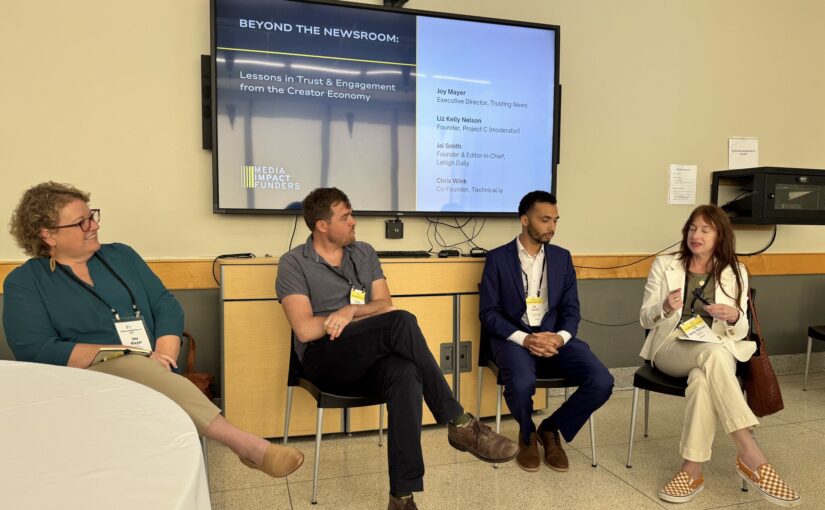
Notes from speaking in a breakout at the annual Media Impact Forum

Nearly 50 philanthropists and funders squeezed into the breakout at the annual Media Impact Forum conference held at the National Constitution Center.

Our panel’s focus was on newsroom-creator relationships, which we at Technical.ly have dove into — both with creators, and with our own newsroom and, in a sense, because looking back my start as a “blogger” sure sounds a lot like the creators of 15 years ago. My moderator Liz Kelly Nelson wrote up more here on the conference here, and she previously wrote this piece which fits into my writing on ‘journalism strategy.’

Below I share a few notes from the discussion.

Continue reading Bloggers were once the creators, and there are lessons to learn

Builders Live @ Global Entrepreneurship Congress

The Global Entrepreneurship Congress was held in the United States for the first time since its founding back in 2009.

The Global Entrepreneurship Congress was held in the United States for the first time since its founding back in 2009. This time in Indianapolis was a chance for me to get a sense of both a global conversation and a particularly American version.

I also got to host a pair of live recordings of Builders Live, Technical.ly’s regular conversation series on ecosystem building. Find my recap stories, and one of those interviews below:

Continue reading Builders Live @ Global Entrepreneurship Congress

Remarks: Tech meetups shape economic mobility

Below are my notes, and video, from the remarks I offered to kickoff the second day of our Technically Builders Conference, which also doubled as the closing of the 15th annual Philly Tech Week. It informed this story we published on Technically. My slides are here.

Starting in 1975, the Homebrew Computer Club was a regular gathering of tech enthusiasts in northern California.

The group was made famous for inspiring Apple founders Steve Jobs and Steve Wozniak. But hundreds of computer clubs emerged around the country then. The Philadelphia Area Computer Society (PACS), for example, was first organized in spring 1976.

You don’t have to care about a few dozen computer nerds getting together 50 years ago. How they did has shaped the work we do, though, and has a few lessons for our future.

Continue reading Remarks: Tech meetups shape economic mobility