The Moundbuilders of the Eastern Woodlands

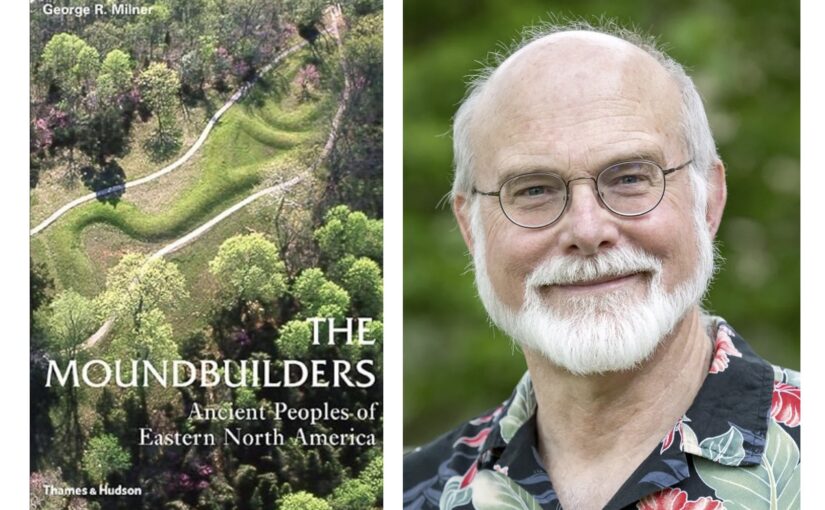
The so-called “moundbuilders” of the Eastern Woodlands in the present-day United States were among the most complex cultures of pre-European societies. Yet growing archeological evidence remains under-recognized in American life.

That’s from anthropologist George Milner’s 2005 book “The Moundbuilders: Ancient Peoples of Eastern North America.”

I’ve read about an array of Amerindian communities, but the moundbuilders, which appeared to be densely populated from Ohio down to Louisana, mostly west of the Appalachian mountains and east of the Mississippi River, especially interest me. This is the first book I read dedicated to this civilization, though they get referenced often in other places. Below I share some notes for my future reference.

Continue reading The Moundbuilders of the Eastern Woodlands
Quantum Supremacy by Michio Kaku

Newtonian physics works for most of our everyday experiences. But for the biggest systems we encounter, we need Einstein’s theories of relativity to make sense of spacetime.

Neither, nor does our own intuitive understanding of the world, work at the smallest scale we understand. This is the quantum level, where electrons can be at two places at the same time, transmit information faster than speed of light and instantly analyze infinite paths between two points.

As Danish physicist and Nobel laureate Neils Bohr (1885-1962) wrote: “Anyone who is not shocked by quantum theory does not understand it.”

And much like we didn’t understand all the ramifications of the atomic age before we developed nuclear weapons, governments and companies are busy investing in the military and commercial implications of the potentially radical advancement in quantum computing.

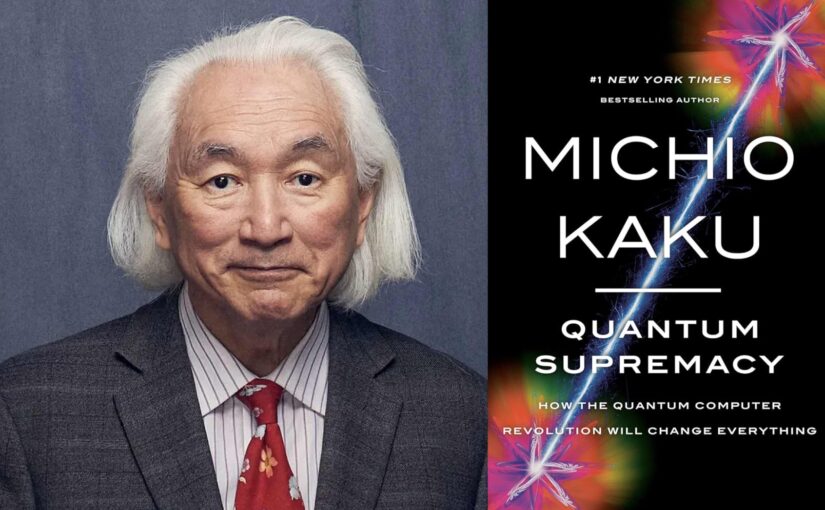
That’s the timing from prominent physicist and science communicator Michio Kaku in his 2023 book “Quantum Supremacy: How the Quantum Computer Revolution Will Change Everything.”

By no means exhaustive, I picked up the book for a primer on the technology my work overlaps with. Below I share my notes for future reference.

Continue reading Quantum Supremacy by Michio Kaku

Tabula Rasa: John McPhee

Retirement projects are completed as a final act. Better to let them linger.

And yet, last year, celebrated longform writer John McPhee, who has published dozens of books and hundreds of articles for New Yorker, published his retirement project: Tabula Rasa, a collection of essays that chronicle stories he never completed.

Contrary to most of my reading of late, I didn’t take many notes. The whole book reads as a light treatise on life, with his wit and wording. A few points that stood out to me now:

  • From Draft No 4: “Editors’ habit of replacing an author’s title, with one of their own, is like a photo of a tourist head on the cardboard body of Mao Zedong”
  • In 1967, he published a book on and called Oranges, which came to define his style: irreverent longform that dabbled in reportage and writerly cultural assessment
  • He developed a friendship with Bill Bradley, after writing a celebrated New Yorker profile and follow-on book
  • Of pharma copywriters, he notes: They create catchy brand names and unnecessarily complicated generic names so it’s harder to market after a patent expires

Philadelphia’s 1844 Nativist Riots: Ken Milano

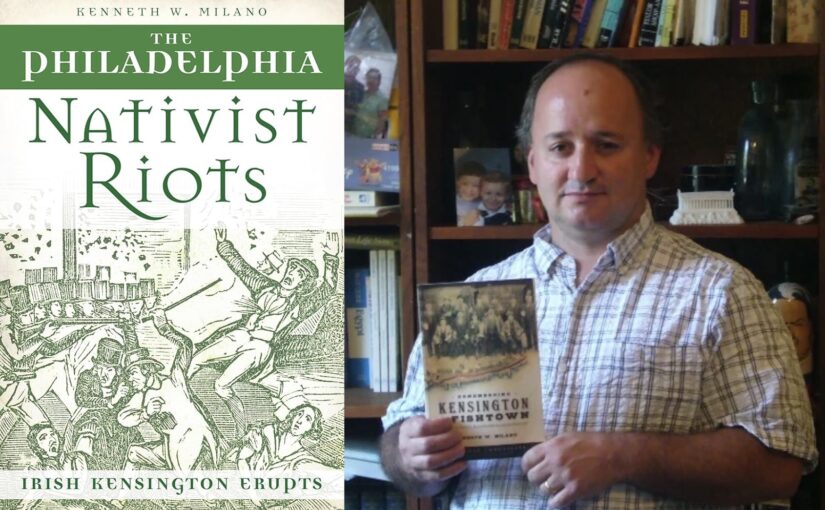
My bicycle commute from where in live in Philadelphia’s Fishtown neighborhood to my office in Old City runs down Kensington Second Street. Little sign remains of the violent riots that took place there 180 years ago between Irish immigrants and so-called nativists in 1844.

Fittingly, Philadelphia’s riots are quietly forgotten, while similarly-timed violence in New York City was turned into a book and then a 2002 movie called Gangs of New York. Sparked from a dispute around bibles in schools, a few dozen people died and perhaps hundreds were wounded in the most intense few days that May.

That’s the focus of the 2013 book The Philadelphia Nativist Riots: Irish Kensington Erupts, written by local historian Ken Milano. I’ve read Ken’s other books — and exchanged a few emails with him through the years. I appreciate his thorough and thoughtful approach, so I have most of his books in my collection, and have gifted them to friends. I only now read this one. Pick up a copy yourself.

The riots had a real impact. Milano argues that the riots contributed to the 1854 consolidation, in which Philadelphia city (and its law enforcement system) annexed surrounding counties, inspired the development of the parochial school system and was directly responsible for the founding of La Salle College, which was originally located across the street from where a church was burned.

Continue reading Philadelphia’s 1844 Nativist Riots: Ken Milano

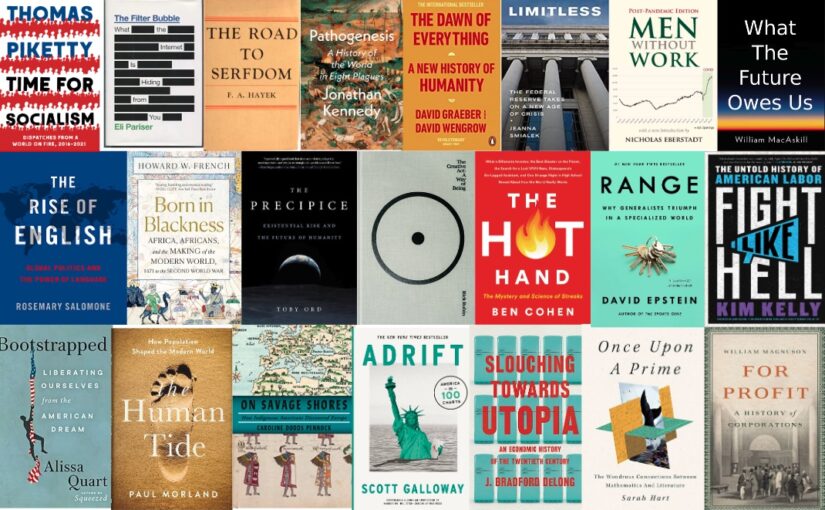
I read 56 books in 2023

Gosh, that was a lot.

How? Well, a baby waking up at 5am ended up resulting in my reading way more than usual. Poor sleep all around, come to think of it, so in some sense I hope I don’t read this many books again. I also gave up most TV weeknights, though I already didn’t watch much. Find all my reading notes here, and see the list below.

Continue reading I read 56 books in 2023

2024 Resolutions

I’ve started 2024 to continue what I started last year.

Looking back at years of resolutions I’ve had both sorts of plans: when I wanted to make change, and when I wanted to continue the work of the year prior. This year I intend to be more of the latter — no big changes intended. My post pandemic life emerged in 2023. I hope for 2024 to be stronger because of it.

Continue reading 2024 Resolutions