The risk-taking that connects Wall Street, Las Vegas and Silicon Valley

A certain approach to risk and decision-making spans Wall Street, Las Vegas, Silicon Valley and, yes, even cryptocurrency libertarianism. Not all of it’s good, but some is.

It’s important to understand this community and worldview. That’s from On the Edge: The Art of Risking Everything, a 2025 book by popular statistician Nate Silver.

The book is at least 150 pages too long, and needed a more disciplined edit. The author says he had three book proposals: gambling, AI and game theory. As far as I can tell, he combined them all. The bloated book has detailed poker gossip, historical passages about Las Vegas and biography of Steve Wynn. Lengthy passages detail how LLMs work and the personalities behind game theory. It’s all moderately interesting but bizarrely off focus of his book, in my read.

I happen to like the stuff, but I kept finding myself circling passages that could have been edited away. Regardless, I took away plenty of charming little details.

Below I share my notes for future reference.

Continue reading The risk-taking that connects Wall Street, Las Vegas and Silicon Valley
AI a Performance-Enhancing Drug: my interview on WYPR

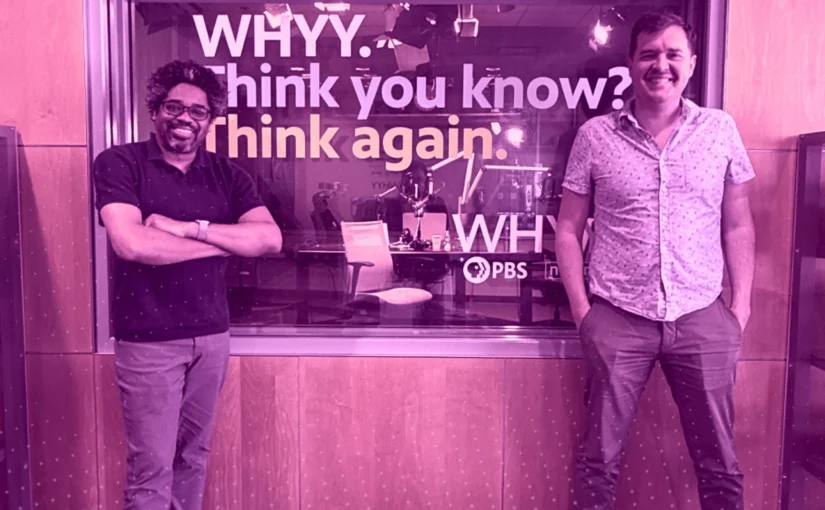
Host Jason Michael Perry sits down with Chris Wink, cofounder and CEO of Technical.ly, to explore whether AI is becoming a performance-enhancing drug for founders and what that means for workers, entrepreneurs, and the cities trying to build ecosystems around both.

Recorded in Philadelphia during Philly Tech Week at the WHYY studios, the conversation digs into Chris’s framework for cutting through the AI noise, the gap between what AI could do at work and what people are actually using it for, why the most exposed workers may not be who you expect, and what the bar is now to be taken seriously as a founder in 2026.

LISTEN HERE

Moravec’s Paradox

This was original a social video post

I want AI to do my dishes and laundry so that I can do art and writing, not for AI to do my art and writing so I can do more dishes and laundry.

That 2024 tweet went viral. And there’s a name for this: Moravec’s Paradox, and it dates back to 1988, from a machine learning researcher.

Continue reading Moravec’s Paradox

“If Anyone Builds It, Everyone Dies”

The alchemist who takes on the king’s trial to attempt to turn lead into gold. If he does so he gets fabulous wealth for all around him. If he doesn’t, everyone dies.

Believing it impractical to stop everyone else’s from trying, he decides that he is the best shot because he has the most discipline. His sister begs him not to, but he goes anyway.

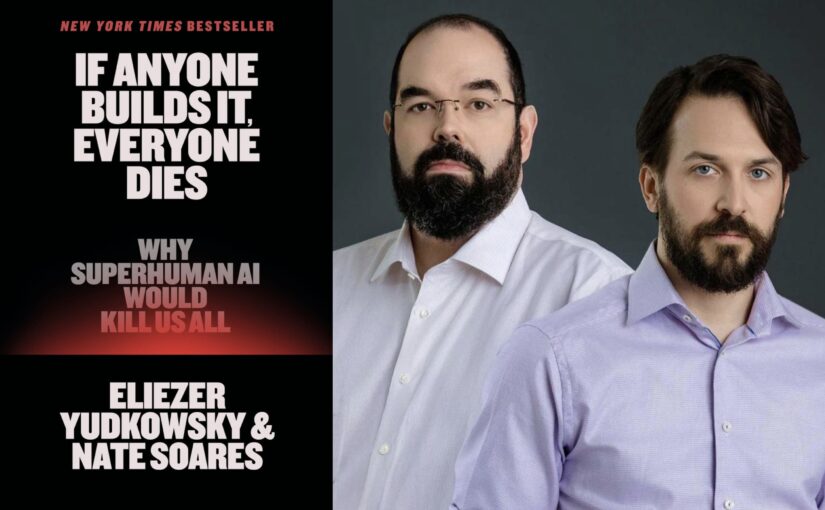
That fable opens the 11th chapter of the comfortingly named “If Anyone Builds It, Everyone Dies,” the fall 2025 book by Eliezer Yudkowsky (“the prophet of AI doom”) and Nate Soares.

To their credit, the book is more reasoned than the title might suggest (I actually think it’s a great book title). They say again and again that they do not know the timeline: AI research, then, they say is a ladder on which each rung is billions of dollars but if anyone reaches the top everything explodes — and no one knows how long the ladder is.

Their argument is competition between China and the United States is silly Nobody “has” ASI (or AGI ), only it has itself, is their argument

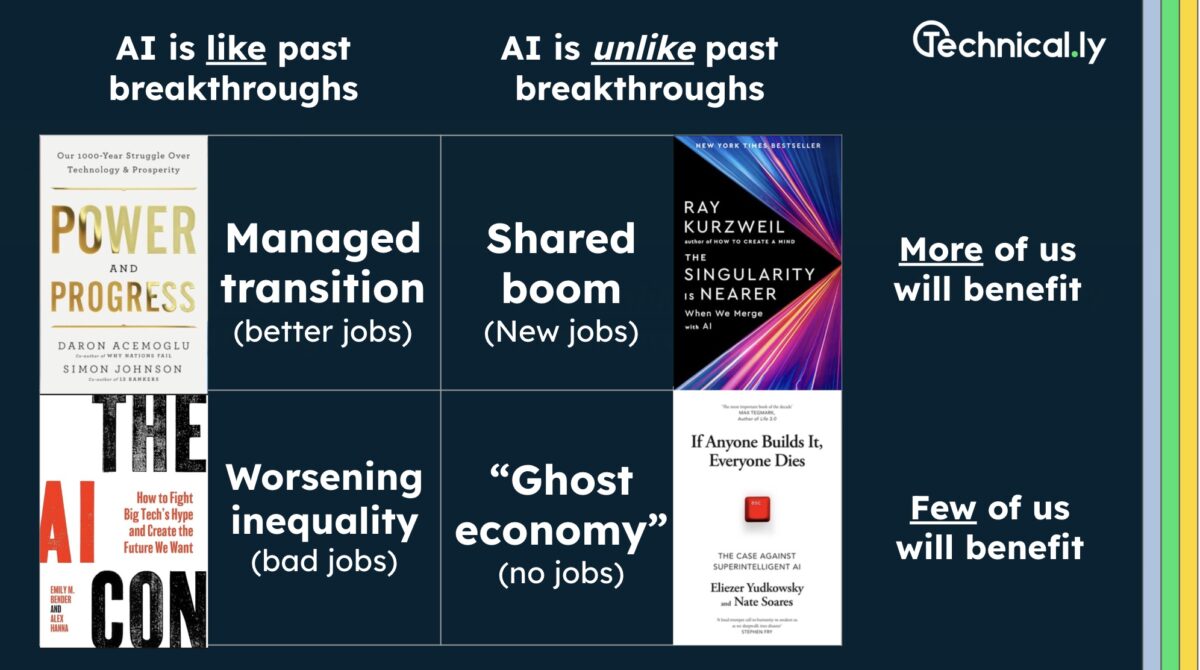
Their argument, and this book in particular, helped refine my own framework for interpreting the moment, and my own AI philosophy, distilled in the chart below as a two-by-two axis depending on what your best guess is on the technology.

Below I have my notes for future reference.

Continue reading “If Anyone Builds It, Everyone Dies”

What’s my personal “artificial intelligence” philosophy

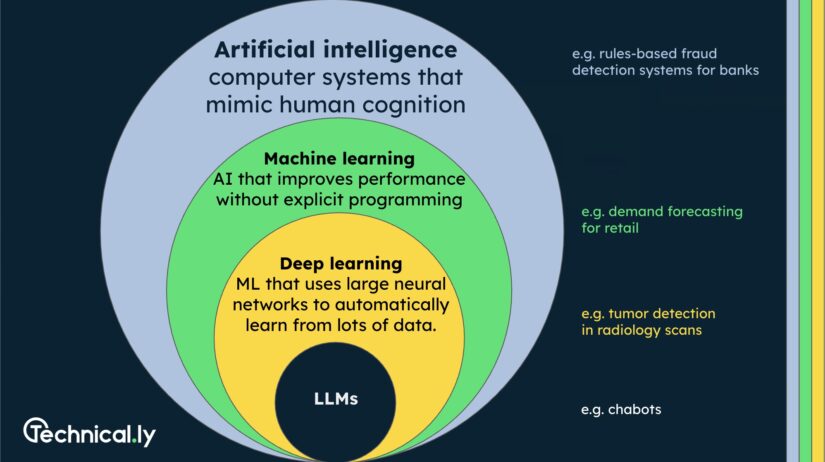
It was summer 2009 that I was first introduced to the idea that robotics and artificial intelligence are two halves of how a machine would move through our world. One is physical motion, and the other is a big term for computer systems that mimic human cognition — from computer vision and probabilistic language to sound mimicry and risk management.

Over the next near two-decades, my reporting and entrepreneurship have evolved alongside a new fast-moving chapter of these technologies we call “artificial intelligence.” I’ve spent at least a decade developing my own relationship to what some have called “the singularity.” Now the last few years have brought this into the mainstream. That’s forced me to develop a more precise view.

Continue reading What’s my personal “artificial intelligence” philosophy

To navigate AI, journalists must know the technology, and their job

To navigate AI, journalists need to break it down: What the technology is, and what the job is.

I was thrilled to keynote this weekend’s New Mexico Local News Fund’s local news summit in Albuquerque. My talk: Risks, Ethics and Opportunities for AI in Local Newsrooms.

To an audience of 100 local journalists and publishers in New Mexico, and supporters from around the conutry, I walked through a simplified framework for understanding what we call artificical intelligence — and I shared Technical.ly’s ethics for AI in storytelling.

Find my full slides here.

Enormous credit to Rashad Mahmood and Denise Zubizarreta.

Forget the AI boosters and doomers, and focus on the “current harms”

The artificial intelligence debate is often discussed as two sided: the boosters and the doomers.

Those who think AI will bring upon abundance, or those who predict it ushers in catastrophe, and the two debate how necessary “AI safety” needs to be handled. But the “current harms” research movement argues something else: Most of the cheers and fears are predicated on over-enthusiasm that won’t come to pass. Instead, focus on what threats are here now.

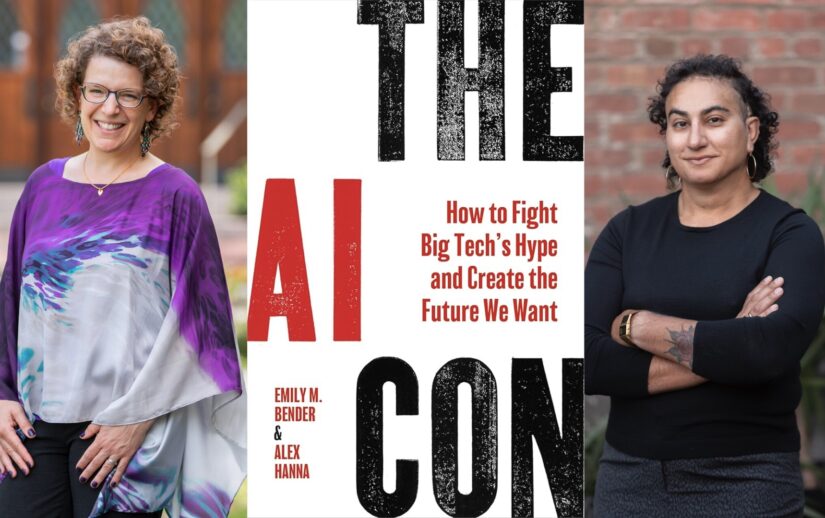
Thats from The AI Con: How to Fight Big Tech’s Hype and Create the Future We Want, the spring 2025 book by researchers Alex Hanna and Emily M. Bender.

In the same way I read futurist Ray Kurzweil’s book as plainly overly optimistic, this reads as overly caustic. As a tech journalist who has spent 20 years being hawked products, I understand, and am sympathetic, to their counterbalance of AI’s hype, but this book has suggests nothing redeeming. Probabalistic language tools used for light therapy are only suicide risks, they say, not an entry point for others. Stitching together many tools into “everything machines” are money-grabs, giving cover to an endless list of state and corporate harms.

I admire them, have followed their work and am closer to them than others in the field — I, too, struggle to believe the most extreme predictions from tech executives who have lied to me many times. Still, their ceaseless pessimism reads to me sometimes as if they’ve shut off everyone who is building in the technology. As they write with similar confidence as those they most criticize: “AI is not going to replace your job. But it will make your job a lot shittier.”

That said, the authors close their book saying they are not anti technology nor even pattern matching algorithms. They write: “We want technology that is created to strengthen and empower communities, not technology that reproduces and enables systems of oppression, consolidation of power and environmental devastation”

Below I share my notes for future reference.

Continue reading Forget the AI boosters and doomers, and focus on the “current harms”

Empire of AI

If there’s even a small chance of a really big thing happening, should you do it?

“The need to be first or to perish” is what set in motion the explosion of consumer use of artificial intelligence. That argument raised billions of dollars, set off one of the largest infrastructure investments in American history and set off a global arms race.

The company that set off the arms race is OpenAI, and its cofounder and public face Sam Altman. Altman wielded this argument widely: If OpenAI doesn’t race toward the possibility of superintelligence than an existing incumbent like Google will, or China will. But no one else, nowhere else, could have done this. At least not now.

Or so the argument goes in Empire of AI: Dreams and Nightmares in Sam Altman’s OpenAI published this year and written by journalist Karen Hao.

One Chinese researcher told Hao that no one would have been funded outside Silicon Valley with over $1 billion without a clear purpose, so we created the risk and the solution. As she writes: “everything OpenAI did was the opposite of inevitable.”

Altman shares a birthday with the legendary physicist Robert Oppenheimer (“father of the atomic bomb”). Altman loves the comparison of OpenAI to the Manhattan project, though Hao notes that “he never seemed to add that Oppenheimer spent the second half of his life plagued by regret and campaigning against the spread of his own creation.”

At an industry event in December 2024, Altman’s cofounder and one-time chief scientist Ilya Sutskever said that “we have but one internet,” in referring to the source material that the AI industry has already primarily digested. Having consumed all of us, they seek more, Hao argues, in preferring the “empire” metaphor of the AI industry. The book is exhaustive and critical. A very worthwhile read for those following the industry, even though it goes into even greater detail on internal politics than I needed. It reads as authoritative.

Below I share my notes for future reference.

Continue reading Empire of AI

“Information has no essential link to truth”: Yuval Noah Harari in Nexus

More information does not lead to more truth. It wasn’t true in the past, and it’s certainly not true now.

Guttenberg’s printing press contributed to the Scientific Revolution, yes, but also to the explosion of witch hunts. Copernicus’s “On the Revolutions of the Heavenly Spheres” (1543) sold far fewer copies than The Hammer of Witches (1486), an international bestseller. The Industrial Revolution led both to wealth-backed investments of research, and also imperialism and totalitarianism.

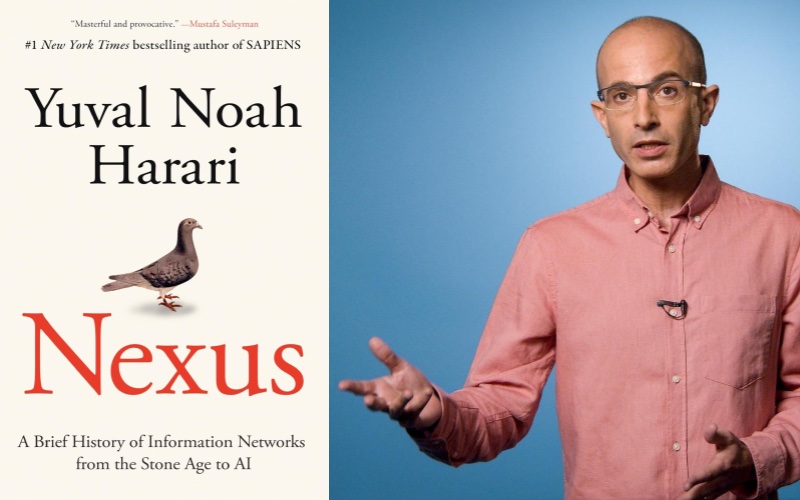
That’s a main argument of Nexus, the latest book from popular historian Yuval Noah Harari, which uses the long arc of history to explore the age of artificial intelligence.

“Information has no essential link to truth,” Harari wrote. “Its defining feature is connection rather than representation “

That connection is a balance between truth and order. Information was used from the repressive Qin empire and the increasingly totalitarian Stalinist Soviet Empire to relatively more tolerant reign of the highly-distributed Roman Empire and the United States. To get a (relatively!) more benign version, self-correcting systems are necessary. AI, though, could be used as new attempt at an infallible god, even as past epochs of human history have involved groups of people attempting to mediate between god.

Below my notes for future reference

Continue reading “Information has no essential link to truth”: Yuval Noah Harari in Nexus

Do Androids Dream of Electric Sheep?

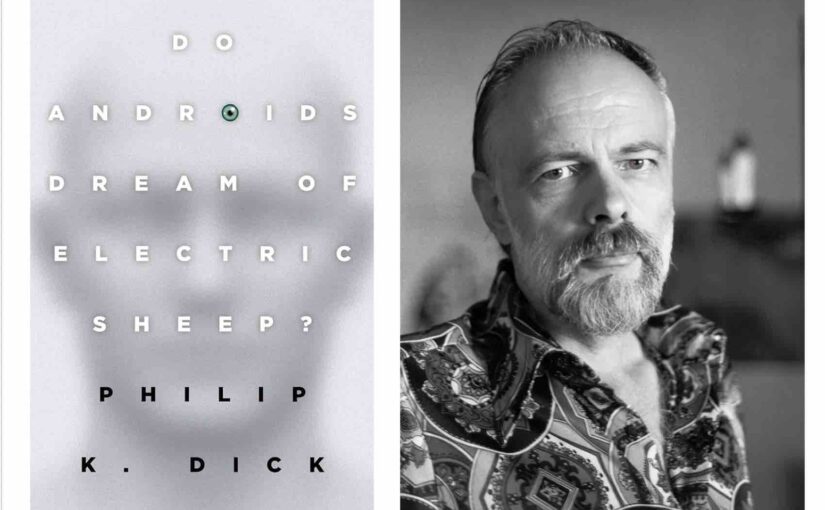
Initially set in 1992, later editions of the science fiction classic “Do Androids Dream of Electric Sheep” updated the setting to 2021. And so, we have now lived through Philip K. Dick’s 1968 novel.

Perhaps best known as inspiring the 1982 Harrison Ford movie Bladerunner, the novel won mixed reviews at launch but has developed a cult following. Dick (1928-1982) is not remembered as a great writer as much as a great thinker (Minority Report and Total Recall also inspired by his stories), and that’s felt truer still after a new wave of artificial intelligence hype.

The title plays off a subplot of the book in which the humans who remain on earth (after nuclear fallout) covet the status symbol of a living animal, as opposed to artificial ones. So, the question is whether androids (the increasingly human-passing machines that the main character is chasing) would dream of electric ones? Its big theme: What defines humanity, especially if machines increasingly recreate many of the skills we identify with? I enjoyed the book, and below share notes for my own future reference.

Continue reading Do Androids Dream of Electric Sheep?