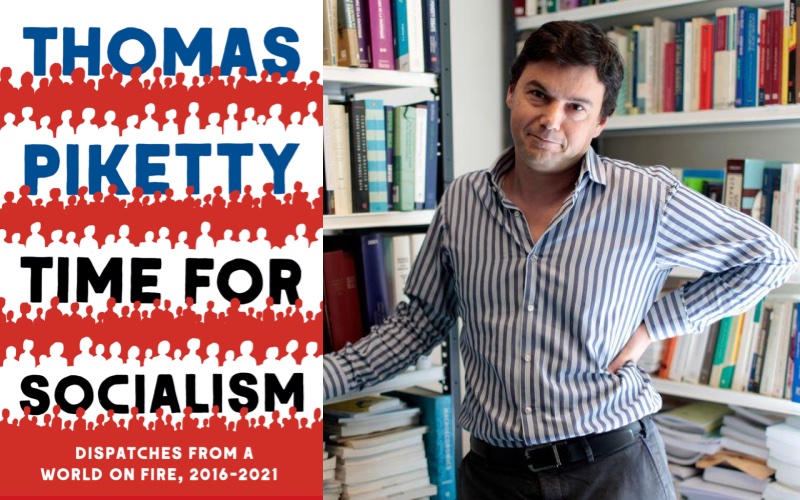
Thomas Piketty’s Time for Socialism

Inequality is endemic to any capitalistic system. Unchecked over time, wealth will accrue to a set of financial winners. One of government’s chief responsibilities is to balance fairness with efficiency. Redistribution is thorny but it is a necessary component of the system.

The rich world debate on wealth and income inequality has been largely powered by Thomas Piketty, a leftist French economist that rose to global prominence with his surprise 2014 global bestseller Capital in the Twenty-First Century. He gave rise to the 1% vs. 99% framing. Since, he’s argued for more aggressive governmental intervention.

That case includes Time for Socialism, a collection published last year of his columns from 2016-2021. The collection read more like day-old bagels than I expected; It felt very much like an effort to capture the attention of Piketty’s .Still, there were points I found compelling. I’ve shared my notes from the collection below.

Continue reading Thomas Piketty’s Time for Socialism

The Emotional Life of a Toddler

Once my second kid started sleeping through the night, the most challenging part of raising two young kids became navigating my older kid’s emotional toddler stage.

For nearly two years after crossing six months old, I found our first kid to be a great listener. Then the tantrums and outbursts began. We know why. That toddler and pre-schooler stage is the height of emotional and social development. It’s tricky.

I find many parent social posters and expert books to be genuinely helpful. One of the classics of the genre is The Emotional Life of a Toddler, first published in 1993 by child psychologist and researcher Dr. Alicia Lieberman. I read the 2017 edition.

My notes below for future reference.

Continue reading The Emotional Life of a Toddler

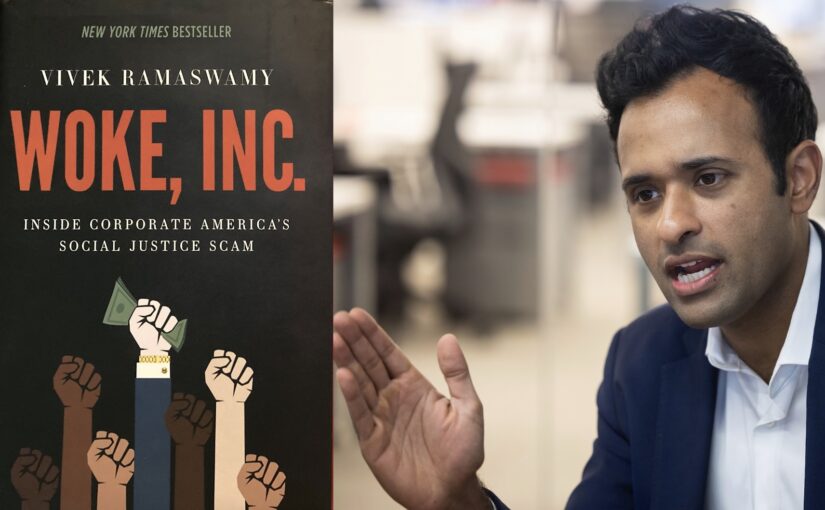
Woke Inc

Coca-Cola is one of the largest and best known consumer products companies in the world. Many of its products contribute to the rich world’s obesity epidemic. Rather than confront that very real harm, company leaders have instead found a convenient distraction in pledges and policies around social issues.

That’s one example that biotech executive turned Republican Presidential hopeful Vivek Ramaswamy puts forward in his 2021 book Woke, Inc.: Inside Corporate America’s Social Justice Scam.

Today’s obsessive use of “woke” by American conservatives to dismiss any progressive policy or perspective is silly and lazy. (Even authors I follow closely have done so). I reluctantly got the book expecting another shallow rendering of partisan talking books. This isnt that. In truth, I think the “Woke Inc” title may be limiting, even if it has proven effective in selling books.

Vivek has something to contribute to the conversation. I’ve written about the perils of today’s shareholder capitalism, but Vivek offers a nuance I hadn’t seen before: Big companies are using progressive talking points to distract from challenges they are better suited to address.

As he puts it: “If you claim to owe the public everything, you will in fact owe it nothing.”

Like all of the books I read, I’m not endorsing any other author’s policy stances. I did appreciate the book, whether or not I agreed with much of the author’s conclusions. Below I share my notes for future reference.

Continue reading Woke Inc

First You Write a Sentence: The Elements of Reading, Writing and Life

Writers begin their journey loving words. Later they learn to love sentences. Still later, they turn to obituaries. Or something like that. The point: Language is a cultural invention so its forms and our relationship to it is ever changing.

To become a better writer, then, is to grab hold of these various for their various purposes. For one, as Gertrude Stein put it: “paragraphs are emotional and sentences are not.”

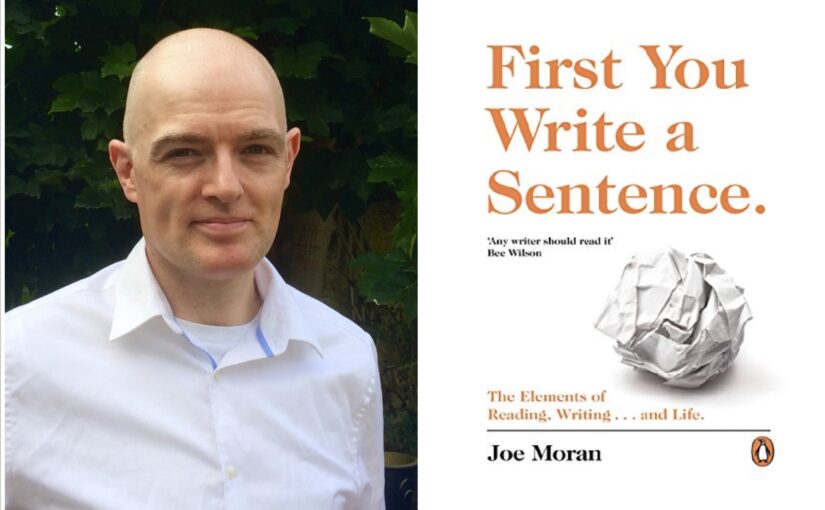
Somewhere in here is how we develop our “writing voice.” Not exactly the same as how you speak but maybe, “a buried, better-said version of you,” as author Joe Moran put it in his 2018 book First You Write a Sentence: The Elements of Reading, Writing . . . and Life.

It’s a lovely book, both for the craftsmanship Moran puts into his sentences and the wisdom he pulls together on stronger writing. I recommend it. Below I share my notes for future reference.

Continue reading First You Write a Sentence: The Elements of Reading, Writing and Life

Semicolons

Punctuation for writers is better thought like musical notation for composers.

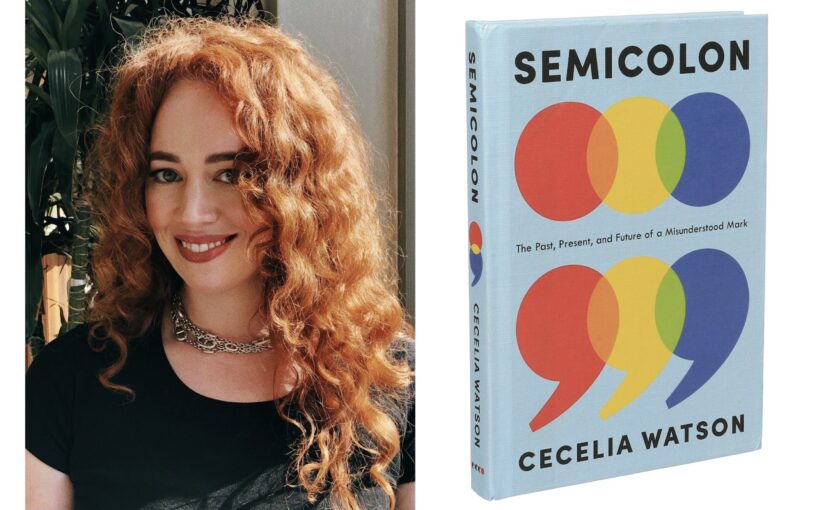
Too many rules are arbitrary and clumsy attempts to guide to better writing. Hence the strange intimidation and vitriol toward one piece of punctuation in particular, the semicolon, which was created in 1490s Venice. Treat it with care and with love. That’s a goal from Cecelia Watson’s slim 2019 book Semicolon: The Past, Present, and Future of a Misunderstood Mark.

Below I share my notes for future reference.

Continue reading Semicolons

What We Owe The Future

People matter if they live thousands of miles away — and thousands of years away too.

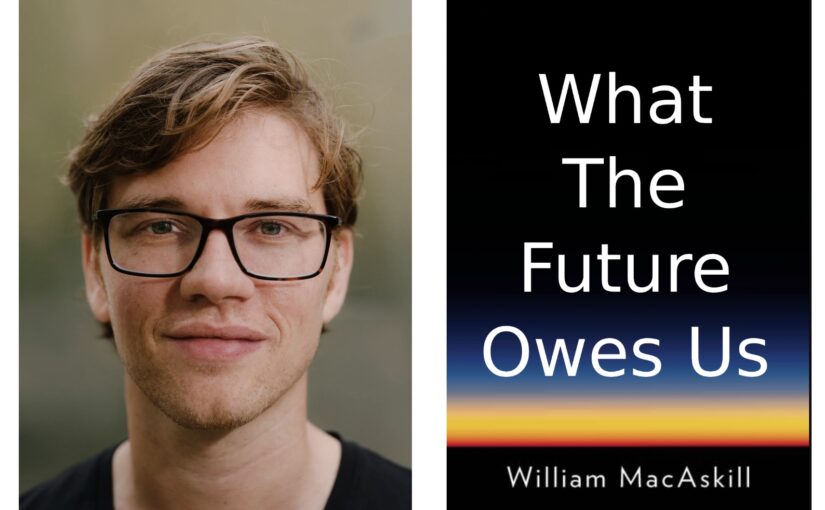
That’s among the primary arguments from What We Owe the Future, a 2022 book by the Scottish philosopher and ethicist William MacAskill that popularized a concept of longtermism (which has coincided with effective altruism).

Below I share my notes for future reference.

Continue reading What We Owe The Future

The Power Law: Venture Capital and the Making of the New Future

Silicon Valley wasn’t created in the 1950s by government intervention — which favored neither California nor Massachusetts at the time. It wasn’t just northern California’s counterculture or Stanford. Its ability commercialize basic products was the interweaving of egalitarian openness and capitalistic competitiveness that venture capital created.

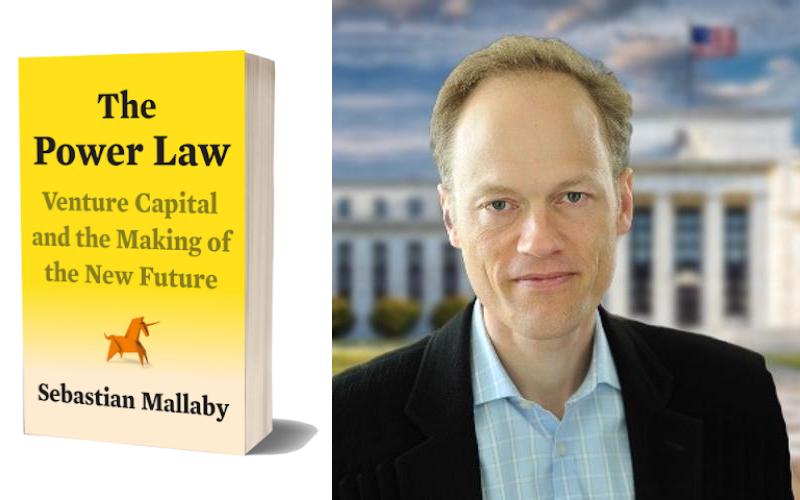
So argues The Power Law: Venture Capital and the Making of the New Future, a 2022 book by economics journalist Sebastian Mallaby. What early Silicon Valley culture did have was a true ecosystem of people gossiping and swapping ideas and sharing. It reminds me of why free speech emerged in Europe.

The book is a history of venture capital, though it adds nuance to another book I read that is a pure history. This book gets its title from the the power law concept, in which you lose only 1x your money but if you miss a deal you could lose out on 10x or 100x your money. That fuels big bets.

Mallaby’s book is exhaustive. I appreciated its deep history, others might not. The book does feel full of survivorship bias, of war stories from successful people (mostly men) describing why they were successful. Quirks of the writing come up — he uses the subjunctive a lot like “in 1986, he had offered,” and sprays the term “Presently” all over the place — but I mightily appreciated the book. Give it a try.

I share my notes below for future reference.

Continue reading The Power Law: Venture Capital and the Making of the New Future

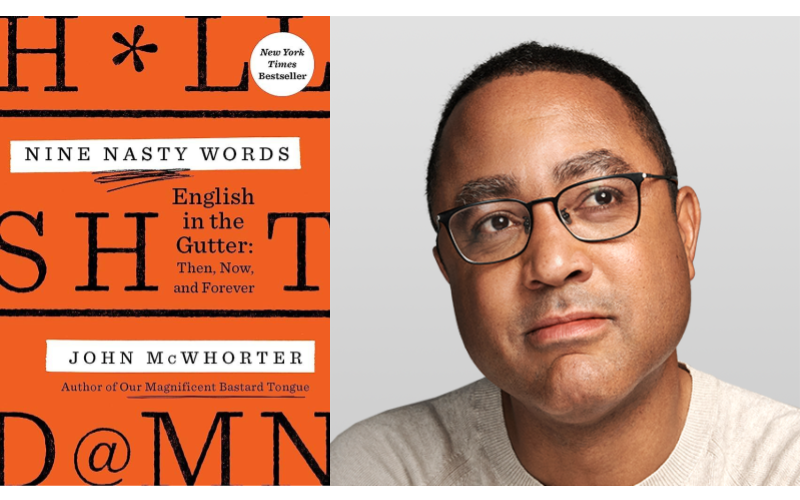
9 Nasty Words by John McWhorter

Vulgarity has gone through three big waves in English: about religion, about the body and now about groups of people.

The etymology and usage of profanity can tell you the most important lesson there is about language: It is always in motion, whether or not you know it, can perceive it or like. That’s the point of linguistics professor John McWhorter’s 2021 book Nine Nasty Words: English in the Gutter: Then, Now, and Forever. As he cheekily summarizes: “Profanity, first involved the holy, and only later the holes.”

I’ve read a bunch of McWhorter’s books, including his other recent publication, which veered into the political. This book is far more like his other pure, approachable books on linguistics. I’m a fan of his, and I’d recommend this as much as his others. As he writes: “To understand that language changes without allowing a certain space for serendipity is to understand it not at all.”

For future reference, I have my notes below.

Continue reading 9 Nasty Words by John McWhorter

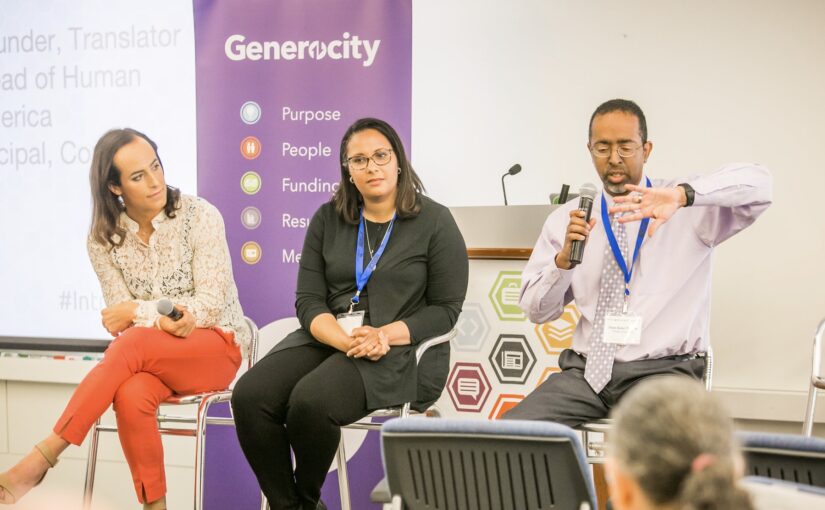
After 7 years, I am no longer Generocity.org publisher

This was originally published on Technical.ly. I republished it here because it feels an especially personal update. This post completes a resolution of mine for the year.

After seven years of publishing Generocity.org, Technical.ly’s parent company Technically Media has transitioned the nonprofit-industry news site to Civic Capital, a philanthropic consultancy.

This is personal to me. In 2015, I led the effort to acquire Generocity, which was founded by philanthropist Sandra Baldino years prior. In the ensuing years, I was publisher for both Technical.ly, which expanded its geographic focus, and Generocity, which remained focused in Philadelphia. Both followed a similar playbook: Find an important industry that is typically covered nationally and report obsessively on it with a local lens.

Continue reading After 7 years, I am no longer Generocity.org publisher