My latest Business Insider story is focused on the economic and family challenges of school-free summer.
I’m scrambling to get my kid into summer camp. We’ve joined multiple lotteries and lost money, but I need to fill 10 weeks of summer.
My latest Business Insider story is focused on the economic and family challenges of school-free summer.
I’m scrambling to get my kid into summer camp. We’ve joined multiple lotteries and lost money, but I need to fill 10 weeks of summer.
Becoming an equal partner is the man’s glass ceiling.
Most American households are dual-income earners, and even in these, men contribute less domestically than women. Gender plays an outsized role. But even in same-sex relationships, one partner seems entirely aloof of what the other does domestically. Culture seems to make this all difficult to overcome, so a manual helps.
That’s the spirit of the 2022 book Equal Partners: Improving Gender Equality at Home, written by Kate Mangino, who has a PhD in social development.
“It is harder and more time-consuming to be a good mother than to be a good father, and it is easier for a woman to fail in motherhood than for a man to fail in fatherhood,” Mangino writes. “We have set the caregiving bar too high for mothers and too low for fathers.”
Mangino makes great effort to speak to relationships with different genders, while reflecting that close to 90% of American households have those in a male and female roles. Those “male-coded” and “female-coded” dynamics are a theme. I found the book challenging at times — sometimes productively, and a few times because I just flatly disagreed with the author’s framing. But I respect and appreciate Mangino’s contribution. It helped me marriage, and will help others. I recommend it. Buy it here.
Below I share my notes for future reference.
Continue reading Improving gender equality at homeRead my piece in Business Insider
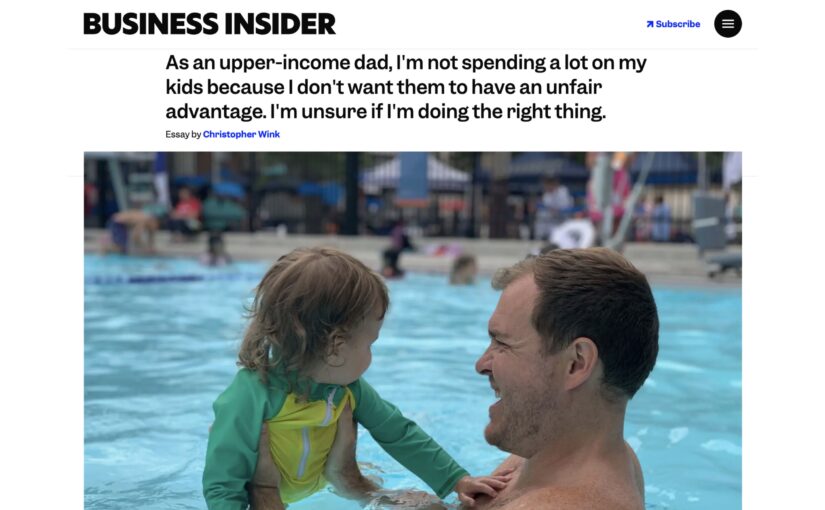
I’m a father who uses some of my expendable income on my kids’ after-school activities.
I worry that giving my kids unlimited access to all these expensive activities will be unfair.
I’m now not using my entire expendable income to give my kids access.
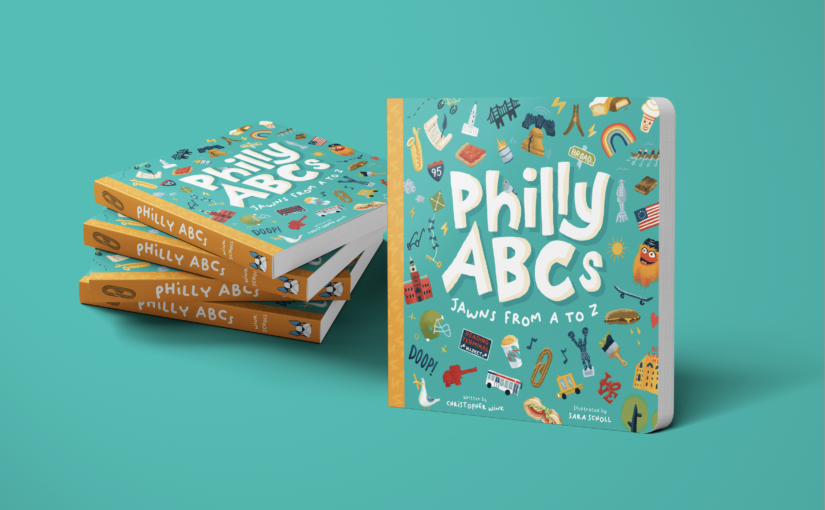
After reading a particular regional children’s board book one too many times, I decided my home of Philadelphia deserved better.
I’m a journalist who spends my days obsessed with how places develop identity and share that with people to live, work and thrive. I’m also the father of two young kids in the city’s Fishtown neighborhood. I also happen to have a close friend who is a talented illustrator and a new mother herself (Hi Sara Scholl!).
I wanted to create a simple board book that would keep young kids engaged, amuse grown-ups and actually contribute something to a region’s identity. I was working on the alphabet with my pre-schooler, who responded best to fun environments where she could tie visuals to sounds and letters.
As dead-simple as it is, the ABCs framework had been used for just a couple states and cities around the world, along with some industries and hobbies. I made a list of kids publishers that seemed to produce a similar vibe, did hours of research of contacts and processes at those firms. Then I led outreach.
On Sept. 28, 2025, my first kids book launches, and can be pre-ordered at PhillyABCs.com.
Below I share some other background, lessons and insights for later.
Continue reading PhillyABCs: my first kids bookDo less for your kids. Give them rules and discipline and love. Don’t be their friend. Be their parent. Let them be bored, let them screw up. Teach them no, please, thank you and table manners. An industry of psychologists and gentle parenting help on the margins but likely cause more damage than help.
That’s from conservative author Abigail Shrier’s new book Bad Therapy: Why the Kids Aren’t Growing Up.
The book starts off with a big, wide criticism of therapy and mental wellness, of which I was skeptical. But as Shrier turned to its impact on parenting styles, my interest grew — especially as a parent of young children myself. In the end, I found it to be a welcome contribution to Jonathan Haidt’s high-profile Anxious Generation.
Below I share my notes for future reference.
Continue reading Why the kids aren’t growing upParents and schools should treat social media like they do cigarettes — unhealthy addictions that are distracting from learning and development.
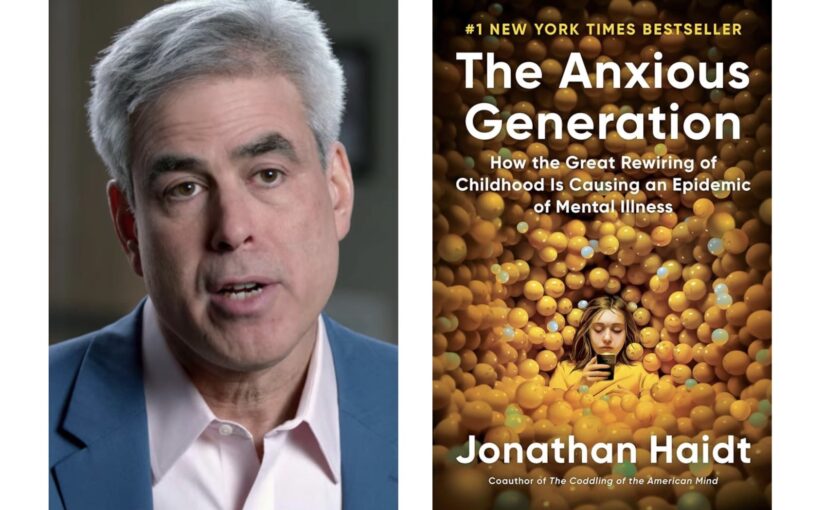
That’s the big argument in “The Anxious Generation: How the Great Rewiring of Childhood is Causing an Epidemic of Mental Illness,” a new popular book by psychologist Jonathan Haidt that has gotten widespread media attention.
“Social media use does not just correlate with mental illness,” he writes: “It causes it.”
Haidt has written several books on living healthier and happier, and he has researched social media use for years. But it’s this book at this time that met the moment: I’ve seen him interviewed by countless national media and at conferences. His advice marks one set of strategies for how parents and wider society can respond to the mounting evidence that algorithmic feeds of addictive content is especially challenging for children to overcome.
Below I share a few points I’m taking into my own parenting.
Continue reading Ban smartphones from schoolsKids who graduates with high marks at high-achieving schools were later put into a high-risk category for mental health disorders.
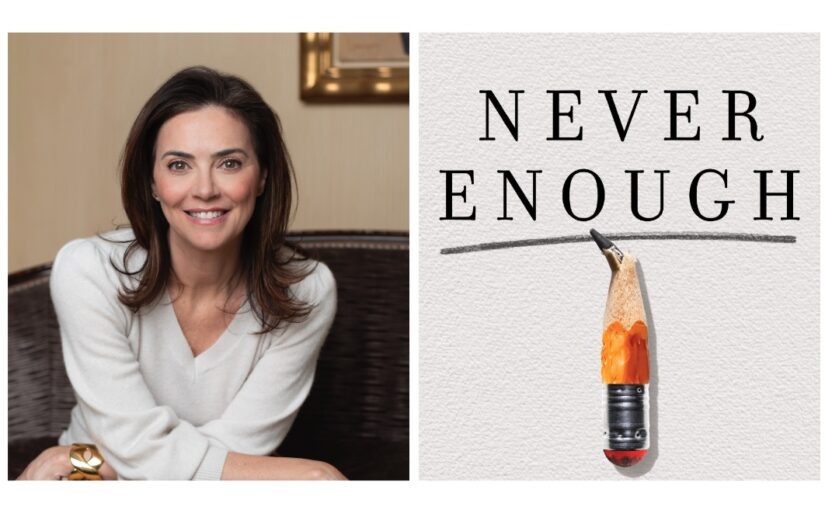
Something felt off, so journalist Jennifer Breheny Wallace wrote ” “Never Enough: When Achievement Culture Becomes Toxic-and What We Can Do About It.”
I read it as a parent, so my notes are scant but the point is clear: Pushing kids for academic achievements can reverse course years later. Better to encourage a healthy and happy relationship with learning. Trouble is that short-term outcomes look good for pushing kids — grades go up — but on the longtail, they’re less happy.
Continue reading When Achievement Culture Becomes ToxicThis month the U.S. government suspended the health emergency, effectively ending the pandemic.
That doesn’t mean covid-19 is gone (it isn’t); it doesn’t mean it won’t flare back up (it could); it doesn’t mean we won’t have another pandemic someday (we might). But it does mark the end of this nearly 3.5 year period.
Millions of lives were lost, and economic and psychological trauma was enacted, all of which we’re still confronting. As a coping mechanism, a friend and I were talking about the little behavior changes that took root, some of which we may reference for years to come. At the very beginning my Technical.ly newsroom was interested in what and how we would create.
I kept up my resolutions, and they were different than before covid-19. I’ll always reference these few simple behavior changes that now feel entrenched as part of me after so many life changes:
Continue reading How was your pandemic?Once my second kid started sleeping through the night, the most challenging part of raising two young kids became navigating my older kid’s emotional toddler stage.
For nearly two years after crossing six months old, I found our first kid to be a great listener. Then the tantrums and outbursts began. We know why. That toddler and pre-schooler stage is the height of emotional and social development. It’s tricky.
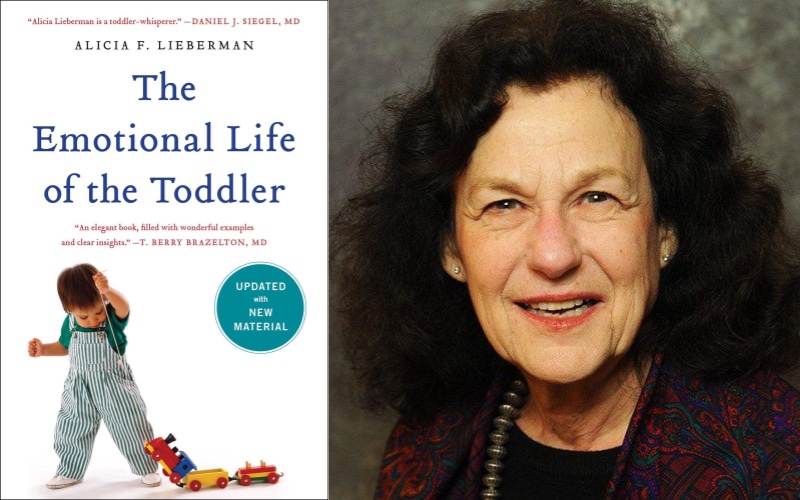
I find many parent social posters and expert books to be genuinely helpful. One of the classics of the genre is The Emotional Life of a Toddler, first published in 1993 by child psychologist and researcher Dr. Alicia Lieberman. I read the 2017 edition.
My notes below for future reference.
Continue reading The Emotional Life of a ToddlerI’ve been thinking about this a lot lately.
Newborn 0-3 mo
Infant 3-6 mo
Baby 6-12 mo
(Parents are always tired)
Toddler: 1-3 yrs
Pre-schooler: 3-5 yrs
(Parents are always late)
Grade-schooler: 5-13 yrs
Teenager: 13-20
(Parents are apparently always wrong)