How ‘common knowledge’ works

The recursion of what most of us call common knowledge is endless: We know that they know that we know that they know, and so on.

No trivial matter, this form of communication is a likely driver of the very development of language so that humans could better coordinate.

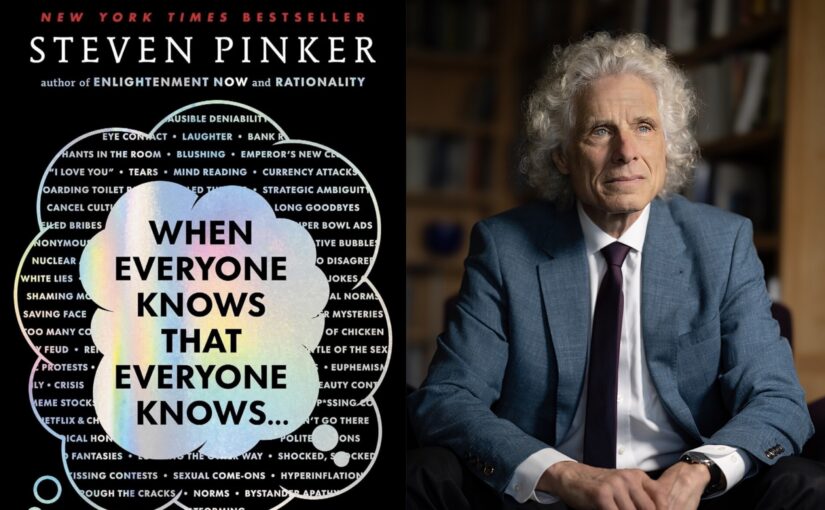
So argues Steven Pinker, the public intellectual and Harvard cognitive psychologist, in his new book “When Everyone Knows That Everyone Knows: Common Knowledge and the Mysteries of Money, Power, and Everyday Life.

Though no specific accusations appear to be public, the timing proved awkward. He’s one of several prominent intellectuals named in a tranche of new correspondence with notorious financier-pedophile Jeffrey Epstein. One of Pinker’s prominent book endorsements is Bill Gates, who is even more exposed.

I read the book before fully understanding this, and it’s not clear what it all means now. Though no great revelation, the book gathers perspective on a widely familiar concept.

Below my notes for future reference.

Continue reading How ‘common knowledge’ works
Algospeak

Are algorithms creating a new kind of language development, or just speeding the method we’ve always had?

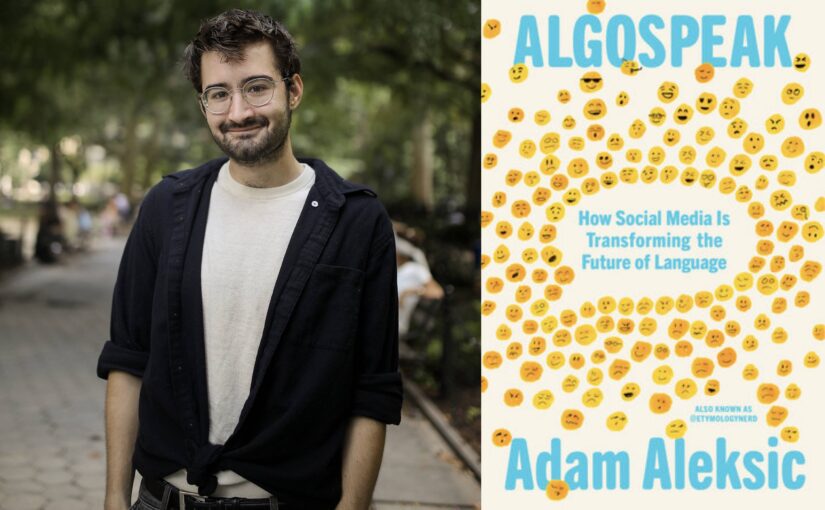
“Words aren’t just diffusing from human to human anymore: they’re now moving from human to algorithm and back to human.” That’s from Algospeak: How Social Media Is Transforming the Future of Language, the new, charming and insightful linguistics book by Adam Aleksic, a Harvard-trained, 20-something influencer creating under the ‘etymology nerd’ handle.

As he writes: “Algorithms are the culprits, influencers are the accomplices, language is the weapon and you, dear reader are the victim”

Below I share my notes for future reference.

Continue reading Algospeak

Pronoun Trouble by John McWhorter

The singular use of “they” is entirely consistent with other linguistic shifts, and even familiar to older periods of English. The term’s partisanship may come more from how quickly and forcefully the change, rather than the change itself.

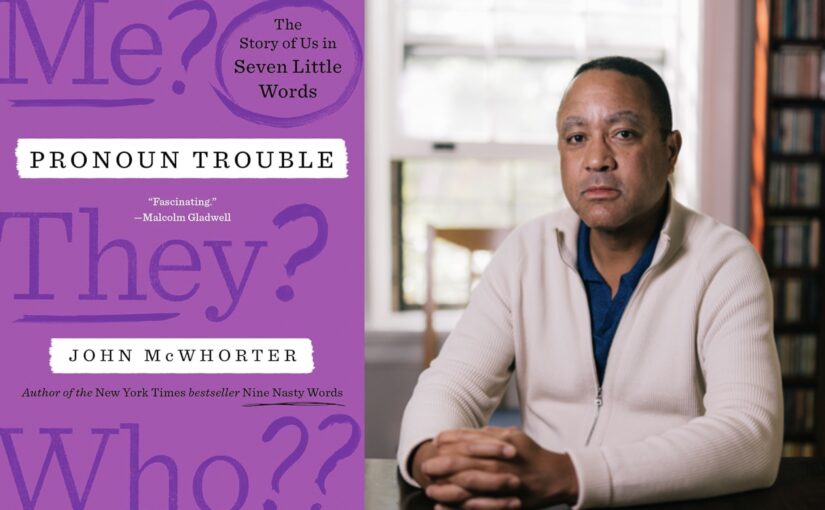
That’s from linguist John McWhorter’s new book Pronoun Trouble: The Story of Us in Seven Little Words.

I’m a fan, and have read most of his other books. This one is consistent with his growing style: Using credible linguistics research to guide us through today’s language changes. It’s a quick and approachable read, I recommend it.

Below I share my notes for future reference.

Continue reading Pronoun Trouble by John McWhorter

We are a “storytelling animal”

Watch a human brain while engaged in a story and that brain looks as if that person is actually experiencing the story, rather than observing it.

That’s why stories are so sticky: why we eavesdrop on other stories, watch movies, listen to music, read novels and gossip. It’s a defining characteristic of humanity.

That’s the thrust of the 2012 book “The Storytelling Animal: How Stories Make Us Human,” written by professor Jonathan Gottschall. Though he argues examples of story’s power shows up all over the place, from effective marketing to biography books and new journalism, this book centers around fiction. Fiction appears better at convincing than nonfiction, exactly because fictional stories put us in a kind of trance, lowering our defenses. How nations and cities, friends and companies, organize are all reliant on stories. (I referenced Gottschall’s work in my recent ‘case for storytelling’ conference speech.)

“Story is the grease and the glue of society,” wrote one psychologist. “Story is the center without which the rest cannot hold”

However the future of fact-based storytelling goes, there appears to be no decline in story in our lives, as disinformation campaigns and bestselling video games both show. As one gamer puts it in the book: “the future looks bleak for reality.” 

Below I share my notes for future reference.

Continue reading We are a “storytelling animal”

The science behind storytelling

Any given musical note gets its meaning from those before and after it, as French philosopher Henri Bergson (1859-1941) introduced: “the invisible progress of the past gnawing into the future,” which he called “duree.”

That insight from a book review reminded me of the role storytelling plays in the human experience. As universal as storytelling is, it is often overlooked.

“The antagonism toward storytelling may have reached a peak in the twentieth century with the determined effort to reduce all knowledge to analytical propositions and ultimately physics or mathematics,” as one academic put it in in 2001. “I found that the resistance to rethinking the role of storytelling was considerable,”

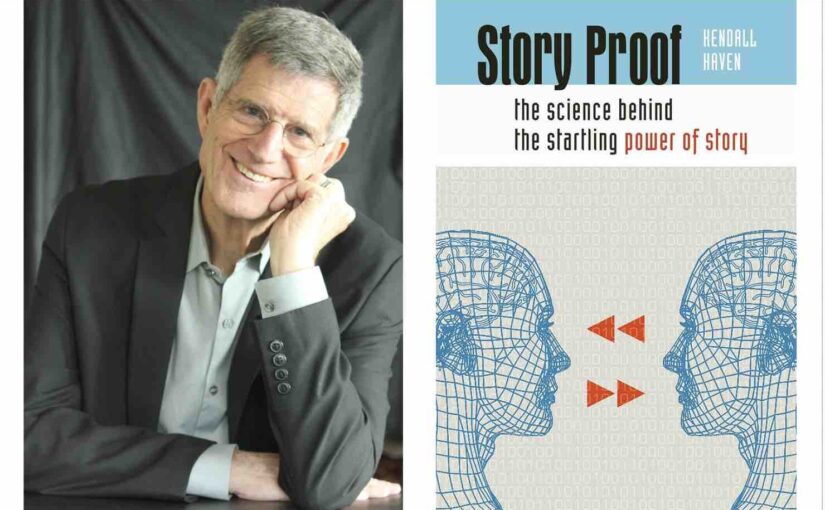
That reference is from Kendall Haven’s 2007 book “Story Proof: The Science Behind the Startling Power of Story,” which I recently completed. It’s part of my long-love of understanding the science of story, which coincided with my own contribution to the cause. Haven’s short book boasts 120 credible studies and references to more than 800 to argue it plainly: information structured in story form are received and retained more effectively. Haven was a science researcher in oceanography in the 1990s before leaving to argue science and story are compatible.

Many of these books don’t make a clear line between whether the story is from real life or fabricated because our brains make no such distinction. Nonfiction gives a truth; fiction creates a truth, goes the thinking. Elsewhere though I’ve seen it’s less about the category than the approach. Still, we do open our minds wider in a fictional landscape.

My notes below for future reference.

Continue reading The science behind storytelling

Word Origins: how etymology interprets English

How language evolves is better understood today because of a few obsessively written forms, and the development of comparative techniques. This is etymology, a science of irrational human culture that requires the balance of simple elegance and rigorous complexity.

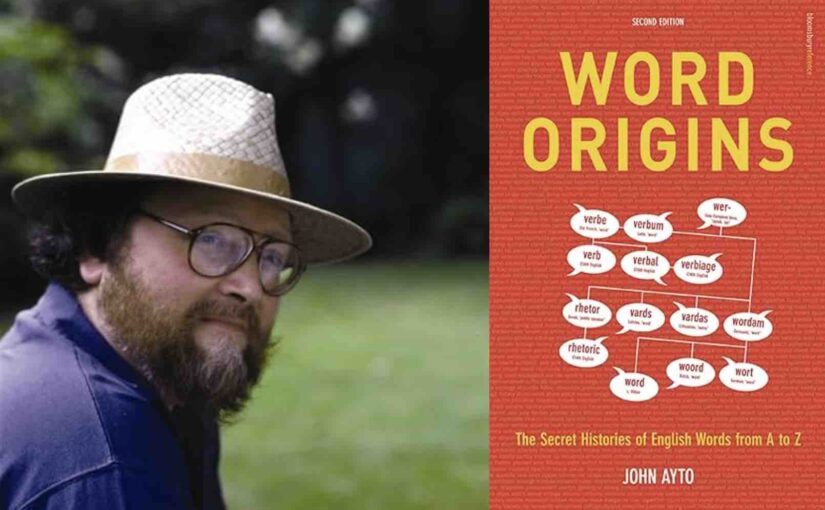
The obscure science of etymology is broadly known but not widely considered. Years into a curiosity with linguistics, I picked up the 2005 book from lexicographer John Ayto called Word Origins: The Secret Histories of English Words from A to Z.

It wasn’t quite what I expected — less a detailed account of the process and more a  charming walk through hundreds of word origins to demonstrate the start and stop discovery process. It still does better convey the process, and fits alongside broader popular books on linguistics 

Below are my notes for future reference.

Continue reading Word Origins: how etymology interprets English

How to use brain science to tell be stories: Story Genius

Your novel is only half the story. The other half already happened.

That’s from the 2016 book from literary agent and story consultant Lisa Cron called “Story Genius: How to Use Brain Science to Go Beyond Outlining and Write a Riveting Novel (Before You Waste Three Years Writing 327 Pages That Go Nowhere).”

I love ‘writing about writing,’ and this book is one of the most commonly cited works among writer groups. Because of that, lots of writers have opinions on the book. For my money, it did just what it aims to do, and I appreciated Lisa’s approach. I’ll recommend it just like it was recommended to me.

This book includes a bigger concept that I found insightful: The reason stories attract so much attention is humans evolved to seek self-awareness and understanding from them. “The purpose of story — of every story — is to help us interpret, and anticipate, the actions of ourselves and others,” Cron wrote. “We don’t turn to story to escape reality. We turn to story to navigate reality.”

Below I share my notes for future reference.

Continue reading How to use brain science to tell be stories: Story Genius

How Indigenous Americans Discovered Europe

Already hundreds of indigenous Americans lived in France before Cortes landed in Mexico in 1519.

Their stories are more complex, rich and nuanced than we typically understand. Too rarely have we followed their journey across the Atlantic to Europe, which they considered “savage,” especially because of the stark inequality they found.

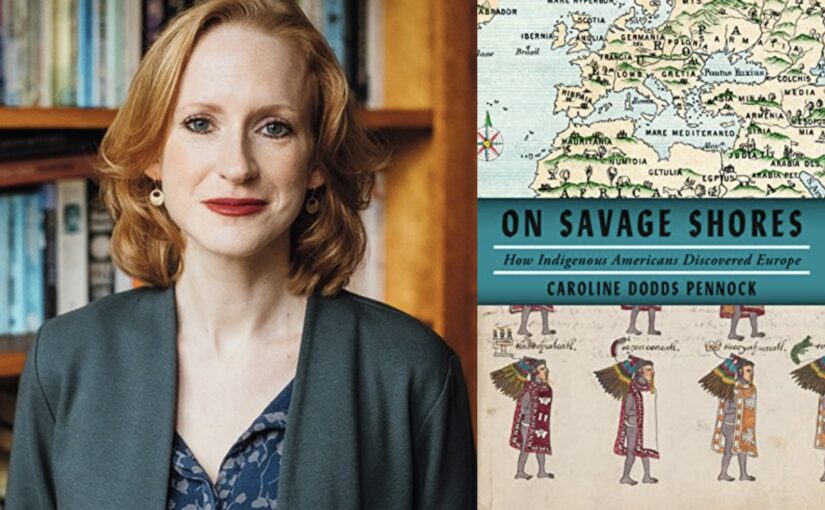
That’s the focus of history professor Caroline Dodds Pennock’s 2023 book “On Savage Shores: How Indigenous Americans Discovered Europe,” which she calls “a project of discovery.” Like the 2006 book 1491, this is part of an effort to add complexity to the post-contact era.

I shared notes from my reading below for future research.

Continue reading How Indigenous Americans Discovered Europe

Papyrus: The Invention of Books in the Ancient World

Irene Vallejo sought to learn more about the women who were erased from so much of history.

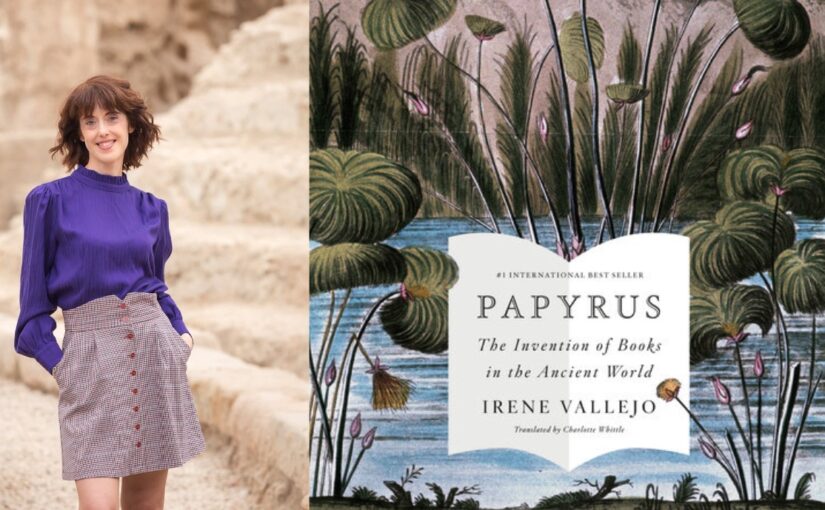
The result became a far wider history, her 2022 book Papyrus: The Invention of Books in the Ancient World. Her pursuit became an allegory of books themselves: so powerful they make ideas last which means they can be co opted to shape history. As she put it, books resulted in “a fantastical increase in the life expectancy of ideas”

In some sense, they are the original “Google effect,” in which “we tend to remember better where information is kept than the information itself. The book, written in Italian and then translated by Charlotte Whittle, is beautiful and thorough. It’s full of quirks of history and a broad understanding of the project that is our modern set of knowledge.

Below I share my notes for future reference.

Continue reading Papyrus: The Invention of Books in the Ancient World

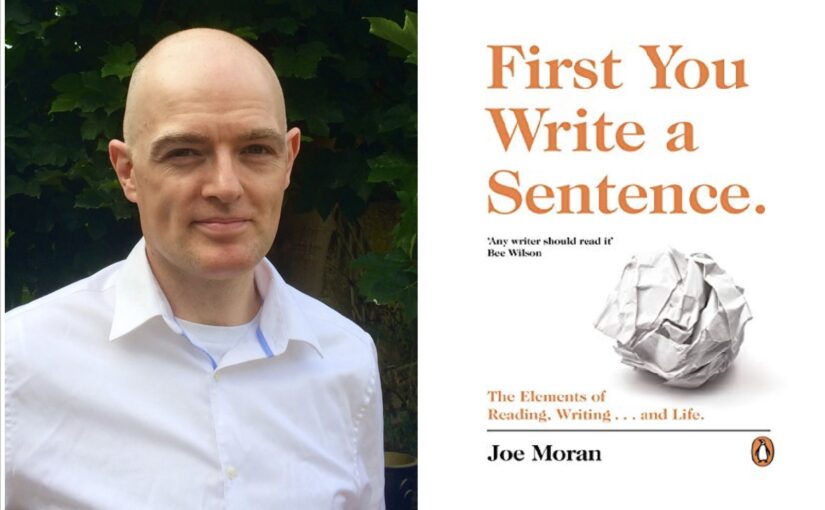
First You Write a Sentence: The Elements of Reading, Writing and Life

Writers begin their journey loving words. Later they learn to love sentences. Still later, they turn to obituaries. Or something like that. The point: Language is a cultural invention so its forms and our relationship to it is ever changing.

To become a better writer, then, is to grab hold of these various for their various purposes. For one, as Gertrude Stein put it: “paragraphs are emotional and sentences are not.”

Somewhere in here is how we develop our “writing voice.” Not exactly the same as how you speak but maybe, “a buried, better-said version of you,” as author Joe Moran put it in his 2018 book First You Write a Sentence: The Elements of Reading, Writing . . . and Life.

It’s a lovely book, both for the craftsmanship Moran puts into his sentences and the wisdom he pulls together on stronger writing. I recommend it. Below I share my notes for future reference.

Continue reading First You Write a Sentence: The Elements of Reading, Writing and Life