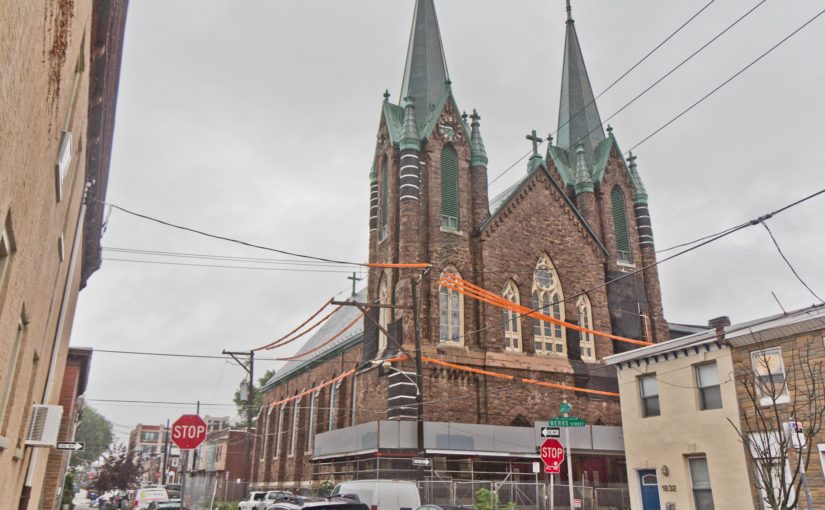
The Parable of St Laurentius

Note: This historic church in Philadelphia’s Fishtown neighborhood is being replaced.

I want to tell you the parable of St Laurentius Church

St Laurentius is an old church, at least by American standards. It was built in 1882, with the donations from Polish families who wanted something of their own — beyond the other Catholic Church nearby that catered to Irish Catholics.

Continue reading The Parable of St Laurentius

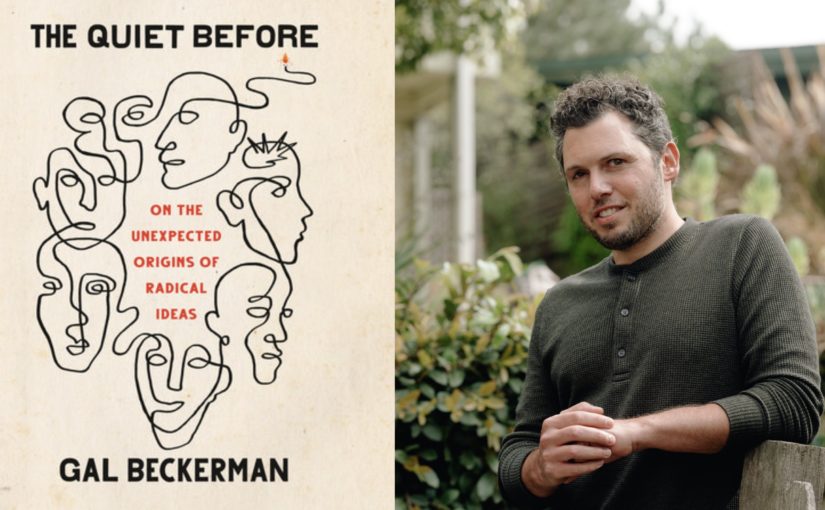
The Quiet Before: the unexpected origins of radical ideas by Gal Beckerman

Long before the change happens, people start by talking.

That’s how community organizing really happens. Before intersectionality or the fall of the Berlin Wall or the Civil Rights movement, or even before the recent explosion of the alt-right, somewhere people quietly come together to form a movement. What do those moments have in common?

That’s the focus of The Quiet Before: On the Unexpected Origins of Radical Ideas, a new book by Gal Beckerman, a books editor for the Atlantic and formerly The New York Times. (Find a review in the Washington Post)

Below, find notes for my future review — and watch an interview Beckerman did with Sewall Chan, who spoke at the 2020 edition of an annual journalism conference I host.

Continue reading The Quiet Before: the unexpected origins of radical ideas by Gal Beckerman

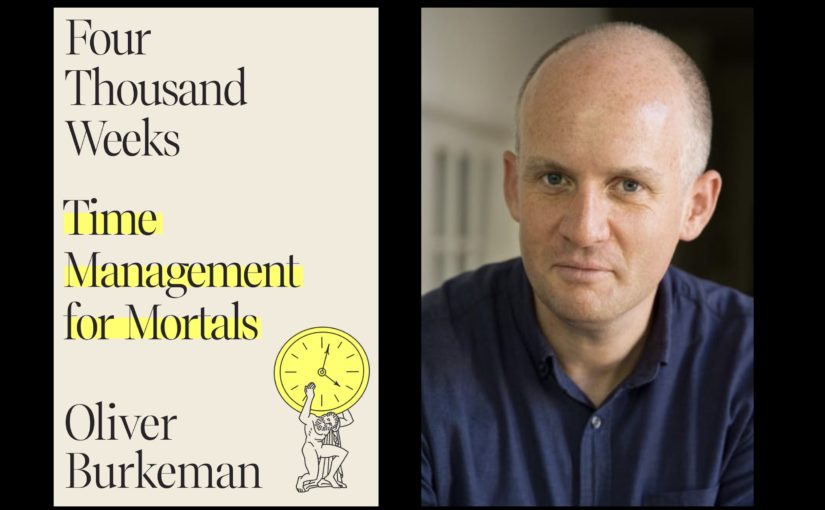
Four Thousand Weeks: Time Management for Mortals

No time management system can save you if you won’t save yourself.

Our human capabilities are powerless against software, global scale and machine learning. We can’t keep up. It’s the “efficiency trap” — the more effective we get, the more others rely on us. Time management, then, isn’t about getting more done but rather it’s about deciding what not to do and how to be at peace with our decisions.

That’s the biggest theme I took from Four Thousand Weeks: Time Management for Mortals, last year’s bestselling book from former productivity columnist Oliver Burkeman.

The average human lifespan today is about 4,000 weeks — which gives the book its title and its purpose. After spending much of his career chasing each productivity hack, the author came to a newfound philosophy. Late in the book he describes it as his “Cosmic Insignificance Therapy”: recognizing our futility in the universe is a prerequisite for sustaining a balanced life.

High-achievers can still work hard and do great work. He writes about how. More than anything though the book argues we need the right foundation before we ever chase “inbox zero.” As a productivity nerd myself, I enjoyed the book and got lots from it. It is far less tactical and so may not resolve what some want out of a time management book, but it succeeds at adding something new to the conversation.

Below I share notes for my future reference.

Continue reading Four Thousand Weeks: Time Management for Mortals

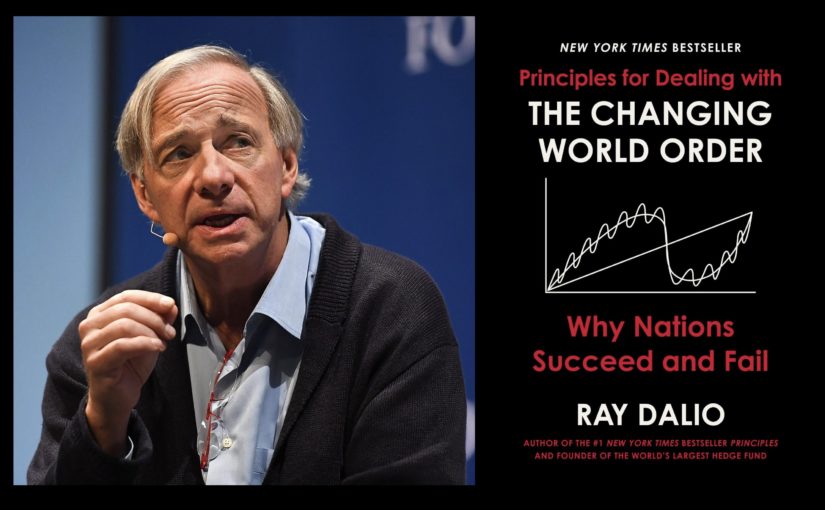
The Changing World Order: Why Nations Succeed or Fail

Empires rise and fall in predictable ways that follow long-established patterns.

An emerging power invests heavily in education, infrastructure and trade to create wealth, which it protects by strengthening its military. Elsewhere the current leading power grows decadent with rising wealth inequality, in-fighting and fading investments until the emerging power confronts it – and wins. War and revolution start the cycle anew.

That’s among the biggest themes from the high profile 2020 book from Ray Dalio, the founder of one of the world’s largest hedge funds: Principles For Dealing With The Changing World Order Why Nations Succeed And Fail. It’s part of the “principles” series that includes extensive independent research that Dalio’s team maintains here. He intends to look at the longest historical period possible to find patterns that can inform what happens next.

Most pressingly, he argues we’re at the late stage of the American empire, when the United States will continue to decline from its role as the world’s global hegemony and cede that position to China. I’ve been disappointed that much of his coverage has not challenged him on what seems a very big conflict of interest: Dalio is heavily invested in China, an authoritarian country that does not protect criticism, and he has been careful to avoid criticizing the party. In short, the book’s biggest flaws may be that he pulls his punches against China. Still, by using his own determinants and data, he paints a stark picture of unassailable patterns over the last 500 years up until today that looks like this:

Below I share my notes from reading the book for my future reference.

Continue reading The Changing World Order: Why Nations Succeed or Fail

Dialect Diversity in America: notes from William Labov’s 2012 book on language change

Language variation is becoming more distinct, not less, in the United States.

So argues the 2012 book “Dialect Diversity in America: The Politics of Language Change” by influential linguist and academic William Labov.

One major divergence in dialects is between African American Vernacular English (AAVE) and white dialects but differences go wider too. According to Labov, people from cities such as Los Angeles, Chicago, Toronto, Philadelphia, and New York now speak more differently from each other than they did in the 1950s. This seems counterintuitive given the ubiquity of mass media, but academic linguists have shown that one-way communication does less to influence how we talk than our peers.

The book is insightful and compelling Get yourself a copy. My notes for future research are below.

Continue reading Dialect Diversity in America: notes from William Labov’s 2012 book on language change

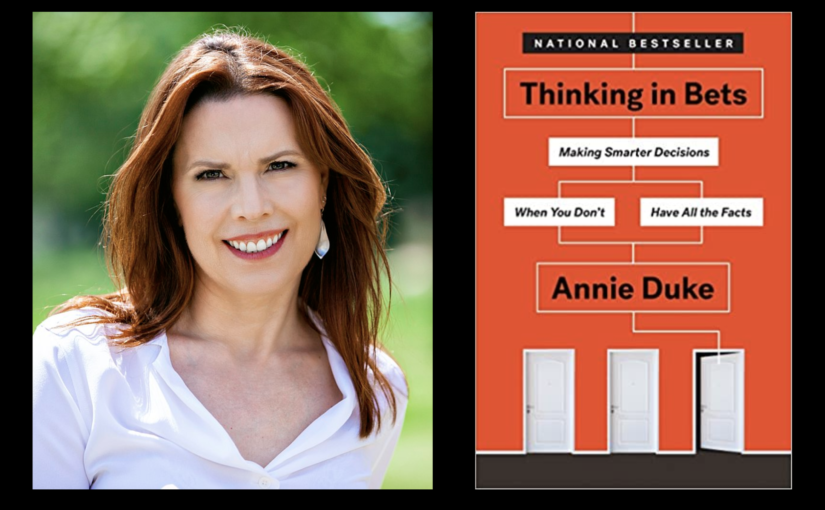
Thinking in Bets: insights on decision science from the 2018 book by Annie Duke

Life is poker, not chess.

We operate with limited information and are outcomes are heavily influenced by others with varied priorities. That’s the setup for the 2018 book Thinking in Bets by poker player Annie Duke. She was near to several poker scandals but has since focused on decision science — with her poker past as an effective storytelling device.

It was popular in business circles. The book is effective in conveying a clear overall point and synthesizing relevant research. I enjoyed it and would recommend it.

Below I share notes for my future reference.

Continue reading Thinking in Bets: insights on decision science from the 2018 book by Annie Duke

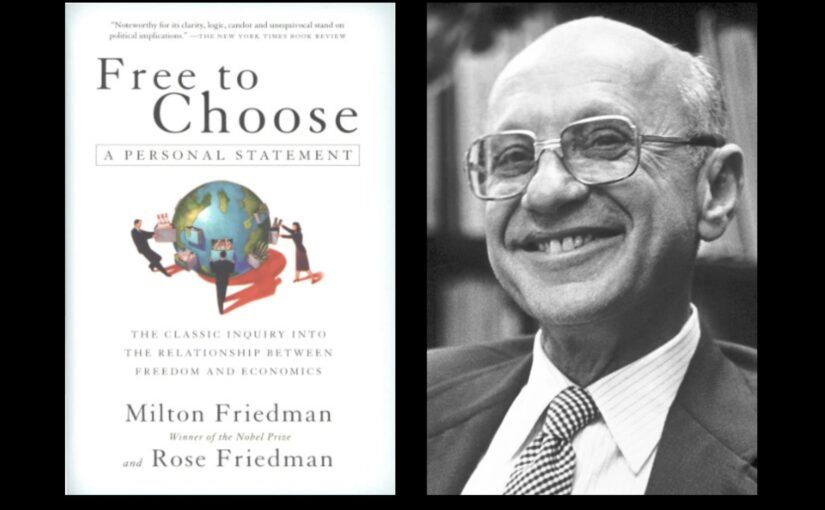
Free to Choose: Milton Friedman’s 1980 defense of American capitalism

Capitalism exposes inequality. It doesn’t cause it.

That’s among the big arguments that influential free market economist Milton Friedman (1912-2006) made in his bestselling 1980 book “Free to Choose.” By 1980, Friedman was the best-known economist of his generation; In 1962, he wrote Capitalism & Freedom, in 1970 he introduced his influential case for shareholder value and in 1976 won the Nobel Prize in Economics.

The book was published in a period of increased government intervention in the economy, high inflation and economic stagflation in the United States. Friedman’s ideas were seen as a counterpoint to the dominant Keynesian economic policies of the time, and he was part of a wave that was epitomized by the so-called Regan Revolution. The book was also the basis for a ten-part television series of the same name that aired on PBS in 1980. The series and book were well received by the public and helped to popularize Friedman’s views on economics.

See my notes below.

Continue reading Free to Choose: Milton Friedman’s 1980 defense of American capitalism

The many locations of the Pen and Pencil Club

(Note, as a past P&P board member, I drafted an earlier history, and this reflects some updates from my friend Sandy Smith. In honor of the place surviving the pandemic, with a fair bit of financial help from many of us members, I wanted to finally share what I know about the place)

The Pen & Pencil Club has had more homes than Philadelphia had daily newspapers when it was founded in 1892. Its current and permanent home at 1522 Latimer Street is the Club’s 16th residence—a fitting end to more than a century of nomadic existence.

The Club’s journey began at 133 South 11th Street, where it occupied the second floor for two years before moving to Bohemian Hall in 1894. Bohemian Hall remained the Club’s longest home, housing it until 1926. Neither of these buildings exists today; Thomas Jefferson University’s hospital now occupies the 11th Street site, and its Scott Building has stood on the Bohemian Hall site since 1970.

The Club’s third home was its first owned property: a townhouse at 1023 Spruce Street, purchased in 1926 for $42,500. Unfortunately, the Club struggled financially during Prohibition and could not sustain mortgage payments, leading to foreclosure in 1936. The building was sold in the late 1930s for $11,500.

From there, the Club rented its next ten homes. Its fourth location was in the now-demolished Walton Hotel at 233-47 South Broad Street, which it occupied from 1937 to 1941. It then moved to 1522 Walnut Street, now home to Holt’s Cigar Company, where it remained through 1944.

In 1945, the Club moved to 1523 Locust Street. Tragically, a Christmas Day fire in 1946 destroyed much of the building and the Club’s records. By January 1947, the Club had relocated to 1615 Walnut Street, where it stayed for 16 months; a New Balance store now occupies this building.

The Club’s eighth home, from 1948 to 1954, was at 239-41 South 15th Street, which drew over 1,000 attendees, including Mayor Bernard Samuel and Governor James H. Duff, to its opening. The site was later demolished, and the Academy House condo tower now stands there.

Records indicate a brief and undocumented stay at 1305 Locust Street in 1954, followed by a move in 1955 to South Camac Street, a stretch once known as the “street of clubs.” This location, at 239-41 South Camac, was also the first home of the Poor Richard Club.

The Club’s next two homes are somewhat unclear. By February 1963, 216 South 16th Street was listed as its address, and it later appeared at 1709 Chestnut Street during the 1960s.

In 1967, the Club moved into its third-longest-lived home at 218 South 16th Street/1600 Chancellor Street, where it stayed for nearly two decades. In 1986, the Club purchased its second owned property at 563 North 15th Street, but financial struggles forced it to close this location in 1990.

The Club reopened later that year at 1623 Sansom Street, where it remained until 1995. This building has since been replaced by the structure housing Abe Fisher and Dizengoff restaurants.

Finally, on August 17, 1995, the Pen & Pencil Club purchased its current home at 1522 Latimer Street. This time, the Club found stability: its mortgage was paid off early, and the milestone was celebrated in 2015 when then-President Chris Brennan ceremonially burned the note.

After more than a century of relocations, the Pen & Pencil Club has firmly settled into its home—a testament to its resilience and enduring role as the nation’s oldest surviving press club.
Power of Habit: notes from the 2012 bestseller by Charles Duhigg

Habits work in three steps: the cue, the routine and the reward.

To change a habit, swap out the routine — because the cue and the reward are apparently already successful. That’s a big theme from Power of Habit, the 2012 bestseller by Pulitzer Prize-winning journalist Charles Duhigg. I’m personally interested in the habit of habits so this book was long on my list to read — then a friend encouraged me to read it since it related to a project of ours. And so here I am.

Below I have a few notes for me to return to in the future.

Continue reading Power of Habit: notes from the 2012 bestseller by Charles Duhigg

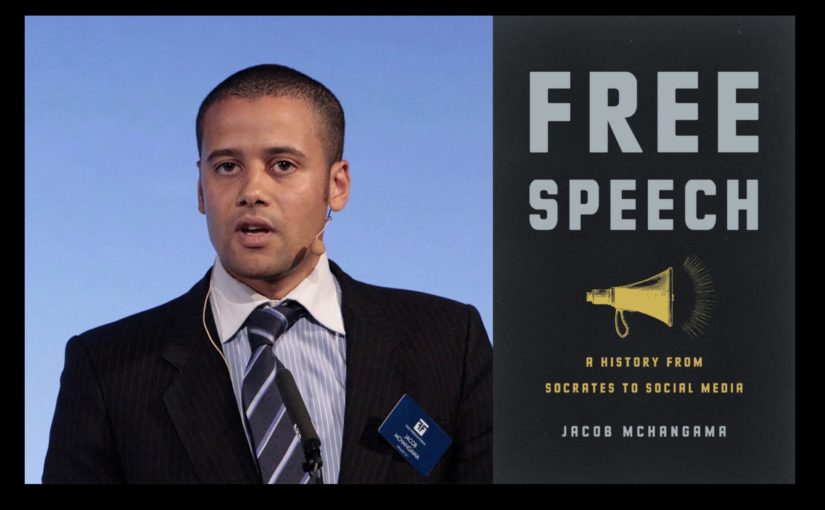
FREE SPEECH: its history and future by Jacob Mchangama

Free speech has a long history. Long enough that we know the pitfalls so well that they have nicknames.

There’s Milton’s Curse to describe the tendency for emerging leaders to defend free speech, only to walk backward once they are in power. More recently, we added the Streisand Effect, nicknamed after Barbara Streisand’s failed 2003 attempt to keep photos of her Malibu home off the internet. Her failed resistance generated far more attention.

This long, fragile and volatile path for free speech is the focus of the new book Free Speech A History from Socrates to Social Media by Jacob Mchangama. It is thorough, important and enjoyable. I recommend it. Below are my notes for my future research purposes.

Continue reading FREE SPEECH: its history and future by Jacob Mchangama