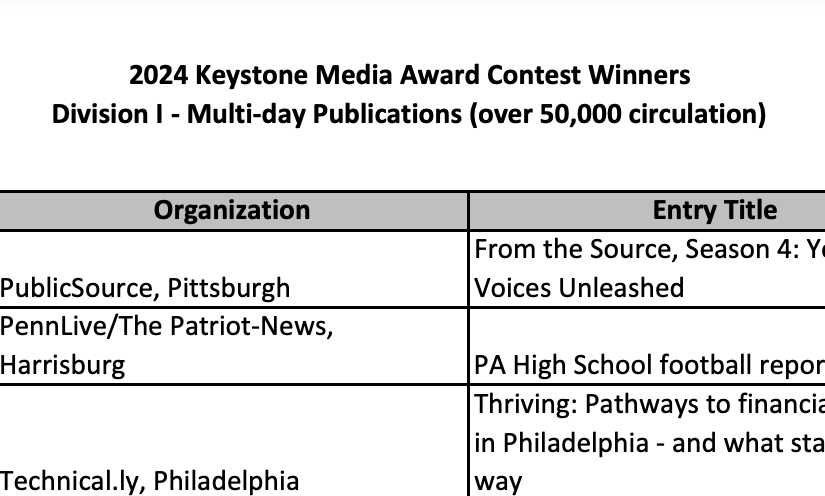
It’s another much appreciated honor for the two-year reporting, community engagement and qualitative research project. I was especially proud that we got the nod in the “large” newsroom category, meaning the most stiff competition. Find THRIVING here.
Month: October 2024
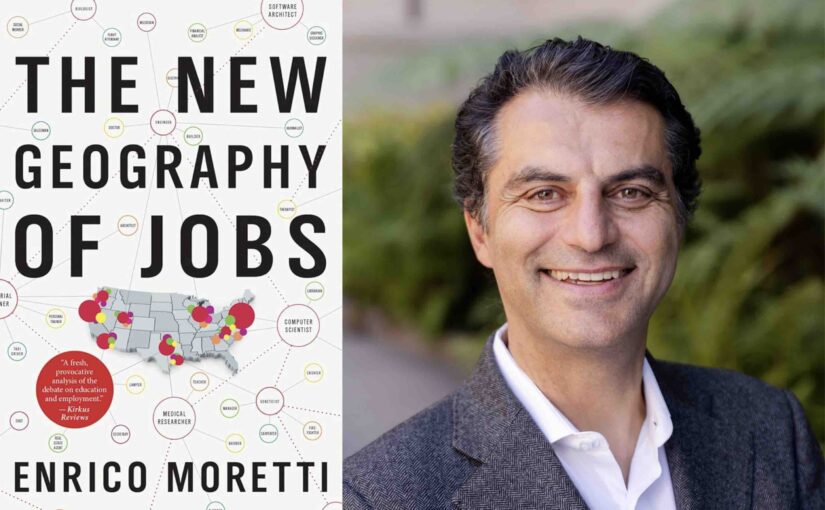
The New Geography of Jobs
In 1979, Seattle and Albuquerque were comparable regions, in population, in reputation and industry.
That year, young Bill Gates and team moved their fledgling computer company Microsoft back home to Seattle — and that changed everything. A generation later, Albuquerque native Jeff Bezos decided to move his own early ecommerce company Amazon to Seattle because Microsoft built an ecosystem there. Today, Seattle is a top-tier innovation economy, by my news organization’s own measure, and Albuquerque isn’t even on the map.
Where once regional economies sought physical capital, they now pursue human capital, and there’s a flywheel effect for people even more than the agglomeration effects of industry. So argues the influential 2012 book The New Geography of Jobs, written by economist Enrico Moretti.
This matters because like manufacturing in the 20th century, the knowledge sector is the driver of the economy today. All those “tradable jobs” create all the non-tradable ones that follow. Put another way, if you lcoate a tech firm or manufacturing plant in a town, then a Walmart will follow — but not the other way. All those productive workers make everyone else more productive too, for three big reasons: complementarity, better technology and externalities.
Globalization was supposed to mean “the world was flat” Instead, geography matters even more. Below find my notes for future reference.
Continue reading The New Geography of Jobs
Storytelling and data work together for ecosystem building
Too often when tech, startup and local economic development leaders I know say they want more “storytelling” about their “ecosystem,” they just mean “I want more people to know about my stuff.” They mean marketing and promotion alone.
But when we evoke the word “storytelling” we need more meaning. All the brain science makes clear, storytelling works when the audience learns something about themselves. With the help of strong data-backing, today storytelling can mean: Using fact-finding and people stories to help a community identify the closest approximation of its truth. It sounds like my old definition journalism.
This idea of marrying data with storytelling for local economic organizers was the focus of a keynote, and subsequent discussion, I led at SuperConnect, the user conference of Baltimore-founded startup Ecomap. It was informed in part by the “ecosystem stack” concept I’m tinkering with.
My slides are here. Earlier this year, I presented a webinar for the firm, and those slides are here.
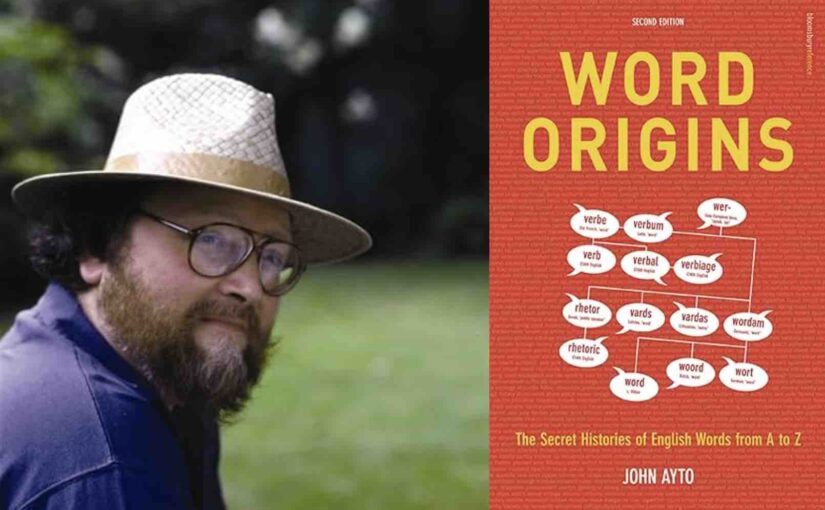
Word Origins: how etymology interprets English
How language evolves is better understood today because of a few obsessively written forms, and the development of comparative techniques. This is etymology, a science of irrational human culture that requires the balance of simple elegance and rigorous complexity.
The obscure science of etymology is broadly known but not widely considered. Years into a curiosity with linguistics, I picked up the 2005 book from lexicographer John Ayto called Word Origins: The Secret Histories of English Words from A to Z.
It wasn’t quite what I expected — less a detailed account of the process and more a charming walk through hundreds of word origins to demonstrate the start and stop discovery process. It still does better convey the process, and fits alongside broader popular books on linguistics
Below are my notes for future reference.
Continue reading Word Origins: how etymology interprets English