Teacher talent is the biggest challenge to education reform: notes from Ted Hershberg

Penn Professor Ted Hershberg

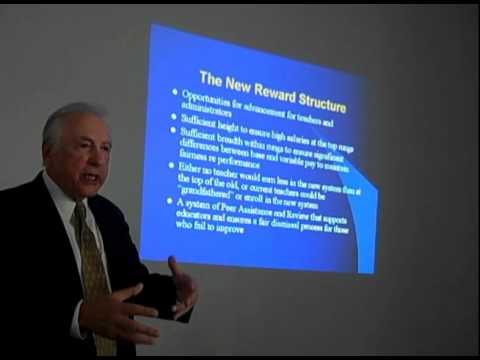
A dense, 30-minute look at the past, present and future of education reform in the United States was the focus of a presentation by the celebrated University of Pennsylvania professor Ted Hershberg last week.

Though his lecture was part of a class I’m taking that is officially off-the-record, because I know Hershberg’s work through a friend of mine who is part of his research team and what he said follows what he often speaks on, I thought it was okay to share what I felt was a helpful top-level look at the problems and opportunities.

For context, Hershberg is an open left-of-center thinker, but he has a reputation for being an outspoken critic of the teacher’s unions. I share some easy-to-digest notes below.

Continue reading Teacher talent is the biggest challenge to education reform: notes from Ted Hershberg

Technically Baltimore and Baltimore Innovation Week: we’ve expanded

First shared in April and then announced more fully last month, earlier this summer, I helped soft-launch Technically Baltimore, another local technology news site committed to covering and growing the conversation around technology bettering the region there.

What’s even better is that, with the help of more than a dozen partners, we’re also organizing the inaugural Baltimore Innovation Week the last week of September, featuring more than 20 events.

It’s an entirely new challenge to go to a new city, though we’ve spent at least a year familiarizing ourselves with Charm City and its meaningful, passionate technology community and have hired a full-time reporter there. Our goal is to take what we’ve learned in Philadelphia and do it better in another city we love: connect entrepreneurship, enterprise, digital access, smarter government and creative and artistic communities at their intersection and try to use news as convener and connector to raise awareness and strengthen their impact on Baltimore.

Let me know if you know anyone we should know. It’s a thrilling opportunity.

Corporate jargon: a collection and translation of common business slang

There is no shortage of jokes and jabs at corporate jargon. But here’s another.

Though the Internet has its fair share of lists and collections and compilations and generators, I felt too few of them actually helped remind us what they really meant and why they’re so hated — a PC obfuscation of business politics.

So this isn’t meant to be as comprehensive as the ones above, but rather a set of ones I really hear and have really come to understand to have a different, somewhat more subtle meaning.

In the past few years, I’ve gotten a taste of some and felt it took time to learn the most common underlying meaning. I use a lot of these words and phrases, and I don’t necessarily think that’s all that bad. Instead, I list them to help remind myself that I can often be more direct. Here’s my best shot at helping the cause for the rest of us.

Continue reading Corporate jargon: a collection and translation of common business slang

Does your knowledge economy-based city of the future import or export more ideas, culture?

If we are to build cities based in the so-called knowledge economy, one of the primary methods for judging its success should be very familiar: net exports.

In culture, ideas, concepts, general intellectual capital and, yes, even businesses and organizations, it may be worth questioning whether your city is mostly taking from others or mostly giving to others. Indeed, one wouldn’t only want to export knowledge — we always want to take ideas from others to get better — but a good sign of the success of a healthy region is the clustering of smart, creative people and their creating ideas, projects, businesses, ideas that are worth being shared elsewhere.

Continue reading Does your knowledge economy-based city of the future import or export more ideas, culture?

Niche news site membership model perspective brought back to life from 2009

The internet doesn’t forget. So I often stockpile perspective (links) for the future.

In 2009, we at Technically Philly were digging our heels into looking at how diversify revenue for a local community news site. In the end, the largest driver turned out to be events, specifically the annual Philly Tech Week we organize. Before then and after some advertising, jobs board and light underwriting revenue, we toyed with donations, gettingsome prominent support and the requisite pushback.

In all the experimentation back then, I saved some great insight, much of which has been relevant lately. As we move back to a new form of that older conversation, I wanted to share a few takeaways from my reading back in 2009.

Continue reading Niche news site membership model perspective brought back to life from 2009

Focus and causality: two lingering lessons from Steve Jobs biography

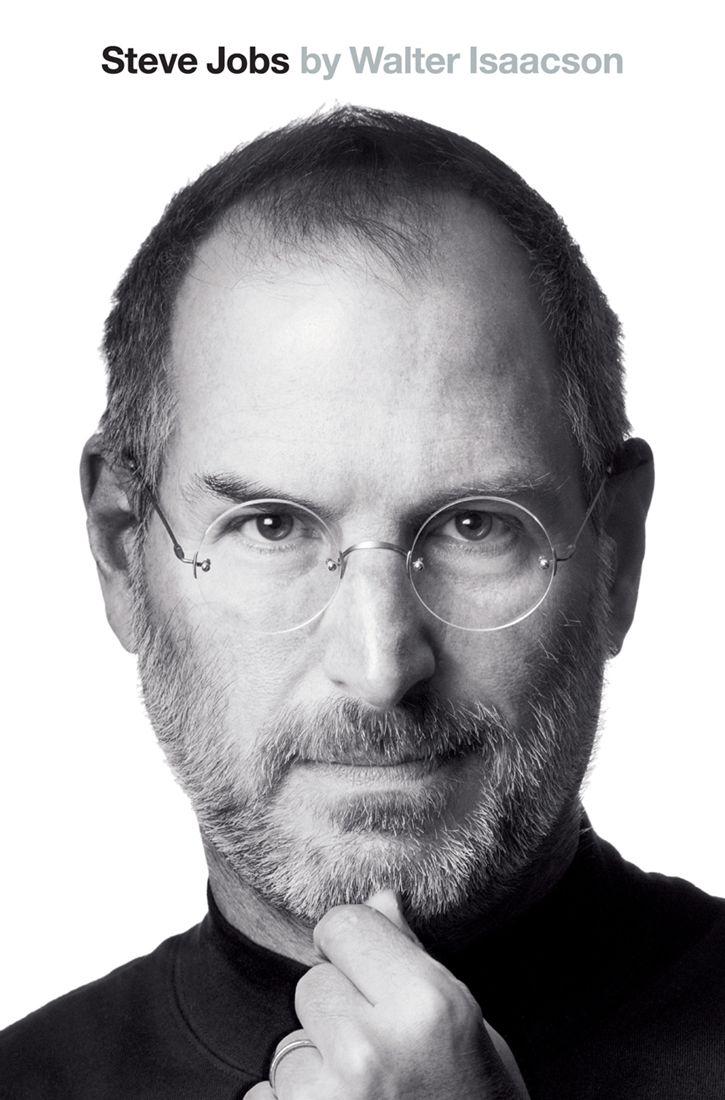
Two themes run across the dense and well-timed Steve Jobs biography by Walter Isaacson that came out last fall.

The unfaltering focus and dependable insensitivity of Jobs, so, having just finished it myself, I’ve been left trying to find causality: did those two qualities make him a better CEO and Apple a better company?

For focus, I believe it’s unquestionable: make fewer products and make them better. It’s the complete opposite of the market share angle of, say, spaghetti sauces. The second has me more uncertain, particularly when the success of Jobs is seen as motivation to drive employees to the edge.

Continue reading Focus and causality: two lingering lessons from Steve Jobs biography

News coworking in Philadelphia: Knight News Challenge app on the future newsroom

In all of regions, there is a great need to envision the future of the metro newsroom, which feature smart, engaged reporters on a variety of beats able to work together to better inform other residents and keep government honest.

In a fractured media ecosystem, the newsroom of the future is coworking for independent media. Reporters and editors together — freelance, niche sites and more — sharing and pushing forward the coverage and conversation among news creators in a given market.

I submitted a Knight News Challenge grant application on that very subject. See it here or on Google Docs here.

It wasn’t accepted, so that may slow the implementation of this, but I’ll work on it regardless.

I’ve been turned down by the News Challenge before.

In 2009, my colleagues and I submitted a business services pitch that was, though well founded, too large and convoluted to carry much weight. By the time it was re-formed as News Inkubator, it included something like this new pitch. Then again in 2010, we submitted a pitch for a shared community director called Cobblestone.

The third time just gives things a more rounded edge.

For news coworking, while others have talked about the idea, no one appears to be taking on the broad collaboration conversation with it. Launching an effort like this could tie into local chapters of ONA and Hacks/Hackers, it could bring the famed Pen & Pencil Club onto a more national stage and could be a chance to tell the long-tail story of Philadelphia journalism — maybe a historic directory like this and a museum of great work.

More to come on this.
Hosting free events: why charging a small sum can add more value

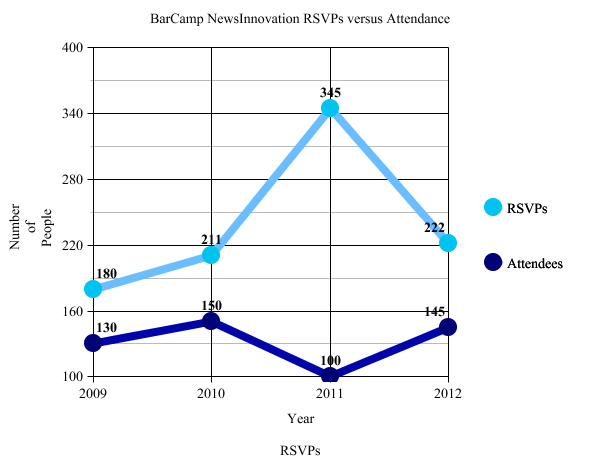
The 2012 BarCamp NewsInnovation was the first to have a paid entrance -- $5 -- which lowered RSVPs and raised attendance from 2011, which likely took on a much larger casual interest from being listed on the Philly Tech Week website. *Also, 2011 and 2012 featured hackathons, which added some attendees overall. These figures do not include them. **I added this graph to this post AFTER the last BCNI.

Later this week, I’ll help organize the fourth-annual BarCamp NewsInnovation.

It will again be, in my biased opinion, among the most meaningful media un-conferences in the country. We’ll have an open news hackathon again, ProPublica social media editor Daniel Victor will talk strategy and representatives will talk shop from legacy media powerhouses and independent news startups from throughout the eastern seaboard and beyond. That rocks.

REGISTER HERE!

Beyond all that, the biggest change in format is that, for the first time, we’ll be charging $5 for admission for the day-long event, which includes breakfast, lunch, happy hour and appetizers, in addition to concepts and conversations of note.

Continue reading Hosting free events: why charging a small sum can add more value

Facial detection can be blocked by changing the spatial relationship of your features: notes on event with artist Adam Harvey

Painting like this on your cheekbones is more likely to throw off facial detection technology than other methods, according to a thesis from artist Adam Harvey. Image courtesy of Harvey

Facial detection can be blocked by changing the contrast of and spatial relationship between key facial features.

So, though growing a beard might throw a casual human glance off, the growing process of computerized recognition is rarely tricked, because it focuses primarily on the T made by your eyes and the bridge of your nose. You’d be better served by painting on your cheekbones like above, a discovery that was part of a masters thesis from artist and photographer Adam Harvey. Harvey does research on tricking facial detection technology.

That discovery was among the coolest lessons I took from moderating a Q&A seminar hosted by the Academy of Natural Sciences as part of the kickoff of the Philadelphia Science Festival. Called Hiding in Plain Sight, it was also one of a number of events done in partnership with the second annual Philly Tech Week, which I’m helping to organize this week.

There were others — Harvey noted that he focuses on facial detection, instead of facial recognition, because the former has to happen first. Roughly 40 people listened, if only in part, to Harvey’s compelling presentation and his answers to questions from me and the audience, seated in a crowded Frankford Hall last Friday. The major kickoff event followed.

Continue reading Facial detection can be blocked by changing the spatial relationship of your features: notes on event with artist Adam Harvey