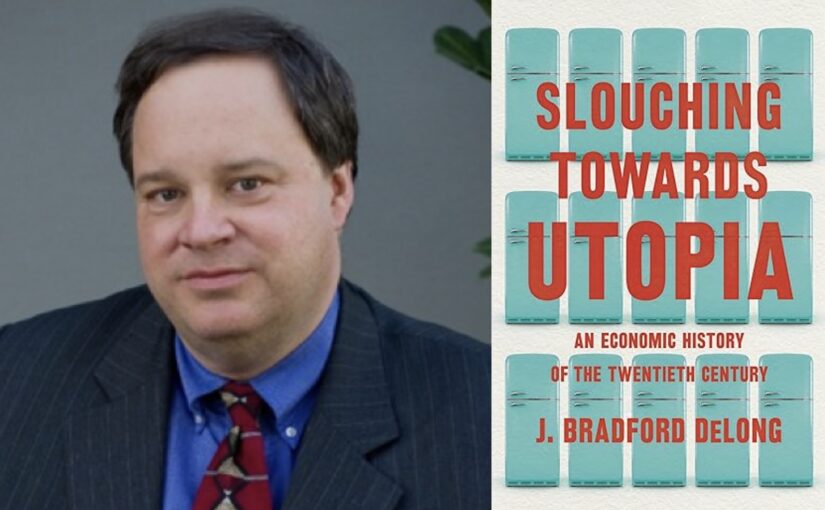
Slouching Towards Utopia: An Economic History of the Twentieth Century

If we have grown so rich so fast, why do so few of us think we’re living in utopia?

Something started during The Enlightenment, but everything really changed between 1870-2010, what has been called “the long twentieth century.” The world got richer and more technologically advanced at a rate many times faster than in any period of human history.

That’s the focus from economics historic Bradford deLong’s 2022 book “Slouching Towards Utopia: An Economic History of the Twentieth Century.” This extends Robert Gordon’s effective 2016 book The Rise and Fall of American Growth.

What happened in 1870? Well, deLong argues that we “invented invention,” with the help of the research lab and the corporation. Globalization happened too because, by 1870, “ it became more expensive to conquer than to trade.”

The book is well regarded in economics and history communities that I follow, so I eagerly read and enjoyed it. I recommend it for anyone as nerdily interested as I am. Below I share my notes for future reference.

Continue reading Slouching Towards Utopia: An Economic History of the Twentieth Century
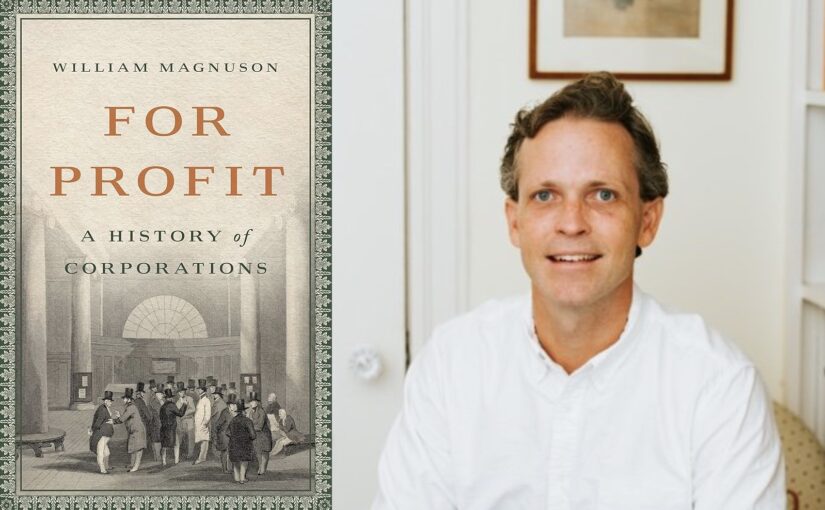
A history of corporations by William Magnuson

Corporations were invented in Roman times to extend the effectiveness of the government. Cicero called them “sinews of the state”

Over the next two thousand years, their form was refined but always followed the logic that they were meant to extend the common good of the nation. Queen Elizabeth didn’t charter the East India Company to make London merchants rich but to organize capital to help extend English rule; Abraham Lincoln chartered the Union Pacific railroad not for Boston capitalists but to bring a unified infrastructure. Profit wasn’t the state’s main interest but a deal was struck to allow for profit if value was created.

The Cold War turned corporations from tools to heroes, “a defining feature of western life,” to contrast with the Soviet Bloc — and that’s when we lost control of them. That’s a major theme from academic William Magnuson’s 2022 book For Profit: History of Corporations.

It’s dense but effective for anyone like myself with an interest in the foundation he provides on business, capitalism and economics. Below I’ve compiled my notes from the book for future research.

Continue reading A history of corporations by William Magnuson

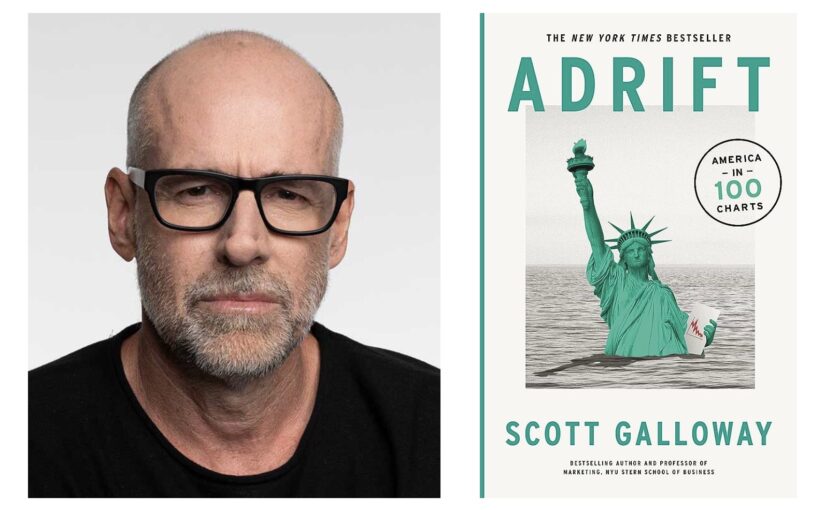
Is American leadership ‘Adrift’?

The United States remains the central leader in one of the most economically dynamic periods the world has ever known. We lack an organizing principle and shared vision.

That’s the overall argument from Scott Galloway, the business-school professor and pundit, in Adrift, his 2022 book centered around 100 charts on economics, culture and life. It’s a thoughtful, fun and breezy read for heavy material. It reads a bit like a textbook for the digital age.

Below I share my notes for future reference.

Continue reading Is American leadership ‘Adrift’?

Where are the 5+ million prime age men missing from the workforce?

A small segment of men out earn everyone else, but that’s not the dominant story of the American economy of the last 50 years: Men are falling out of the economy.

Overall: Higher rates of education, a sprawling prison population and antisocial-like behavior (despair) seem to account for at least five million missing prime-age men from the workforce.

% of Prime Age Men Without Work

The unemployment rate as an indicator entirely misses the crisis of labor-force participation among prime age men — because waves of men aren’t even trying to get formal work anymore. It’s ignored for many reasons, one of which may be that it doesn’t fit a progressive priorities, so it’s largely been voiced by conservatives — with a few exceptions. This is not happening in any other rich country save for Italy; This needs to be an issue of national and bipartisan interest.

That’s the main theme of Men Without Work: America’s Invisible Crisis, a book by demographer Nicholas Eberstadt. The book was first published in 2016, though I read an updated pandemic version published in 2022 amid dramatic economic shifts.

I’ve backed into this sort of trend-reporting when I covered how tenure rates have changed over time, and I’ve come across Eberstadt’s work elsewhere. I took his new pandemic release asa reason to read his full work. It’s urgent and nuanced and interesting and important.

Below I share my notes for future reference.

Continue reading Where are the 5+ million prime age men missing from the workforce?

Limitless: the history and future of the Federal Reserve Bank

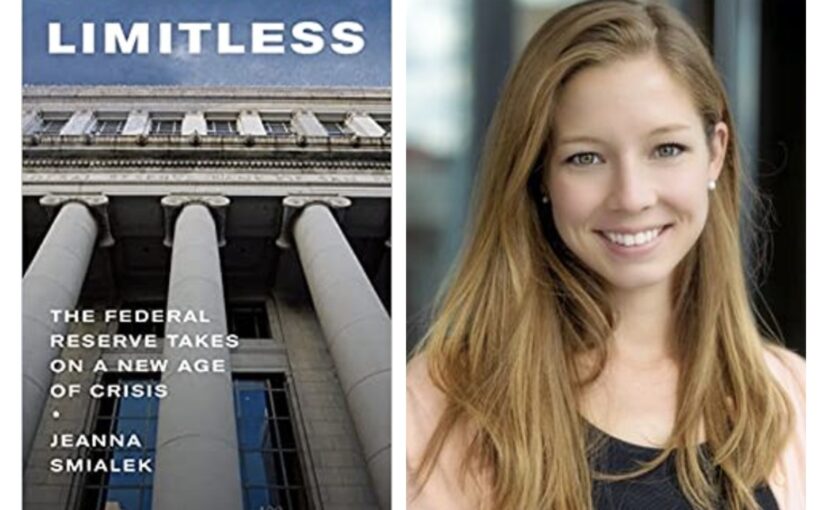
The Federal Reserve Bank of the United States has gone from a 30-year run as quiet and boring to one of the highest profile institutions in the world.

Its unique structure (its a central bank, but don’t call it that) and influential leadership (appointed leaders shaping the economy) bring it scrutiny, especially in a new era of “limitless” resources. Its history and future is the focus of Limitless: The Federal Reserve Takes on a New Age of Crisis, a 2023 book written by New York Times fed reporter (and Pittsburgh native) Jeanna Smialek.

The book’s final quarter features quite a bit of detail into the pandemic era machinations of fiscal policy, which will interest some but was too much for my interests. Still the overarching history and connective argument make it worth the read. Last year, I got but could not will myself through former Fed chair Ben Bernanke’s book on 21st Century Monetary Policy. In contrast, Smialek kept me engaged. The author is a regular on Marketplace, the popular public media business and economics radio show and podcast that I follow. I enjoyed it and recommend it.

Below I share my notes from the book for my future reference.

Continue reading Limitless: the history and future of the Federal Reserve Bank

Papyrus: The Invention of Books in the Ancient World

Irene Vallejo sought to learn more about the women who were erased from so much of history.

The result became a far wider history, her 2022 book Papyrus: The Invention of Books in the Ancient World. Her pursuit became an allegory of books themselves: so powerful they make ideas last which means they can be co opted to shape history. As she put it, books resulted in “a fantastical increase in the life expectancy of ideas”

In some sense, they are the original “Google effect,” in which “we tend to remember better where information is kept than the information itself. The book, written in Italian and then translated by Charlotte Whittle, is beautiful and thorough. It’s full of quirks of history and a broad understanding of the project that is our modern set of knowledge.

Below I share my notes for future reference.

Continue reading Papyrus: The Invention of Books in the Ancient World

Road to Serfdom

American style, lightly regulated democratic-capitalism so dominated the late 20th century that it’s easy to forget it was not destined to be. The form’s critics (and fans) can benefit from unwinding the tape.

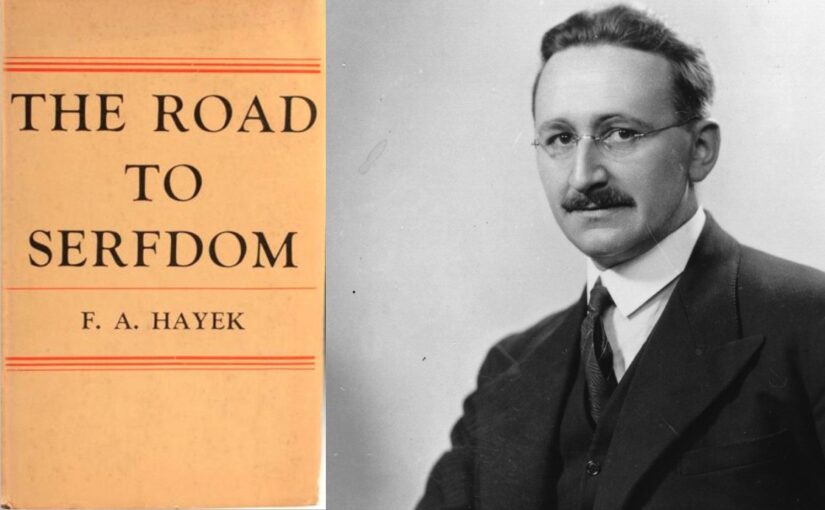
Austrian-British economist Friedrich Hayek (1899-1992) was among the chief architects of an ideology that resulted in that system, which gave us unprecedented growth and predictable inequality. With John Maynard Keynes (1883-1946), Hayek outlined much of today’s economic thought, in part by inspiring economist Milton Friedman who influenced the so-called Reagan Revolution. That’s not to say the system is necessarily the best option, but it is worth remembering Hayek viewed himself in opposition to fascists.

Whatever your stance on it, Hayek’s book Road to Serfdom, published in 1944, is an influential of classic liberalism and modern American and western light-touch capitalism. That’s why he still catches the ire of those defending greater state intervention. Since it is so often referenced, I finally read the thing myself.

I share my notes for future reference below.

Continue reading Road to Serfdom

The End of The World is Just The Beginning: Peter Zeihan

The American-led global system has led to remarkable peace and prosperity — and it is ending.

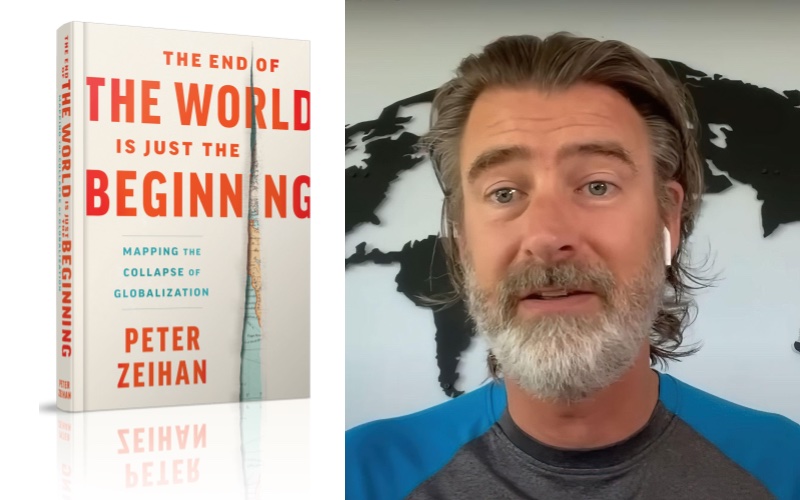
After World War II, unwilling or unable to maintain a truly global empire of old, the Americans built up Allies, not colonies — which would have been the historic norm. This worked, allowing a truly low cost and safe international trading regime which was subsidized by the US Navy. Supply anywhere could meet demand anywhere — a truly impossible utopian dream. This made sense for the US until the end of the Cold War, and it was continued in the 1990s unipolar world but it isn’t necessary. The threat of a rising China, which is aging rapidly and is heavily reliant on the American led global system too, is overblown. Globalization is over, and it’s time to understand what’s next.

That’s the bulk of geopolitical analyst Peter Zeihan, colorful, crisp and chilling book of realpolitik from last year: The End of the World Is Just the Beginning: Mapping the Collapse of Globalization (He has cool maps and visuals here). Zeihan’s speciality is in geopolitics and demography but he writes with clarity and humor while still retaining a sense of authority. He has his critics but I appreciated his voice. I’ve enjoyed his lectures online.

He’s all about “Geography of Success,” how much where you live determines your outcomes. His view of “deglobization” means the end of large-scale farming and return of widespread famine, he argues, but he bets that North America will do well in the coming decades. Central to this premise is US disinterest. Rather than active US involvement that many found “distasteful,” we’ll move to US disinterest that many around the world will find “terrifying,” he argues.

“Recent decades have been the best time in human history, and we are never going back.”

Below I share my notes for future reference.

Continue reading The End of The World is Just The Beginning: Peter Zeihan

935 Lies: what journalism learned from the War in Iraq

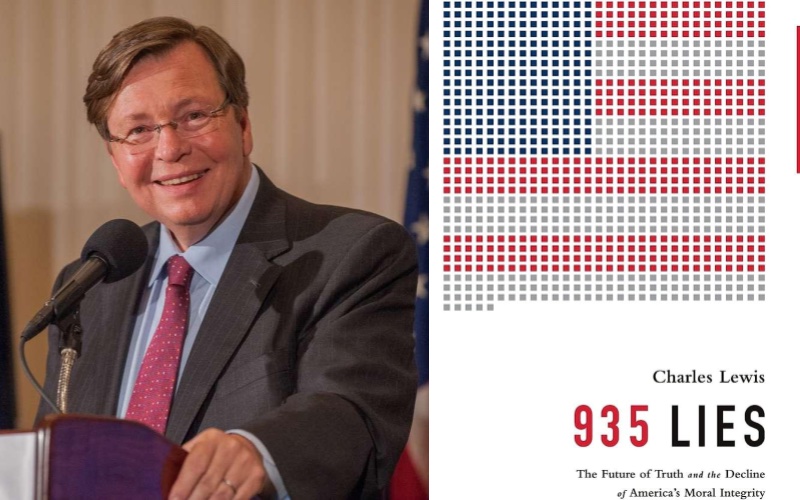
The Bush administration made 935 lies to extend the specious connection between the attacks of Sept. 11 and the American invasion of Iraq. So says longtime investigative journalist and journalism champion Charles Lewis in his reporting and 2014 book entitled “935 Lies.”

Lewis uses the book to champion the importance of investigative journalism, the role of journalists more generally and an engaged citizenry. Lewis is part of a class of journalists whose careers spanned the golden age of American journalism, when the business models worked and audience reach was an essential monopoly. That has all changed, yet his perspective is still welcome. The book is drier than I expected, but the mix professional memoir and treatise on journalism was full of insight.

Below I share my notes for future reference.

Continue reading 935 Lies: what journalism learned from the War in Iraq

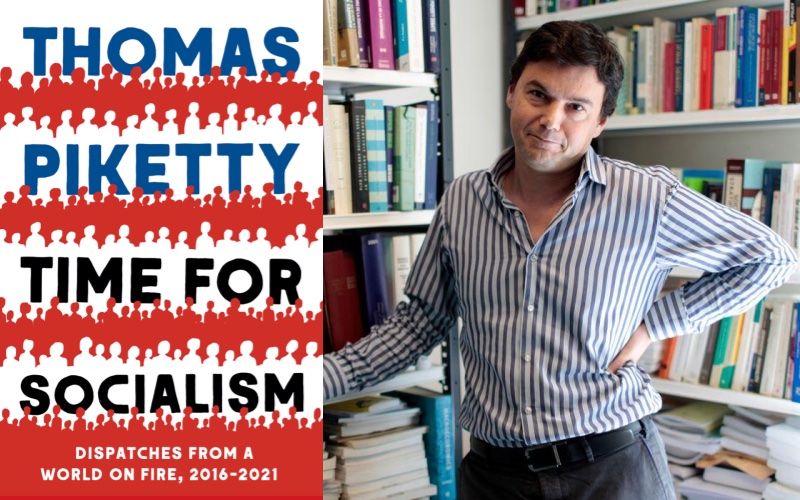
Thomas Piketty’s Time for Socialism

Inequality is endemic to any capitalistic system. Unchecked over time, wealth will accrue to a set of financial winners. One of government’s chief responsibilities is to balance fairness with efficiency. Redistribution is thorny but it is a necessary component of the system.

The rich world debate on wealth and income inequality has been largely powered by Thomas Piketty, a leftist French economist that rose to global prominence with his surprise 2014 global bestseller Capital in the Twenty-First Century. He gave rise to the 1% vs. 99% framing. Since, he’s argued for more aggressive governmental intervention.

That case includes Time for Socialism, a collection published last year of his columns from 2016-2021. The collection read more like day-old bagels than I expected; It felt very much like an effort to capture the attention of Piketty’s .Still, there were points I found compelling. I’ve shared my notes from the collection below.

Continue reading Thomas Piketty’s Time for Socialism