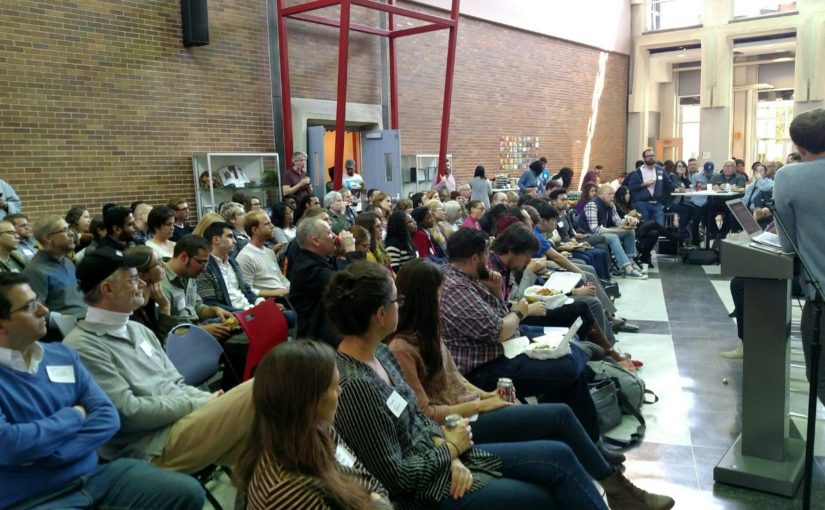
The 8th annual Barcamp News Innovation was the best attended yet. This annual unconference on the future of news welcomed more than 175 journalists, editors and other media makers interested in trends and best practices.
We at Technically Media have always produced it at and with Temple University’s School of Media Communications. For the first time, this year we hosted the day-long event in the fall, rather than late in the spring, which allowed perhaps nearly two dozen students to attend. Despite being free for students (just $15 for professionals), we’ve never had much turnout for those about to begin their careers. This year worked.
I wanted to share a few lessons and notes that stuck with me below.
Its pursuit is among the more commonly inalienable constants of news media. But like a child who needs to be exposed to germs to develop resistance, we can benefit from some level of privacy among leaders. Transparency of power can lead to polarization. Some conversations need to be worked out in private.
Of course that doesn’t sit quite right with many newsrooms — or among many civic minded people. A symbolic scourge of journalism is the back room conversation — dealmaking without public discourse.
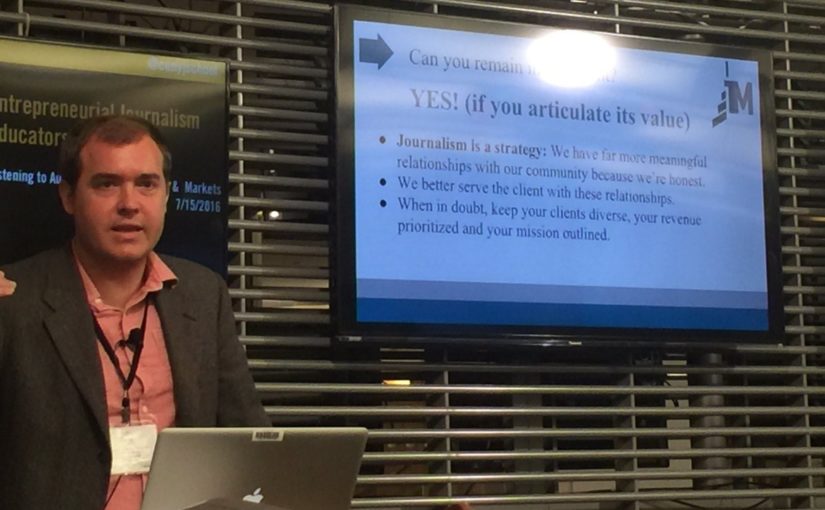
Newsrooms should rethink their competition. Journalism organizations are in dozens of different businesses. What we share in common (journalism DNA) makes us more partners than adversaries. The many businesses that are competing for the revenue and not providing other community value, like service journalism, are the real competition.
This was the focus of a lightning pitch I gave this weekend at the national Online News Association annual conference in Denver. Below find my slides, audio and some tweet reactions I received.
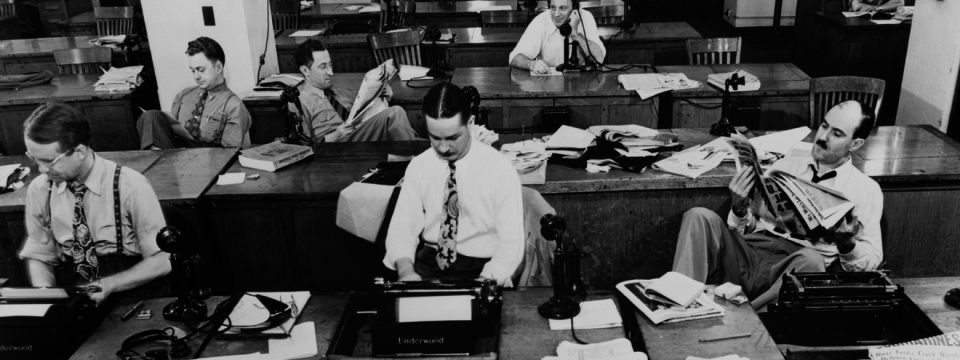
Because the modern concept of journalism was developed inside newspaper newsrooms, we’ve stayed stuck on the idea that journalism only looks one way: written words with a feature lede and nut graf.
Maybe a photo essay. Or an editorial cartoon. Or nonfiction book. Radio and TV reports too can cut the pass. But we know what form comes to mind first when journalism is invoked: writing and editing long, multi-source feature stories, likely to put into some print publication. That has to adapt.
I say this fully admitting I’m an active, proud and lively member of the Pen and Pencil Club, a private journalist’s association and bar in my hometown Philadelphia.
Journalists, especially community and beat reporters, should spend a lot more time with their communities than with other in news media. For sure, you can get great professional development and important understanding from meeting with your colleagues. But count up the number of hours you spend with other reporters and compare it with your community in person: which one is the bigger number?
A friend forwarded me the report first with a question: Where’s Technical.ly?
I’m a genuine fan of the Knight Foundation. It gets its knocks, but it’s one of the few consistent funders of journalistic change in the country. I’ve also spent more than a decade running Technical.ly, one of the few local news organizations that has gone all-in on using journalism to attract earned income—the very approach journalistic funders always talk about prioritizing. And I’ve been doing it from Philadelphia.
So when Knight published a report this month specifically highlighting bright spots in Philadelphia media, it felt a little strange to be overlooked entirely. [Report PDF]
To be clear, I understand why we’re not in there. Technical.ly looks different from most of the players in local journalism, even the smaller outlets cited in the report for their “ecosystem approach.” It even cites “nonprofit news” as its focus, which is mostly a way to discount TV stations. But for me, that’s exactly the point.
Years into this work, I keep encountering a pattern: Established leaders say they want more of a certain kind of innovation—let’s call it “XYZ”—but by their own definitions, anyone doing XYZ (serving a niche market to pursue independent sustainability) is dismissed as not “journalistic” enough to be part of the conversation. It’s a perfect recipe to ensure we never actually address the core problem these reports are meant to solve.
I do believe most large regions in the country will eventually end up with a philanthropically funded local news organization. In Philadelphia, thanks to Gerry Lenfest, that may well be the Inquirer. And other public-interest nonprofit news outlets will find their place too.
But I’ve bet my career on the idea that local news ecosystems need more than just legacy and nonprofit institutions. They need ethnic media, neighborhood weeklies, subject-matter-focused outlets like Technical.ly, and even individuals empowered by social platforms and new tech tools. (I like lessons from B2B publishing, though it’s different locally).
We’re not competing with the legacy players. We’re complementing them, filling gaps and addressing needs they can’t meet alone. I just hope more people in positions of influence and funding will recognize that role—and include it in conversations about the future of local journalism.
We spend a lot of time at Technical.ly thinking about what metric are the right ones.
Recently I presented to the team some data, including this headline: over the last year, Facebook brought more site visitors (8%), but Twitter brought far more returning people (105%!). What’s more valuable?
We’re not an ad model, mostly we want people to become fans and then come out to our events, or financially sponsor us otherwise. Picking the metric picks the strategy.
The thing about beat reporting today is that your competition has changed. In some ways, there are fewer news resources. But in other ways, more people, data tools, and automated services are curating and distributing news than ever before.
Running a small, niche local news organization, I think a lot about introducing reporters to our approach to beat reporting—one where we are both part of and covering a community. It’s a tricky balance: You have to know information before you can share it, while balancing relationships and delivering value to readers.
Here’s my running list of tips for successful beat reporting:
Think in three stages: Reporting is about gathering news, creating stories, and distributing them effectively. Treat all three as equally important.
Context is key: Information is plentiful, but context is rare. Get great at searching archives, collecting insights, and connecting dots in your community. You don’t need to know everything, but you do need to know how it all fits together.
Use the right tools: Social media, RSS feed readers, data dashboards, and email lists should feed you a steady stream of information to curate. Stay plugged in.
Leverage community events: Events are invaluable for finding stories, building relationships, and adding context. Make it a habit to attend them regularly.
Build insider access: What private group of power players can you meet with regularly? Gossip often leads to real reporting. Be in the know.
Ask the obvious question: What might seem obvious to insiders can look very different from an outsider’s perspective. Your fresh eyes can uncover new angles.
Keep relationships front of mind: Write, interview, and edit like you’ll have to talk to these people the next day. Because you likely will.
Beat reporting today requires balancing relationships, tools, and context to build trust and deliver value. These are the habits that can help reporters succeed in a noisy, ever-changing news environment.
A year ago, we replaced me as Editor in Chief and I have been transitioning to more of a publisher (connecting and overseeing business and editorial). The experience brings up an interesting reminder of my role in a news organization I helped found but no longer have complete control over.
How are so-called innovation clusters happening across the country and in Philadelphia specifically? Alongside Dilworth Paxson law firm CEO Ajay Raju, I was interviewed on the subject over drinks at Parc on Rittenhouse Park.
The interview was for Temple University law school’s blog and came in a two-part series from a Temple law professor and transcribed by a precocious law student.
Read part one here, in which we talk about Philadelphia’s own development of a tech and entrepreneurship communit
Read part two here, in which we talk about what that development can mean for the rest of Philadelphia.