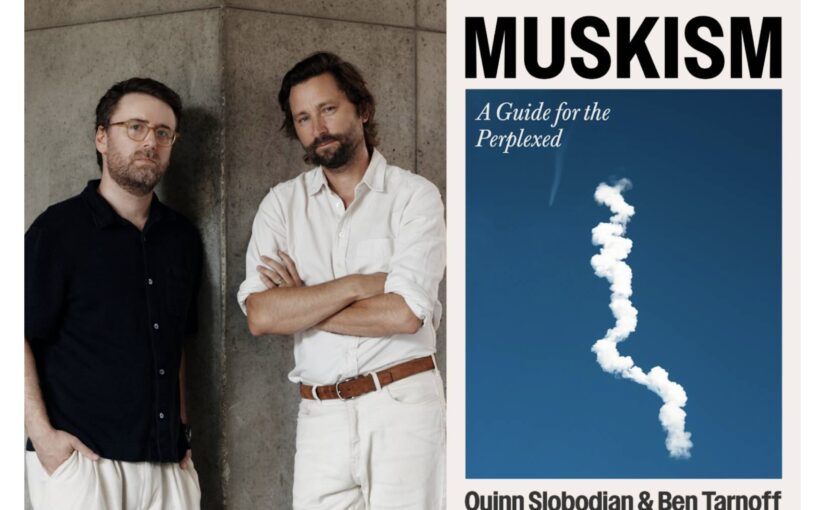
Elon Musk is more an effect than a cause. As Henry Ford was a product of an age he came to define, so too is Elon Musk, the divisive repeat entrepreneur.
That’s the angle of Muskism, a 2026 book by historian Quinn Slobodian and tech writer Ben Tarnoff. (Guardian review)
Unlike religiously anti-statist Peter Thiel, Musk’s career has blossomed by harnessing state power for his financial and cultural gain. In this way, Musk’s mega-corporations resemble the quasi-state actors of early modern corporate history — his Starlink dictated communications access for the Ukrainian army, and his SpaceX reshaped American satellite strategy.
I’ve never interviewed Musk, and in many ways he’s one-of-a-kind. But I can’t shake that he also reminds me of many other brilliant, over-confident tech executives that I have spent much of a 20-year reporting career with. At the height of Musk’s DOGE federal government purge, I wrote an op-ed proposing what seemed evident to me: he wasn’t interested in an actual coup (which many then feared), but just genuinely thought he was so much smarter than everyone else, he was going to clear the whole American bureaucracy right quick. Despite this getting me plenty of criticism, looking back now years later, my argument looks dead on.
In many ways, then, my read is Musk really is just the best known and most successful of a whole generational type. This book says something quite similar, if in a different way and tone than I might. I enjoyed its contribution.
Below I share my notes for future reference.
Continue reading Elon Musk is a product of his age, not its cause