What’s my personal “artificial intelligence” philosophy

It was summer 2009 that I was first introduced to the idea that robotics and artificial intelligence are two halves of how a machine would move through our world. One is physical motion, and the other is a big term for computer systems that mimic human cognition — from computer vision and probabilistic language to sound mimicry and risk management.

Over the next near two-decades, my reporting and entrepreneurship have evolved alongside a new fast-moving chapter of these technologies we call “artificial intelligence.” I’ve spent at least a decade developing my own relationship to what some have called “the singularity.” Now the last few years have brought this into the mainstream. That’s forced me to develop a more precise view.

Continue reading What’s my personal “artificial intelligence” philosophy

Forget the AI boosters and doomers, and focus on the “current harms”

The artificial intelligence debate is often discussed as two sided: the boosters and the doomers.

Those who think AI will bring upon abundance, or those who predict it ushers in catastrophe, and the two debate how necessary “AI safety” needs to be handled. But the “current harms” research movement argues something else: Most of the cheers and fears are predicated on over-enthusiasm that won’t come to pass. Instead, focus on what threats are here now.

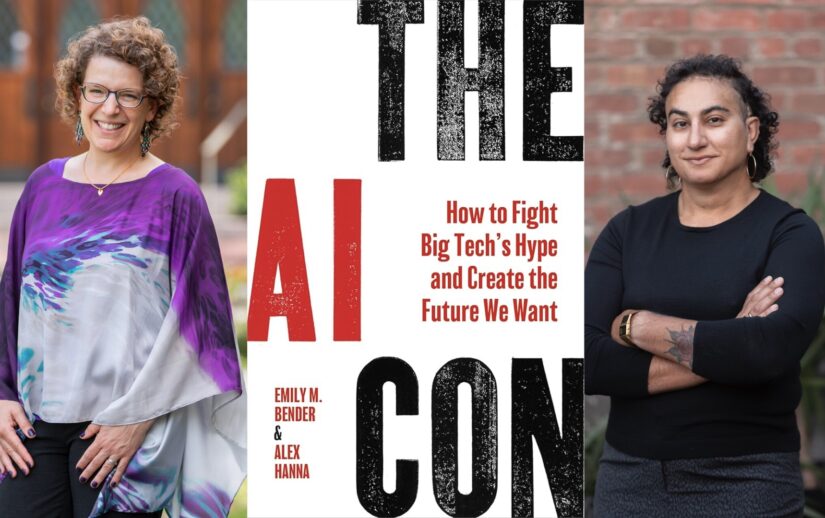
Thats from The AI Con: How to Fight Big Tech’s Hype and Create the Future We Want, the spring 2025 book by researchers Alex Hanna and Emily M. Bender.

In the same way I read futurist Ray Kurzweil’s book as plainly overly optimistic, this reads as overly caustic. As a tech journalist who has spent 20 years being hawked products, I understand, and am sympathetic, to their counterbalance of AI’s hype, but this book has suggests nothing redeeming. Probabalistic language tools used for light therapy are only suicide risks, they say, not an entry point for others. Stitching together many tools into “everything machines” are money-grabs, giving cover to an endless list of state and corporate harms.

I admire them, have followed their work and am closer to them than others in the field — I, too, struggle to believe the most extreme predictions from tech executives who have lied to me many times. Still, their ceaseless pessimism reads to me sometimes as if they’ve shut off everyone who is building in the technology. As they write with similar confidence as those they most criticize: “AI is not going to replace your job. But it will make your job a lot shittier.”

That said, the authors close their book saying they are not anti technology nor even pattern matching algorithms. They write: “We want technology that is created to strengthen and empower communities, not technology that reproduces and enables systems of oppression, consolidation of power and environmental devastation”

Below I share my notes for future reference.

Continue reading Forget the AI boosters and doomers, and focus on the “current harms”
How the internet connects across the world

Close to 900k miles of undersea cables criss-cross the world’s oceans. Pulsing light carrying data that makes up every Instagram post, email and transfer speed between users and data centers.

Mostly they’re thin as a garden hose, and the modest landing stations that bring them on-ground are all “air conditioned disappointment.” All this infrastructure is quiet and bulky and difficult, nothing like the frictionless experience we’re treated to online. We ought to better understand it.

That’s from The Web Beneath the Waves: The Fragile Cables That Connect Our World, a trim little fall 2025 book by journalist Samanth Subramanian, which neatly, artfully and helpfully captures core infrastructure of our digital age. It’s a delightful read.

Below I share my notes for future reference.

Continue reading How the internet connects across the world

The Technological Republic by Alex Karp

The freedom, peace and security that allowed Silicon Valley to flourish was quietly underwritten by an American military that these same Silicon Valley technologists are ambivalent about supporting.

Far from its origins in the Second World War, Silicon Valley focused on consumer technology, which gave it no greater ideal than profit and comfort. This must change, or so argues Alex Karp, the cofounder-CEO of the controversial defense contractor Palantir Technologies, in his new book “The Technological Republic: Hard Power, Soft Belief, and the Future of the West”

Why, asks Karp, are technologists and knowledge workers ambivalent about working to support invasive corporate advertising, but ardently opposed to (militaristically) defending the Free World?

Writing of Silicon Valley engineers, but no doubt thinking also of millions of other complacent American professionals: “They exist in a cultural space that enjoys the protection of the American security umbrella, but are responsible for none of its costs.”

Palantir and Karp are entwined with a techno-libertarianism that sounds increasingly unhinged: company cofounder Peter Thiel just recently gave a bizarre interview with the New York Times in which, among other quirks, he gave a long, extended pause when he was asked whether humanity “should” survive. Karp might respond the strength and security of the United States affords a diverse array of perspectives, including eccentric billionaires.

Karp reminds, though: “The victors of history have a habit of growing complacent at precisely the wrong moment.”

Below I share my notes for future reference.

Continue reading The Technological Republic by Alex Karp

How Technologies of Connection Tear Us Apart

We assume more information means we’ll like people more because the people we know best tend to be people we know the most about. For ages, we’ve predicted more and faster information would end war. But we forget the many people whom we spend less time with once we learn more about them.

This is a very normal human process that has been industrialized by social media. The “online disinhibition effect,” in which we share more online so there’s no small talk like neighbors but rather ” “deep cascading dissimilarity.” This is Wilder’s sense of proximity.

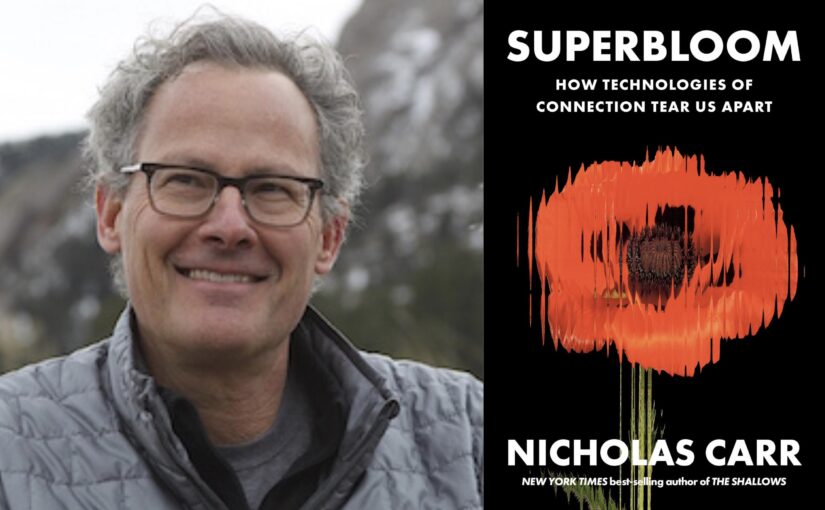
That’s from Superbloom: How Technologies of Connection Tear Us Apart, a new book from journalist Nicholas Carr. As Carr writes: “By turning us all in the media personalities, social media has also turned us all into rivals.”

Chart communications technologies over time, and Carr says they came in three stages. First, the machines were just carriers (telephones, telegraph, early internet), then they began to exert editorial influence by social media algorithms curating, and now AI threats to also create the content. This gets us more and more, but runs in the “naive view of information” problem that historian Noah Yuval Harari has also argued: “Information has no essential link to truth,” and so more information does not necessarily lead to more truth.

Carr’s Superbloom is enjoyable and enlightening. I recommend it. Below my notes for future reference.

Continue reading How Technologies of Connection Tear Us Apart

What happens to our digital remains after we die?

By 2100, the dead could outnumber the living on Facebook, and other social platforms like it.

Centuries of hiding the dead away may come to a close as our “digital remains” may keep our ancestors around us at all times. We ought to have a plan.

So argues the Oxford researcher Carl Öhman in his new book The Afterlife of Data: What Happens to Your Information When You Die and Why You Should Care.”

The book is a mix of philosophy, technology and information sciences. It’s rich, light, short and important. I recommend it. Below I share my notes for future reference.

Continue reading What happens to our digital remains after we die?

The Singularity is Nearer

This generation of artificial intelligence bots have passed the famed Turing test, as we once knew it.

Experts may quibble with the rules, and we’ll continue to move the goal posts. Now, though, generative AI needs to play dumb to trick humans, because they move too fast, can write too convincingly and have too-comprehensive knowledge to be any person.

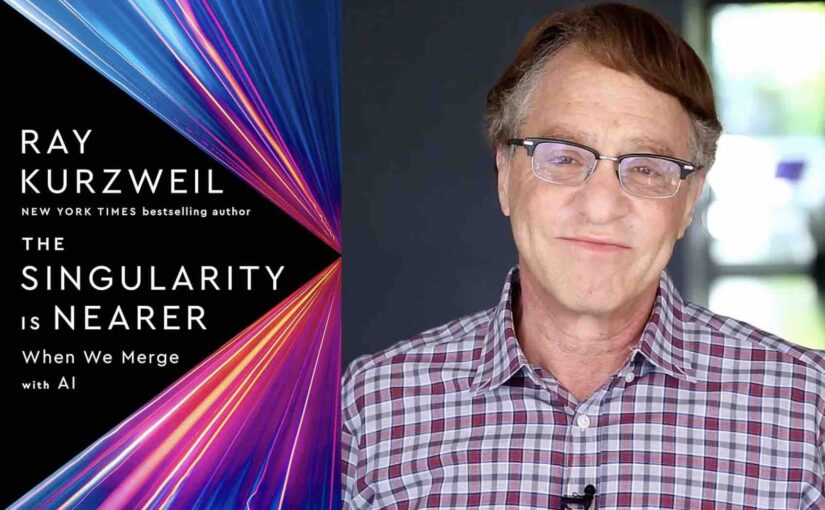
That’s from the new book from futurist Ray Kurzweil called “The Singularity is Nearer: When We Merge with AI”. It’s a followup to his 2005 book “The Singularity is Near.”

He’s among the best known, and longest-running champions of the kind of digital superintelligence that is called the singularity, which he says is coming — he estimates it by 2045, and has a bet with a friend that by 2029, AI will pass an even more rigorous Turing test he helped establish. His book is a wild romp of optimism and confidence. Anyone digging into the conversation will appreciate it. I recommend it.

Below I share notes for my future reference.

Continue reading The Singularity is Nearer

Inside Crypto’s Wild Rise and Staggering Fall

An entrepreneur friend who fell deep into crypto mania said he hadn’t thought of it before.

The inevitability of crypto dominance that he predicted would be led by how traditional fiat currencies would fall out of favor. The thing about bitcoin and other cryptocurrencies, I told him, was that no military backed them. Tanks favor the status quo.

Now, as the founder of a tech-business publication, I always knew I needed a handle on blockchain, crypto and its myriad interwoven technologies, now increasingly labeled web3 and decentralization. So I still hold a small stash of bitcoin and ethereum, and I do hold an NFT, but I’ve always been prepared for them all to be priced at zero. That did help me better understand the world.

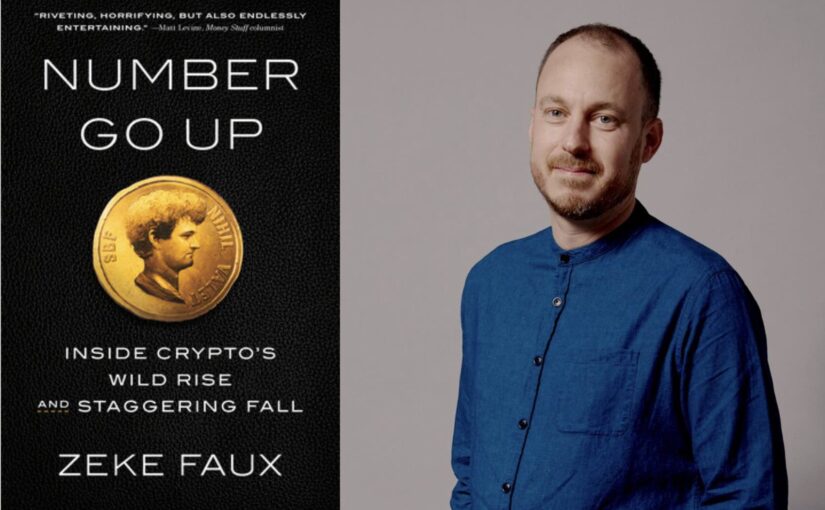
But that friend of mine had a hard fall. His stake in cryptocurrencies has so far fared better, but his portfolio of NFTs are essentially worthless today. It will always be a cautionary tale. And I bet the story isn’t done. Yet, the high-profile fall of the crypto exchange FTX and its boyish, one-time-billionare founder Samuel Bankman Fried was enough to spin an array of books – including one by a former coworker of mine. More recently, I read another account from journalist Zeke Faux, in his 2023 book “Number Go Up: Inside Crypto’s Wild Rise and Staggering Fall.”

Below I share my notes for future reference.

Continue reading Inside Crypto’s Wild Rise and Staggering Fall

Will AI be good or bad for journalism?

This answer Sam Altman gave TIME editor Sam Jacobs this month is pretty close to my stance too (clip here). That stance? With an over-supply of content, the differentiation will come from trust and high-quality relationships. That’s why I continue to bet on journalism, and local journalism at that.

Continue reading Will AI be good or bad for journalism?

What would it mean to build AI like octopuses, fungi or forests?

Framing intelligence as either the extractive corporate technological determinism kind or the pure human uniqueness kind is too limiting an understanding of intelligence. The world has far more kinds.

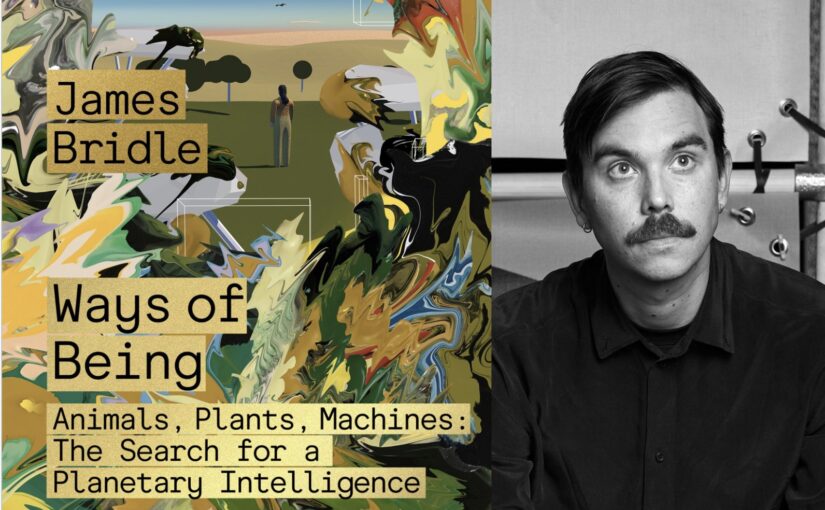
Artist and technologist James Bridle published in 2022 a compelling book called Ways of Being that reviewed research, themes and experiments in expanding our understanding of what technology can be. I recommend the book for others interested in a wider lens on AI and other advancements.

Below I share my notes for future reference.

Continue reading What would it mean to build AI like octopuses, fungi or forests?