Jimmy Lai, Hong Kong’s troublemaker

What’s the greater priority: universal human rights or sovereign rights? What rights, if any, are truly universal? How far should other nations go to challenge a sovereign power who is taking such rights away from residents within their boundaries?

After the horrors of the world wars, the United Nations marked in 1948 its “Universal Declaration of Human Rights.” This gave moral currency to dozens of international actions over the next 80 years. The drafting committee included philosophers from China and Lebanon, yet these are criticized by some as Eurocentric. Overreach under the UDHR banner complicated its message, and gave authoritarians greater cover.

Where does that leave us? I’ve thought about that since completing “The Troublemaker: How Jimmy Lai Became a Billionaire, Hong Kong’s Greatest Dissident, and China’s Most Feared Critic,” a 2024 biography written by Mark Clifford.

Continue reading Jimmy Lai, Hong Kong’s troublemaker

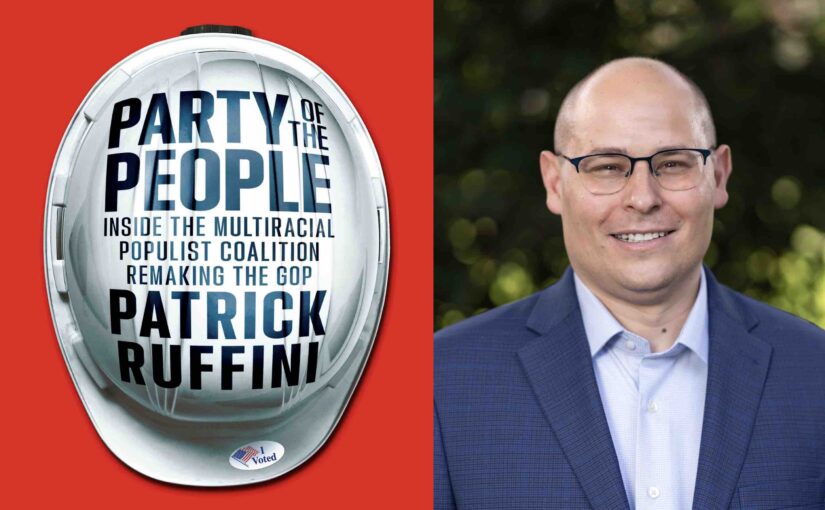
Inside the Multiracial Populist Coalition Remaking the GOP

In 2002, The Emerging Democratic Majority book based its arguments on two key points: that the population of the United States was becoming less white, and that non-white voters voted for Democrats more often than Republicans.

Though the multiracial Obama coalition seemed to make their case. The Trump era has looked very different. In 2023, within the Biden presidency, Republican strategist Patrick Ruffini wrote “Party of the People: Inside the Multiracial Populist Coalition Remaking the GOP,” which looked prescient in November 2024.

Looking closely at the 2016 and 2020 elections, Ruffini argued that Hispanic, Asian and mixed-race voters were following voting patterns of immigrants before them. Very unlike Black American voters, and Native Americans too, with their distinct historical context, waves of immigrants often vote their liberal interest, then grower richer and vote a different interests.

The Emerging Democratic Majority rightly demonstrated how much more diverse the American electorate would get, but badly misunderstood how that more diverse electorate would vote. The 2024 election put this on full display: Democrats look like a party of rich, educated people, alongside Black supervoters; whereas Republicans look now like a multiracial populist coalition. This is so far from the Republican jokes that left-leaning voters told in the 2000s and 2010s. Whatever comes to pass, the book is rich with insight.

Below my notes for future reference.

Continue reading Inside the Multiracial Populist Coalition Remaking the GOP

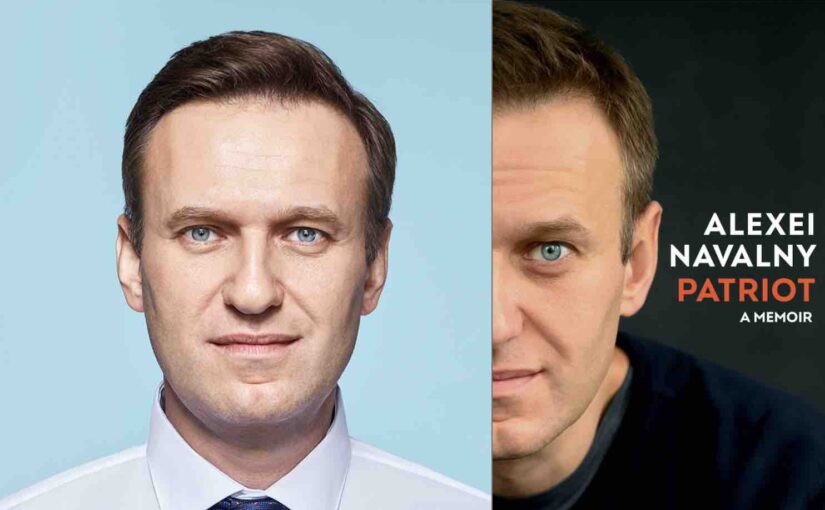
Patriot by Alexi Navalny

We must separate “a good people with a bad state.”

The defining representation of this is Alexi Navalny, the Russian lawyer turned good-government advocate that stood, and died, as the world’s most prominent anti-authoritarian activist — and foil to Russian despot Vladimir Putin.

In Patriot, his posthumous memoir that was published last fall, Navalny’s charm and commitment shone through. I admire him greatly. The book is rich with anecdotes about growing up under late-stage Soviet Communism, some of his tactics and his hopeful worldview.

“My family had a deep love of our country and was exceedingly patriotic,” he wrote. “Nobody however had any time for the state, which was regarded as a kind of annoying mistake — one we ourselves had made, but a mistake nevertheless.”

More broadly, as the book cover itself aptly puts it:: “Life works in such a way that social progress and a better future can only be achieved if a certain number of people are willing to pay the price for their right to have their own beliefs. The more of them there are, the less everyone has to pay.”

Below my notes for future reference.

Continue reading Patriot by Alexi Navalny

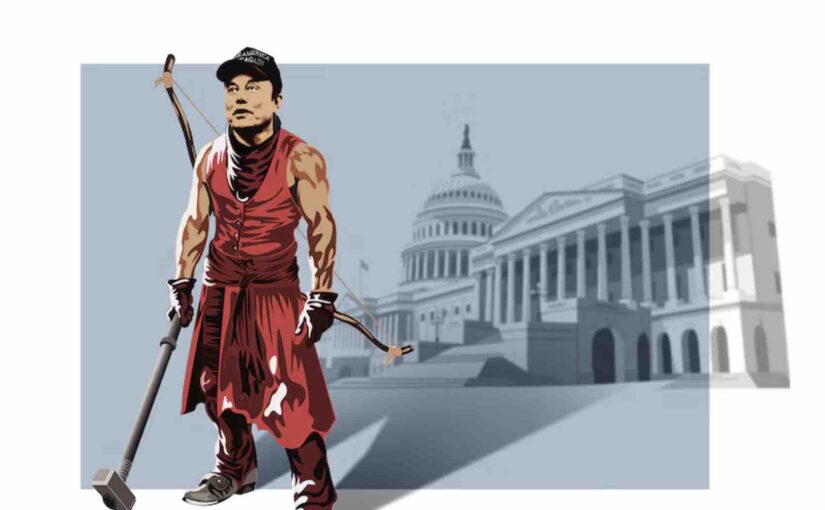
No, Elon Musk isn’t attempting a coup. He just really thinks he’s that much smarter than everyone else.

A former journalist-coworker of mine emailed me a couple weeks back: Is Musk attempting a coup?

An op-editor at a metro newspaper, she was referring to the bombastic and destructive collusion of the world’s richest man Elon Musk into the Donald Trump-led shock to the federal bureaucracy under the guise of the irreverently named DOGE, or Department of Government Efficiency — a boyish reference to a memecoin.

I suppose it’s possible, I wrote her. Instead, what I see in Elon Musk is a kind of arrogance I’ve found in other entrepreneurs. Brilliant in one domain and successful in others, I’ve seen plenty of them storm into some situation truly and genuinely oblivious to how over their head they really are.

Continue reading No, Elon Musk isn’t attempting a coup. He just really thinks he’s that much smarter than everyone else.

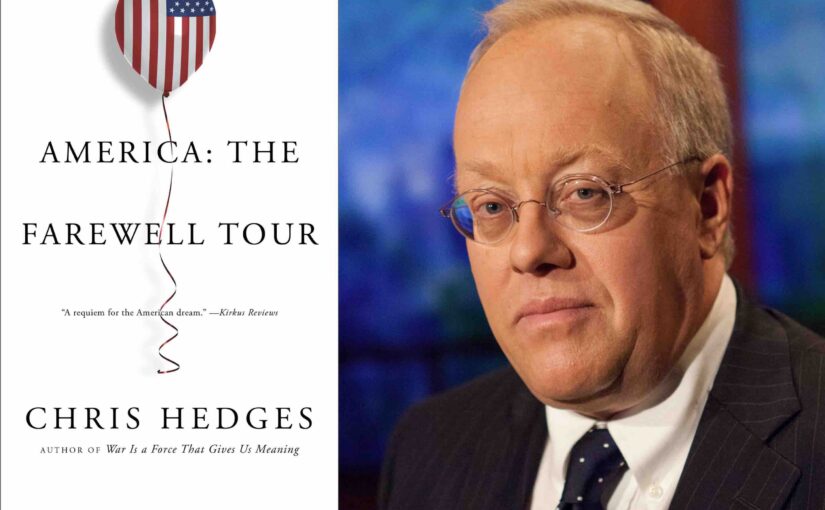
America: A Farewell Tour

In 2018, progressives had an especially dim view of the American project.

The Trump administration — from the “Muslim travel ban” to unfunded tax cuts to the more general corrosion of norms — was considered a destructive symptom of “the toxic brew of American exceptionalism.” The remarkable “special century” of American-led peace, growth and economic prosperity had ended. A subtler decline was made public.

Or as prolific writer and critic Matt Taibbi famously put it back then: “Trump found the flaw in the American Death Star. It doesn’t know how to turn the cameras off, even when it’s filming its own demise.”

That’s from the 2018 book America: A Farewell Tour, written by journalist Chris Hedges. A Pulitzer Prize-winner, Hedges self-identifies as a socialist and has had an outspoken career — leaving the New York Times after his criticism of the Iraq War featured getting booed for a commencement speech. He later contributed to and ran Green Party campaigns.

The book thoughtfully features many in-depth character studies from far-flung corners of American life, from BDSM culture to white supremacy, from sex work to gambling.

“This is the new American capitalism,” he wrote. “It is not about producing products, but escapist fantasies.”

Regardless of whether my politics overlap with his, I respect how Hedges has pursued his sense of truth. He’s at least an independent thinker. This book came in the heat of progressive reaction to the Trump administration. With his second administration starting next month, It felt fitting to return to see how much of Hedges’s 2018 take held up, and what fell flat.

Back then, like as now, he wrote that we were in Gramsci’s interregnum — which the Marxist writer used to describe when an old order has fallen but the new one has not yet come.

“The American empire is coming to an end,” Hedges writes confidently (p. 294). “It will limp along, losing influence and electing diminished leaders. It will lose reserve currency status [Editor’s note: but to whom!?] and falter.” All “within a decade or two”, he writes. This is by no means an optimistic book, and what hope it has is in working people building something better, it is outstripped by Hedge’s antipathy to the established order. I enjoyed the book, and would recommend it to others — I especially appreciated his thoughtful argument against reactionary violence, as a distraction from the work of organizing.

Below find my notes from the book for future reference.

Continue reading America: A Farewell Tour

Autocracy Inc.

Naïveté abounded among rich-world leaders in the 1990s.

Free market capitalism and representative democracy seemed ascendant. Free-flowing information online seemed to inspire people to overthrow repressive governments.

In March 2000, then President Bill Clinton famously dismissed a new effort from the Chinese Communist Party to censor the internet: “That’s sort of like trying to nail Jello to the wall.” Likewise, German and other European leaders argued that doing business with Russian and Chinese companies would make them freer. Looking back, this all looks plainly wrong.

That’s a theme from the 2024 book from Pulitzer Prize-winning journalist Anne Applebaum’s book Autocracy, Inc.: The Dictators Who Want to Run the World.

More free-flowing information does not necessarily mean more truth. Technologies have helped democratic movements no more than they’ve helped authoritarian ones, and turns out those Russian oil providers and Chinese electronic vehicle firms were at least in part government actors, so their motivations weren’t only aligned with a Western capitalistic view.

Today, at least half of all humans now live within states considered autocratic. The world has gotten less democratic in recent years, a backward trend that in the early 1990s seemed impossible. Applebaum’s book is a breezy and thoughtful overview of this emerging bloc she calls “Autocracy Inc.

Below I share my notes for future reference.

Continue reading Autocracy Inc.

I got hit in the face and escorted a protestor from an event. What happened?

About 20 minutes left in the evening reception, and a 20-something fella came running up to me: “You got a big problem, and you better come with me,” he said, and turning.

What first crossed my mind was someone was having a health emergency. Instead, I walked into the emptying main ballroom, where perhaps 100 people so remained. A half-dozen technology exhibitors were there, including a high-school robotics demo and a chocolate 3D printer. This was the tail-end of the closing reception of my news organization Technically’s annual conference, which itself was the close of Philly Tech Week, an open-calendar of community events we founded.

It got weird.

Continue reading I got hit in the face and escorted a protestor from an event. What happened?

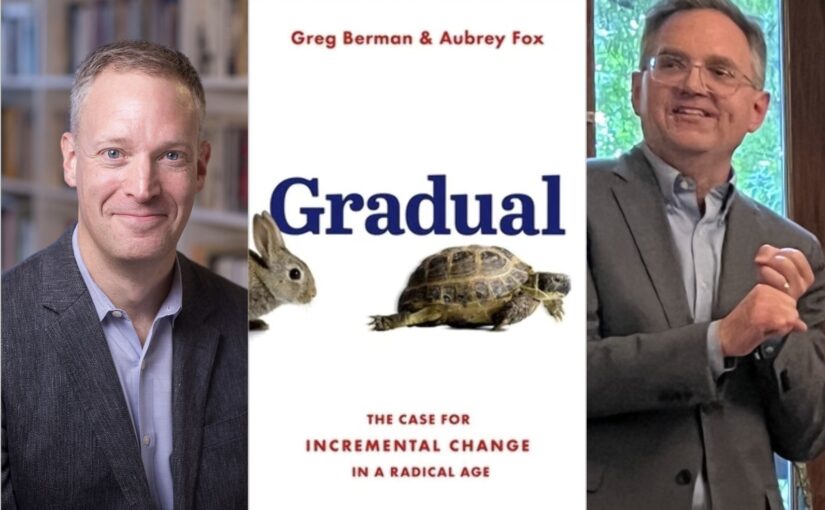
Gradual: The Case for Incremental Change in a Radical Age

Too often we seek big, dramatic and comprehensive change when the far more common and effective way to make change in a democratic system is through a grinding and collaborative approach.

One way that’s the case is because making real change requires three stages (the politics, the policy and implementing the practice) but we commonly forget that third step. All told, incrementalism gets a bad rap. Nearly all lasting change has happened gradually, not boldly. The world is complex, no coalition is ideologically cohesive and those implementing change are flawed.

That’s the case made in the 2023 book “Gradual: The Case for Incremental Change in a Radical Age,” written by two longtime advocates in criminal justice reform, Aubrey Fox and Greg Berman. Below I share my notes for future reference.

Continue reading Gradual: The Case for Incremental Change in a Radical Age

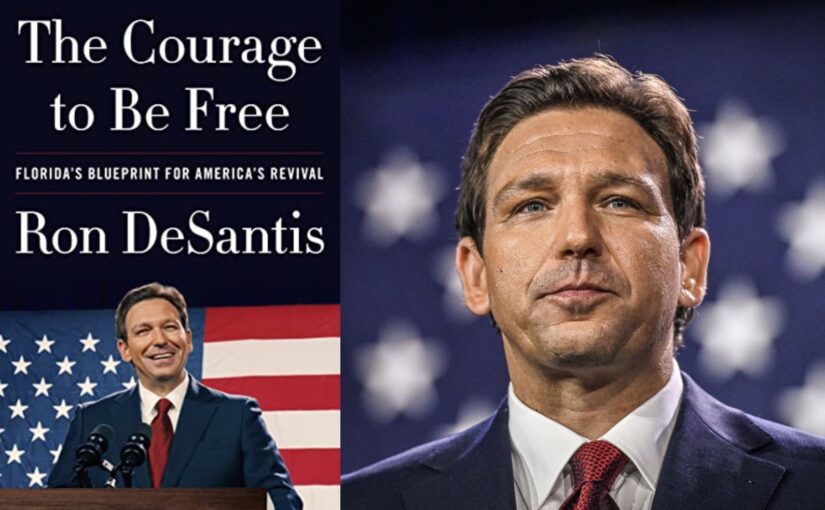
Ron Desantis: Courage to be Free

What can a campaign book say that a candidate can’t on a campaign trail?

I read them when I want to hear from a serious candidate with whom I am not especially aligned. Daily campaign reporting follows minor crisis. I like to understand how these candidates want to be packaged.

That’s why I read Florida governor Ron Desantis’s new book Courage to be Free. It isn’t especially well-written (no ghost writer?), and there’s plenty of trite talking points (lots of Fauci bashing). But there are a few worthwhile criticisms.

Below I share my notes for future reference (and plenty of questions he leaves unaswered).

Continue reading Ron Desantis: Courage to be Free

Where are the 5+ million prime age men missing from the workforce?

A small segment of men out earn everyone else, but that’s not the dominant story of the American economy of the last 50 years: Men are falling out of the economy.

Overall: Higher rates of education, a sprawling prison population and antisocial-like behavior (despair) seem to account for at least five million missing prime-age men from the workforce.

% of Prime Age Men Without Work

The unemployment rate as an indicator entirely misses the crisis of labor-force participation among prime age men — because waves of men aren’t even trying to get formal work anymore. It’s ignored for many reasons, one of which may be that it doesn’t fit a progressive priorities, so it’s largely been voiced by conservatives — with a few exceptions. This is not happening in any other rich country save for Italy; This needs to be an issue of national and bipartisan interest.

That’s the main theme of Men Without Work: America’s Invisible Crisis, a book by demographer Nicholas Eberstadt. The book was first published in 2016, though I read an updated pandemic version published in 2022 amid dramatic economic shifts.

I’ve backed into this sort of trend-reporting when I covered how tenure rates have changed over time, and I’ve come across Eberstadt’s work elsewhere. I took his new pandemic release asa reason to read his full work. It’s urgent and nuanced and interesting and important.

Below I share my notes for future reference.

Continue reading Where are the 5+ million prime age men missing from the workforce?