Two social video lessons: daily posting, and be wary of paid experiments

Social video data: This will be embarrassing (low view counts!) but insightful!

This is the first full year I took social video serious. I mostly hang around on TikTok and re-post elsewhere so I was surprised when I noticed my Instagram reach growing faster in the last few months, while TikTok reach declined. I was curious what might stand out, knowing that the algorithms are being tweaked all the time. TikTok does get some real large outliers (for me right now, that’s 50k+ views), so I’m interested in the averages, that exclude the big swings.

When I charted it out, two really clear moments stood out, which each can tell a clear piece of advice that will sound familiar.

Continue reading Two social video lessons: daily posting, and be wary of paid experiments

Two kinds of stories go viral: The rare and the commonplace

[This was originally a social post]

The biggest problem I see on social media is how often we confuse things that get attention because they represent something that happens often, and emerging that gets attention because it’s entirely unusual. One marks a pattern, one shares an outlier.

Continue reading Two kinds of stories go viral: The rare and the commonplace

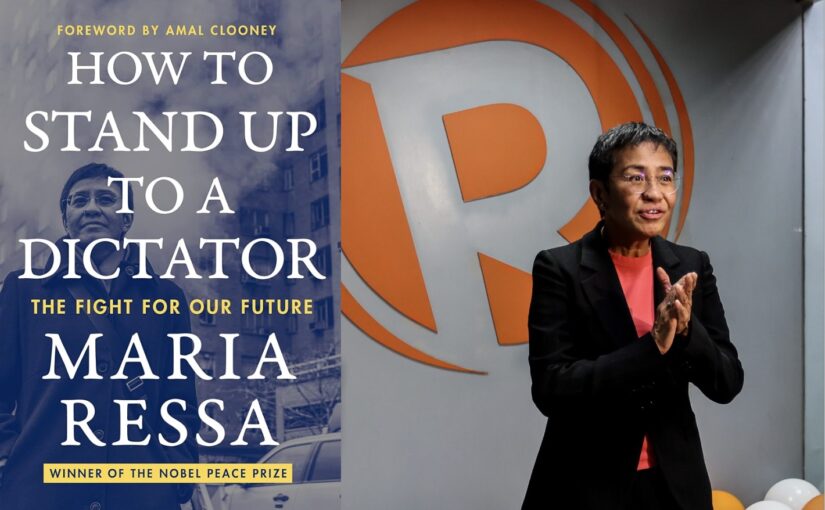
How to Stand Up to a Dictator: Maria Ressa

Bullies only respond to strength. Complicity won’t due. When confronting an authoritarian, best to “hold the line.”

That’s from the 2022 book “How to Stand Up to a Dictator: The Fight for Our Future,” written by Maria Ressa, the Nobel Peace Prize-winning journalist-entrepreneur behind Rappler — a respected, digital-first news site in the Philippines. Ressa was jailed and harrassed for her unwavering coverage of Filipino corruption.

The book is memoir and field guide, with a telling mirror for American audiences: the rise and fall of her enthusiasm for social media, and her battles with elected officials disdainful of free press and democratic norms. She’s charming and energetic. I spoke at a recent journalism funders conference where she was the headliner, and she gushed on-stage, effusing advice and perspective and vision. It’s easy to believe in her, and she tells a story of optimism, provided we work for it.

Of building open discourse-use and democratic values in the Philippines, in 2016, she thought Facebook was the solution; by 2018, she thought of them as indifferent and by 2020, she thought that “Facebook was the bad guy.” For all her reporting and operating a fearless news organization, she was jailed.

Why return to the Philippines to be jailed, even though she has American citizenship and family there? “There is no choice,” she wrote — couldn’t turn on Rappler and her employees and community and it’s where she wants to be. This will remind of Navalny, as she writes: “Over time, you get used to fear”

So, how do you stand up to a dictator: “by embracing values, defined early.. you have to create a team, strengthen your area of influence” — and know your lines and stand firm by them.

Below I have notes for my future reference.

Continue reading How to Stand Up to a Dictator: Maria Ressa

Thoughts and data on proposing to get married and then sharing online

Earlier this month, I proposed to my longtime girlfriend, saying that we would both be happier and healthier if we lived together for the rest of our lives. She agreed.

That was on a Wednesday. Within an hour, we had the conversation that will confront other web-minded engaged couples today: how should we tell the Internet? It’s the logical maturation of the old idea that online, everyone is both publisher and brand. This news would be acknowledged or shared on the social web with or without our permission, so we ought to at least have it happen to our own liking.

I keep most of my love, romance and emotion private. Here, it’s all about process and lessons. This is what I learned from sharing a big personal update online.

Continue reading Thoughts and data on proposing to get married and then sharing online

9 real ways I use social media to report that won’t bore you

Ten years into the modern social media era can leave even the most reluctant digital reporter bored by tactics for news gathering online. Still, though the source gathering, link sharing and network building are common acts, there are other ways I use these open platforms.

Here are some of those ways.

Continue reading 9 real ways I use social media to report that won’t bore you

Photos, video and social media at events are our newest form of applause

A photo of the crowd at an All American Rejects concert at Xfinity Live in September 2012.

Creating media continues to become easier and more varied every day. Humans are the only species to develop the practice of recording history.

So whenever we are in a moment we regard as a distinguished experience — travel, first-time moments, extraordinary circumstances — we are bound to have this motivation to record that history as best we can.

Continue reading Photos, video and social media at events are our newest form of applause