Do not save writing for later, more will come: ‘The Writing Life’ by Annie Dillard

The Writing Life,‘ a 1989 collection of essays from novelist Annie Dillard, is one of the foundational contributions to the canon of teaching modern fiction writing.

A few months ago, I finally tore through the tidy, celebrated, delightful little book, commonly known as the friendly, fiction alternative to the 1920 grammarian guide from Strunk and White. (Interestingly a New York Times book review took a dim view of her collection, but it’s cherished today.)

Continue reading Do not save writing for later, more will come: ‘The Writing Life’ by Annie Dillard

What employee counts should mean to reporters

The employee headcount at a company seems like it should be a straightforward metric. It isn’t.

As business reporters, we often use employee counts to gauge a company’s growth, size and priorities. For small, private companies especially, employee counts can be one of the most accessible and telling numbers available. But here’s the catch: Not all “employees” are created equal, and founders have plenty of incentives to inflate those numbers.

This isn’t necessarily about deception. Many founders genuinely believe their extended network of contractors, part-timers, and interns are part of their “team.” And in many cases, that broader team plays a significant role in their business. But as reporters, we need to dig deeper. If we take every headcount claim at face value, we risk misunderstanding a company’s true scale or overstating its growth.

So how do we approach employee counts with both curiosity and skepticism? Here are a few tips:

1. Clarify Full-Time Employees

When a founder shares their headcount, your next question should be: How many of those are full-time employees? This number matters because full-time employees (often salaried, W2 workers) represent a more permanent and sustained commitment from the company. Contractors and part-timers can be scaled up or down quickly, but full-timers are typically a better indicator of a company’s core operations.

For example, at my own company, Technical.ly, we have 19 full-time employees. However, if you include part-timers and contractors, that number rises to 24 people who regularly get a paycheck from us. In some contexts, we might call that a “team of 24,” but I’d expect a diligent reporter to push me on how many of those are full-time staff.

2. Consider Full-Time Equivalent (FTE)

In some industries, particularly those with lots of part-time or seasonal workers, it’s worth asking for the full-time equivalent (FTE) count. This metric translates all the hours worked by part-timers into the equivalent of 40-hour workweeks. For instance, two part-time workers clocking 20 hours a week each would count as one FTE.

FTE is a useful standard because it provides a clearer sense of the company’s overall workforce capacity. Many government and economic reports rely on FTE figures, and they can help normalize comparisons across companies with different staffing models.

3. Be Wary of Inflated Numbers

It’s not uncommon for founders to include anyone remotely connected to the company in their employee count—freelancers, one-off contractors, or even unpaid interns. This can make a company seem much larger than it actually is. While it’s fine to include those numbers in certain contexts, you should always distinguish between core staff and auxiliary contributors.

For example, a founder might proudly claim they have a “team of 400,” but if 380 of those are one-time freelancers, that paints a very different picture than a company with 400 full-time employees.

4. Think About the Narrative

Ultimately, employee counts are a storytelling tool. The number a company shares—and the one you choose to include in your reporting—should match the narrative you’re telling. Is the focus on a company’s growth trajectory? Highlight full-time employees to underscore sustained investment. Covering a gig-based startup? Mention contractors to illustrate its flexible model.

TL;DR: Always Ask the Follow-Up

Employee counts are a valuable metric for understanding a company’s size and priorities, but they require context. Always follow up to clarify:

  • How many employees are full-time?
  • What is the full-time equivalent (FTE) count?
  • Who is included in the broader “team” number?

By asking these questions, you’ll ensure your reporting accurately reflects the reality behind the numbers—and avoid falling for the illusion of scale that an inflated headcount can create.


Here’s the reading list from my resolution to only read books from women and writers of color

One of my resolutions last year was to only read books by women and writers of color for a year. My goal was to both read more and to push myself outside of authors who look like me.

I fell out of the habit, so rather than clear a book a month, this lingered for 18 months, but the last 12 books I’ve read fulfilled the goal. This has resulted in a couple lasting points for me: a recognition of authors from underrepresented backgrounds and a new reading habit of more smartly using my library card (thanks for the process, SACMW!)

Below find my reading list.

Continue reading Here’s the reading list from my resolution to only read books from women and writers of color

Hey fellow white guys, we’re responsible for increasing board diversity and inclusion

Having served on a half-dozen nonprofit boards over the years, I’ve come to see one of the most immediate, productive roles I can play is this: asking whether the board reflects the community it serves.

That means race and gender, sure, but it also includes age, background, and lived experience. On a school-related nonprofit board, I once asked: Can we have student representation? That question alone opened up a conversation that led to real change.

I’m not anyone’s idea of an equity leader. I’m pragmatic and practical, a self-described centrist straight white guy. No radical here. But I’ve learned that my identity can actually be a strength in these conversations. People are surprisingly receptive when diversity is framed in strategic terms: We need the perspectives of the people we serve.

Let’s be clear: Increasing diversity isn’t just about optics; it’s about improving the effectiveness of boards. Different voices bring new ideas, spot blind spots, and ensure decisions align more closely with the needs of the broader community.

This isn’t about making anyone feel guilty or defensive—it’s about taking responsibility for how we can help. And frankly, it’s easier than you might think:

  • Start the conversation: I’ve found that just naming the gap can begin to shift mindsets. Most people agree that boards should reflect their communities when it’s framed strategically.
  • Make concrete suggestions: Don’t stop at identifying the problem; help solve it. Recommend specific individuals from underrepresented groups who can bring valuable perspectives. If you don’t know anyone, ask around. Networking is part of our role.
  • Recruit with intention: Don’t just passively suggest names. Actively reach out to people and encourage them to join. A personal invitation can go a long way.
  • Keep an open lens: Diversity isn’t only about race or gender. Think about socioeconomic background, age, and professional expertise. Representation should be holistic.

We have a responsibility to make change, and as white men, we’re often in a position to accelerate it. If we treat this as a strategic and necessary part of our work—not just a “nice to have” but a fundamental strength—we can help make the boards we serve on more effective, inclusive, and impactful.

This isn’t an insurmountable task. Change can happen faster than you’d think, and it starts with the smallest actions: asking the right questions, recommending great people, and following through.

Let’s get to work.

Economics terms that help me understand the world

Since my undergrad years, I’ve taken an interest in the pop science of behavioral economics. From books and articles and podcasts aplenty, I’ve found the shallow edges of the social science quite helpful for my worldview. (I also book a second-hand microeconomics textbook and dug in.)

The clearest result of that has been an entire set of familiar terms that help explain the world. These phrases have been valuable to me. I’d like to share them with you.

Continue reading Economics terms that help me understand the world

What a kid should graduate high school knowing

Caught in a debate about whether or not software programming should be taught in schools, I wanted to start from a first principle. What do I think every American should graduate high school knowing?

Pulled out from pedagogy or educational theory, this became an exercise simply to explore what I felt was important.

Continue reading What a kid should graduate high school knowing

Build the habit of making habits: resolutions of mine that stuck

A friend asked me what I thought is the best skill to develop. Build the habit of habits, I told her.

That’s how you get the most out of yourself and your place. It won’t always work but if you develop the rigor and constitution to choose to add a habit and then go and do just that, you’ll be gold. That is how you develop discipline.

My method for doing this is my near obsessive approach to annual resolutions. Each year, I put forward a dozen of them, many straightforward goals but often several tied to habits I want to add to who I am. I tie them to individual months but in truth I plan to do many of them throughout the year and beyond.

Recently I was considering how many personality traits of mine I believe started as resolutions. I think they’re a good example of building the habit of building habits. I wanted to share.

Continue reading Build the habit of making habits: resolutions of mine that stuck

Privilege has nothing to do with how hard you work

version of this essay was published as part of my monthly newsletter a couple weeks back. Find other archives and join here to get updates like this first.

Privilege has nothing to do with how hard you work, or even what you deserve.

Among the many complexities we are confronting in our fist-flying, partisan online discourse, this is a translation issue. If you’re telling someone they’re privileged and you can’t understand why they get frustrated or tune you out, pause for a moment. Likewise, if you’re someone who has been called privileged and don’t understand why they ignore how hard you work, stop to consider.

Continue reading Privilege has nothing to do with how hard you work

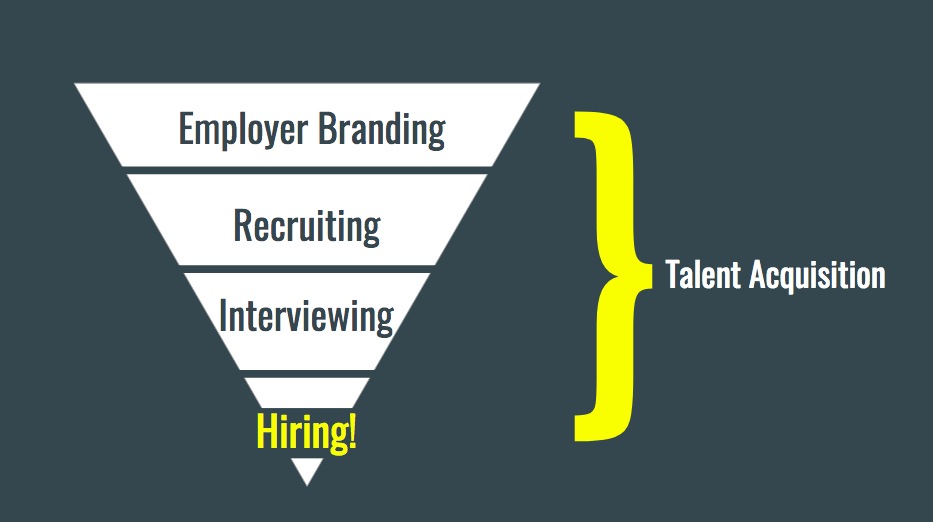
Employer Branding is central to your passive jobseeker strategy

I’ve been writing, speaking and thinking a lot about modern talent-attraction strategies.

Not long after speaking at a DisruptHR event to define passive jobseekers, I recently joined an Employee Cycle podcast episode to dive deeper into the conversation. Listen to it here.

Continue reading Employer Branding is central to your passive jobseeker strategy