Some whiskey stories

I reviewed a turkey-flavor whiskey, and prominent radio show Preston & Steve referenced my review — by literally reading my words without exactly referencing them 🙂

I also wrote about Pennsylvania’s rising rye whiskey.

I did a weekly whiskey review clip with my friend April.

How to be happy

A version of this essay was published as part of my monthly newsletter several weeks back. Find other archives and join here to get updates like this first.

I spent a lot of time living in Tokyo 15 years ago on my bicycle, riding to this park or that garden with one or another book on Eastern philosophy or Asian history. Two concepts I learned about happiness have endured.

One is from a famous passage attributed to ancient Chinese philosopher Lao Tzu. He’s translated as writing: “Be content with what you have; rejoice in the way things are. When you realize there is nothing lacking, the whole world belongs to you.”

Continue reading How to be happy

Is that a Fish in Your Ear? notes on the 2011 book by David Bellos on translation

Translation isn’t about specific word choice. It’s about meaning.

But, then, there are many different kinds of translation. The very old act of translation both creates and defends language in an interconnected world. Earlier this summer, I finished a 2011 book by translator David Bellos called “Is that a Fish in Your Ear: Translation and the Meaning of Everything.” [PDF] Find a review here of it. This is a different approach to understanding language, which has been an interest of mine for years.

You should read the book. For my own purposes, I’ve captured my notes below.

Continue reading Is that a Fish in Your Ear? notes on the 2011 book by David Bellos on translation

Nonprofit news models are important. We need others too

With new grantees announced earlier this year, I’m thrilled by the success of nonprofit local newsrooms, well represented by the American Journalism Project, rolling across the country. It seems clear that each U.S. state, and many regions around the country, will, and should, have some version of this model, sustained by local philanthropy and individual donors. This is a necessary, and exciting, layer to the future of local news ecosyinstems — it is also incomplete. As the founder of decade-plus-old, bootstrapped, niche multi-local newsroom, let me share why.

Back in 2009, I used two plastic containers as a couch and supplemented my meager freelance income by doing odd jobs in landscaping and plumbing. It was clear a true global economic crisis was hastening the decline of my trade. I was living in a crumbling, mouse-infested apartment in the Frankford section of Philadelphia. I scared, lonely and very sad.

Two friends I knew from my college newspaper days were also feeling quite stuck, falling through the cracks of a yawning fissure in how our economy worked and information gathering needs were met

From the start, we agreed that every local news organization still structured as an advertising model was on an irreversible path of decline. The web’s power was scale, anything that unnecessarily drew geographic boundaries was unnatural. None of us came from families with any business background but we were curious and frustrated. We felt very abandoned by those who should have been our mentors and advisors. If I’m being honest I still harbor a chip on my shoulder from those days, and likely will for the rest of my career.

Since then, I’ve become fixated on understanding how journalism creates value for communities. I’ve learned that journalism’s value—curating and verifying information to help people understand their world—remains immense. But too often, the ways we attempt to sustain journalism misalign with this value.

Nonprofit models are one such approach. They freeze the core principles of 20th-century accountability journalism and fund it with philanthropy and reader donations. This is a promising trend, and I believe these newsrooms will endure as a key part of the ecosystem. But they aren’t enough.

For one, nonprofit newsrooms must compete with other critical community needs—food banks, job training, and the arts. During times of crisis, it’s unclear whether journalism can consistently win that competition. More importantly, there are simply too many communities for nonprofit models to serve alone.

Instead, we need a broader range of experiments. Journalism shouldn’t limit itself to replicating legacy models under new funding structures. We should explore new business models that align journalism’s value with sustainable revenue. That means embracing entrepreneurship, commercializing ideas, and rethinking how we engage with audiences.

For-profit newsrooms have the potential to play a critical role here. Charging a lot of people a little—or a few people a lot—remains the foundation of any sustainable business. Yet, too often, journalists are uncomfortable or even dismissive of revenue generation. That mindset is dangerous if we want journalism to endure.

I don’t mean to suggest that my own company, Technical.ly, has cracked the code. If anything, my experience has taught me there is no “code.” There are only the slow, messy steps of experimentation. But I remain convinced that local news needs more than one model to survive.

The Happiness Equation

Develop your internal motivation. Focus. Be kind. Ignore the rest.

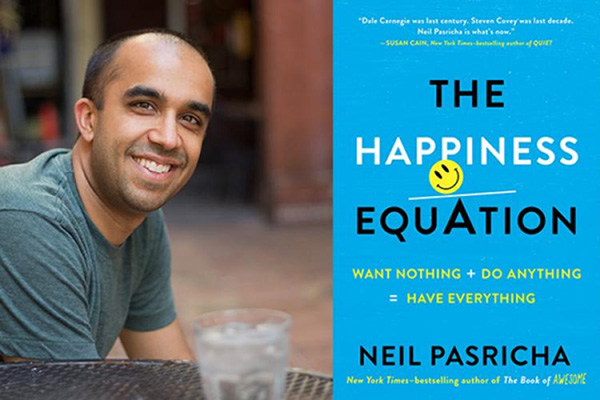
I read Neil Pasricha’s 2016 book The Happiness Equation as part of a pandemic-fatigue powered period of self-discovery. It certainly has its gimmicks and many of the concepts felt familiar to me. Still, I did appreciate the book and came away refocused on returning to being a happier person during such a tumultuous time.

Below I share a few of my notes from reading the book, though I recommend you buy a copy yourself.

Continue reading The Happiness Equation

What if journalism wasn’t only produced by news organizations?

Opera is a tightly defined form of musical theater, but it doesn’t encompass all celebrated music. Journalism risks a similar narrowing of scope—a class divide that leaves it lacking the range and diversity its principles deserve.

As a community of practitioners, we often misunderstand journalism as the exclusive product of a single industry: news organizations. Journalism is not just a product; it’s a set of principles and approaches developed over centuries to foster trust and build relationships.

In the 20th century, journalism’s societal value—fact-based, contextual information to help communities navigate a complex world—was primarily produced by news organizations. This dominance stemmed from a successful business model that paired advertising revenue with independent newsrooms. That model, however, has collapsed under systemic creative destruction. Instead of rethinking how to produce the outputs (journalism) more effectively, we remain overly focused on restructuring the inputs (news organizations).

Meanwhile, other actors—some unaware of or uninterested in journalistic norms—have invaded the space. They mimic the appearance of journalism but produce outcomes ranging from banal content marketing to partisan propaganda, further eroding trust in traditional news organizations.

As someone who co-founded a digital-first local news organization after the Great Recession, I’ve spent the last decade operating in this shifting landscape. In 2011 I wrote: “Sustaining the craft of journalism matters more right now than the craft itself.”

Our work looks little like the 20th-century newspaper model that dominated local journalism, which leaves us seen as anomalies rather than as viable examples of what’s possible. Through this experience, I’ve become convinced that journalism practitioners are still thinking too small. We need to codify the tenets of journalism into a worldview that any professional or organization can adopt—making journalism less of an exclusive craft and more like a cloud-based SaaS tool: adaptable, scalable, and widely accessible.

Local journalism, in particular, suffers under two unsustainable extremes: large-scale media brands thriving through web-enabled reach, and small, local brands struggling with audiences that appear minuscule in comparison. Nonprofit newsroom models have emerged as a promising response, preserving the core principles of 20th-century accountability journalism while leveraging philanthropy and reader support. These models are important and long-lasting—but also limited.

Nonprofit journalism cannot meet the needs of every community. Competing against other vital services like food banks and job training, especially in times of crisis, is an uphill battle. Moreover, the editorial firewall of the 20th century has left many journalists deeply uncomfortable with—or even hostile to—revenue generation. That mindset is dangerous if we want this work to last.

What we need is a broader exploration of commercial opportunities and new ways to align journalism’s value with sustainable business models. My own company, Technical.ly, hasn’t cracked the code—because there is no code. But we’ve worked through the painful, slow steps of building something sustainable, and I believe those lessons are replicable.

I’m motivated by the conviction that every community needs a voice. Journalism doesn’t belong to news organizations alone—it belongs to anyone committed to creating and sharing fact-based, contextual information. If we embrace that, we can ensure journalism thrives, not just as a profession, but as a societal good.