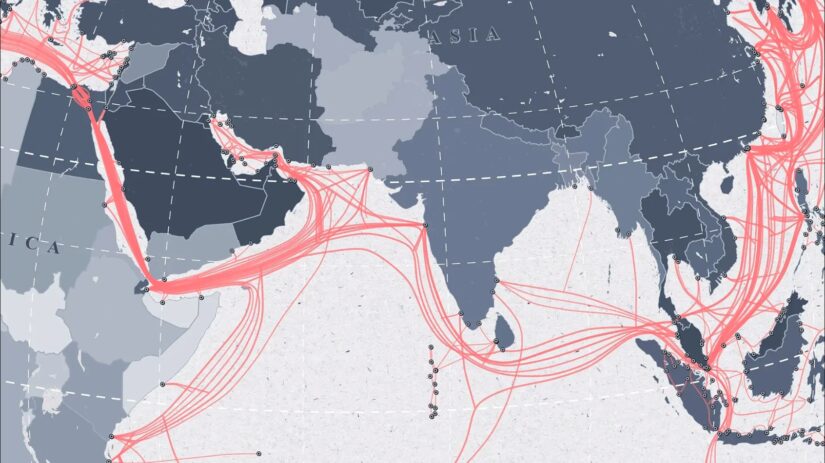
Close to 900k miles of undersea cables criss-cross the world’s oceans. Pulsing light carrying data that makes up every Instagram post, email and transfer speed between users and data centers.
Mostly they’re thin as a garden hose, and the modest landing stations that bring them on-ground are all “air conditioned disappointment.” All this infrastructure is quiet and bulky and difficult, nothing like the frictionless experience we’re treated to online. We ought to better understand it.
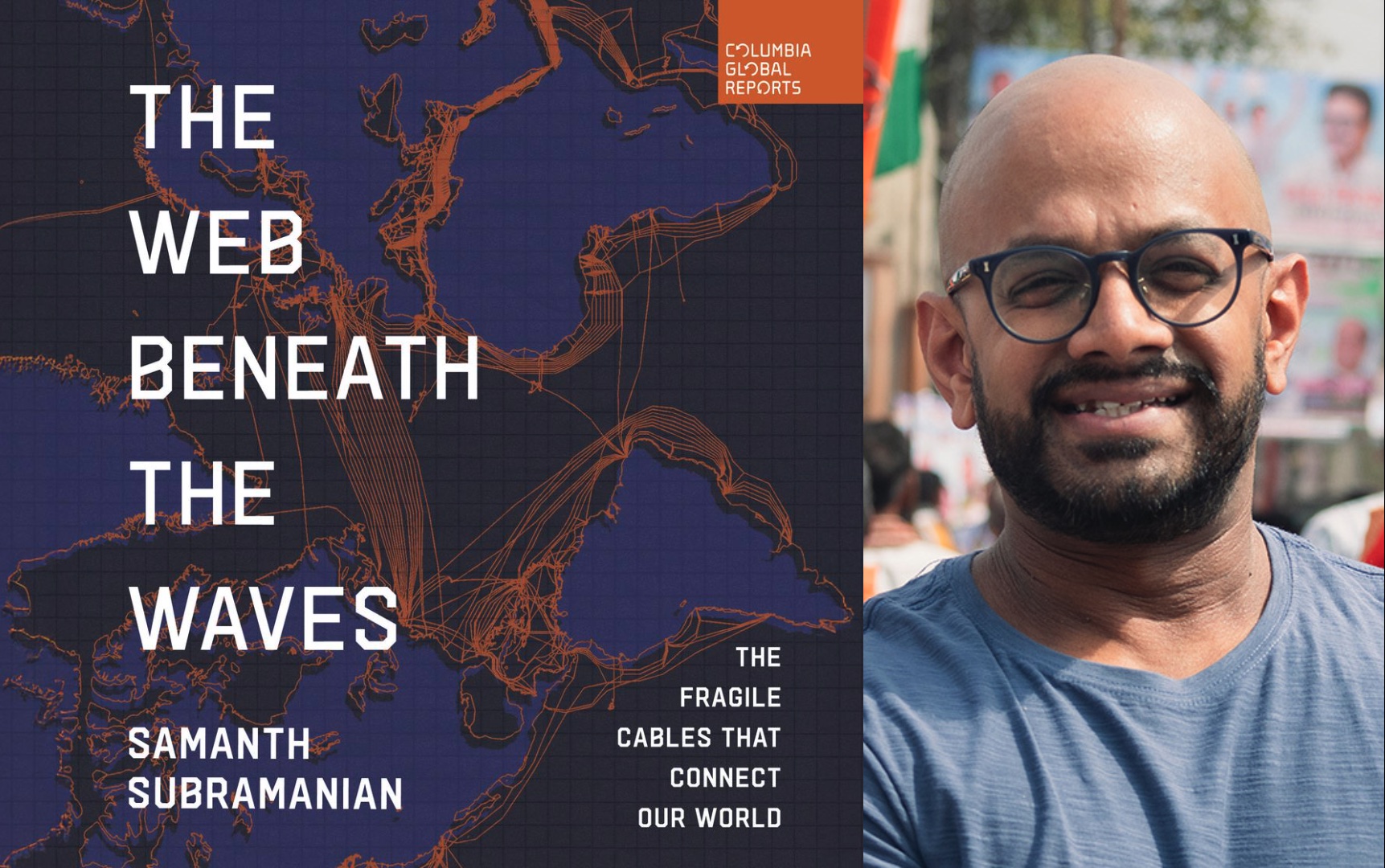
That’s from The Web Beneath the Waves: The Fragile Cables That Connect Our World, a trim little fall 2025 book by journalist Samanth Subramanian, which neatly, artfully and helpfully captures core infrastructure of our digital age. It’s a delightful read.
Below I share my notes for future reference.
My notes:
- 870k Miles of Undersea cables: entwined fibers of glass no thicker than a human hair, through which light travels at 125k miles per second; wrapped in steel for protection then copper to carry electricity to keep the light moving and then wrapped in “nylon soaked in tar” —altogether about the thickness of a garden hose
- Of the garden hose metaphor, industry “veterans draw this comparison in tones of both guilt and marvel, as if they’re ashamed of consigning this delicate thing to the sea and astonished that it performs (for the most part) as reliably and unfussy as it does.”
- The Tonga communications corporation had grown so reliant on the undersea cable that was broken during the volcanic explosion that it had dismantled its satellite equipment and let its subscription lapse. To renew it they had to go online and make a payment, which, of course they couldn’t do. In any case, the sky was so thick with ash for a few days that satellite signals would’ve failed to penetrated anyway. Even in Australia and New Zealand, they sent reconnaissance planes over the islands so that their pilots go to eyeball the extent of the damage.
- But Tonga didn’t go back to the 1990s, because the internet has replaced so many services it went even further back
- Neal Stephenson 1996 Wired science fiction essay on the subject, that this small book updates and reports
- Cornwall England is where “the cable-inclined” always begin their “pilgrimage” — in 1870 it first connected an International sea cable
- In 1907, 200k seabed cables and 75% were British
- International Cable Protection Committee is a submarine cable protection nonprofit organisation. It was formed in 1958.
- Alcatel Submarine networks has roots to 1898
- New Jersey based SubCom is the youngest of these firms that develop and maintain undersea cables
- FLAG in the 1990s timed with telecom deregulation (after a century of government led cable )
- Then came OTT (over the top players ) like Google doing their own cables
- China’s HMN Tech now a major and growing leader
- Rather than a totem for the internet’s power, the landing station for undersea cables are all “air conditioned disappointment”
- “The cable station’s best semiotic value lies in reminding us that, in the online world, the personal is industrial – that even the most casual Instagram post wouldn’t happen without the heavy duty equipment, undergirding the Internet”
- Sailor Roy Neymen had a Garmin on his yacht berthed in Tongo coincidentally and so he sent 1,600 messages for residents blocked by outage (He was later reimbursed by the company)
- Satellites are helpful for a war zone and the frontier and emergencies but “ to serve a community with fast, reliable and voluminous Internet, there’s no alternative to a cable”
- 60-70 vessels fix and lay cable, just 5 new ones added 2004-2020
- Ex-NSA Chief Michael Hayden: ‘We Kill People Based on Metadata’
- Team Telecom (an interagency group formalised in 2020) battles Chinese state-backed cyber threats by reviewing and blocking Chinese telecom firms (like Huawei, ZTE, and China Telecom) from operating in the US due to espionage risks. Their actions have led to FCC license denials, submarine cable restrictions, and major investigations into Chinese hacking campaigns, such as Salt Typhoon, which compromised US provider networks to steal sensitive data.
- Taiwanese telecom Chiueh said of a dozen cable that land in Taiwan only TSE-1 went to China but it had failed and neither side fixed it, but the two countries exchange digital data: “Right now Taiwan is physically closer to China, but on the Internet, they are closer to Japan or the US”
- An OMS cable staffer in Kula Lumur named Wayab Jumrah spent three months with fisherman to make them happy and compensate to keeping a cable safe
- “The liquid medium of the modern world”