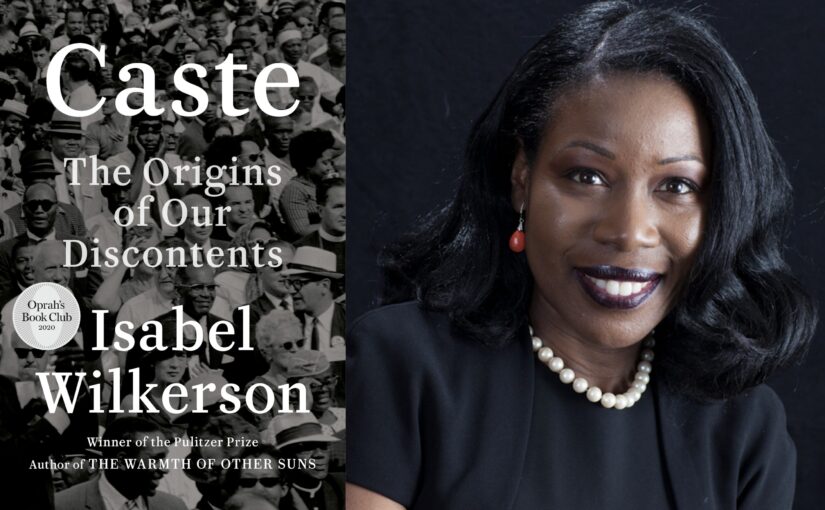
The American system isn’t a racial hierarcy but a caste system.

When so few identify as racist, a better explanation is those who support a caste system. Caste is the granting or withholding of status to someone on the basis of their perceived rank or standing in the hierarchy.

“Caste is insidious and therefore powerful because it is not hatred, it is not necessarily personal. It is the worn grooves of comforting routines and unthinking expectations, patterns of a social order that have been in place for so long that it looks like the natural order of things.”

That’s from Caste: The Origins of Our Discontents, a book by journalist Isabel Wilkerson that published in August 2020, just months after the police killing of George Floyd and amid one of the country’s largest racial justice movements. (In 1994, Wilkerson became the first Black woman to ever win the Pulitzer Prize; Her 2010 book The Warmth of Other Suns on the Great Migration received critical and commercial success)

It became a bestseller, and I just finally read it fully. It is rich and beautiful, and challenging. The central tenet is a mix of race and class into caste. The author prefers to use “subordinate” and “dominant caste” in the American context, exactly because we don’t commonly use the framing — and associate it more with, say, India.

Plenty of the depth of this thorny issue isn’t explored in this book. It came out in summer 2020, so it missed the political shift of the ensuing years, when Black voters did not vote as a monolith. In her rich metaphors, she doesn’t spend any time explaining why she thinks the “American house” is worth saving at all.

As she quotes one sociologist saying: slavery was not a torn thread in “an otherwise perfect cloth” but “it would be closer to say that slavery provided the fabric out of which the cloth was made.” Race, then, plays heavily in the book, but she argues this has become something entwined in class and culture. As Dalit leader Ambedkar said: “there is never caste. Only castes,”

The book is well worth the read, and I regret not having gotten there sooner. Below I share my notes for future reference.

Continue reading The American system isn’t a racial hierarcy but a caste system.
Is the world safer with an AI-powered American military?

Does technology advanced by the American military make the world a better place? Or a worse one?

The last century has made those complicated questions. It’s difficult to interpret American involvement in the 20th century’s first two world wars as resulting in anything but a freer, safer, happier world. The track record has been murkier since.

The ascendant uses of artificial intelligence has awakened the debate. Whether the “neo-prime” military contractors like Palantir give the world’s most powerful democracy an edge to maintain that freer world, or fuels a morally vacant oligarchy, is a hot debate in American culture. At the heart is the US-China rivalry. It’s important then to understand the origins of the American military embracing AI.

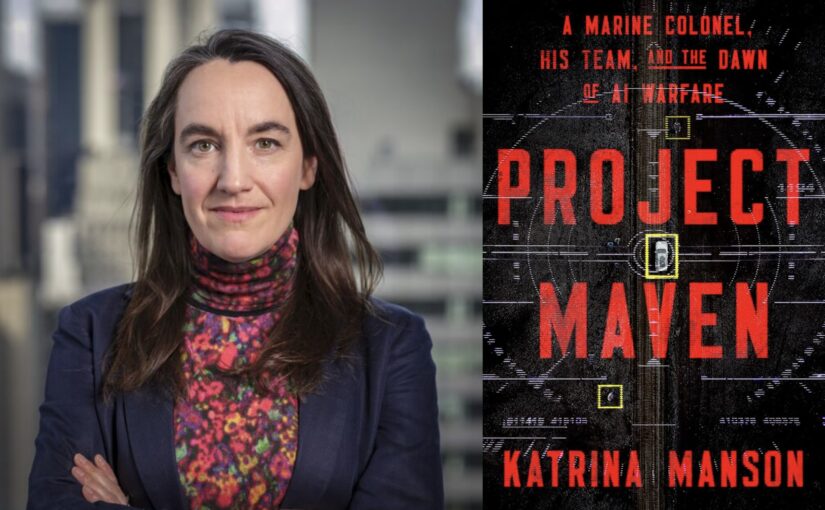
That’s the focus of British journalist Katrina Manson’s 2026 book Project Maven: A Marine Colonel, His Team, and the Dawn of AI Warfare.

She tells of the tale of Drew Cukor, who more than almost anyone dragged a hardware-focused Pentagon toward the data-science and autonomy that was sprouting out of Silicon Valley. When he began his leadership before 9/11, intelligence was viewed to military leaders as secondary, “like a flower in the room.” That has changed.

Below I share my notes for future use.

Continue reading Is the world safer with an AI-powered American military?

China is an engineering society, and the United States is a lawyerly one

The world would be better of if the United States would give engineers more influence, and if China would defer more to lawyers.

The Americans have built a lawyerly society, and the Chinese have an engineering one. The two nations have more in common than they might realize, and so they’d both do well to learn more from one another.

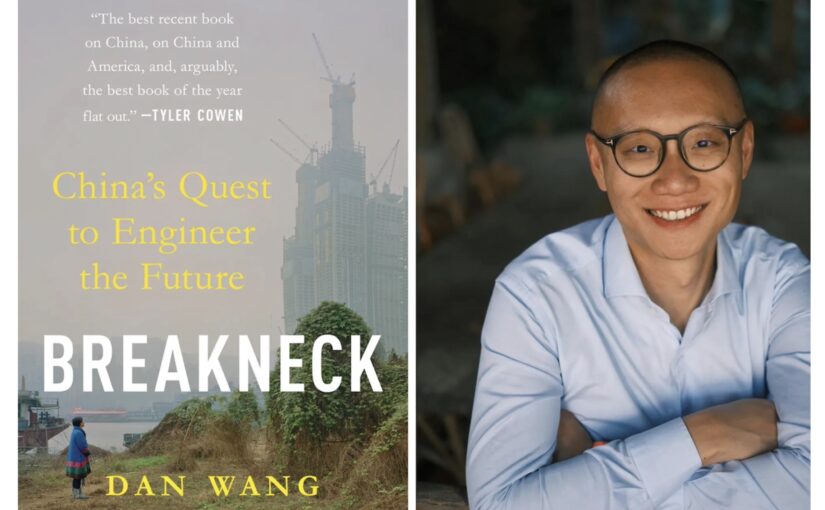
That’s from the 2025 book “Breakneck: China’s Quest to Engineer the Future” by technology analyst Dany Wang.

It’s one of my favorite books of the year: Fun, fast-moving and authoritative. At the heart of the world’s two-state superpower battle, the author argues: “This contest will be won by the country that works best for the people living in it.”

In the greedy late 20th century, American policymakers and executives failed to grasp the importance of “process knowledge.” Boeing and GE traded engineering knowledge for shorter-term Wall Street gain. By 1992, Michael Boskin, an influential economic adviser to the first President Bush, famously said: “Potato chips, computer chips—what’s the difference?” They got it.

Below I share my notes for future reference.

Continue reading China is an engineering society, and the United States is a lawyerly one

Travel Well (Newsweek submission: 3/18/07)

By Christopher Wink | Mar 18, 2007 | Newsweek submission

I have an excessive devotion to my nationality. I like to think there is something distinctly American in that pride of being American. I have saved money and made friends all to answer my desperation to travel, desperate to learn and explore and represent this nation.

I carry a four foot by six foot American flag that was once my grandfather’s whenever I’m abroad, whenever I’m representing this nation. So, that faded flag has gone from his attic, to the wall of my row home in Philadelphia, to a migrant workers’ station in Mexico, to a slave castle in Ghana, to a great wall in China.

I take very seriously my representing the United States. I speak with the polite “vous” in southern Quebec and drink slowly my wine in central Tuscany. Yes, I have an excessive devotion to my nationality. But, sadly, perhaps it is my expressiveness that is distinctly American. I have seen hundreds of Italian club-goers glaring at a group of American girls who were having too much fun–pocketbooks over their shoulders, shoes in one hand, drinks in the other–as they tripped through a break-dancing competition.

Continue reading Travel Well (Newsweek submission: 3/18/07)