Technically Media team head shots by Colin M. Lenton Photography

My Technically Media colleagues Sean Blanda, Brian James Kirk and I kept running into situations where we needed headshots or team photos.

Even as a startup, for conferences and speaking engagements, we’d send out photos taken by friends or shots that had landed on Facebook and we realized we needed something a bit more formal.

So, as noted last week on our company blog, we worked with Philadelphia Photographer Colin M. Lenton, whom we know from our college newspaper days, at his rental photo studio in the Frankford section of Northeast Philadelphia. We’re really pleased with the results. See the low resolution versions on our company Facebook page here.

(As noted here a couple months ago, we actually had a few fun shots taken by another great Philadelphia photographer, Neal Santos, but that just in preparation for another photo shoot altogether and weren’t formal headshots.)

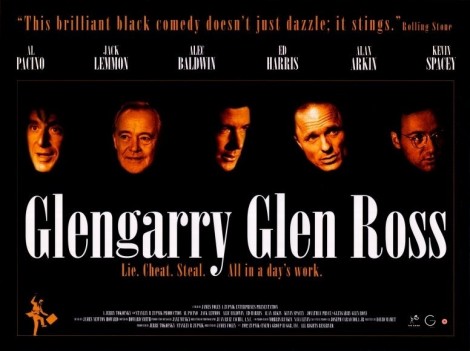
Glengarry Glen Ross: 10 sales lessons from the 1992 cult classic movie

Sales tactics to lead and those to avoid are seemingly peppered throughout the classic, star-studded, independent black comedy Glengarry Glen Ross from 1992 that I finally got to watch — after quoting clips for years.

“We’re adding a little something to this month’s sales contest. As you all know, first prize is a Cadillac El Dorado. Anyone wanna see second prize? Second prize is a set of steak knives. Third prize is you’re fired,” says the character Blake, setting the mood early on.

As you might expect, there are some takeaways to be had.

Continue reading Glengarry Glen Ross: 10 sales lessons from the 1992 cult classic movie

Five things that should be in your organization style guide

While I was at Back on My Feet, something I was proud of completing was, with the great help of a colleague, a company style guide.

A style guide should be a fundamental piece of documentation that goes a long way to creating an institutional memory. If everything imploded, a style guide would help you rebuild your organization — with workflow being more explicitly enumerated in staff manuals.

As your organization grows, it’s easy to wake up and find a lot of disparate, disconnected pieces that you’ll need to assemble again. Take hold and  keep connected the work you do for a tighter, more inspired and successful campaign.

In looking at other guides and finding value in ours, there are a few items that I think every style guide should include:

Continue reading Five things that should be in your organization style guide

JLab Enterprise Reporting Fund: Abandoned City and Broadband2035

Two more collaborative Philadelphia reporting projects in which I was involved have finished recently.

Part of the JLab-funded Enterprise Reporting Fund that paid for the NEast Philly District 172 project I shared recently, Abandoned City was a partnership between Technically Philly, PlanPhilly and CityPaper and Broadband2035 was a partnership between Technically Philly and PlanPhilly.

While I was involved with some strategy, reporting, introductions, planning and, for Broadband2035, I led the relationship with the city’s Planning Commission (more on that below), my colleague Brian James Kirk really led our roles in these two initiatives.

Abandoned City, depicted above was an investigation of vacant property in Philadelphia and its impact on communities.

  • CityPaper led the reporting and devoted a cover story and other print space for reporting
  • PlanPhilly offered additional reporting, editing and the web platform
  • Technically Philly initiated the partnership and worked with a developer to visualize and map those findings.

Broadband2035, which is ongoing, investigated the impact access to affordable broadband has on low-income communities

  • PlanPhilly offered reporting, editing and guidance
  • Technically Philly led the reporting, worked with the city’s Planning Commission to incorporate broadband plans into its comprehensive Philadelphia2035 vision and hosted the series page.

News Frontier Database from Columbia Journalism Review: Technically Philly and NEast Philly included

The Columbia Journalism Review launched this year its News Frontier Database, meant to be a curated directory of independent online news organizations, included the two niche sites on which I collaborate.

See the entire News Frontier Database here.

Technically Philly was an early listing, having been contacted by CJR in March and launching in early May. See that listing here.

Northeast Philly hyperlocal NEast Philly was recently added too. See that page here.

Including those two, there are just four Pennsylvania sites listed, all from Philadelphia, including also PlanPhilly, with which Technically Media is now doing some work, and another FactCheck.

Steps to incorporate a business in Philadelphia (or elsewhere)

Last month, I described the process of dissolving the Technically Media general partnership, so I wanted to close the loop by quickly sharing our process for incorporation.

Mostly, this was a lesson in paying for a lawyer — doing it (mostly) right is worth paying. But I also wanted to share a few lessons I learned and some resources I used.

Why we decided to incorporate: (a) I expressed concern that as a new homeowner, I wanted greater protection from liability for our work (like liable or breach of contract concerns), and, as an added benefit, (b) we wanted to be W2 employees of our company, for the credit value of guaranteed payments. Moving forward, we also recognized (c) the benefit for the possibility of hiring employees.

Find the steps and resources below.

Continue reading Steps to incorporate a business in Philadelphia (or elsewhere)

Knight Foundation funds Philadelphia Media Network ‘digital media incubator:’ thoughts

Philadelphia Media Network CEO Greg Osberg announcing Project Liberty, which includes a tech startup incubation program. Photo by Liliputing.

The parent company of the two largest paid daily newspapers in Philadelphia is making good on its pledge to launch an incubation program. We at Technically Philly first reported on that pledge last fall.

We had heard of the likely partnerships with University City accelerator program DreamItVentures and the regional Ben Franklin Technology Partners, but what did surprise me a bit was the $250,000 in funding from the Knight Foundation to give it a go.

The initiative was a sliver of the Philadelphia Media Network’s overall Project Liberty, which focused mostly on news that the media company would offer subsidized sales of Android tablets with subscriptions to its newspaper content baked in. So, I’ve been surprised by the handful of questions I’ve had about the smaller incubation portion of the project. I’m writing here to answer them.

Continue reading Knight Foundation funds Philadelphia Media Network ‘digital media incubator:’ thoughts

Don’t try to sell for the first year but have a plan for what you’re doing to sell

I’ve been thinking lately about advice I’d give others about starting a niche product or, really, what I’d do differently myself.

In doing so, I’ve focused on business rollout timeline. The social sites of the web 2.0 world have developed something of a reputation around building audience first and a business  model second. It’s a plan that I myself remember doubting, but I wonder if I was just being naive.

It takes time to develop what you are, which certainly will dictate how you’ll fund it. Last month, I shared some of my favorite pieces from Gary Vaynerchuck’s book ‘Crush It. He shared some in there that is relevant here:’ “I didn’t make a peep the first year and a half of doing [the wine tasting video podcast] show. I didn’t try one biz deal ever,” [p. 92].

He was busy building the audience. The best marketing strategy, he adds, is just caring. So build a community and then figure out how to fund it.

It still worries me, I’ll admit, but it’s the ultimate trial pitch. Don’t waste energy selling into something that isn’t there. Instead, focus on increasing users, creating community and building engagement and, if the community develops, then figure out how to pay for it. If the community doesn’t develop, well, then, the project didn’t work out and you move on to your next.

That said, particularly in news, you damn well better have a good sense of what you intend on making money on. Make the business plan, but make sure there’s something real there before you dawdle on doing something about it.

Looking back at Technically Philly, it took us about a year and a half before we made a dime. That’s not for lack of trying and, admittedly, it was probably ideal that we made some cold calls and started conversations because we had to learn the basics first. But, now, when I give advice, I think it’s that give your project a year to grow on the side — keep the day job — before going all in.

I reserve the right to morph this line of thinking, but that’s where I am now. Whatcha think?

“Understand what business you’re really in. That’s what benefit you provide customers. Not what product.”

The innovator’s dilemma: “Understand what business you’re really in. That’s what benefit you provide customers. Not what product.”

H/T Tech Dirt.

Economics of abundance: “Find the scarcity that abundance creates.”

All of this fits into the news (and many other industry) fracturing conversation. Which might have led leaders to take more serious predictions, like this prescient one from 1994 about the future of tablet computer.

FCC report: local accountability journalism is lacking, impact small when present

The FCC released a year-long study on the state of local accountability journalism and the view is pessimistic, as the Seattle Times reports.

A lot of conversation has come from it, and I hope to add some greater thoughts here on the 40-plus page document. Download it here [PDF]. Author Steven Waldman gave a short presentation at last Thursday’s Aspen Institute roundtable.

Technically Philly is mentioned briefly, but in a section lamenting that what modest successes the Philadelphia market has had in local journalism is having a relatively small numerical impact, in terms of traffic. The report’s premise was defining meaningful impact by those sites that account for at least one percent of a region’s overall traffic.

The broad comScore coverage also allows us to piggyback onto recent in?depth studies of local journalism in the digital age. First, the Institute for Interactive Journalism authored a recent study of the online news ecosystem in Philadelphia. They claim to have identified 260 local blogs, including “about 60 [with] some journalistic DNA in that they report news, not just comment on it” (Shafer 2010). While J?Lab does not provide a full listing of the sites, they single out several as particularly successful examples. Metropolis is an online news outlet staffed by professional journalists with experience in traditional media. TechnicallyPhilly.com focuses on the city’s tech community. Public School Notebook covers Philly schools and local education issues. PlanPhilly.com concentrates on planning and zoning. SeptaWatch.org provides coverage of local transportation. The Broad Street Review provides coverage of the local arts scene. The Philadelphia media market provides the fourth?largest panel in the sample, making it easier to find low?market?reach sites here than it is almost anywhere else. PlanPhilly.com shows up just in the February data, with 7 visitors out of 7967 panelists. None of the other online news sources show up at all.

Read the entire report here [PDF].

Important reading and takeaways: