What I’ve learned from being threatened with legal action as a journalist and news publisher

Following a series of well-reported stories by Technical.ly on a startup in turmoil (including this most recent one), the founder threatened legal action. I’ve been here before.

In fact, I had drafted here a blog post from 2013 (!) that I’m refreshing for these purposes. Once or twice a year, we at Technical.ly get some kind of threat of legal action. Sometimes this amounts to a cease and desist letter, once it was formal-sounding demands for reporter notes and more often it is bluster.

Most usually though, our legal counsel advises us to stay quiet. No use inflaming the situation. But this time, one of the startup founder’s allies posted on social media a criticism of my reporter. That gave me cause to post this video response on social here (and embedded below for ease).

Continue reading What I’ve learned from being threatened with legal action as a journalist and news publisher

Will AI be good or bad for journalism?

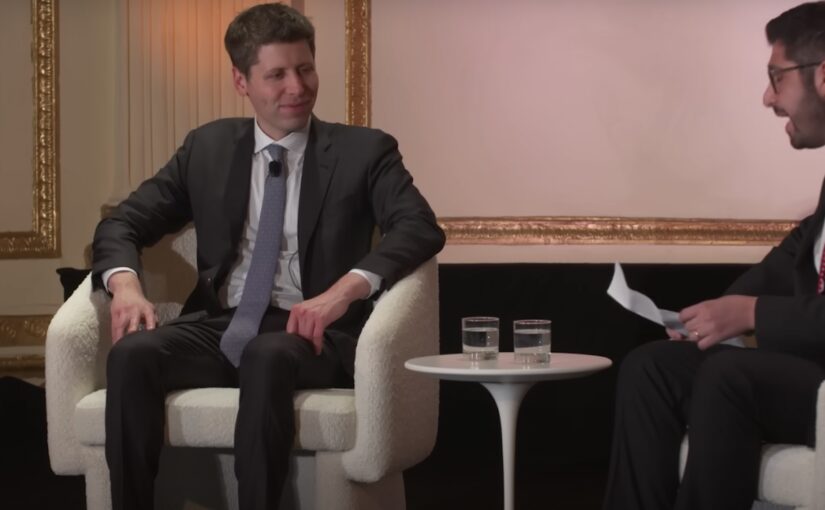
This answer Sam Altman gave TIME editor Sam Jacobs this month is pretty close to my stance too (clip here). That stance? With an over-supply of content, the differentiation will come from trust and high-quality relationships. That’s why I continue to bet on journalism, and local journalism at that.

Continue reading Will AI be good or bad for journalism?

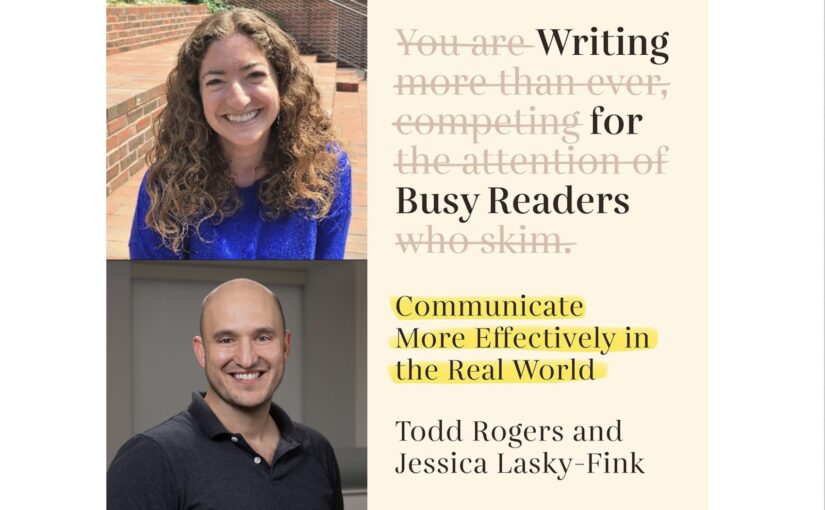
Writing for Busy Readers

More words add nuance but clutters central message. Which is your preference: the details or the point?

It isn’t always one or the other, but if you’re writing for busy readers and broader audiences, you ought focus on the point. That’s among the themes from a new book by Jessica Lasky-Fink and Todd Rogers called “Writing for Busy Readers: Communicate More Effectively in the Real World.” Add it to a helpful collection of writing about writing that I enjoy.

They have a nice simplified chart here on a site of resources. Below I share my notes for future reference.

Continue reading Writing for Busy Readers

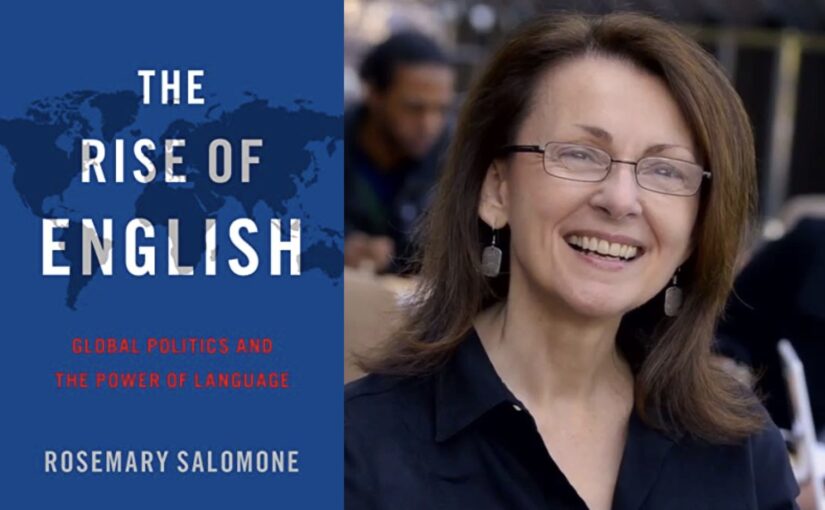
The Rise of English

English is one in a long line of global lingua francas. If it’s the last, we’ll lose an important bit of culture, and reinforce elements of inequality.

That’s what Rosemary Salomone argues in her 2021 book The Rise of English: Global Politics and the Power of Language.

In 2010, British Nicholas Ostler author argued that English will be the last lingua franca, due to the values-lock of technology today. Salomone’s book is an exhaustive review of how English came to its vaulted position today – beating French, replacing Latin and joining others like Arabic, Italian and Greek that played versions of the global language of commerce of the past.

I enjoyed the book, though dense, and recommend it for language and history nerds. Below find my notes for future reference.

Continue reading The Rise of English

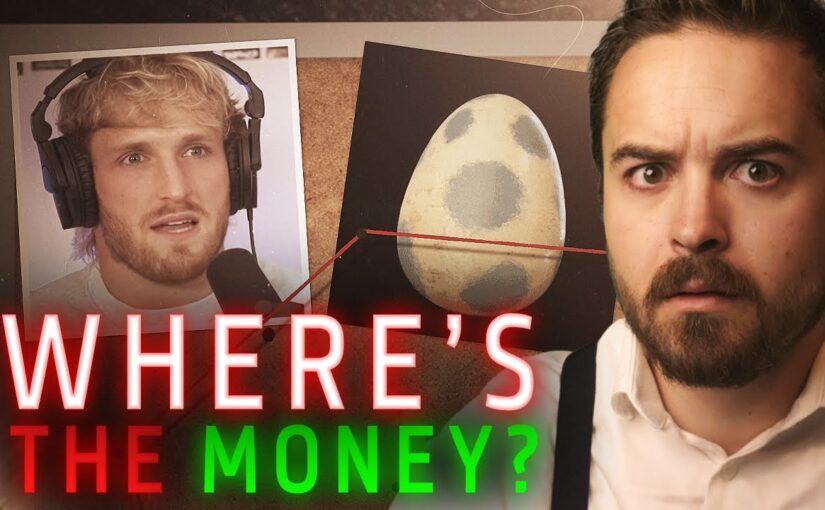
What a feud between YouTuber Coffeezilla and influencer Logan Paul says about journalism

This started as a video, thread and post.

Two communities I follow that don’t overlap much: (1) Those who are following the battle between YouTuber Coffeezilla and big-time influencer Logan Paul, and (2) those who focus on journalistic process and integrity.

I’m here to tell you these conversations are one and the same.

Continue reading What a feud between YouTuber Coffeezilla and influencer Logan Paul says about journalism

3 ways journalists can use AI writing ethically

This was originally a video, post and thread elsewhere.

ChatGPT is especially scary to journalists because AI writing feels a lot like cheating. But it doesn’t have to be. Here are three ways I’ve experimented with AI writing that don’t break any journalism codes:

Continue reading 3 ways journalists can use AI writing ethically

Divided We Fall

Americans choose party affiliation over national identity at our own peril.

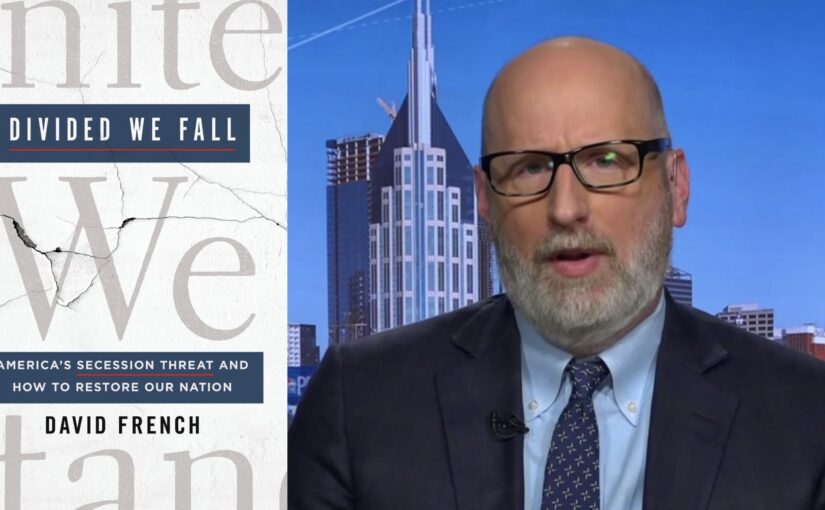
That negative polarization keeps us from uniting and using one of our country’s best designs: federalism, which could allow for disparate state-by-state experiments. So argued David French, the conservative political commentator in his fall 2020 book Divided We Fall: America’s Secession Threat and How to Restore Our Nation.

French, a pro life conservative Christian lawyer and Iraq War veteran, has wedged himself in a debate about the future of the Republican Party, and so American life. “We are in a cold civil war,” he writes.

One cause? Tolerance: conservatives hate it and liberals misunderstand it, he writes. Or as he says Scott Alexander argues: Tolerance is misused by liberals to mean liking marginalized groups, but tolerance means tolerating something so tolerance is about tolerating out groups, not opinions you already agree with. French, who formerly lived in Center City Philadelphia while leading a free speech nonprofit, has annoyed many corners of American public life, but I appreciated his book and perspective. It’s worth reading. Below I share my notes from the book for future reference.

Continue reading Divided We Fall

Three types of “Journalism Thinking” coming from outside news organizations

This was originally published as a tweet thread.

I’ve spent 15 years obsessed with the bleeding edge of journalism, marketing and online community building, and I finally have a grand unifying theory for what is happening — and where this is going.

If you’re interested in how we learn and connect together, hear me out ?

Continue reading Three types of “Journalism Thinking” coming from outside news organizations

The many locations of the Pen and Pencil Club

(Note, as a past P&P board member, I drafted an earlier history, and this reflects some updates from my friend Sandy Smith. In honor of the place surviving the pandemic, with a fair bit of financial help from many of us members, I wanted to finally share what I know about the place)

The Pen & Pencil Club has had more homes than Philadelphia had daily newspapers when it was founded in 1892. Its current and permanent home at 1522 Latimer Street is the Club’s 16th residence—a fitting end to more than a century of nomadic existence.

The Club’s journey began at 133 South 11th Street, where it occupied the second floor for two years before moving to Bohemian Hall in 1894. Bohemian Hall remained the Club’s longest home, housing it until 1926. Neither of these buildings exists today; Thomas Jefferson University’s hospital now occupies the 11th Street site, and its Scott Building has stood on the Bohemian Hall site since 1970.

The Club’s third home was its first owned property: a townhouse at 1023 Spruce Street, purchased in 1926 for $42,500. Unfortunately, the Club struggled financially during Prohibition and could not sustain mortgage payments, leading to foreclosure in 1936. The building was sold in the late 1930s for $11,500.

From there, the Club rented its next ten homes. Its fourth location was in the now-demolished Walton Hotel at 233-47 South Broad Street, which it occupied from 1937 to 1941. It then moved to 1522 Walnut Street, now home to Holt’s Cigar Company, where it remained through 1944.

In 1945, the Club moved to 1523 Locust Street. Tragically, a Christmas Day fire in 1946 destroyed much of the building and the Club’s records. By January 1947, the Club had relocated to 1615 Walnut Street, where it stayed for 16 months; a New Balance store now occupies this building.

The Club’s eighth home, from 1948 to 1954, was at 239-41 South 15th Street, which drew over 1,000 attendees, including Mayor Bernard Samuel and Governor James H. Duff, to its opening. The site was later demolished, and the Academy House condo tower now stands there.

Records indicate a brief and undocumented stay at 1305 Locust Street in 1954, followed by a move in 1955 to South Camac Street, a stretch once known as the “street of clubs.” This location, at 239-41 South Camac, was also the first home of the Poor Richard Club.

The Club’s next two homes are somewhat unclear. By February 1963, 216 South 16th Street was listed as its address, and it later appeared at 1709 Chestnut Street during the 1960s.

In 1967, the Club moved into its third-longest-lived home at 218 South 16th Street/1600 Chancellor Street, where it stayed for nearly two decades. In 1986, the Club purchased its second owned property at 563 North 15th Street, but financial struggles forced it to close this location in 1990.

The Club reopened later that year at 1623 Sansom Street, where it remained until 1995. This building has since been replaced by the structure housing Abe Fisher and Dizengoff restaurants.

Finally, on August 17, 1995, the Pen & Pencil Club purchased its current home at 1522 Latimer Street. This time, the Club found stability: its mortgage was paid off early, and the milestone was celebrated in 2015 when then-President Chris Brennan ceremonially burned the note.

After more than a century of relocations, the Pen & Pencil Club has firmly settled into its home—a testament to its resilience and enduring role as the nation’s oldest surviving press club.

The Journalist the Murderer

Journalism can only be done adversarially — or immorally.

So argues the 1990 book The Journalist the Murderer by Janet Malcolm, which was first a serialization the year before in New Yorker. The nonfiction book is today considered a seminal work in journalism ethics, and related fields. Though frequently referenced in other works I’ve read, I only now finished the short book.

Malcolm focuses on the relationship between a journalist named Joe McGinniss and a man named Jeffrey MacDonald, who was accused of murdering his wife and children. McGinniss wrote a 1983 bestselling book about the case, which then became a popular movie, but was later criticized for his handling of the relationship with MacDonald, resulting in a high-profile libel case. In short, McGinniss was accused of portraying himself as sympathetic to MacDonald but always planning a damning book. Malcolm takes this narrow example to draw wider conclusions, including the nature of truth and how it is represented in journalism.

Below find my notes for future reference.

Continue reading The Journalist the Murderer