How 9/11 helped shape New York City for the better

The New York 9/11 terrorist attack site view on Sept. 12, 2001 from the Enhanced Thematic Mapper Plus camera on NASA's Landsat 8. Click to see original. H/t Gizmodo

Nearly 3,000 people are said to have died 10 years ago in the Sept. 11 terrorist attacks, perhaps more if some first responder deaths are to be included.

That is brutal and sobering and tragic and heartbreaking.

TL;DR — Why I believe the pain of 9/11 helped shape NYC for the better.

  • A long history exists between pain and strength.
  • After 9/11, Americans embraced New York City as patriot territory.
  • After the attacks, an even stronger NYC identity has developed.
  • Following that day, NYC is now protected by more of a veil of patriotism than it perhaps has ever had.
  • Why I wrote this: To argue that a dramatic shift in our national perspectives on NYC changed after 9/11 and it has largely benefited the city.

I grew up in northwest New Jersey, a rural enclave in the New York City region. Like many others there, my parents were from the city and arrived an hour west chasing suburban sprawl. Much of my family still lives in and around that city. They worked in and around the Twin Towers. A couple times a year, my parents would take my sister and me to Manhattan for nice dinners with family; I always wanted to play sandlot baseball or get lost in the woods instead.

I was a sophomore in high school sitting in English class that September Tuesday, but I don’t want to rehash my story. Plenty are doing that and, quite frankly, they are doing a better job of it than I can. Moreover, many people with whom I was in class had parents or other close family working there or near to the buildings. I didn’t, after some confirmation, so my personal story isn’t compelling.

Instead, I want to suggest what might be considered a rather unsettling thought, but I think it’s an important one.

That the most costly, most visual portion of the Sept. 11 attacks in lower Manhattan have, looking back at the last 10 years, been good for New York City.

People died. Real people. At a different time, my uncles, or cousin or sister could have very likely been in that number. Philosophy isn’t developed enough for us to understand why not. Very little is ever worth death. But, I believe, these attacks have propelled New York City to first city status among the few generations of Americans alive for 9/11 in a way that nothing else ever could.

I am not a resident of New York City. Never have been. The city was around me — literally and by means of familial roots, but, no, I wasn’t there that morning and know little of that moment. My arguments here rely most heavily on outside perception, so having roots and family there, but being distant enough to evaluate that perception is a strength, I believe.

Now let me tell you why the idea that something so painful could be beneficial is not only plausible, it is clear.

Continue reading How 9/11 helped shape New York City for the better
New York City is not representative of the United States: a letter to national media

In 2007, a 44-year-old father of two fell five stories on an active construction site at Temple University Hospital and died.

The Inquirer wrote a nice feature on the man, who died a tragic, accidental death. Locally, the local ironworker union used his death as something of a rallying cry for a new achievement. There might have been some local TV coverage too, if the news day was slow enough.

It’s the kind of heart-wrenching story that happens too often, some 100,000 times in this specific case. But for most of the country, the story ends there. A local tragedy seen through the lens of local media.

I couldn’t find the news report, but I seem to remember a similar tragedy happening in Manhattan around the same time. It was a story like this one from April, where the New York Times reported on a terrible fall that made its way onto the NBC Nightly News and, if I remember correctly, other national media outlets.

This wasn’t the first time, and it hardly was the last. Tragedies are painful no matter where they happen, but in these cases, they’re representative of something else.

Continue reading New York City is not representative of the United States: a letter to national media

Why Philadelphia should embrace its accent

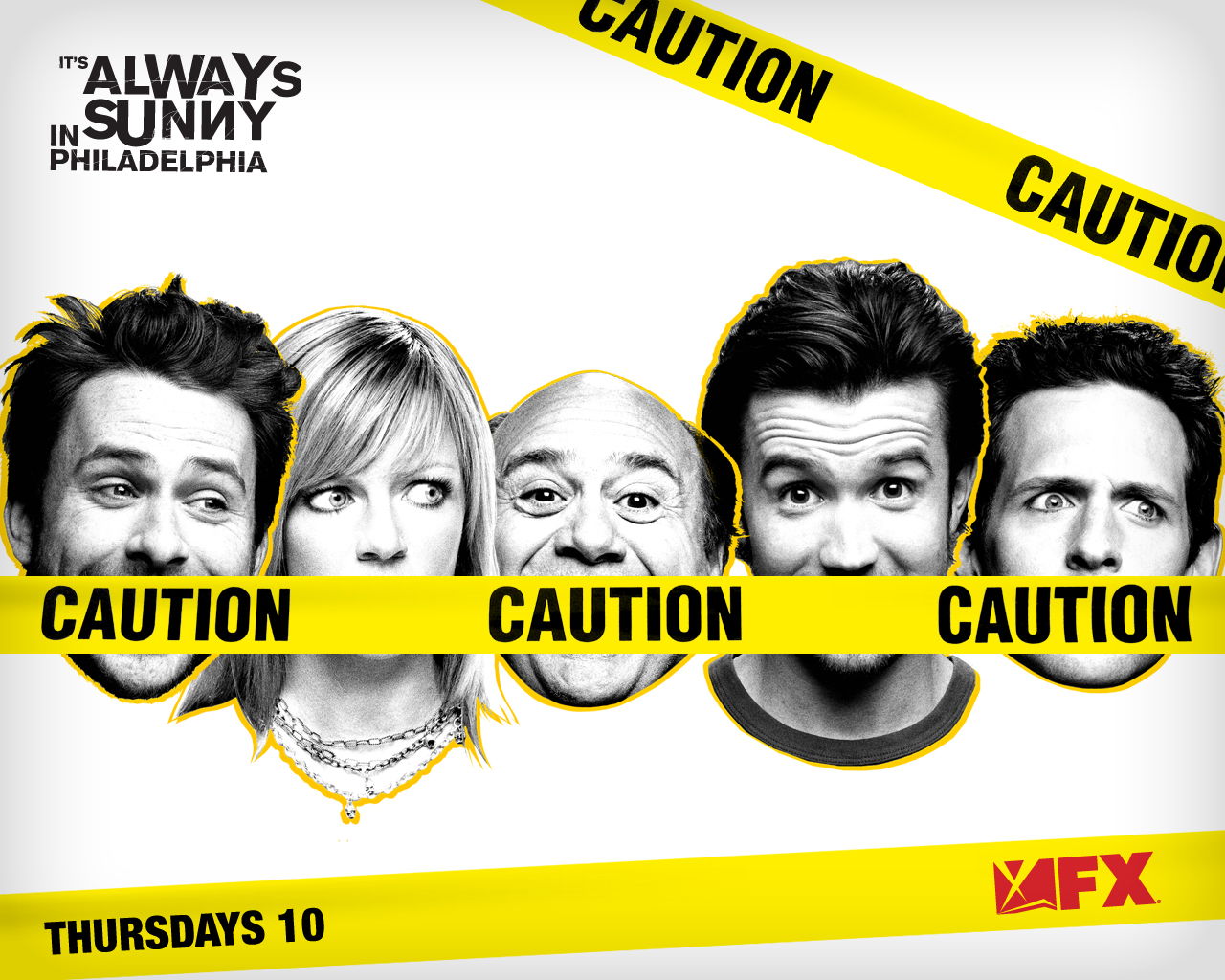
Even on the beloved and excellent TV comedy 'Always Sunny in Philadelphia,' native Rob McElhenney doesn't employ a Philly accent.

I have a friend who went to college where he did for, really, one leading reason: the accent.

Sure, he found a nice campus at a respected university with a good reputation and a big price tag, but, ultimately, he sought colleges in and around Boston because he loved that accent.

Boston, most might say, is a culturally distinctive city of 650,000 in a region steeped in history, plagued by all the problems dense places face and respected for its future.

Boston and its portion of New England surely has a lot going for it — in Philadelphia, it’s the city we probably most often compare ourselves to in terms of college graduate retention and sustaining of life sciences business — but I argue one of the strongest, most meaningful reasons for its success that no one seems to talk about is, yes, those broad As of the Boston accent.

So I’m here to argue that one of the greatest ways to continue to bolster Philadelphia’s reputation is to expand its cultural exportation through movies, music and TV, highlighted by that accent that the rest of the country rarely can identify.

Continue reading Why Philadelphia should embrace its accent

Selling Out: why some acquisitions are good and others are bad for Philadelphia business

Remember: I am an individual who is a technology reporter. These are my opinions and should not reflect those of my company Technically Media, nor its technology news site Technically Philly.

Online auction giant eBay bought for $2.4 billion King of Prussia-based e-commerce powerhouse GSI Commerce in March, and I spoke briefly about the deal on WHYY.

As NewsWorks reported, there was immediate concern about the loss of local jobs through contraction and restructuring. In my conversation, I pushed on the notion that there is important value for the region’s perception as a technology hub to have significant exits to point to.

This acquisition, I suggested, can be seen as a good thing.

In doing so, I raised the ire of Old City coworking space Independents Hall co-founder Alex Hillman, who told me he felt strongly that growing companies in Philadelphia was a lot more important than selling out to bigger players elsewhere.

This post is going to argue that we’re both right.

Continue reading Selling Out: why some acquisitions are good and others are bad for Philadelphia business

Temple Review: why big companies still lead innovation and how that’s changing

How large technology companies still lead innovation in the world is the focus of a freelance story I wrote for Temple Review, the alumni magazine of Temple University.

Read the story here or download the PDF here, on page 24.

An earlier nut graf: Innovation has been seen as strictly in the purview of tiny, agile startups, taking an idea and bringing it to market. But as the speed of new technologies continues to quicken, the need for large businesses to help bring products to market becomes even greater. So big corporations are not only playing a remarkably underplayed role in innovation, they are also innovating in how they change the world altogether.

Give it a read and then check some of the extras from my interviews that didn’t make it into the piece.

Continue reading Temple Review: why big companies still lead innovation and how that’s changing

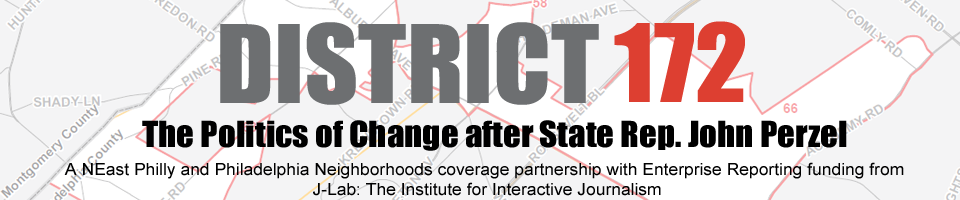
District 172: John Perzel coverage for NEast Philly, funded by JLab


Though I took part in three of 14 JLab-funded Philadelphia Enterprise Reporting Fund projects, first announced here last fall, I led one of them.

For Northeast Philadelphia hyperlocal NEast Philly, I helped lead the editorial direction of a project called District 172: the politics of change after state Rep. John Perzel.

Following the indicted former state Speaker of the House, whose corruption trial has been postponed until the fall, we covered what the impact the loss of a 30-year state leader would be on his district, particularly a small swath that had served as his political base.


Find all the coverage here.

I had the following roles:

Can you be a star in Philadelphia?

Back in February, Philadelphia magazine profiled Doogie Horner, a quirky stand up comedian who has gotten some national attention, a major publisher’s backing and has the audacity to think he’s going to stay living in Philadelphia.

Doogie Horner is a comedian, and he isn’t encouraged by what he sees inside Noche, a Center City bar filled with binge-drinking 20-somethings on this cold Tuesday night in December. The room is jet-engine loud — not the ideal setting for tonight’s stand-up gig. None of the comics are getting paid. Horner thinks the guy who booked the show is a dentist. Seriously.

While the piece was largely a profile of Horner, there was this undertone of his still trying to make in Philly — a big city in population but not in celebrity or national voice.

Los Angeles has Hollywood. New York is the country’s capital of publishing, financial and TV. Las Vegas had created an entertainment industry. Other cities have a national voice by way of a central figure who forced it that way: CNN made Atlanta a news hub; Oprah gave Chicago a national platform; Warren Buffet made the financial world come to him in Omaha. So can you be a star in Philadelphia?

Continue reading Can you be a star in Philadelphia?

Why this truancy ad sucks and what I think would be better

Media, particularly that which is meant to attract the indifference of youth, has to be more informed by the end user.

Riding the El in Philadelphia, I see this truancy ad with Bill Cosby pretty often.

Maybe I’m just cynical, but this seems so clearly to be an ad that completely ignores its audience. This ad’s message of getting kids to go to school was made by adults, for adults or by high-achieving kids, for high-achieving kids.

I’m not sure I believe that any kid who is at risk for skipping school would look at this ad and be moved to change his or her ways.

It’s a picture of an aged Bill Cosby and a pack of clean cut students, suggesting going to school ‘made me a winner.’ I don’t believe it’s compelling: nameless kids and an older celebrity. I don’t think there is anyone there who, without context, would inspire other students to follow this suggested path.

What would be compelling, I believe, is making clear the looming risks of not graduating high school.

Continue reading Why this truancy ad sucks and what I think would be better

Exit Interview series on Technically Philly

To kick off this year, we at Technically Philly ran a weekly Tuesday feature interviewing a technology community member and/or entrepreneur who left Philadelphia. It is called Exit Interview and the weekly portion of the series is winding down, with perhaps one more to run next week.

The three of us who founded TP love Philadelphia, in particular its creative and entrepreneur communities. Journalism aside, we tend to think those whom we cover are going to be a big part of improving Philadelphia, its perception, its government, its taxes and its reputation.

Journalism should uncover truths and push forward dialogue. That can come with important public affairs coverage and institutional oversight, but it can also by highlighting key issues among its audience.

So I felt strongly that to further the conversation among these communities, it was our role to face directly concerns holding it back. To do so, I led the move to bring together nearly a dozen interviews and will now roll back out Exit Interview when new perception comes forward.

Today, on the Technically Media blog, I shared six lessons I took from running the series.

To get a quick sense, here are three example headlines from the series:

Tokyo: Archived Podcasting and Blogging from Junior Year Abroad with NBC

Four years later, I’m finishing this piece of archiving business.

A couple months ago, I announced I had moved my honors thesis to a subdomain of this site for the sake of organization and archiving. Following up on that resolution to make more tidy a rambling online portfolio, I have brought another dated, collection of work of which I am proud under this house.

I spent the better chunk of 2006 in Tokyo video podcasting, writing, traveling and learning on behalf of NBC Universal Digital Studios. Now all of that work can be found at japan.christopherwink.com.

See all the Episodes here and all the Archives here. Go and explore.

A few things interested me from my work in 2006:

  • Short, bad titles — The post headlines were all short and sometimes not even descriptive. I didn’t recognize then the importance.
  • I wrote a lot — I far outpaced all of my fellow castmembers in output, which is great, but I could have made much of the content terser and more straightforward.
  • I actually had comments — On many posts, I had a handful of comments. I haven’t transferred them… yet.
  • I never linked — I didn’t have a single link to a past post.
  • Photo albums, not in posts — Photos and the video episodes were never embedded. This is the one major change I’ve made, by incorporating them.
  • Yes, I called posts ‘blogs’ — But that was 2006. What’s the excuse today?
  • I learned and experienced so damn much — I interacted with an audience and explored and created multimedia, but ultimately, I was just a young kid learning. ..And what a clear stepping stone toward the WDSTL podcast I did while in Western Europe.