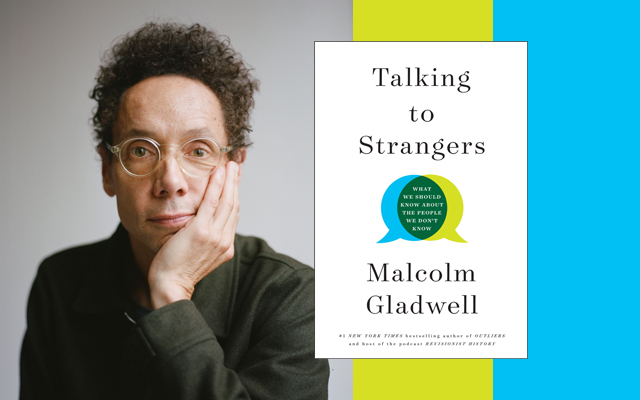
Notes from Malcolm Gladwell’s ‘Talking to Strangers’

The social human species evolved to default to truth when encountering each other. That works well more than it doesn’t but in complex society it results in many unintended consequences.

That’s the heart of Talking with Strangers, the 2019 book by journalist-public intellectual Malcolm Gladwell. That year, I saw Gladwell speak about his research informing the book. Though I got a copy of the book then, I only just got around to reading it.

Like many others, I enjoy Gladwell and admire the journey he’s taken as journalist, extending into longform narrative nonfiction to push forward our understanding of the world. Below I share a few short notes for myself in the future.

Continue reading Notes from Malcolm Gladwell’s ‘Talking to Strangers’

Hold firm your beliefs, let your opinions change

A version of this essay was published as part of my monthly newsletter several weeks back. Find other archives and join here to get updates like this first.

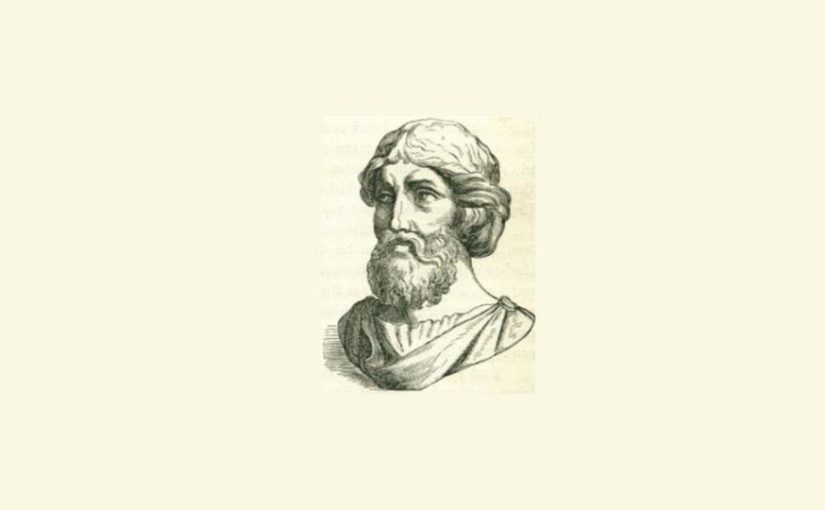
Hippasus was a student of the Greek philosopher-mathematician Pythagoras 2,500 years ago.

Pythagoras, whom you may know for popularizing a theorem that is today named for him, taught that all numbers could be expressed as a ratio of two whole numbers. This seems obviously wrong to us today.

Continue reading Hold firm your beliefs, let your opinions change

Newsroom objectivity and “moral clarity” are not in opposition

(This is adapted from a Twitter thread)

No, newsrooms don’t need to throw out “objectivity’ as a principle. Yes “moral clarity” should mean something for news organizations.

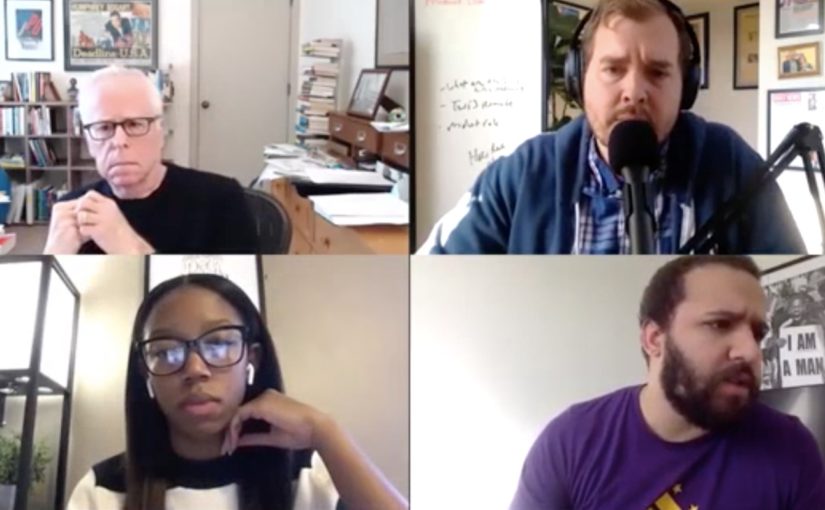
This thread comes from my own experiences, plus this helpful conversation I had during Klein News Innovation Camp with Alexis Johnson, Tom Rosenstiel and Wes Lowery.

Continue reading Newsroom objectivity and “moral clarity” are not in opposition

Will the world be a better place to live in the future?

A version of this essay was published as part of my monthly newsletter several weeks back. Find other archives and join here to get updates like this first.

In 2018, Harvard psychologist and pop intellectual Steven Pinker wrote a book that made a lot of smart people very mad. He argued that, on the global whole, quality of life was continuing its trend of getting better for humans. It was the continuation on a theme from a book he wrote in 2011.

His argument was that we are so (understandably) focused on the immediate pain, suffering and injustice of the day that we feel heartless to zoom out and acknowledge broader trends. Diseases are eradicated. Global poverty is down. Life expectancy is up. As Pinker often put it: We remember stories about airplane crashes but we ignore stories of airplane takeoffs. (In fact, there’s a movement among journalists to respond to that last point.)

Those aren’t trivial accomplishments for the world. Yet many intellectuals waved Pinker off as an overly-optimistic privileged pollyanna who went beyond his expertise. 

Continue reading Will the world be a better place to live in the future?

A few quick personal finance lessons from Morgan Housel’s ‘Psychology of Money’

Finance is no science. It involves the tiny actions and feelings of millions of people.

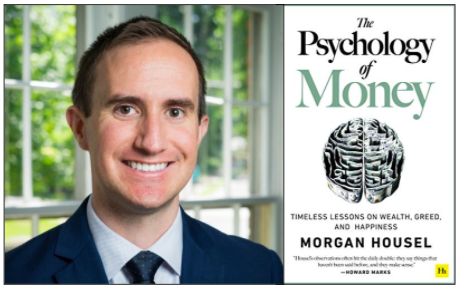
Finance writer Morgan Housel published a tidy book last year called the Psychology of Money that does a fine job communicating the concept. I quite liked it, so I’ve shared a few quick takeaways I got from the book. Consider buying your own copy.

Here’s a 2018 blog post he wrote honing the topic.

Continue reading A few quick personal finance lessons from Morgan Housel’s ‘Psychology of Money’

Newsrooms should have and defend their ‘basic beliefs,’ not the tactics to get there

News organizations, at least here in the United States, operate with all sorts of assumptions underpinning their foundations. But it gets uncomfortable once you review them. I believe more news orgs should identify these.

Out of a reporting project, I found myself considering what those core beliefs are for Technical.ly. To identify these assumptions, we’re forced to address: what is the line between a newsroom becoming partisan and a newsroom defending justice? My divide is between the *tactics* to reach a given goal, and the goal itself, which might be understood as that organization’s *”basic beliefs.”*

From my perspective, a news organization today should hold firmly those *beliefs* about the world and the communities it serves. These can and likely should range by the organization. As an exercise, I wrote a few that I believe are basic beliefs of my own news org:

  • Representative democracy is our preferred form of government;
  • A free press that challenges its community in pursuit of the most true view of that community is at times inconvenient but beneficial;
  • Race is an immoral predictor for health and economic outcomes, and should be removed;
  • Invention is a means for solving collective problems and should be rewarded;
  • Economic mobility makes us all better off, and entrepreneurship and career opportunities help;
  • Group-based income inequality correlates to conflict and so should therefore be reduced;
  • Violence is rarely a justified act and so should therefore be reduced, etc.

News organizations should defend fiercely their core beliefs — and individual employees, including newsroom staff, should be allowed to do the same. This is why when we had a newsroom conversation, it felt easy to encourage Technical.ly’s D.C. reporter to protest personally and loudly at a Black Lives Matter protest.

In contrast, the *tactics* to reach those goals are where I view newsrooms must tread most cautiously. In tactics, we find politics and partisanship; it is easy to fall in love with one set of tactics and then therefore become a political actor. Debating and lobbying for tactics is not inherently bad — activists and advocates are crucial, but I believe that’s where journalistic approach ought not venture. I believe there are exceptions but news organizations should use those exceptions rarely.

A good example? Minimum wage research is mixed. Whether a federal $15 minimum wage will reduce income inequality is contested. In contrast, there’s more consensus around growing local minimum wages to fit prevailing wages, and we at Technical.ly have guardedly written in a more favorable light to a local increase than a federal one.
What is my news, media or content business worth?

As the web has brought down the upfront costs of launching a publishing business, there are plenty of them. This means I’ve been asked to join several conversations about how to decide how much one of these are worth.

I’ve been involved in several conversations over the last few years in which publishers (those with no full-time employees to those with several dozen) have sought advice or discussed the topic. I suspect I’ll have other conversations like them in the future, so I thought I’d just share some of the advice I most commonly give and have seen take place.

Continue reading What is my news, media or content business worth?

Notes on ‘Stuff of Thought’ by Steven Pinker

Language is a manifestation of human thought. So it’s an effective tool to understanding how we perceive the world.

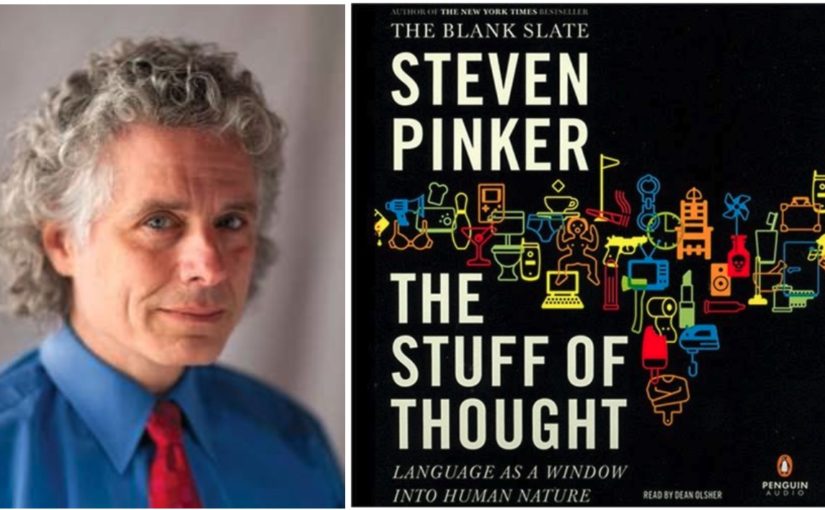
That’s the premise of the 2007 bestselling book The Stuff of Thought: Language as a Window Into Human Nature by experimental psychologist Steven Pinker. His prodigious collection of popular books blending linguistics, thought and human nature have made him both a celebrity academic and a frequent source of scorn.

I appreciate his contributions and regardless of popular perception, I’ve enjoyed working through his catalogue. Below I capture some notes from finally getting through this one. Find 2007 reviews from the New York Times and the Guardian.

Continue reading Notes on ‘Stuff of Thought’ by Steven Pinker

Either you ride the horse or the horse rides you

A version of this essay was published as part of my monthly newsletter several weeks back. Find other archives and join here to get updates like this first.

For a couple of years in college, I spent a few days a month working at the Belmont Stables in Philadelphia’s West Fairmount Park. It’s just a dozen or so stables built in 1936 to house police horses on perhaps an acre of land.

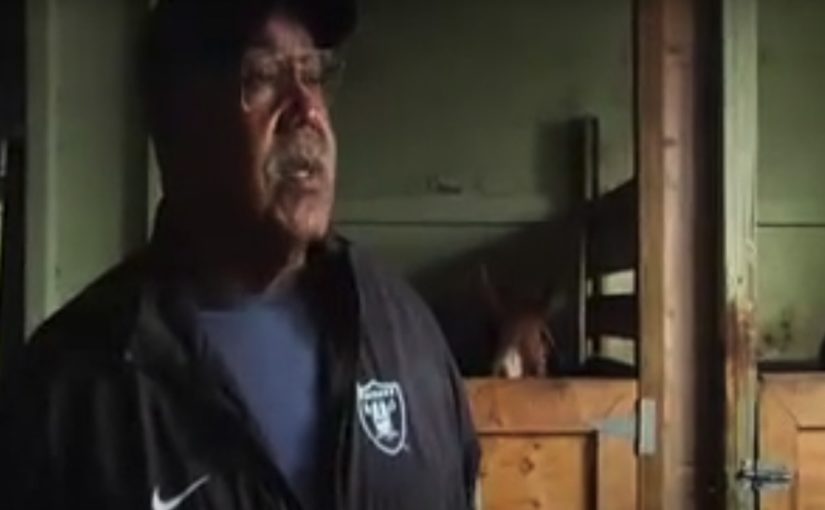
I was under the tutelage of Ike Johnstone, an imposing, grandfatherly, gregarious kind of man who made you work for his respect. Ike, whose son played in the NFL, effectively ran the stables, which were owned by the City of Philadelphia, and operated his Bill Picket Riding Academy — a summer camp for mostly poorer Black kids from North Philadelphia.

Ike, who is Black, hosted horses for a handful of mostly Black families — offering a kind of opportunity and access that always seemed a point of pride for him. Despite that healthy Black riding community he fostered, Belmont Stables was unrelated to the Fletcher Street Riding Club that is most associated with mixing social justice and Black horse riding in Philadelphia.

“Plenty of Black cowboys if you know where to look,” Ike told me once.

Continue reading Either you ride the horse or the horse rides you

I believe Donald Trump should be impeached

One of the reasons I’ve maintained this blog for more than 10 years is as an effort to hold myself accountable. I want to make sure I know in the future where I stood on something.

I am the publisher of a news organization and still operate as a community journalist. I do maintain the dated and increasingly unpopular opinion that journalists do have a responsibility for prioritizing policy, over politics. That is, though I don’t believe in an “objectivity ideal” and despite the anti-media climate we are in, I still prize journalists fighting for results and data and something resembling a shared truth. This is unpopular work, but I think it’s important.

This, then is not a partisan cry. I believe Donald Trump should be impeached.

Continue reading I believe Donald Trump should be impeached