How to hide an empire

In 1916, the United Kingdom and the United States both formally commemorated new holidays. The British crown introduced Empire Day; For the Americans, it was Flag Day.

That distinction between the reigning world superpower and its quickly rising successor says a lot. Once, empire was a point of pride, a signal of strength and responsibility, but as the United States established itself as the global leader, that changed. In 1940, 1 in 3 people in the world lived in a self-described empire. By 1965, that total was 1 in 50, and falling. Though the United States hasn’t used the term, a growing body of research argues historians should.

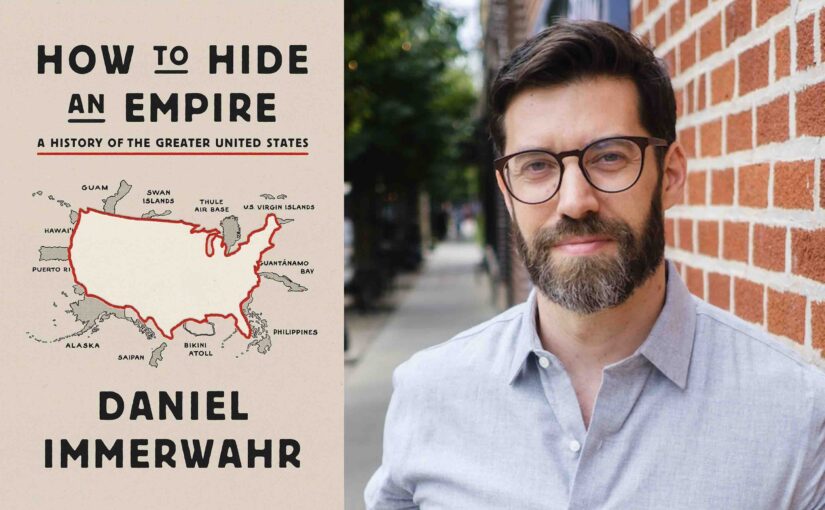
That’s from “How to Hide an Empire: A History of the Greater United States,” a 2019 book written by historian Daniel Immerwahr. It is a kind of global version of the influential “A People’s History of the United States,” Howard Zinn’s classic from 1980 that was updated in 2003 (the version I read as an undergrad).

Immerwahr argues the American empire looks different, based less on large swaths of land and more on strategic ports. This was made easier still as American science introduced a growing number of synthetic replacements for physical goods, such as synthetic fertilizers and rubber replacements (The United States “replaced colonies with chemistry”). Nonetheless, that American flag waved over a growing number of points in the world — with similar problems that are familiar to any previous empire.

American leaders faced a “trilemma,” as Immerwahr puts it. They’ve had to choose between Republicanism, overseas expansion and white supremacy, but can only achieve two. Rather than drop white supremacy, the United States cut the Republicanism, thereby overseeing the Philippines in the past and currently maintaining Puerto Rico, Guam the US Virgin Islands and other inconsistently administered territories without full nationhood. The book is challenging and worth grappling with, regardless of your own take on it all. I recommend it.

Below my notes for future reference.

Continue reading How to hide an empire
The world history of the horse

The great manure crisis of 1894 has become a half-joking reference to the very serious public health challenge that big cities around the world faced near the end of the 19th century.

A growing reliance on horse power meant the smell, disease and discomfort of manure that wasn’t being removed fast enough. Exactly because this feels so archaic a problem neatly conveys how much we relied on horses, and then how dramatically we replaced them with mechanical labor. Yet the love persists.

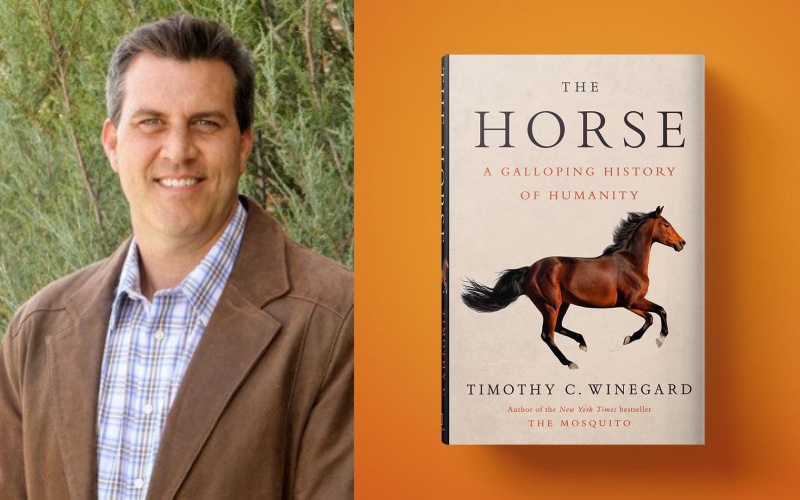
This is from Timothy Winegard’s summer 2024 book The Horse: A Galloping History of Humanity. It’s thicker, denser and at at times more lyrical than I expected. It’s certainly a new approach to the sweep of history. Below I share my notes for future reference.

Continue reading The world history of the horse

Why has war lasted for thousands of years?

The first recorded war involved the Sumerians in Mesopotamia almost 5,000 years ago. Prehistoric war is thought to be far older. Can we ever get rid of it?

Margaret Mead said war is older than the jury system but no less an invention to address conflict, and so it can be removed. As the anthropologist Douglas Fry more recently wrote: “War like slavery before it can be abolished.”

Whether peace or war is the more natural human state is disputed and complicated.

That’s from the 2024 book Why War?, which recasts an old question that previous literature has addressed, this time from British historian Richard Overy. The book is largely a review of the literature on war. All the disciplines in these chapters build on each other, starting in evolution, biologically evolved to demonstrated aggression.

“Warfare,” Overy wrote “ is not in our genes, but for our genes.” There is still a role for historians (and therefore journalists) to interpret the specific human actions of “why THIS  war” but there is also a broad universal answer to the question Why War: It’s been an effective means to resolve dispute, despite considerable cost, so war emerged from our systems by hijacking our instincts.

Or as the author himself concludes: “The co-evolution of culture and biology for most of the long human past created conditions within which nature and nurture together, not either one or the other, reinforced the resort to violence when regarded as necessary or advantageous.”

Below I share my notes for future reference.

Continue reading Why has war lasted for thousands of years?

How Rome fell

Leaders of the late Roman Empire faced at least as many threats from within as without. Over-extension, declining trust in its institutions, falling middle class and a series of ineffective leaders that failed to address these looming threats all contributed to the decline of antiquity’s greatest force.

That’s the theme from “Home Rome Fell,” published in 2010 by British historian Adrian Goldsworthy. I picked it up for my own sense of every amateur historian’s favorite period.

Over nearly 500 pages, the book adds considerable depth to the simple tables we learn in high school. Speaking of which, I recreated one of those over-simplified tables below, heh.

753 BCE: Rome is established509 BCE: Roman Republic established27 BCE: Octavian made first Roman emperor476 CE: Germans depose last Roman emperor1453: Ottoman Empire overthrows Constantinople
Rome’s Period of Kings (244 years)Roman Republic (482 years)Roman Empire (503 years)Byzantine Empire (977 years)

Below are my notes for future reference.

Continue reading How Rome fell

The Creative Spark of humanity

Hominins are a bush of species millions of years old, not one line leading to homo sapiens. Even if we’re the last standing. Our defining characteristic is coordination and creativity.

That’s from the 2017 book “The Creative Spark: How Imagination Made Humans Exceptional” written by anthropologist Agustín Fuentes.

I enjoyed his curation of academic research into an approachable narrative. Below I share my notes for future reference.

Continue reading The Creative Spark of humanity

Power and Progress

Technology has a way of dazzling us into the deterministic fallacy: assuming path dependence for the ways a technology develops and its impact on society. But we have agency.

The so-called “productivity bandwagon” that we assume follows a new technology (where Schumpeter’s creative destruction will generate more jobs than are destroyed) is not inevitable. Widespread gains require that a technology creates more demand for workers (by creating new tasks and industries), and that demand induces higher wages. Neither are certainties, and take societal negotiation between labor and capital.

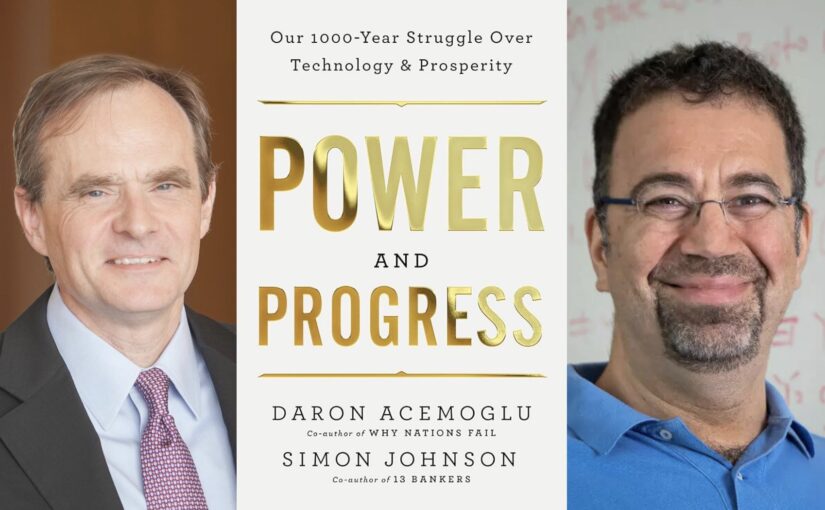
That’s from a 2023 book co-authored by economists Simon Johnson and Daron Acemoglu called “Power and Progress: Our Thousand-Year Struggle Over Technology and Prosperity.”

The book is big and thorough, with a sprawling historical comparisons over a millennia. Yet, I was disappointed by how few concrete examples the authors gave for what precisely they want to be done differently — especially in a book that is more than 500 pages. For example, on page 353, they write “digital technologies, which are almost by their nature highly general purpose, could’ve been used to further machine usefulness – for example, by creating new worker tasks or new platforms that multiplied human capabilities.” But that “for example” is not actually an example, but rather a reassertion of the general outcomes they seek (“new worker tasks or new platforms.”) Instead, I wanted an example of what exactly could have been done differently to ensure new worker tasks or platforms.

In that way, I found so big a book disappointing, and felt it could have been half as long. I appreciated their overall point, though, of idealizing “machine usefulness” in four ways: machines should improve worker productivity; create new tasks; distribute accurate information (like the web) and give better access and markets. Just don’t look to this book for the path to get there.

As they write: “How technology is used is always intertwined with the vision and interests of those who hold power.” Below I share my notes from the book for future reference.

Continue reading Power and Progress

Afrofuturism

Afrofuturism was coined in 1993, is entrenched in pan-African history but has everything to do with the future. Our overlooking digital access and equity is a newer part of an old conversation: Imagining a future of state of joy and justice.

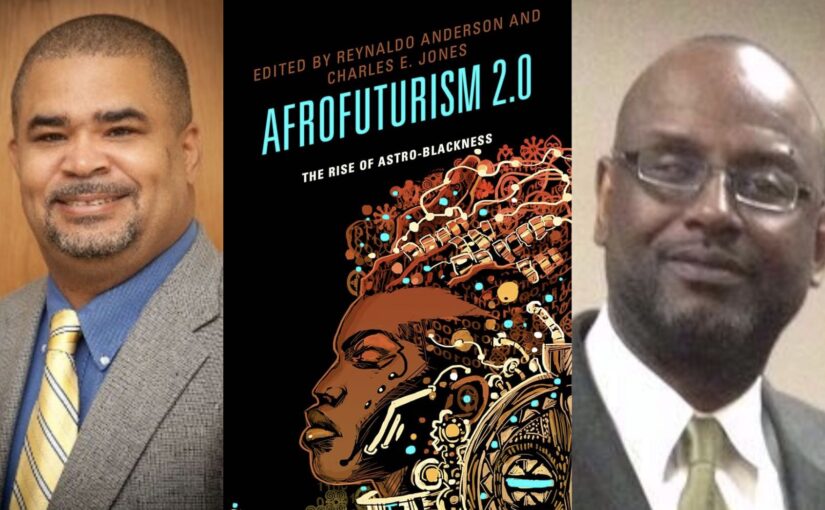
That’s from the 2015 essay collection edited by Reynaldo Anderson and Charles Earl Jones entitled “Afrofuturism 2.0: The Rise of Astro-Blackness.”

Below I share a few notes for future reference.

Continue reading Afrofuturism

The Moundbuilders of the Eastern Woodlands

The so-called “moundbuilders” of the Eastern Woodlands in the present-day United States were among the most complex cultures of pre-European societies. Yet growing archeological evidence remains under-recognized in American life.

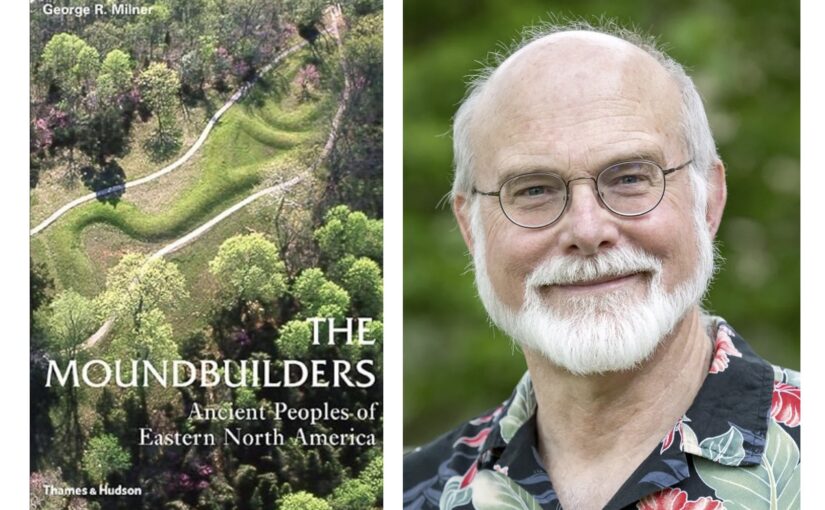
That’s from anthropologist George Milner’s 2005 book “The Moundbuilders: Ancient Peoples of Eastern North America.”

I’ve read about an array of Amerindian communities, but the moundbuilders, which appeared to be densely populated from Ohio down to Louisana, mostly west of the Appalachian mountains and east of the Mississippi River, especially interest me. This is the first book I read dedicated to this civilization, though they get referenced often in other places. Below I share some notes for my future reference.

Continue reading The Moundbuilders of the Eastern Woodlands

Philadelphia’s 1844 Nativist Riots: Ken Milano

My bicycle commute from where in live in Philadelphia’s Fishtown neighborhood to my office in Old City runs down Kensington Second Street. Little sign remains of the violent riots that took place there 180 years ago between Irish immigrants and so-called nativists in 1844.

Fittingly, Philadelphia’s riots are quietly forgotten, while similarly-timed violence in New York City was turned into a book and then a 2002 movie called Gangs of New York. Sparked from a dispute around bibles in schools, a few dozen people died and perhaps hundreds were wounded in the most intense few days that May.

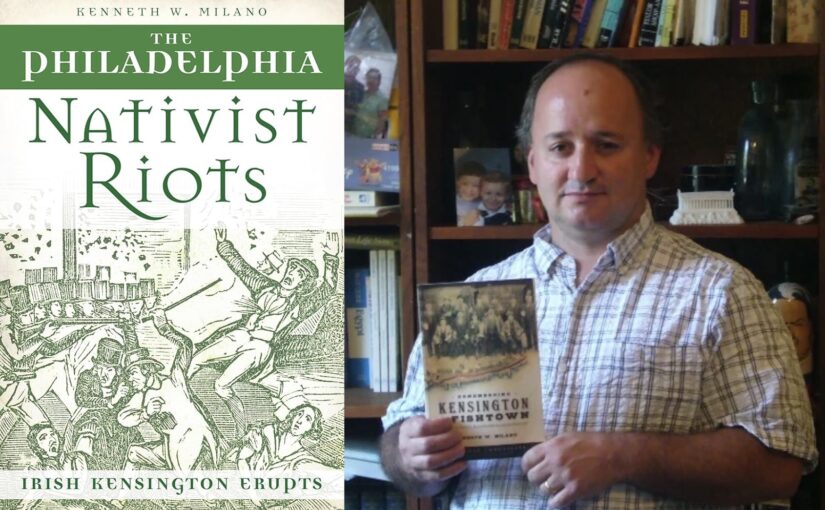
That’s the focus of the 2013 book The Philadelphia Nativist Riots: Irish Kensington Erupts, written by local historian Ken Milano. I’ve read Ken’s other books — and exchanged a few emails with him through the years. I appreciate his thorough and thoughtful approach, so I have most of his books in my collection, and have gifted them to friends. I only now read this one. Pick up a copy yourself.

The riots had a real impact. Milano argues that the riots contributed to the 1854 consolidation, in which Philadelphia city (and its law enforcement system) annexed surrounding counties, inspired the development of the parochial school system and was directly responsible for the founding of La Salle College, which was originally located across the street from where a church was burned.

Continue reading Philadelphia’s 1844 Nativist Riots: Ken Milano

A History of the World in Eight Plagues

The fall of Neanderthal and the rise of homo sapiens; the fall of Rome, the rise of Christianity; the fall of Ghenghis Khan and the rise of Ming dynasty; the Age of Exploration and the splinter of the Catholic Church, the rise of capitalism, the fate of the American Revolution and where slavery took root and did not.

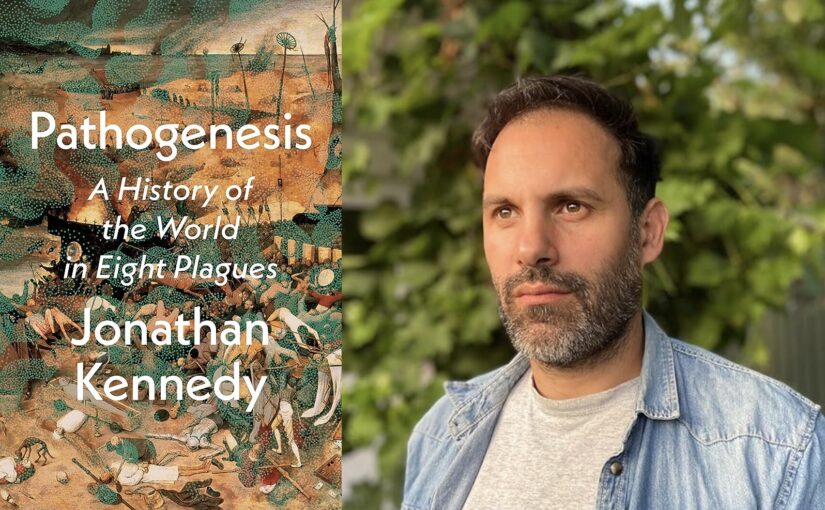
We only see history as a story about people, but tiny microbes are far more important. That’s the take by academic Jonathan Kennedy‘s 2023 book Pathogenesis: A History of the World in Eight Plagues. (After On Savage Shores, this is the second book in a row I’ve read by authors from southwest England).

For most of human history we didn’t know the microscopic level so we didn’t understand the role it played. Fewer than 1,300 of our ancestors may have lived at one time a million years ago, in part because of climate and disease, according to research released this summer. The effects of the microscopic world are bigger than we’ve yet realized.

This book picks up from an influential 1976 book called Plagues and People. It’s insightful and challenging and presents a new way to see the world. I recommend it. Below I share my notes from the book for future research.

Continue reading A History of the World in Eight Plagues