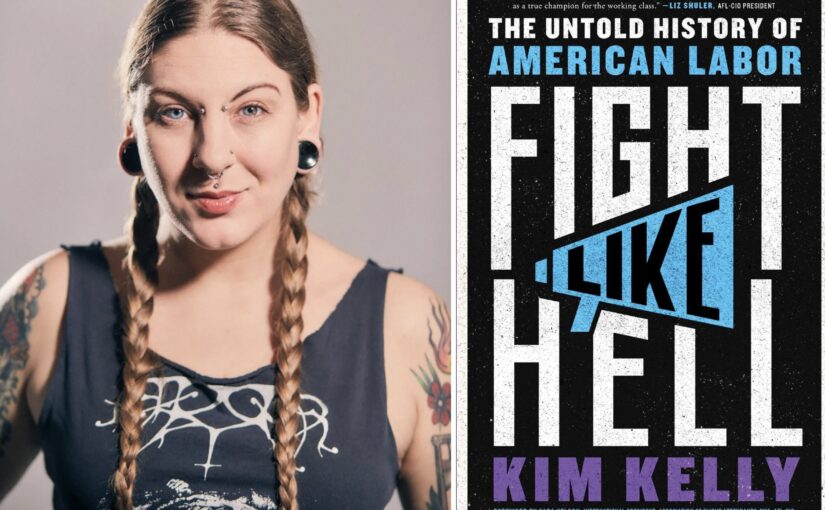
Fight Like Hell: under told stories of the union movement

What is culturally and statistically counted as work is a political battle. Housework and prison labor remain murky parts of economic records and worker rights efforts.

That’s a big theme from the 2022 book “Fight Like Hell: The Untold History of American Labor” by Kim Kelly, a progressive freelance journalist with a specialist on labor movements (and a fellow Philadelphian). Kelly has called it a “people’s history” of the labor movement. Each chapter is dedicated to a key historical period told through the narrative of lesser-known leaders, with a special focus on women, immigrants and Black and indigenous people. The book added context to my understanding of the country’s labor history.

Below I share my notes from the book for future reference.

Continue reading Fight Like Hell: under told stories of the union movement

Metaphors We Live By from the influential 1980 book

Metaphor is integral not just to language but to understanding.

So goes the influential book Metaphors We Live By, published in 1980 by a book by George Lakoff and Mark Johnson. The book suggests metaphor is a tool that enables people to use what they know about their direct physical and social experiences to understand more abstract things like work, time, mental activity and feelings.

It is a short and approachable book that nonetheless introduced and spread the idea of just how pervasive metaphor is in human language. It helps writers and editors process our phrase choices.

Below I share my notes from the book for future reference.

Continue reading Metaphors We Live By from the influential 1980 book

The Data Detective: notes from Tim Harford’s 2020 guide on numeracy

Our preconceptions warp our interpretation about statistics, and our political decisions shape what data we even collect.

It can seem statistics aren’t worth trouble. But statistics show us things we cannot see any other way, like the human or anecdotal scale. So goes economics journalist Tim Harford’s 2020 celebration of and guide through statistical analysis for the layperson, the book The Data Detective: Ten Easy Rules To Make Sense of Statistics.

“It’s easy to lie with statistics,” goes the line that gets attributed to American mathematician Frederick Mosteller (1916-2006). “But it’s even easier to lie without them.”

I’ve read a few of Harford’s books, which are friendly, fun and readable. They’re full of stories and collected wisdom for those interested in overcoming statistical trickery.

Below I share my notes from the book for future reference.

Continue reading The Data Detective: notes from Tim Harford’s 2020 guide on numeracy

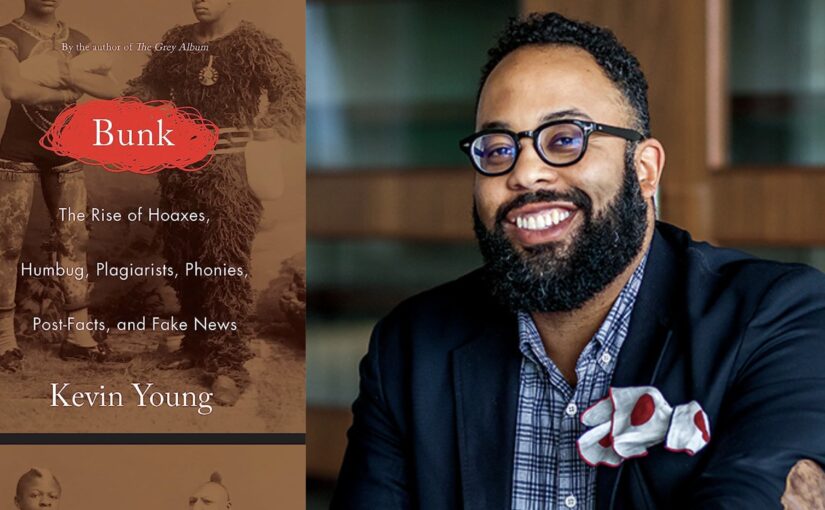
Bunk: The Rise of Hoaxes, Humbug, Plagiarists, Phonies, Post-Facts and Fake News

Tall tales and blurring the lines between fact and fiction is part of the American identity.

Fake news isn’t new but the latest variation on the theme. So argued Kevin Young in his 2017 book Bunk
The Rise of Hoaxes, Humbug, Plagiarists, Phonies, Post-Facts, and Fake News
.

The book came from a series of articles he wrote for The New Yorker. It mashes culture, journalism, cultural appropriation and Americana. It reads like a collection of interesting tidbits, which can be fun, though I put the book down and picked it back up a few times over the couple years since it was given to me.

It still adds to my understanding of my field and my country. As Young quotes poet Mary Karr as saying: “The American religion — so far as there is one anymore — seems to be doubt. Whoever believes the least wins, because he’ll never be found wrong.”

Below I share my notes from the book for my future reference.

Continue reading Bunk: The Rise of Hoaxes, Humbug, Plagiarists, Phonies, Post-Facts and Fake News

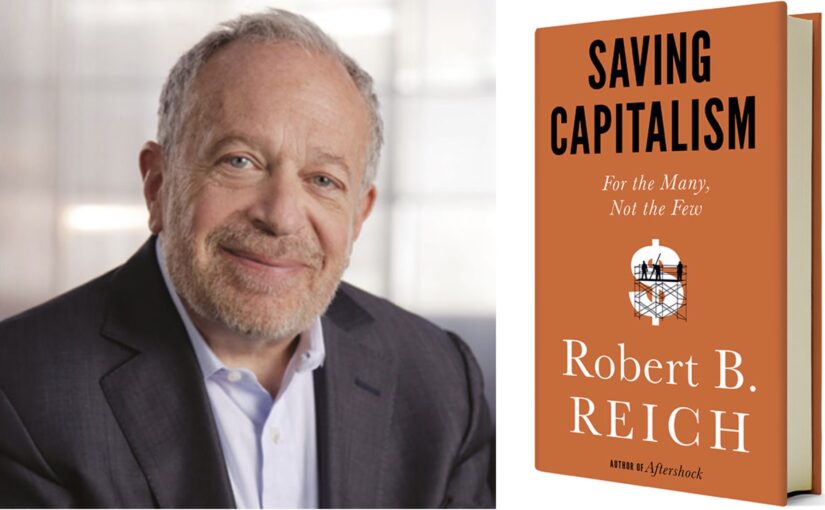
Saving Capitalism: For the Many, Not the Few

Pitting the free market against government intervention is a false premise. Free markets can’t last without government intervention. The debate is how much, which is not just an economic but a political challenge to overcome.

That’s a big theme from Saving Capitalism: For the Many, Not the Few, a 2015 book from progressive academic Robert Reich, who was President Clinton’s labor secretary. Today he’s a prolific writer, speaker and social content producer. Though I don’t align entirely with his politics, he’s a thoughtful and effective writer. I still recommend the book after all these years.

Below I share my own notes for future reference.

Continue reading Saving Capitalism: For the Many, Not the Few

A list of once-great, now closed Philadelphia manufacturing giants

Philadelphia is old enough a city that its business community has lived many lifetimes.

Though its Quakerly tradition shunned ostentatious consumption, there are old roots. In 1732, The Rowland Company became one of the first incorporated businesses in the country (and it still operates in Philadelphia). 1881, Wharton became the first college-level business school. The Philadelphia Contributionship(1752) is the country’s oldest property insurance company; Rawle & Henderson (1783) is the oldest law-firm and (since relocated) D. Landreth Seed Company (1783) is the oldest seed companies (George Washington was a customer).

Philadelphia’s global clout declined in the late 19th and 20th centuries. Many of its prominent manufacturing businesses did not adapt to a changing world. Out of my own curiosity I’ve started a running tab of some of the more prominent closures from that time.

Continue reading A list of once-great, now closed Philadelphia manufacturing giants

I Never Thought of It That Way: notes on having difficult conversations

Our whole lives bring us to each opinion we hold.

Or, as Mónica Guzmán puts it: “We don’t see with our eyes after all but our whole biographies”

Guzmán happens to be an old friend from early in our journalism careers. She has since joined a movement for more civil discourse. Her latest step in that work was publishing last year her book I Never Thought of It That Way: How to Have Fearlessly Curious Conversations in Dangerously Divided Times.

I’m inspired by Guzmán’s work and her approach. The book reads as a kind of manual for engaging across the political spectrum, and is part of a movement of advocates, nonprofits and organizations intending to improve civil dialogue. Guzmán advises us to pursue INTOIT moments, or “I never thought of it that way.” When do those moments confirm or challenge our beliefs?

To get there, she guides us to ask good questions that follow CARE (curious, answerable, raw and exploring). Examples includes asking “How did you come to believe?” rather than why do you believe this. Another one she likes: What am I missing? Most generally I appreciated her guidance: “The most important thing about bridges is not It to cross them but to keep them.”

Below I share my notes from the book for my future research.

Continue reading I Never Thought of It That Way: notes on having difficult conversations

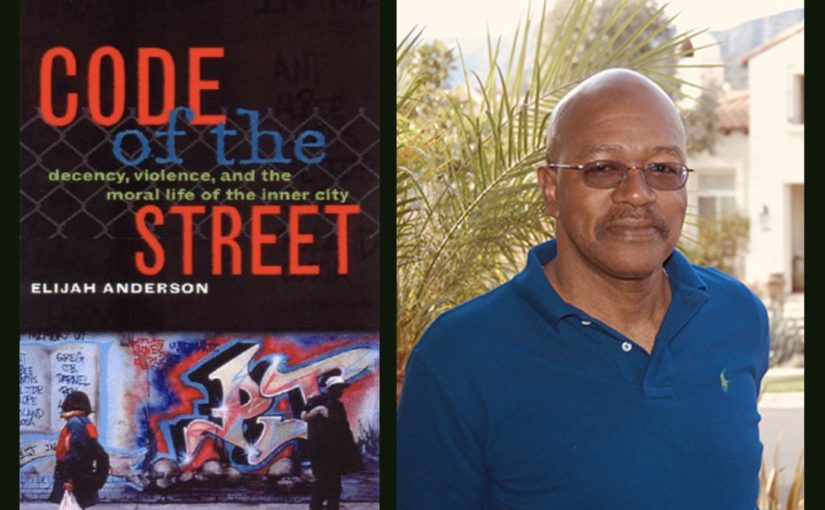
Code of the Street

In the 1990s, a 15-year-old we’ll call Tyree moved from an unstable home in North Philadelphia to his grandmother’s home in Southwest Philadelphia. Her home was stable, but he walked into a new neighborhood with new dynamics. He fought his way into a new group of teenage boys who lived there and suffered violence and intimidation. All along, he had to follow an unwritten code.

In some sense, it’s an old story, as old as the the Roman empire or shogunate Japan, maybe older still. The difference today is this code’s interplay with race, drugs, more powerful weapons and higher expectations for we think the American promise is. This theme and that story are from the 1999 book, “Code of the Street: Decency, Violence, and the Moral Life of the Inner City,” written by ethnographer and academic Elijah Anderson. (It was published following to surging crime and the proliferation of drugs within cities in the 1990s, and was followed by books like Off the Books focused on the underground economy.)

Earlier that decade, Anderson wrote about similar themes in the Atlantic. The book gives more space to allow it to read almost like an oral history, with lengthy passages from residents.

The book explores the cultural and internal battle between “decent” and “street” life by going deep on several neighborhoods in Philadelphia, especially Germantown in its northwest section. That decent and street divide runs throughout the book. Through an ethnographic study and lengthy direct quotes from residents, Anderson delves into the intricate code of the street, which has developed as a way for residents to replace trust in institutions and instead rely on their own methods of justice and protection.

According to Anderson, the vast majority of residents in these hard hit neighborhoods of the 1990s were “decent” and trying to live a peaceful life, with only a small minority belonging to street families involved in drugs and violence. However, the proliferation of guns has made even small conflicts deadly, and the code of the street dictates that might makes right. Children as young as 10 years old begin to identify with and engage in either a decent or street lifestyle, with a strong cultural belief that toughness is a virtue and humility is not, he writes.

Anderson also writes about the concept of “code switching,” in which individuals alternate between decent and street behavior depending on the situation. The term “code switching” has become much more commonly used to describe how Black Americans navigate white culture, though this use is at least as important and interesting.

Throughout the book, Anderson discusses the role that economic dislocation, drugs, and a lack of opportunities play in the development and adherence to the code of the street. He also touches on the discrimination faced by black men in the job market and the impact of welfare reform on family dynamics. The consequences of the code of the street are severe, with a high rate of incarceration among black men in their 20s and the acceptance of early pregnancy and single motherhood as a way of life.

Overall, “Code of the Street” offers a detailed and nuanced look at the complex issues facing poor urban communities. Tellingly, though almost 25 years ago, the book is still informative, if only as a window into the voices and perspectives in the late 1990s confronting the cultural forces at play. I recommend the book. My notes are below.

Continue reading Code of the Street
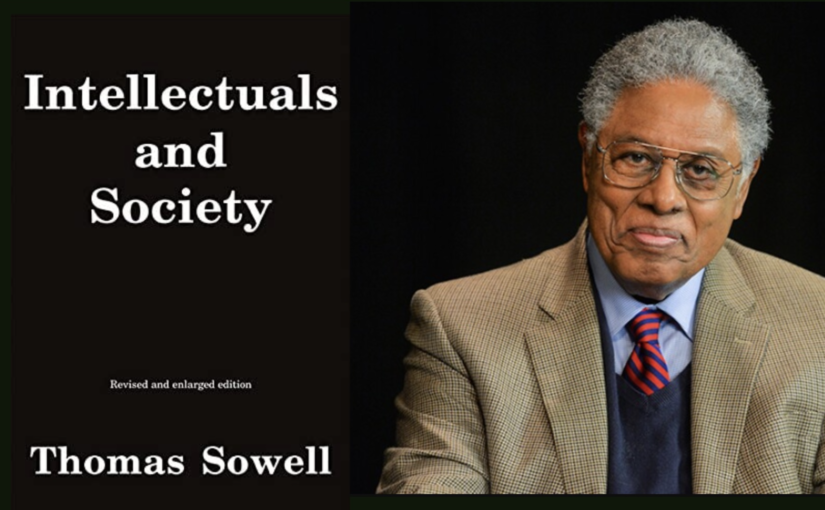
Intellectuals and Society

If “social justice” is the work to ensure our human-made systems operate with greater fairness, then “cosmic justice” is the understanding that the universe results in countless unexpected obstacles to that goal.

At times these forces operate in competition, and to better understand the world, one must appreciate them both. That’s among the themes of Intellectuals & Society, a dense 2010 book written by conservative economist Thomas Sowell. The book is centrally a criticism of “intellectuals,” whom Sowell describes as those “dealers in ideas” who have never implemented any. By and large, he directs his ire on left-leaning academics, authors and commentators.

Sowell’s writing and speaking are frequently distributed on social media via the Hoover Institution and other right-leaning political efforts, so I was curious to dig deeper into his work. Harvard educated and associated with the conservative University of Chicago economics department (an acolyte of Milton Friedman), Sowell is himself is one of the more prominent conservative intellectuals.

The book has a few opinions that might be considered unsavory, and others that twist facts as much as he criticizes his political opponents of doing. For example, he rightly celebrates the good of a free market, but he seems unwilling to admit of any market failures — like, industry consolidation that eventually results in limited choice, or the concentration of inherited wealth that saps productivity.

But Sowell is serious and rigorous, so I follow him for his perspective. Like, John Stuart Mill wrote of those whose politics differ from your own, “know them in their most plausible and persuasive form.”

In particular, I appreciate two bits of criticism he lobs at the left. For one, years back I heard his challenge that progressives spend a lot of time working to redistribute wealth without pausing much to consider how that wealth is created in the first place. In my reporting, I’ve found that to be largely (if not entirely) true. Second, in this book in particular he introduces a framework between the “tragic vision” of the world, in which the world will always be messy, and the “vision of the anointed,” in which the world can be cleaned up. Sowell, who clearly identifies with the tragic vision, criticizes intellectuals as falling victim to the vision of anointed — forever trotting out some neat and clean idea to organize the world without ever caring much about how it works in practice.

I disagree with Sowell on lots of topics. But he is someone who challenges me in important ways. I respect him, so I would recommend his books, including this long and dense tome. Below I share my notes from the book for my future reference.

Continue reading Intellectuals and Society

Merchants of Doubt

The modern era of fighting facts with doubt began on Dec. 15, 1953.

Months earlier, landmark research from Sloan-Kettering showed cigarette tar gave mice fatal cancers, and the attention was widespread. The research wasn’t even groundbreaking. In the 1930s, Nazi scientists documented cigarette dangers — but, you know, they were Nazis, so polite Allied researchers weren’t keen to rely on them. That’s why this new research from a credible American institution was so damning.

To combat this, the tobacco industry met at a New York hotel that day to decide to actively discredit the research. Not engage in it, not to adapt the product but just to muddy the waters. A now infamous internal trade memo in 1969 said “doubt is our product.” This strategy was then repeated again and again. It was employed by organizations such as the Marshall Institute, which pushed for the “balanced” coverage of the Strategic Defense Initiative (SDI, also known as “Star Wars”) and climate change. That’s what one-time Trump ally Steve Bannon meant when he advised political campaigns to “flood the zone with shit.”

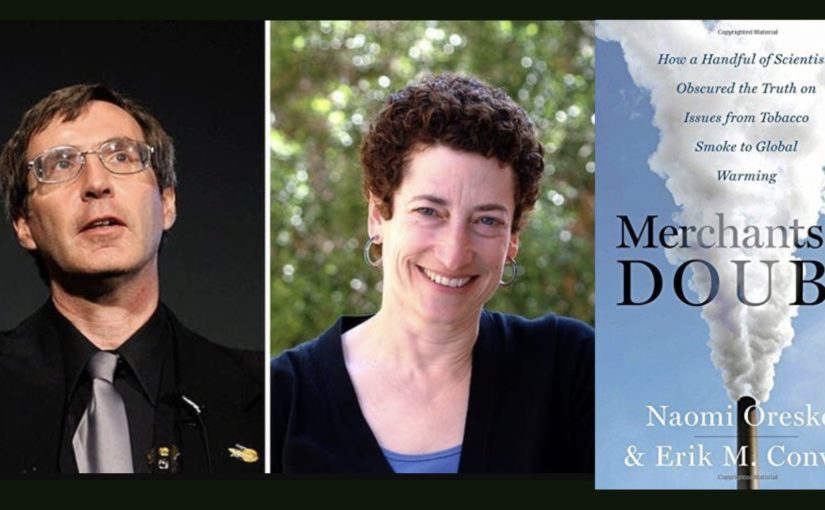
This work and the men behind it is the focus of the influential 2010 book “Merchants of Doubt,” written by by Erik M. Conway and Naomi Oreskes and made into a movie. discusses the tactics used by various organizations to challenge scientific consensus and sow doubt in the minds of the general public, with a focus on the tobacco and defense industries. It highlights the dangers of giving equal weight to both sides of an issue, regardless of the strength of the evidence supporting each side.

More than a decade later the book is enlightening, My notes from the book are below.

Continue reading Merchants of Doubt