Our ‘tranquilizing drug of gradualism’

version of this essay was published as part of my monthly newsletter a couple weeks back. In its own way, it commemorates African American History Month. Find other archives and join here to get updates like this first.

Dr. King is likely the American thinker who comes to my mind more than any other. Not the populist who was culturally moderated over time into a convenient character for classroom posters. But the difficult and complicated and tortured man, the leader who was flawed and inspiring and masterful in so many ways.

When a MLK quote rattles in my head, it isn’t his iconic, if tired, classic: “Injustice anywhere is a threat to justice everywhere.” Pulled from its context, that’s always seemed to me to be too universal to stir. Instead, it comforts, and I’ve found always found MLK misunderstood when he’s seen as a comforting.

Continue reading Our ‘tranquilizing drug of gradualism’

Art tells us we are important. Science reminds us we are not

version of this essay was published as part of my monthly newsletter a couple weeks back. Find other archives and join here to get updates like this first.

Art elevates the human experience. Science contextualizes it. Art says we are important. Science says we are not.

I think of this tension often — it’s a theme of a lot of the writing I’ve done for years. High culture is the best tool we have against nationalism and provincialism. The best of what we collectively create tends to come from collaboration and gains interest beyond race or country or tribe. Science is a collection of the facts as best we can see them now. Art motivates us to care, to understand, to act. I’m interested in when we seem to deploy the wrong one for a circumstance.

Continue reading Art tells us we are important. Science reminds us we are not

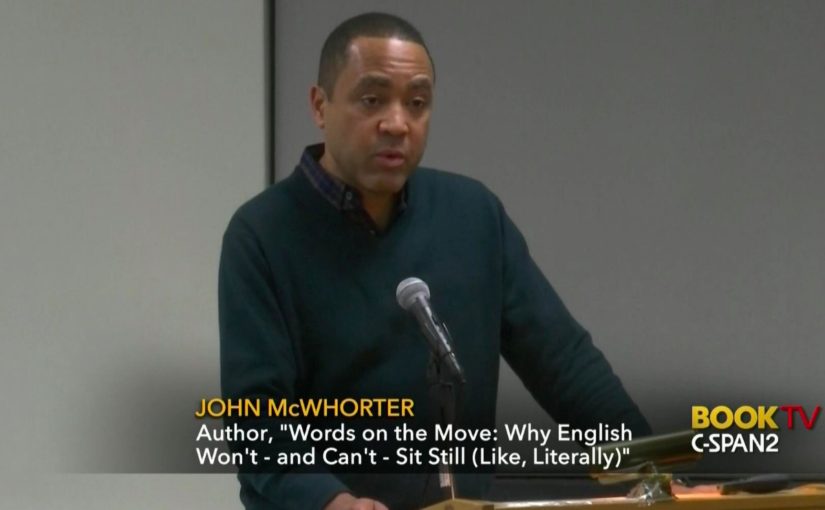
Language is more like fashion than math: “Words on the Move” by John McWhorter

We get it wrong: language is always in motion, more like fashion, than science or math. This changes how we treat language and its uses.

We don’t quite say someone is wrong for wearing bell-bottom jeans today. It might feel outdated. We also might think they could return someday in some form if fashion and culture moves in the right way. It’s just not what most of us would consider common today. That is a pretty good approximation of language.

This concept is the big idea from linguistics that John McWhorter most gets at in his sublimely readable and thoughtful Words on the Move book from 2016. (Read the New York Times review here)

I first read this book earlier this summer, part of a binge on McWhorter’s books and linguistics generally. I finally wanted to share my notes from reading this. But if it interests you, you really should buy it, because there’s so much more.

Below I share my notes.

Continue reading Language is more like fashion than math: “Words on the Move” by John McWhorter

Why English actually is relatively easy to learn (but not to master)

English is a (relatively) simple language to learn enough of to communicate (rather than to master) because it’s had so many non-native adults learning and using it.

The rules are relatively flexible, so — as you’ve likely experienced — we can often understand someone speaking in simple “broken” English. Try that with Russian. But — as you also likely know — it can take a lifetime to have some kind of English mastery, and even that’s no promise. If you want to understand why, you need to look into the secret corners of the 1,500 years of English language development.

That’s among the big ideas from “Our Magnificent Bastard Tongue,” a 2009 book from linguist John McWhorter. I picked this up after devouring his 2016 book, both of which I read earlier this summer. (Read the laudatory New York Times review of this book. For context, this Economist story is a nice recap of what makes language difficult.)

I have a bunch of posts about linguistics.

This book’s focus on English is distinct from other linguistics books I’ve read recently about language generally. Find my favorite lessons from the book and a few related videos below.

Continue reading Why English actually is relatively easy to learn (but not to master)

What we know from 150,000 years of human language

There was likely once a single language, first developed 150,000 years ago. That grew to as many as 100,000 languages, before we developed farming. Today there are 6,000 and by 2100, that might be back to as few as 500.

Along the way, languages have emerged, influenced each other and continue to change.

That comes from the 2003 book “Power of Babel,” the third consecutive book I read by linguist John McWhorter, which I finished early this summer. In the last six months, I’ve become quite a big fan of his — having read his 2016 book on language evolution and his 2009 book on the lesser-known stories of the English language history, I seem to be working through his language books in reverse chronological order. (Read the Guardian’s review of this book here.)

The title of the book is, of course, a reference to the biblical story in Genesis of the Tower of Babel. Following the Great Flood, humans speaking a single language plan to build a tower that can reach heaven. God destroys it, sets humans into an array of languages and spreads them across the world to keep them from conspiring to do something like that ever again.

Find my notes from the book below.

Continue reading What we know from 150,000 years of human language

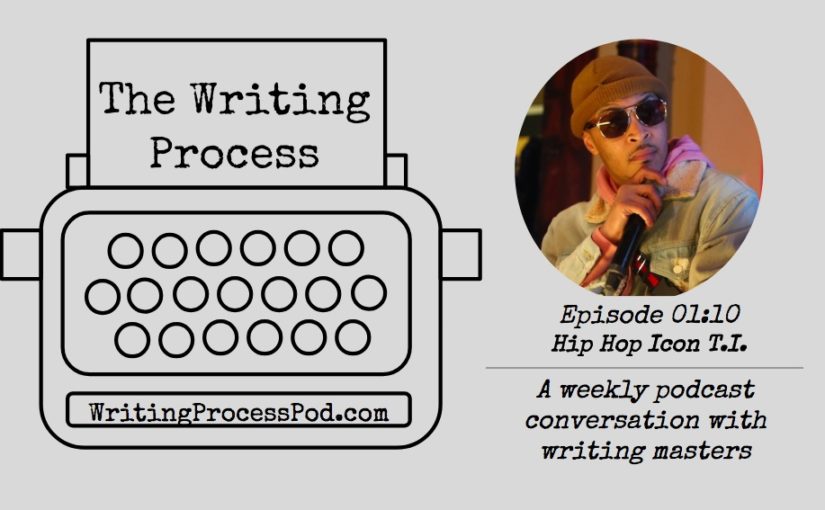
01:10: Hip Hop Icon T.I.

Who better to explore one of popular writing’s most contested modern debates than an icon who has worked on both sides of that debate? That’s why today’s episode of The Writing Process Podcast, the final of this first season, is with T.I.

Conventional wisdom tells that the process of developing rap lyrics was polarized by the genre’s most prolific star: Jay-Z maintained he would develop lyrics in his mind, influencing Biggie’s habit of not writing lyrics either. That transformed a generation of rap stars into memory-led lyricists.

Continue reading 01:10: Hip Hop Icon T.I.

Leadership is something you do before you have a title

It’s common to wait to be tapped to be a leader. You’re doing it wrong.

You demonstrate it, you’re doing it before anyone gives you the job.

Don’t say My Idea. Say you worked on an idea. Cause ideas are easy, execution is hard. Don’t obsess over credit, work toward consensus

Demand only as much credit for a success as you would accept blame for its failure

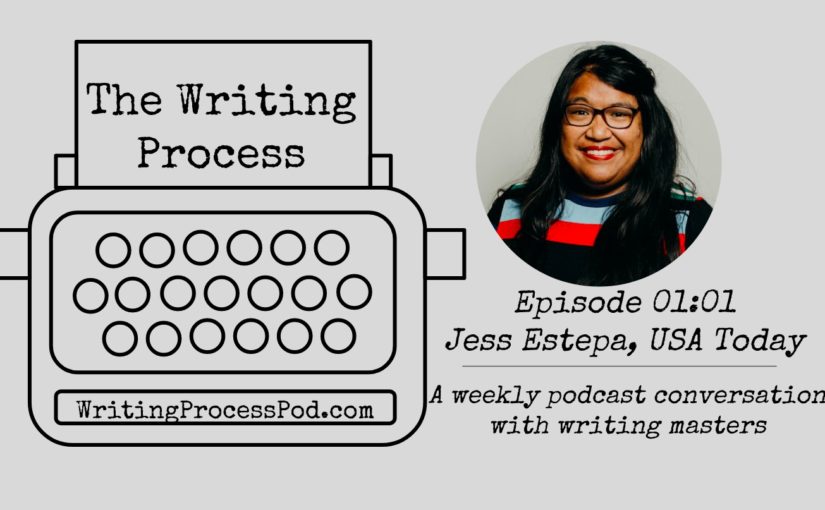
01:01: USA Today Journalist Jess Estepa

In the pilot episode of my new weekly podcast The Writing Process, I speak with my dear friend Jess Estepa. She’s a national politics reporter for USA Today.

She also was the first person I called when I wanted to figure out what exactly I wanted to accomplish with this idea of mine. I knew I wanted to capture real lessons on writing from lots of different forms, but I wasn’t quite sure how to approach it. Jess patiently let me sort that out.

Continue reading 01:01: USA Today Journalist Jess Estepa

Introducing The Writing Process: my new weekly podcast

Today I am announcing a new personal passion project: a weekly podcast conversation with master writers from an array of different forms.

Humans have spoken to each other for maybe 100,000 years (or, uh, a lot longer). But we’ve only had writing for 6,000 of them. We’ve cultivated corn for twice as long.

Even though it’s relatively new, we have lots of forms of writing: from  short stories and novels to journalism and memoir to poems and lyrics and comics and software code. When I talk to friends who are gifted in any of these, I find they listen closely to the Greats in their form. But rarely the Greats from the other forms. That feels like an opportunity.

That’s why I’m launching The Writing Process, a weekly podcast conversation I have with masters from all of the many writing forms. Please subscribe on iTunes or other places podcasts can be found. I’ll also be posting each episode here.

Continue reading Introducing The Writing Process: my new weekly podcast

Hey fellow white guys, we’re responsible for increasing board diversity and inclusion

Having served on a half-dozen nonprofit boards over the years, I’ve come to see one of the most immediate, productive roles I can play is this: asking whether the board reflects the community it serves.

That means race and gender, sure, but it also includes age, background, and lived experience. On a school-related nonprofit board, I once asked: Can we have student representation? That question alone opened up a conversation that led to real change.

I’m not anyone’s idea of an equity leader. I’m pragmatic and practical, a self-described centrist straight white guy. No radical here. But I’ve learned that my identity can actually be a strength in these conversations. People are surprisingly receptive when diversity is framed in strategic terms: We need the perspectives of the people we serve.

Let’s be clear: Increasing diversity isn’t just about optics; it’s about improving the effectiveness of boards. Different voices bring new ideas, spot blind spots, and ensure decisions align more closely with the needs of the broader community.

This isn’t about making anyone feel guilty or defensive—it’s about taking responsibility for how we can help. And frankly, it’s easier than you might think:

  • Start the conversation: I’ve found that just naming the gap can begin to shift mindsets. Most people agree that boards should reflect their communities when it’s framed strategically.
  • Make concrete suggestions: Don’t stop at identifying the problem; help solve it. Recommend specific individuals from underrepresented groups who can bring valuable perspectives. If you don’t know anyone, ask around. Networking is part of our role.
  • Recruit with intention: Don’t just passively suggest names. Actively reach out to people and encourage them to join. A personal invitation can go a long way.
  • Keep an open lens: Diversity isn’t only about race or gender. Think about socioeconomic background, age, and professional expertise. Representation should be holistic.

We have a responsibility to make change, and as white men, we’re often in a position to accelerate it. If we treat this as a strategic and necessary part of our work—not just a “nice to have” but a fundamental strength—we can help make the boards we serve on more effective, inclusive, and impactful.

This isn’t an insurmountable task. Change can happen faster than you’d think, and it starts with the smallest actions: asking the right questions, recommending great people, and following through.

Let’s get to work.