What the suburbs will be 20 years from now

Now, the stereotype stands that the suburbs are about wealth and the cities are about poverty. The suburbs are white. The cities are black (or Latino or some other non-white group).

The reality has always been more complicated — cities have always had white populations, both rich and poor — but this is a question of our national shorthand, and I believe that in the next 20 years or so, that perception is going to change.

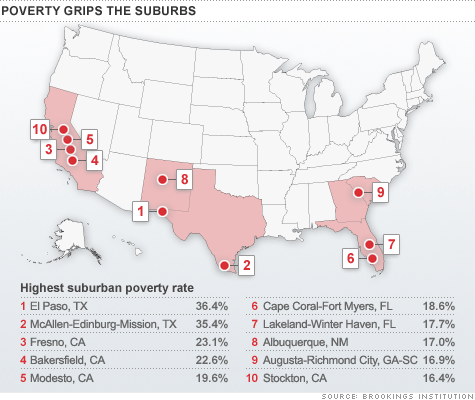
It’s going to have to change because reality eventually catches up to perception. Poverty is sadly surging in the suburbs, part of a wide diversification outside of cities, which, though still facing legacy violence and education issues, largely appear on a road of recovery. More poor people live in the suburbs than cities or in areas called rural, a fact that came true starting in 2005.

Simply put, in the next generation, the divide will be simply more about space: the suburbs will have space, the cities will not. Of course, it’s a simplification. I know homes in Philadelphia with big yards in the Northeast and northwest, homes with pools and driveways along the dense riverwards and deep in West Philadelphia. But that’s not the point.

The point is what the stereotype will be. And when crime, demographics and poverty aren’t the issue, what else could be?

Continue reading What the suburbs will be 20 years from now

‘What if Northeast Philadelphia seceded from the city?:’ Philos Adelphos Irrealis submission

A submission I made to a book anthology out of the noted Kelly Writers House has been accepted.

The collection, called Philos Adelphos Irrealis, was meant to portray various states of Philadelphia that never came to pass — in 200 words or less. I focused mine on the aborted effort in the late 1980s for Northeast Philadelphia to secede from the city and form its own municipality.

After some discussion with a dear friend, I decided to show something that might not have happened if that secession occurred. I also decided to do what I knew best (and what I thought would be unique to the collection): offer a submission in traditional newspaper style.

See the submission below and head over to the University City staple to purchase a copy for $5 to get a variety of local writerly takes on the prompt.

Continue reading ‘What if Northeast Philadelphia seceded from the city?:’ Philos Adelphos Irrealis submission

How the web continues to shape campus life: Temple Review

More than 20 years after the Internet and web-based technologies stormed onto college campuses, the life of a university student is still rapidly changing.

So goes the focus of another feature I did for the newly rebranded Temple University alumni magazine.

Read the story here or see the sleek new design here [PDF].

As usual, below I have some background and interview extras that I cut from the story.

Continue reading How the web continues to shape campus life: Temple Review

There are no good U.S. presidents, just good times to be president

When one looks at the depths of U.S. presidential politics, there is a balance between who is perceived as having succeeded and who has failed.

We write thick biographies and create college courses on the considerable accomplishments of our favorites. In pragmatic contrast, there is an old saw that means to convey how much federal structure has been built up over time.

The only two decisions a president gets to make are when to drop the bomb and where to put the library.

It’s with that logic that I’ve found myself feeling a certain sense of predetermined indifference. I’ve long loved following local politics more than federal, on the whole, because it’s my belief that those actors impact my life in a far more tangible way than those federally.

There are no good U.S. presidents, just good times to be president.

Good times

  • When a new gamechanging technology is invented, like the Internet
  • When there is an enemy of state, like after 9/11
  • Right after a global recession, like perhaps next term

Bad times

  • When there is a global recession, like now
  • When there is a hostage situation, late in your second term.

Why politicians cheat: five reasons that should leave us unsurprised by campaign affairs

When the inevitable annual news story comes out about the latest politician having cheated on his wife, people question why leaders cheat.

There are some obvious reasons to me:

  1. Long campaign hours — Same as workaholics, being away from home offers a lot of opportunity for philandering.
  2. Lots of people interaction — When campaigning and legislating, you deal with a lot of people.
  3. Charismatic, passionate leaders — Elections attract people who often have the attractive qualities.
  4. Sense of entitlement — Those who do good, big work (like legislators) can easily convince themselves that they’re owed a little wrong.
  5. You’re the boss — In interviews and campaigning and voting and such, legislators are taught to make and stand by their decisions. Not all of them are the right ones.

Prediction: my children will care less about technology than I do

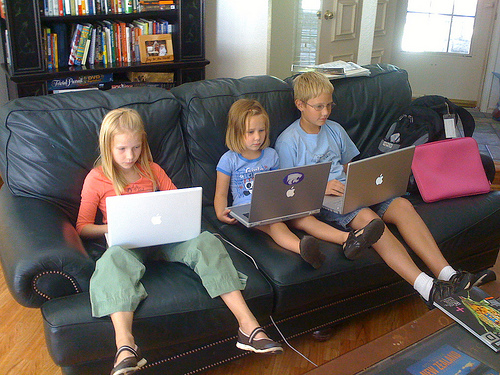
These are not my kids. I don't even have kids. This is a photo I found online of a bunch of kids using laptops. It's meant to be mildly representative of where we are today, in shoving digital technology in everyone's hands.

Two premises:

(a) Generations are cyclical.

(b) Technology is everything we were alive to see invented.

If my peers today are a part of an incredible age of change and innovation, when what is new is what matters most, I believe that my children’s generation in 20 years or so, will be characterized by rebelling against what is new — if that doesn’t happen sooner. (I don’t have kids yet, but I might have ’em someday and so I’m talking broadly)

What is considered technology today — things like web-based communication, geo location-centric discovery and adaptable information gathering — will not be abandoned necessarily (because those will be everyday tools 20 years from now) but I do believe consumer interest will go elsewhere from the newest and latest around technology in as obsessive a fashion. New ideas fuel consumer interest, but I suspect my kids won’t care about technology in the same way we do today.

What will replace technology, well, I’m not quite sure yet.

Will jobs ever come back?: maybe there is an answer to the employment bomb

Is our recession another blip in centuries of economic rises and falls or is something darker happening?

Part of me agrees with the recent post from media critic Jeff Jarvis, who voiced a concern I’ve been working through myself: efficiency-creating technology has continued to speed and, well, there are a lot of old people coming.

There is a real conversation happening that a new normal rate of unemployment should be expected, though there is counter to that — we’re just too close to the economic collapse to have any sense of what is normal.

But here’s one additional thought I keep gnawing over.

Continue reading Will jobs ever come back?: maybe there is an answer to the employment bomb

Five things I learned about Philadelphia Mayor Michael Nutter watching his NBC 10 ‘Ask the Mayor’ program [VIDEO]

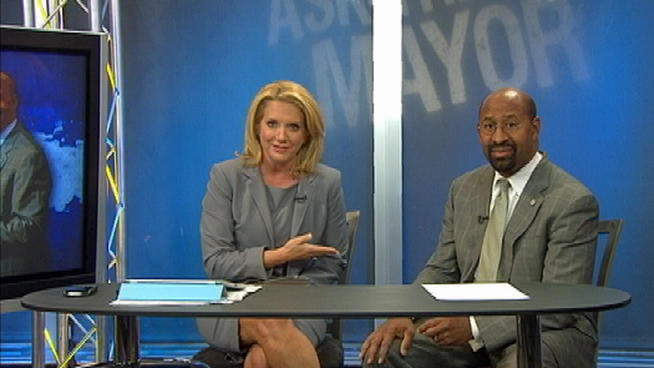
Philadelphia Mayor Michael Nutter gave an hour of his time this week to answer resident questions that came to host NBC 10 by way of email, Twitter and Facebook, as we reported on Technically Philly in sharing video of the event.

Nutter has already been praised for use of Twitter — a move we had asked him about during a Q&A in July 2010 , a few months before the city imported communications director Desiree Peterkin-Bell, who had helped transform Newark Mayor Cory Booker into an urban political social media star.

The Ask the Mayor event — prompted by NBC 10 social media hire Lou Dubois and Bell — was unique, interesting and compelling. NBC 10 deserves credit for only sharing a single softball question — about cheesesteaks, of course — and Nutter and his team deserve praise too for participating in something new and relatively open. It was clear and admirable that Nutter hadn’t been prepared for the questions.

Granted, none of those questions amounted to public affairs journalism, but many did seem to represent the perspective of Philadelphians. Watch the five video segments of the event here or watch the first below and see what I learned about Nutter watching them.

Continue reading Five things I learned about Philadelphia Mayor Michael Nutter watching his NBC 10 ‘Ask the Mayor’ program [VIDEO]

Temple University’s neighborhood scholarships should go to kids, not undergrads

Chess player Garry Kasparov at an event from the Harlem Children's Zone, a nationally-celebrated program devoted to impacting kids at a young age. Photo by Mig Greengard.

Two hundred fifty students from the largely troubled neighborhoods of North Philadelphia will receive full, four-year scholarships to neighobring Temple University, my alma mater, during the next decade, as the Inquirer reported.

It’s a generous effort from a major urban research university often called on for more outreach in its surrounding communities. Good things, warm stories and, surely, great public relations will come as a result. Of a student population numbering nearly 30,000, 250 may seem small, but it’s always worth valuing.

All that said, a friend summed up my exact reaction to the situation. This is a kind, relatively easy, relatively small move. It ignores the reality that the biggest impact on the development of young people happens long before they are applying for college.

“[Temple] should have given full-day preschool from birth and full-day kindergarten to 250 neighboring kids and intensive parental training to 250 neighborhood new parents 18 years ago. That would have been more effective and ultimately cheaper.” – Dan Pohlig

Temple, of course, is a university, so offering those scholarships have precedence there. This is a fine act, but there are bigger issues and more interesting approaches to take on.

Open city data in Philadelphia: the obstacles and triumphs of the L&I example

A screenshot of a draft of the License to Inspect tool, built by Azavea for PlanPhilly using the new L&I app. Click to enlarge.

A feature story covering the as-yet unreleased Philadelphia Department of Licenses and Inspections API-based online tool ‘License to Inspect,’ its inspiration and hope was published on Technically Philly Monday, a story I reported and wrote during the last couple months.

It is the last major feature of the Transparencity grant project I’ve been leading, and one of the more detailed investigative reports I’ve done in my journalism career. The feature, which details the nearly two-year struggle to go public with a project with internal support, is meant to show the lessons learned and obstacles faced in the hopes that future city agencies can more efficiently release their data publicly for development and citizen use.

Give it a read, for lessons to be taken for any local government. and then find some of what didn’t make it into the piece below.

Continue reading Open city data in Philadelphia: the obstacles and triumphs of the L&I example