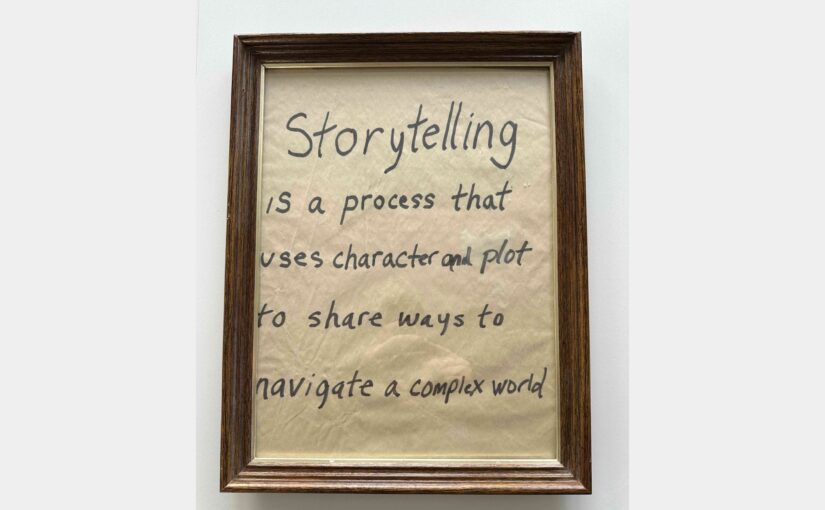
Storytelling is a process that uses character and plot to share ways to navigate a complex world.

Storytelling has a working definition that I like and find helpful. It explains why you can roll your eyes at the term or be really motivated by it, and why “storytelling” can refer to so many different forms.

Here’s how I think of storytelling, how I define it in my own practice. I keep it in a nerdy frame in the Technical.ly newsroom:

Storytelling is a process that uses character and plot to share ways to navigate a complex world.

Continue reading Storytelling is a process that uses character and plot to share ways to navigate a complex world.

My 2026 resolutions

For my annual resolutions, I thought more about my ends.

I think often of Vonnegut’s advice that the very point of life is “to experience becoming.” I get personal joy from identifying experiences and goals that give me meaning, and their pursuit is the point.

I find meaning in becoming a better version of myself, of becoming the man I want to be — and that is a lifelong pursuit. After years of resolution-making, this year I also wrote down a few areas I want to be stronger, and that better tied why my resolutions for the year fit now. Both areas of growth and resolutions are below.

Continue reading My 2026 resolutions

Two social video lessons: daily posting, and be wary of paid experiments

Social video data: This will be embarrassing (low view counts!) but insightful!

This is the first full year I took social video serious. I mostly hang around on TikTok and re-post elsewhere so I was surprised when I noticed my Instagram reach growing faster in the last few months, while TikTok reach declined. I was curious what might stand out, knowing that the algorithms are being tweaked all the time. TikTok does get some real large outliers (for me right now, that’s 50k+ views), so I’m interested in the averages, that exclude the big swings.

When I charted it out, two really clear moments stood out, which each can tell a clear piece of advice that will sound familiar.

Continue reading Two social video lessons: daily posting, and be wary of paid experiments

Two kinds of stories go viral: The rare and the commonplace

[This was originally a social post]

The biggest problem I see on social media is how often we confuse things that get attention because they represent something that happens often, and emerging that gets attention because it’s entirely unusual. One marks a pattern, one shares an outlier.

Continue reading Two kinds of stories go viral: The rare and the commonplace

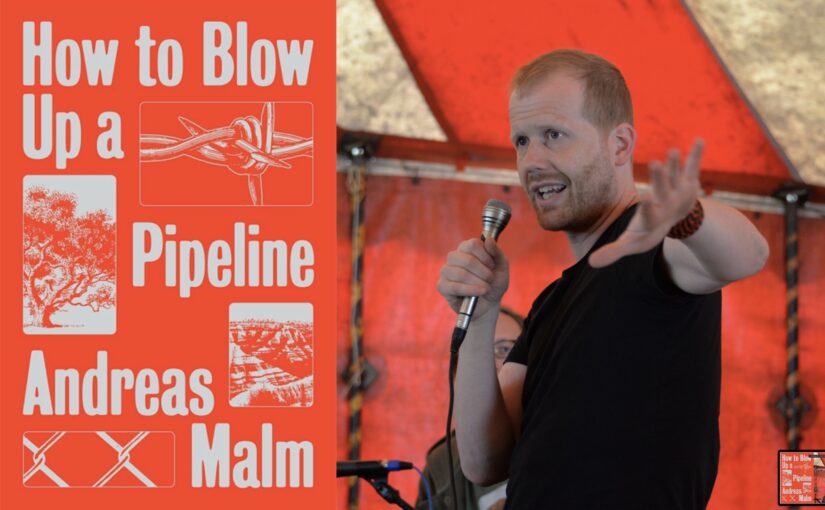
How to Blow Up a Pipeline

Nonviolence should be a tactic of resistance movements, not a holy covenant As famed South African activist Nelson Mandela (1918-2013) said “ I called for nonviolent protest for as long as it was effective.”

Yet today’s climate change movement, advocating against environmental destruction, have calcified into purely nonviolent pacifists. A whole range of tactics have been deployed by successful movements, even excluding violence on people but focusing on property destruction. Was the fall of the Berlin War a violent attack on a wall?

That’s the short, provocative and effective 2021 climate activism book by Andreas Malm entitled: How to Blow Up a Pipeline: Learning to Fight in a World on Fire. It inspired a film of the same name. The movie is a fictional narrative, but the book is a challenging, but important, nonfiction read for activists.

As the author argues, the two most common defenses of nonviolence:

  • moral: we are the good guys, so nonviolence is the only option and
  • strategic: it is always taken too far, so it is actually the better option

Yet this “strategic pacifism is sanitized history,” Malm writes. All so-called nonviolent movements benefited from “the radical flank effect,” in which a more violent group pushed the issue even farther. In contrast, the nonviolent movement seemed sensible. In this way, even if radical and more centrist groups despite each other, they actually work together.

As the author writes: “There is something suspicious about total tactical conformity”

Below I share my notes for future reference.

Continue reading How to Blow Up a Pipeline
What Works (and doesn’t) in Community News

This is primarily a place for my notes from this book for my future reference, but I have also included below an essay about the book I originally posted on Linkedin.

American journalism leaders rightly view local news models as worryingly limited. After nearly 20 years founding and operating a local news org, I believe many take too narrow a view of how to address that worry.

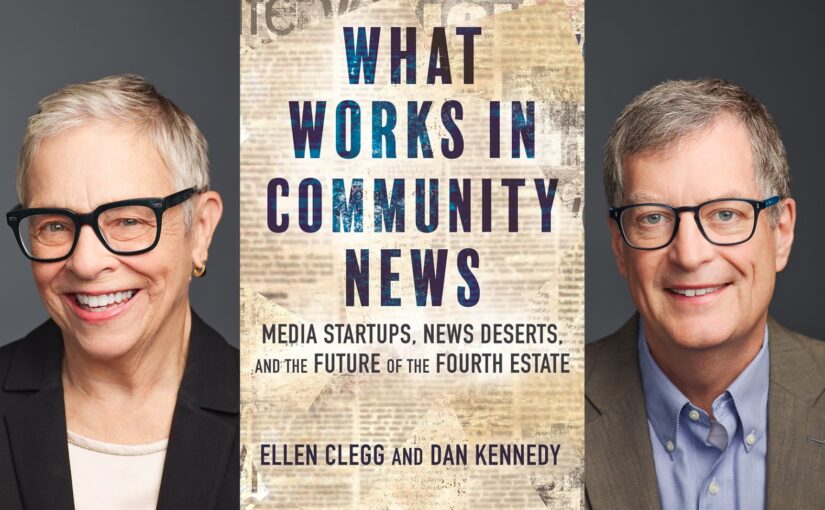
That’s why I was interested to read What Works in Community News: Media Startups, News Deserts, and the Future of the Fourth Estate, published in 2024 and written by Ellen Clegg and Dan Kennedy, two well-regarded journalism insiders who also host a podcast on local news. (Clegg is a longtime Boston Globe veteran who founded hyperlocal news site Brookline News; Kennedy is a Northeastern University faculty member.)

The book came out two years ago, and for fellow local news nerds, it’s still worth adding to you collection. Buy it!

Below, I share my reflections, and I have criticisms, but they’re more about the broader local news discourse than the book itself 🙂 I come with peace and love.

Continue reading What Works (and doesn’t) in Community News

Pro-entrepreneurship is not the same as pro-business

[This was originally a social post]

Pro-entrepreneurship is not the same as pro-business.

You can support new ideas, competition and experimentation, and still be skeptical of incumbents. Being pro-entrepreneurship means backing good-faith attempts at something new: letting teams iterate, letting bad ideas fail, and letting good ones scale.

Continue reading Pro-entrepreneurship is not the same as pro-business

What happens after Eureka?

We love to celebrate the spark of a good idea, but we too often skip over the long, uneven road it takes to get that idea into the world.

Research on innovation keeps pointing to the same tension: breakthroughs come from serendipity and “structural holes,” where people from different disciplines collide, but impact only happens when we deliberately smooth the path that follows. That’s what made a conversation I led at Baltimore’s University of Maryland Biopark, inside the innovation district’s year-old 4MLK building feel special.

I contributed Technically coverage here and here. The Biopark team had a photographer on site, so I also just pulled some of the shots of me in action below.

Continue reading What happens after Eureka?

How to prepare for facing violence

Violence is rare. Even those who seek it might encounter only a few hours of direct and active violence

For of the rest of us, a few minutes could shape the rest of our life. Better prepare.

That’s from the 2011 self-defense book Facing Violence by Rory Miller, a longtime corrections officer who worked in Iraqi prisons and developed self-defense training courses.

Miller has a vibe and a viewpoint, including personal stories alongside tactical advice. This book is a philosophical and practical guide that would be a good accompaniment to self-defense training. The book’s chapters are the seven stages that he identifies are part of navigating violence. Those stages:

  1. Legal and ethical frameworks
  2. Violence dynamics
  3. Avoidance
  4. Counter ambush
  5. Breaking the freeze
  6. The fight itself
  7. The aftermath

Below I share my notes for future reference.

Continue reading How to prepare for facing violence