How to be a beat reporter today

The thing about beat reporting today is that your competition has changed. In some ways, there are fewer news resources. But in other ways, more people, data tools, and automated services are curating and distributing news than ever before.

I’m gathering tips in posts on this tag here.

Running a small, niche local news organization, I think a lot about introducing reporters to our approach to beat reporting—one where we are both part of and covering a community. It’s a tricky balance: You have to know information before you can share it, while balancing relationships and delivering value to readers.

Here’s my running list of tips for successful beat reporting:

  • Think in three stages: Reporting is about gathering news, creating stories, and distributing them effectively. Treat all three as equally important.
  • Focus on the people stories: If your reporting is boring, remember: Find the people.
  • Context is key: Information is plentiful, but context is rare. Get great at searching archives, collecting insights, and connecting dots in your community. You don’t need to know everything, but you do need to know how it all fits together.
  • Use the right tools: Social media, RSS feed readers, data dashboards, and email lists should feed you a steady stream of information to curate. Stay plugged in.
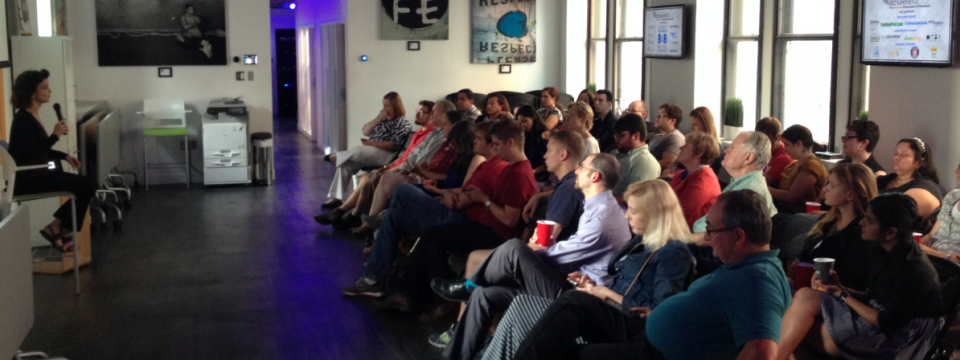
  • Leverage community events: Events are invaluable for finding stories, building relationships, and adding context. Make it a habit to attend them regularly.
  • Build insider access: What private group of power players can you meet with regularly? Gossip often leads to real reporting. Be in the know.
  • Ask the obvious question: What might seem obvious to insiders can look very different from an outsider’s perspective. Your fresh eyes can uncover new angles.
  • Keep relationships front of mind: Write, interview, and edit like you’ll have to talk to these people the next day. Because you likely will.

Beat reporting today requires balancing relationships, tools, and context to build trust and deliver value. These are the habits that can help reporters succeed in a noisy, ever-changing news environment.
A few thoughts on editing young reporters for community news

After a few years of working closely with other reporters, I’ve found the points we most often talk about. Here’s a list.

  • Tell me something that matters with your lede.
  • Anecdotal ledes should follow through the narrative arc. That anecdote better be in your kicker too
  • Either a story I want or a lesson I need. Readers want a great story or something that can help them (preferably both)
  • Where is your nut graf? This always feels like what is most often missing. This is the pivot between a story and your point: what broader context brings this together?
  • Structure and pace are two different skillsets
  • Prepare headlines and stories for the wider social web. Help think through the tightest way to explain the importance of your story.
  • Allow your story to be focused locally and understood globally
  • That’s redundant, which means a waste of words, which is a sin.
  • Know what your news site believes in. Who is your audience? What is the worldview? What is the broader narrative this story fits in?
  • How could this story be told differently?
  • What would the reader most need? What would help the reader scan? Would bullet points help?
  • You haven’t earned long sentences; shorter sentences for pace
  • Move faster; ship product
  • Be flawless on grammar
  • Hyperbole and cliche is where imprecision lives
  • Human elements to give the reader a break from technical pieces
  • Lead with attribution on purpose, either for style or more likely because the source matters. otherwise, lead with the lesson. the attribution is the footnote.
  • Link for more information
  • Have a call to action and make it easy
  • When in doubt disclose. Transparency over all else

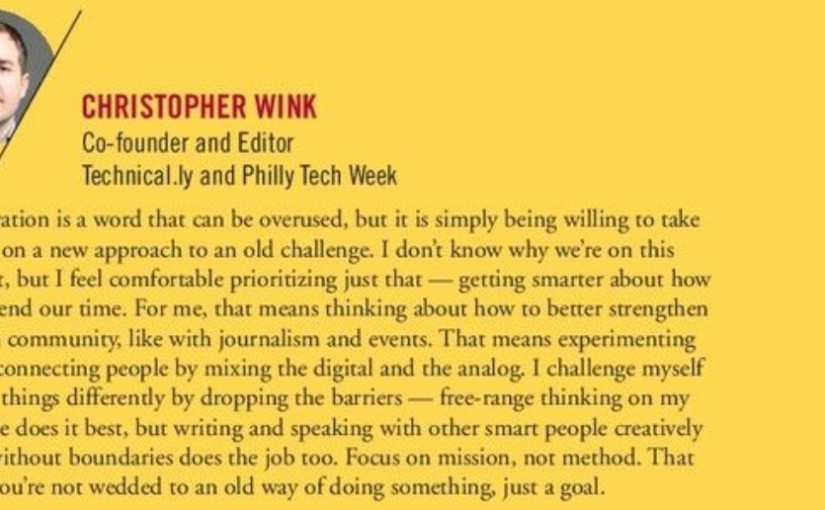
Innovation is taking a risk on a new approach for an old challenge

Sometimes when a word is really powerful, it gets over-used enough that its power dwindles. This happens in cycles, like how “collaboration” was sorely stretched in recent years as institutions got hip to open source culture, and now as “innovation” is being slid into the name of any new effort from any organization aiming to look forward-thinking.

That over-use doesn’t mean the word isn’t effective. It is. But it should mean it requires defense. So when I was asked to submit to business marketing magazine SmartCEO my own definition of the word and my process for employing it, I tried to do just that.

Continue reading Innovation is taking a risk on a new approach for an old challenge

What I’ve learned about running a regular professional meetup as a hobby

Organizing a regular event for peers and friends as a volunteer has become far more widespread with the power of the web, social media and services like Meetup.com for connecting like-minded professionals. It can be rewarding and relevant for both your personal and professional interests. This is what I’ve learned by doing just that.

Continue reading What I’ve learned about running a regular professional meetup as a hobby

Linking methodology at legacy media online for competitor scoop: Example

A Technical.ly Philly reader sent a photo our way of SEPTA transit agency maps with a prominent station’s name renamed to reflect a nearby hospital chain, suggesting a possible sponsorship deal. Then our editor Zack Seward reported it out and we shared the item as an interesting possibility — SEPTA appropriately demurred from comment.

Then the name change was actually announced a week later.

Continue reading Linking methodology at legacy media online for competitor scoop: Example

5 reminders for every local news startup, with a focus on Philly’s ‘Billy Penn’ from Jim Brady

If you were setting out to launch a local, city-wide, civic affairs and breaking news outfit today, there are a few clear first steps I’d encourage you to take. Understand deeply and succinctly why and for whom you are doing this. Plan clearly how you hope to sustain the thing, and have a rough idea of what you think the thing might be.

So I’m assuming that work is already done for Billy Penn, just such an effort here in Philadelphia that is soon-to-be-launched by Jim Brady, a news media executive popular in national online media circles, and Chris Krewson, a former Philadelphia Inquirer online editor who has returned after several years on the West Coast.

Now let’s think about what comes next.

Continue reading 5 reminders for every local news startup, with a focus on Philly’s ‘Billy Penn’ from Jim Brady

What the Committee of Seventy should teach other nonprofits about publishing

The Committee of Seventy is a 110-year-old local good government activist group known best in Philadelphia for its oversight of city elections. With the retirement of their popular newsman-turned-leader, the nonpartisan nonprofit is seeking a new Executive Director. This is also a unique opportunity for the group to update how it can best serve its mission to combat corruption. It has a clear alignment with public affairs journalism — something other mission groups should learn from.

For my undergraduate academic year 2004-2005, I was a policy intern at Seventy, spanning outgoing director Zack Stalberg and his predecessor Fred Voigt, whom I also interviewed for a college thesis project. From then through to my Election Day volunteering, I’ve long been inspired by their work.

But like Stalberg was meant to do when he replaced Voigt, Seventy is again in need of an updated look at how it can best accomplish their goals. If I were to launch an organization with the goals Seventy has today, in an era with newfound opportunities to build civic-orientated coalitions, web publishing for audience building would certainly be part of the strategy.

Continue reading What the Committee of Seventy should teach other nonprofits about publishing

The difference between a beat reporter and a features writer

Producing acts of journalism to inform a community can get done with different approaches. There are those who follow one community closely and those who offer the broader narrative to a wider audience.

In news parlance, it’s the beat reporter and the features writer, and it’s tied to the idea of choosing deeper impact or larger scale. I’ve developed a better understanding of the differences in these specialties over the last few years, in both hiring, following and familiarizing myself with the work of my peers.

Continue reading The difference between a beat reporter and a features writer

Art with tradition is objective, that without one is subjective

Appreciation for art is meant to be, by today’s focus on accessibility, wholly subjective. Whatever your view of something can be defended as your experience with it.

Over drinks at a Gayborhood bar last month, a primatologist-turned-choreographer shared his view on trying to interject objective reality into art — incorporating technology, data and fact into ‘timed performance art.’ With no art history background or deep cultural experience, I deserve no voice in the conversation, but our chatter did result in me sharing with him something I’ve been mulling since.

My knowledge of the debate on whether art is subjective or objective seems incomplete. As I understand it, there are two very different types of art: that which aims to inspire through an existing tradition and that which aims to explore something new.

Continue reading Art with tradition is objective, that without one is subjective

NEast Philly: everything I learned by working on this now-closed hyperlocal news site

The hyperlocal news site NEastPhilly.com that served Northeast Philadelphia for five years stopped publishing in December and was closed by founder Shannon McDonald. During that time, I helped her with strategy, reporting and web work. Since its closing, I’ve wanted to share a few lessons from that time.

Find out why Shannon decided to stop publishing NEast in her own post here. Below, I share what I learned (find other writing here I did about NEast here).

Continue reading NEast Philly: everything I learned by working on this now-closed hyperlocal news site