How ‘common knowledge’ works

The recursion of what most of us call common knowledge is endless: We know that they know that we know that they know, and so on.

No trivial matter, this form of communication is a likely driver of the very development of language so that humans could better coordinate.

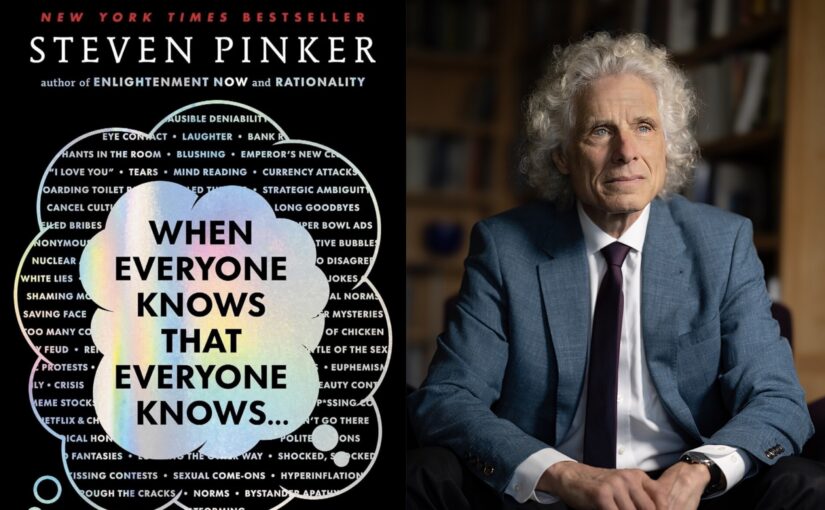
So argues Steven Pinker, the public intellectual and Harvard cognitive psychologist, in his new book “When Everyone Knows That Everyone Knows: Common Knowledge and the Mysteries of Money, Power, and Everyday Life.

Though no specific accusations appear to be public, the timing proved awkward. He’s one of several prominent intellectuals named in a tranche of new correspondence with notorious financier-pedophile Jeffrey Epstein. One of Pinker’s prominent book endorsements is Bill Gates, who is even more exposed.

I read the book before fully understanding this, and it’s not clear what it all means now. Though no great revelation, the book gathers perspective on a widely familiar concept.

Below my notes for future reference.

Continue reading How ‘common knowledge’ works

In 2018, Hans Rosling argued the world is getting better than most of us think. Was he wrong?

Viewing the world as a binary between rich and poor is too simple to be helpful.

A century of economic development has created a far bigger middle, so better to simplify with a four-level (quartile) income split. Despite this success, most people when surveyed assume the world is getting worse. It’s important to understand in what ways progress is being made.

That’s from the 2018 book Factfulness: Ten Reasons We’re Wrong About the World — and Why Things Are Better Than You Think, which argues people consistently misunderstand global trends, believing the world is worse off than it is due to inherent biases and misinformation.

My career-long reporting on entrepreneurship has always colored my belief that most people on most days want to make their lives a little better, and so that creates a better place over time. But this book is a canonical example of arguing too many of us overlook remarkable progress we must understand.

The book’s authors, Swedish husband-wife team Ola Rosling and Anna Rosling Rönnlund, and Ola’s father Hans, are insistent that theirs is not a naive or overly optimistic view, though this sort of “globalization has made the world richer and healthier” writing has become deeply unfashionable. Progressive advocates and activists I know deride a class of often-Boomer liberal writer as apologists for an entrenched world order by throwing facts and figures at people.

Still Rosling and team argued they were never apologizing for elites who could rest-easy, but rather doing research to put into context what had worked, so as to motivate the best behaviors to be continued. After Hans’s passing, the husband-wife duo continue leading a research nonprofit called Gapminder. It didn’t help that Rosling gave prominent talks at the World Economic Forum in Davos and at TED, often seen as the heart of this global liberal order.

So though I’m familiar with the arguments and Rosling’s reputation, I wanted to read what he described as the best distillation of his research.

Books like this (and one that came out the same year by Steven Pinker) tend to have two flaws: They overlook how many people are only focused on their personal life not broad global trends, and even many academics consider what these authors describe as an exceptional century, not an enduring trend. For example does slowing productivity and an aging secular business cycle, helped by geopolitical uncertainty and AI technology, portend a reversal of standards for most of us? Economic mobility and wealth equality reached notable highs during the author’s life, but declined since: so is he describing a world that is already changing again?

As they wrote: “Things can be both bad and better.”

Below I share my notes for future reference.

Continue reading In 2018, Hans Rosling argued the world is getting better than most of us think. Was he wrong?
Exploring the relevance of philosophy with “Plato at the Googleplex”

Why doesn’t philosophy progress?

Plato is still just influential as ever, but Democritus is not shaping modern physics nor is Aristotle a serious voice in modern biology.

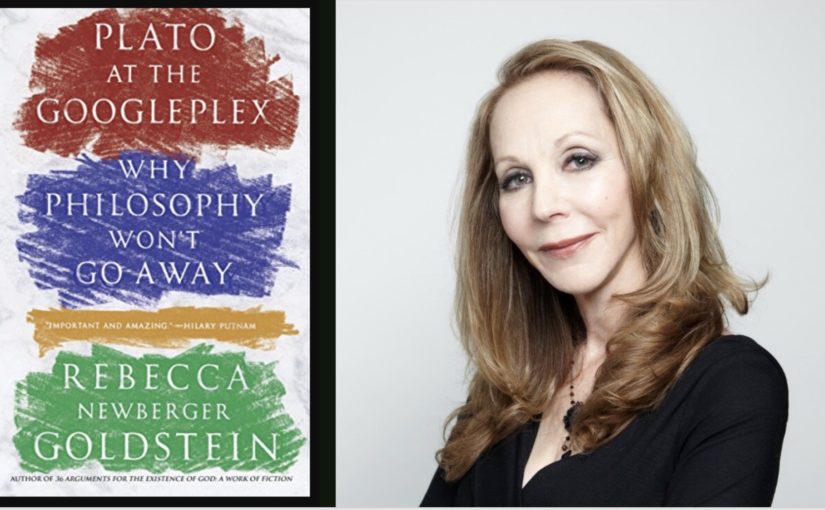
In 2014, Rebecca Goldstein’s book “Plato at the Googleplex: Why Philosophy Won’t Go Away” aimed to answer the question. The book takes a novel approach to exploring the relevance and value of philosophy in modern times by imagining Socrates visiting the Googleplex and engaging in philosophical discussions in various modern settings.

Personally, I found the premise of the book to be a bit gimmicky — modeled on Dialogues, each other chapter featured imagined discussions but it all too wooden. While it may be an interesting thought experiment to consider what Socrates would make of the world today, I think the book could have achieved the same goals without the need for such a contrived setup.

Despite my reservations about the book’s premise, I did find some value in the discussions that took place. Goldstein makes a strong case for the continued importance of philosophy in the modern world, arguing that it can help us to think more critically and deeply about the complex issues that we face as a society.

Goldstein, who is married to Steven Pinker, whose books I’ve read, certainly contributed to modernizing the themes. Give it a try. My notes are below.

Continue reading Exploring the relevance of philosophy with “Plato at the Googleplex”

Will the world be a better place to live in the future?

version of this essay was published as part of my monthly newsletter several weeks back. Find other archives and join here to get updates like this first.

In 2018, Harvard psychologist and pop intellectual Steven Pinker wrote a book that made a lot of smart people very mad. He argued that, on the global whole, quality of life was continuing its trend of getting better for humans. It was the continuation on a theme from a book he wrote in 2011.

His argument was that we are so (understandably) focused on the immediate pain, suffering and injustice of the day that we feel heartless to zoom out and acknowledge broader trends. Diseases are eradicatedGlobal poverty is downLife expectancy is up. As Pinker often put it: We remember stories about airplane crashes but we ignore stories of airplane takeoffs. (In fact, there’s a movement among journalists to respond to that last point.)

Those aren’t trivial accomplishments for the world. Yet many intellectuals waved Pinker off as an overly-optimistic privileged pollyanna who went beyond his expertise. 

Continue reading Will the world be a better place to live in the future?

Notes on ‘Stuff of Thought’ by Steven Pinker

Language is a manifestation of human thought. So it’s an effective tool to understanding how we perceive the world.

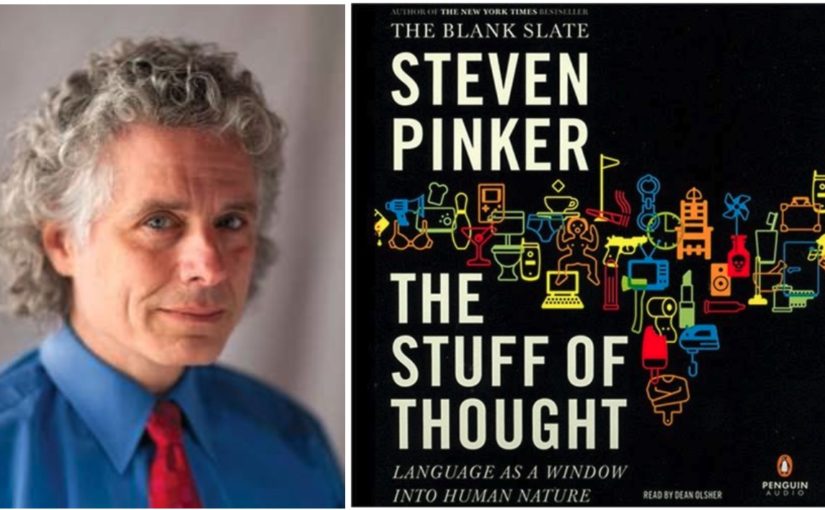
That’s the premise of the 2007 bestselling book The Stuff of Thought: Language as a Window Into Human Nature by experimental psychologist Steven Pinker. His prodigious collection of popular books blending linguistics, thought and human nature have made him both a celebrity academic and a frequent source of scorn.

I appreciate his contributions and regardless of popular perception, I’ve enjoyed working through his catalogue. Below I capture some notes from finally getting through this one. Find 2007 reviews from the New York Times and the Guardian.

Continue reading Notes on ‘Stuff of Thought’ by Steven Pinker

Language is more like fashion than math: “Words on the Move” by John McWhorter

We get it wrong: language is always in motion, more like fashion, than science or math. This changes how we treat language and its uses.

We don’t quite say someone is wrong for wearing bell-bottom jeans today. It might feel outdated. We also might think they could return someday in some form if fashion and culture moves in the right way. It’s just not what most of us would consider common today. That is a pretty good approximation of language.

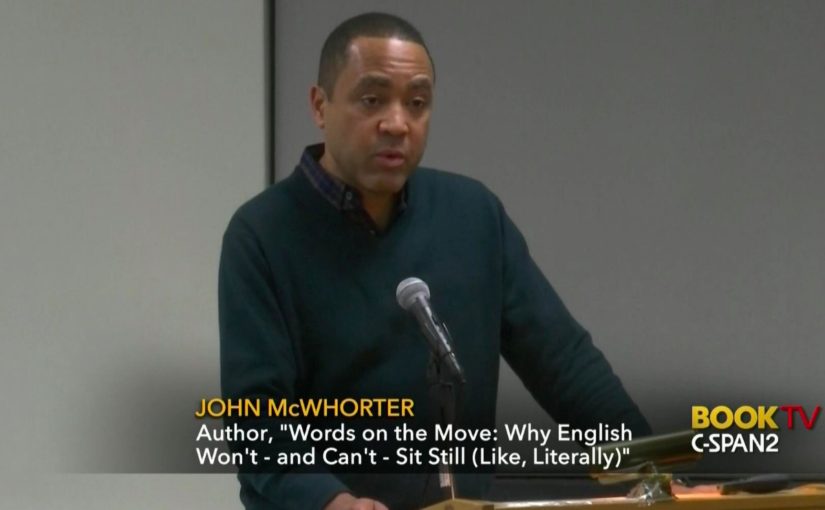
This concept is the big idea from linguistics that John McWhorter most gets at in his sublimely readable and thoughtful Words on the Move book from 2016. (Read the New York Times review here)

I first read this book earlier this summer, part of a binge on McWhorter’s books and linguistics generally. I finally wanted to share my notes from reading this. But if it interests you, you really should buy it, because there’s so much more.

Below I share my notes.

Continue reading Language is more like fashion than math: “Words on the Move” by John McWhorter