For regional startup cities to stand out, be true to yourself

I joined Chattanooga Tennessee Mayor Tim Kelly, and Joe Kirgues, the cofounder of the startup accelerator provider gener8tor, for a discussion at COLLAB. It’s the well-polished mobility- and quantum-themed conference produced by that city’s entrepreneur support organization.

Our theme? How do small city’s stand out. My push? Talk to each other, find a consistent narrative. Be authentic, honest and repeat those people stories.

I ended up filing this story after the conference and a quantum piece here. I also hosted a webinar on the U.S. Southeast’s entreprenuership activity.

I got hit in the face and escorted a protestor from an event. What happened?

About 20 minutes left in the evening reception, and a 20-something fella came running up to me: “You got a big problem, and you better come with me,” he said, and turning.

What first crossed my mind was someone was having a health emergency. Instead, I walked into the emptying main ballroom, where perhaps 100 people so remained. A half-dozen technology exhibitors were there, including a high-school robotics demo and a chocolate 3D printer. This was the tail-end of the closing reception of my news organization Technically’s annual conference, which itself was the close of Philly Tech Week, an open-calendar of community events we founded.

It got weird.

Continue reading I got hit in the face and escorted a protestor from an event. What happened?

Ban smartphones from schools

Parents and schools should treat social media like they do cigarettes — unhealthy addictions that are distracting from learning and development.

That’s the big argument in “The Anxious Generation: How the Great Rewiring of Childhood is Causing an Epidemic of Mental Illness,” a new popular book by psychologist Jonathan Haidt that has gotten widespread media attention.

“Social media use does not just correlate with mental illness,” he writes: “It causes it.”

Haidt has written several books on living healthier and happier, and he has researched social media use for years. But it’s this book at this time that met the moment: I’ve seen him interviewed by countless national media and at conferences. His advice marks one set of strategies for how parents and wider society can respond to the mounting evidence that algorithmic feeds of addictive content is especially challenging for children to overcome.

Below I share a few points I’m taking into my own parenting.

Continue reading Ban smartphones from schools

Power and Progress

Technology has a way of dazzling us into the deterministic fallacy: assuming path dependence for the ways a technology develops and its impact on society. But we have agency.

The so-called “productivity bandwagon” that we assume follows a new technology (where Schumpeter’s creative destruction will generate more jobs than are destroyed) is not inevitable. Widespread gains require that a technology creates more demand for workers (by creating new tasks and industries), and that demand induces higher wages. Neither are certainties, and take societal negotiation between labor and capital.

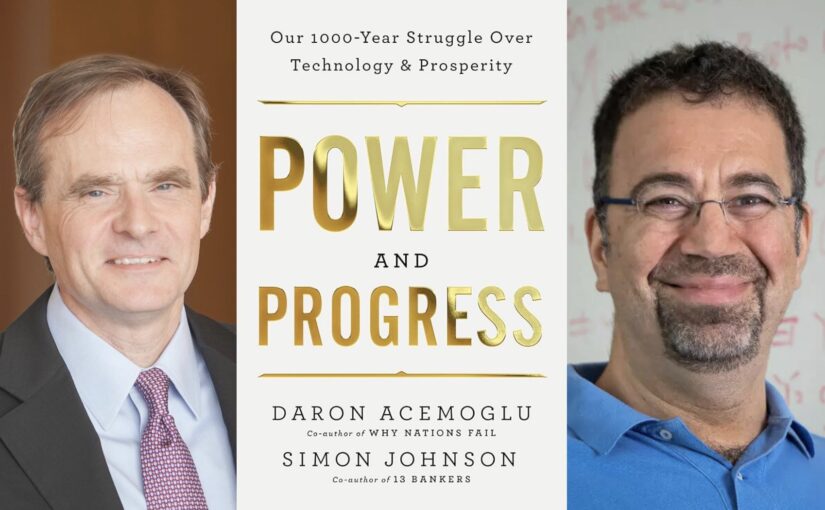
That’s from a 2023 book co-authored by economists Simon Johnson and Daron Acemoglu called “Power and Progress: Our Thousand-Year Struggle Over Technology and Prosperity.”

The book is big and thorough, with a sprawling historical comparisons over a millennia. Yet, I was disappointed by how few concrete examples the authors gave for what precisely they want to be done differently — especially in a book that is more than 500 pages. For example, on page 353, they write “digital technologies, which are almost by their nature highly general purpose, could’ve been used to further machine usefulness – for example, by creating new worker tasks or new platforms that multiplied human capabilities.” But that “for example” is not actually an example, but rather a reassertion of the general outcomes they seek (“new worker tasks or new platforms.”) Instead, I wanted an example of what exactly could have been done differently to ensure new worker tasks or platforms.

In that way, I found so big a book disappointing, and felt it could have been half as long. I appreciated their overall point, though, of idealizing “machine usefulness” in four ways: machines should improve worker productivity; create new tasks; distribute accurate information (like the web) and give better access and markets. Just don’t look to this book for the path to get there.

As they write: “How technology is used is always intertwined with the vision and interests of those who hold power.” Below I share my notes from the book for future reference.

Continue reading Power and Progress

I was honored with the 2024 IBIT “Innovators Award”

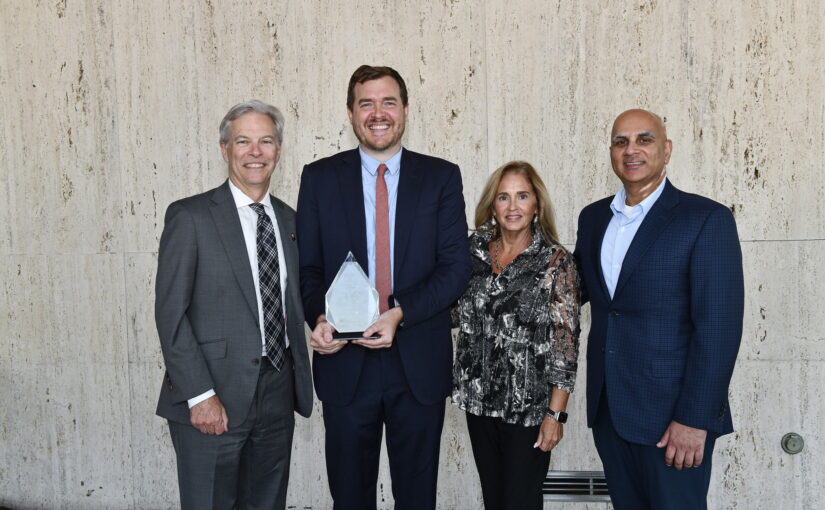
I proudly accepted Wednesday the “Innovators Award” from the Temple University Fox School of Business’s Institute for Business and Information Technology. The award is “given annually to a person or persons for innovation in applying IT to create business opportunity.”

The award was timed with the launch of the 14th annual Philly Tech Week, which I founded, and the 15th anniversary of Technical.ly, a local news org that has adapted in this strange economic period for community journalism. The transfer of Generocity.org last year was also a relevant example of my work.I was proud that my references for the award were my friends journalist-turned-college-dean David Boardman and entrepreneur Bob Moore. I formerly emceed these very awards, which are led by the thoughtful and analytical Munir Y. Mandviwalla and Laurel Miller. Knowing what they put into these awards made it all the more special. I was certainly in good company: My fellow award-winner was Jeff Hamilton, who was the CIO of Pfizer while the company rolled out its covid-19 vaccine.

Below, I share my remarks from the award event.

Continue reading I was honored with the 2024 IBIT “Innovators Award”