Do Androids Dream of Electric Sheep?

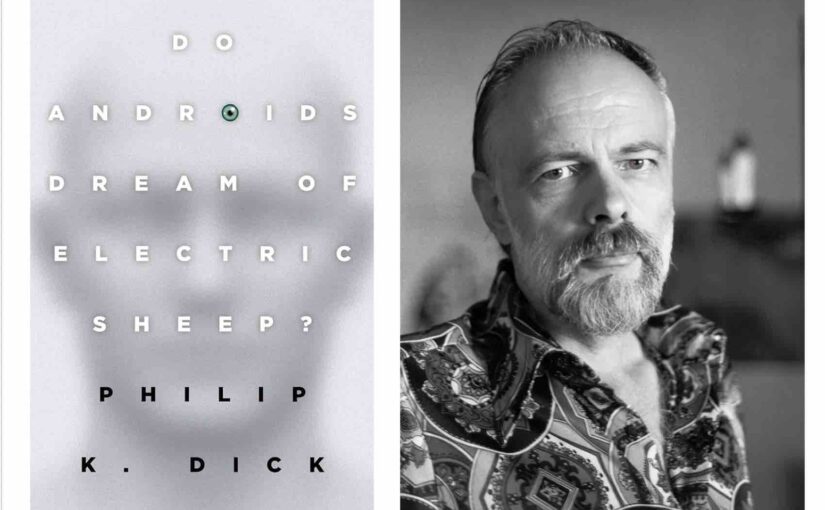
Initially set in 1992, later editions of the science fiction classic “Do Androids Dream of Electric Sheep” updated the setting to 2021. And so, we have now lived through Philip K. Dick’s 1968 novel.

Perhaps best known as inspiring the 1982 Harrison Ford movie Bladerunner, the novel won mixed reviews at launch but has developed a cult following. Dick (1928-1982) is not remembered as a great writer as much as a great thinker (Minority Report and Total Recall also inspired by his stories), and that’s felt truer still after a new wave of artificial intelligence hype.

The title plays off a subplot of the book in which the humans who remain on earth (after nuclear fallout) covet the status symbol of a living animal, as opposed to artificial ones. So, the question is whether androids (the increasingly human-passing machines that the main character is chasing) would dream of electric ones? Its big theme: What defines humanity, especially if machines increasingly recreate many of the skills we identify with? I enjoyed the book, and below share notes for my own future reference.

Continue reading Do Androids Dream of Electric Sheep?
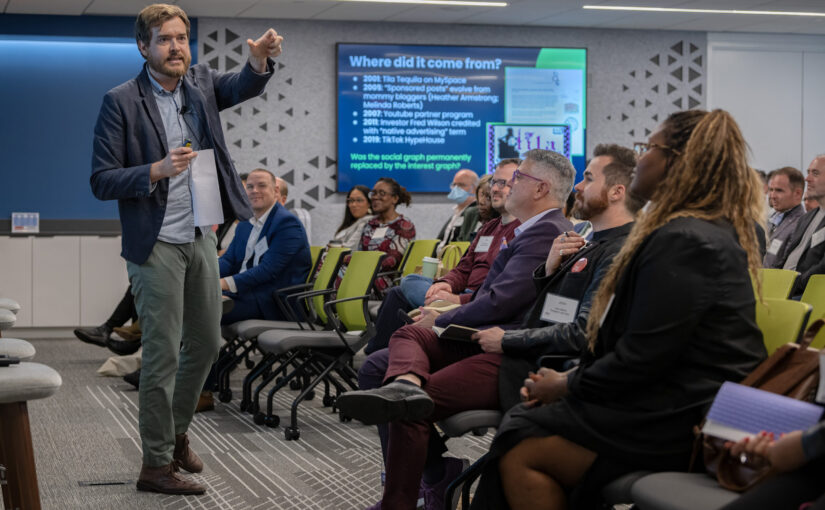
A few lessons from the 15th annual Klein News Innovation Camp

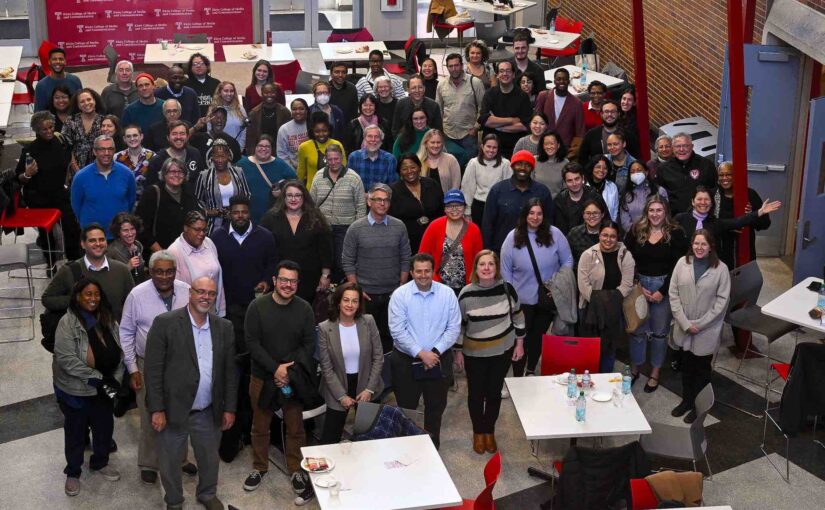
We were back. Audience was great, I enjoyed my lunchtime keynote interview with Wired editor Steven Levy.

To fill an early-morning slot, I crowdsourced a session (in old school unconference style!) on creators as distribution partners, and creators of news. (The topic has been on my mind!) In a crowded room

Below are a few notes from the daylong unconference on the future of news for my own memory.

Continue reading A few lessons from the 15th annual Klein News Innovation Camp

Keynote: What marketers need to know about the creator economy

The creator economy may be big, or not. The numbers are somewhat divided because definitions are still evolving.

I took what I did know from covering, living and curating creator campaigns, and gave a keynote on the topic for the Philly Ad Club’s annual conference. They had roughly 150 marketers on site at the cozy innovation space of Independence Blue Cross’s headquarters.

Find my slides here. A rough audio recording of the presentation can be found here (or here).

I published here a piece on Technical.ly informed by this work.

What happens to our digital remains after we die?

By 2100, the dead could outnumber the living on Facebook, and other social platforms like it.

Centuries of hiding the dead away may come to a close as our “digital remains” may keep our ancestors around us at all times. We ought to have a plan.

So argues the Oxford researcher Carl Öhman in his new book The Afterlife of Data: What Happens to Your Information When You Die and Why You Should Care.”

The book is a mix of philosophy, technology and information sciences. It’s rich, light, short and important. I recommend it. Below I share my notes for future reference.

Continue reading What happens to our digital remains after we die?

Why are there so few tech apprenticeships?

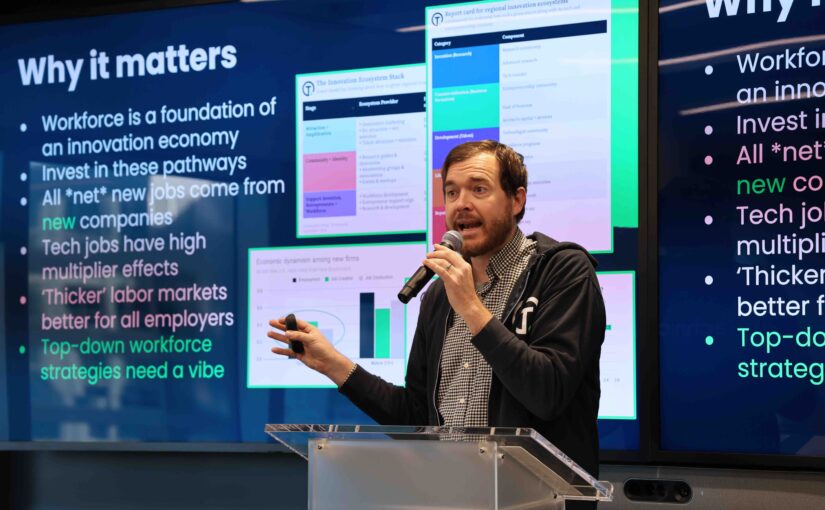
Backed by a research project on tech workforce development that I am leading with Technical.ly for our client Accenture, I got the chance to share high-level findings.

Ahead of National Apprenticeship Week, I gave a 10-minute talk, which was broadly about apprenticeships but included a bit of general tech workforce and tech economy basics and some Philadelphia-specific detail. Find the slides here, and a story I wrote on the topic here.

Entrepreneurship is bipartisan

Informed by reporting I’ve done, I’m keen on making the case that entrepreneurship engagement and tech workforce support are bipartisan issues.

I led a workshop session on the topic at the Young, Smart, Local conference. Find my slides here. Below is the session abstract I roughly followed. (After the daytime conference, there was an evening reception, at which I am depicted below with my friend and collaborator Damon McWhite, photo by Sana’i Parker!)

Continue reading Entrepreneurship is bipartisan

Journalists subsidize PR

This is from a social video I posted: “PR pros without a strategy for supporting and growing journalists and creators are like safari tour guides without a strategy for protecting endangered wildlife.”

Journalists subsidize PR. That’s always been true. But today, there are now six times as many PR specialists than journalists in the United States. It’s untenable. Let me share how we got here and what we can do about it.

Continue reading Journalists subsidize PR

Living and working with AI

Artificial intelligence is a marvel that generates two unnecessarily extreme reactions: This will solve all our problems, or it will actually kill us all.

“If we focus solely on the risks or benefits of building, super intelligent machines, it robs us of our abilities to consider the more likely second and third scenarios, a world where AI is ubiquitous, but very much in human control.” That’s from the 2024 book by Wharton professor Ethan Mollick titled Co-Intelligence: Living and Working with AI. As he writes: “Rather than being worried about one giant AI Apocalypse, we need to worry about the many small catastrophes at AI can bring.”

It’s a great read gathering the moment we are in right now. I recommend it. Below are my notes for my future reference.

Continue reading Living and working with AI